

Do newborns have nightmares? A Simple Guide to Infant Sleep
When you hear your newborn cry out in their sleep, it is completely natural to jump to one conclusion: a nightmare. But here is the simple truth: no, they do not. The kind of complex brain activity needed for a true nightmare, with its stories and fears, has not developed yet.
Answering Your Biggest Newborn Sleep Question
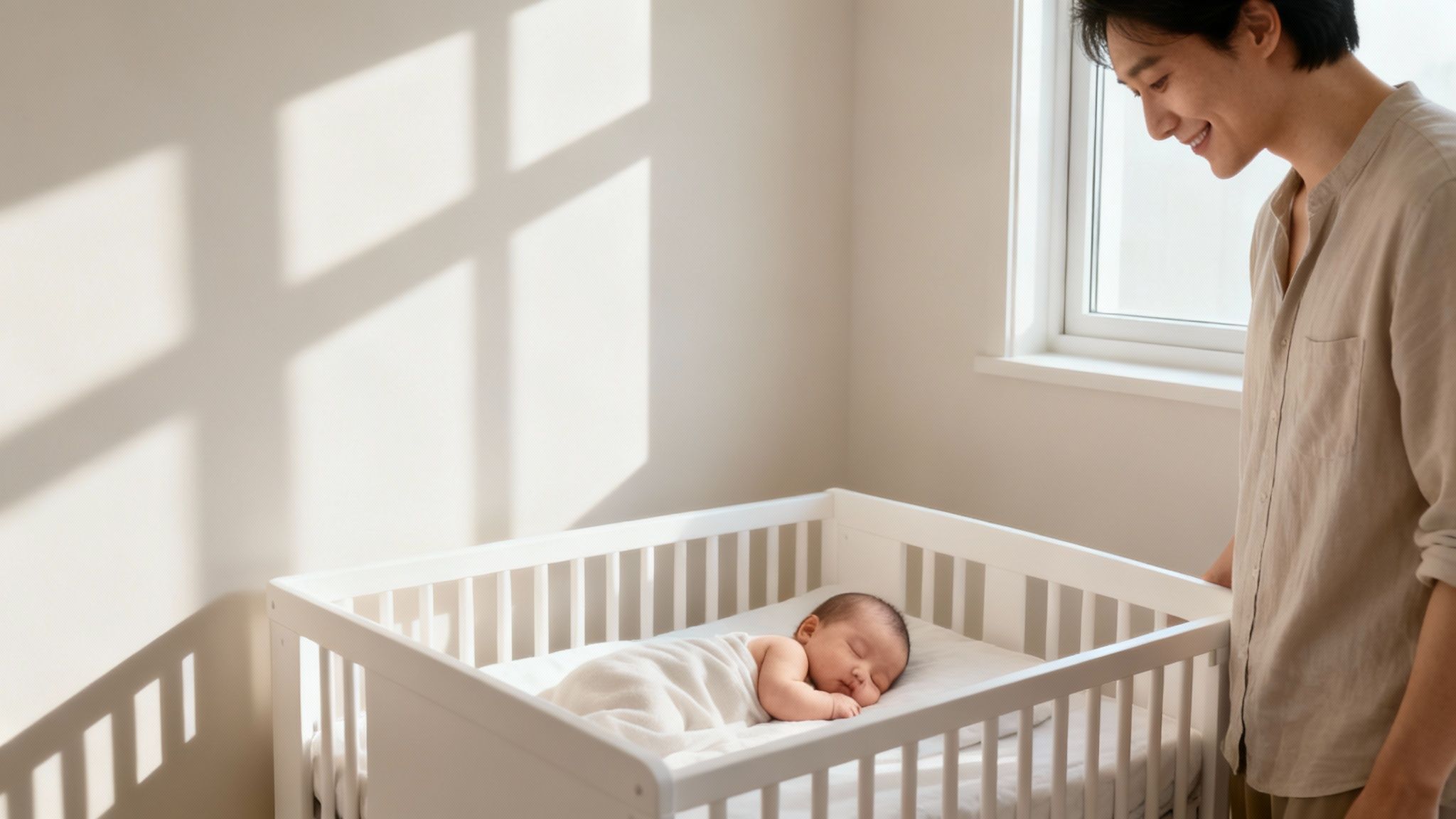
Hearing your little one whimper, cry, or even thrash around in the middle of the night can be really unsettling. As a parent, your first instinct is to worry they are having a bad dream. But what you see is almost always a normal, healthy part of their early development.
A newborn's brain is working incredibly hard, but it is not yet wired for the kind of imagination and emotional processing that creates a real nightmare. Their brain is building the hardware, but the software for complex storytelling has not been installed yet.
Let's break it down. Developmental science backs this up. The cognitive skills needed to dream up scary scenarios are not in place during the first few months. In fact, most research suggests that nightmares do not typically show up until around ages three to five, becoming more common between five and ten. You can read more in-depth research on these developmental stages to better understand your child’s sleep journey.
Newborn Sleep Arousal vs True Nightmare
To put your mind completely at ease, it helps to see the differences laid out side-by-side. Those sudden jerks, little cries, or fussing you see are just signs of a busy, developing brain, not a bad dream.
Here is why. This quick comparison highlights what is really happening.
| Characteristic | Newborn Sleep Arousal (0-3 Months) | True Nightmare (Ages 3+) |
|---|---|---|
| Awareness | Baby stays mostly asleep, often settling back down on their own. | Child usually wakes up fully and is aware of their surroundings. |
| Memory | Your baby will have no memory of the event. | The child can often recall parts of the scary dream that woke them. |
| Response | Baby might twitch, grunt, or cry out briefly before falling quiet. | The child is genuinely frightened and seeks comfort from a parent. |
| Cause | Usually caused by involuntary reflexes or shifting between sleep cycles. | Caused by a scary dream during REM sleep, often linked to new fears. |
Ultimately, what you witness is your baby's nervous system maturing and learning to navigate the transitions between sleep cycles. It is a positive sign of growth, even if it looks a little alarming in the middle of the night.
Exploring Your Newborn's Active Sleeping Brain
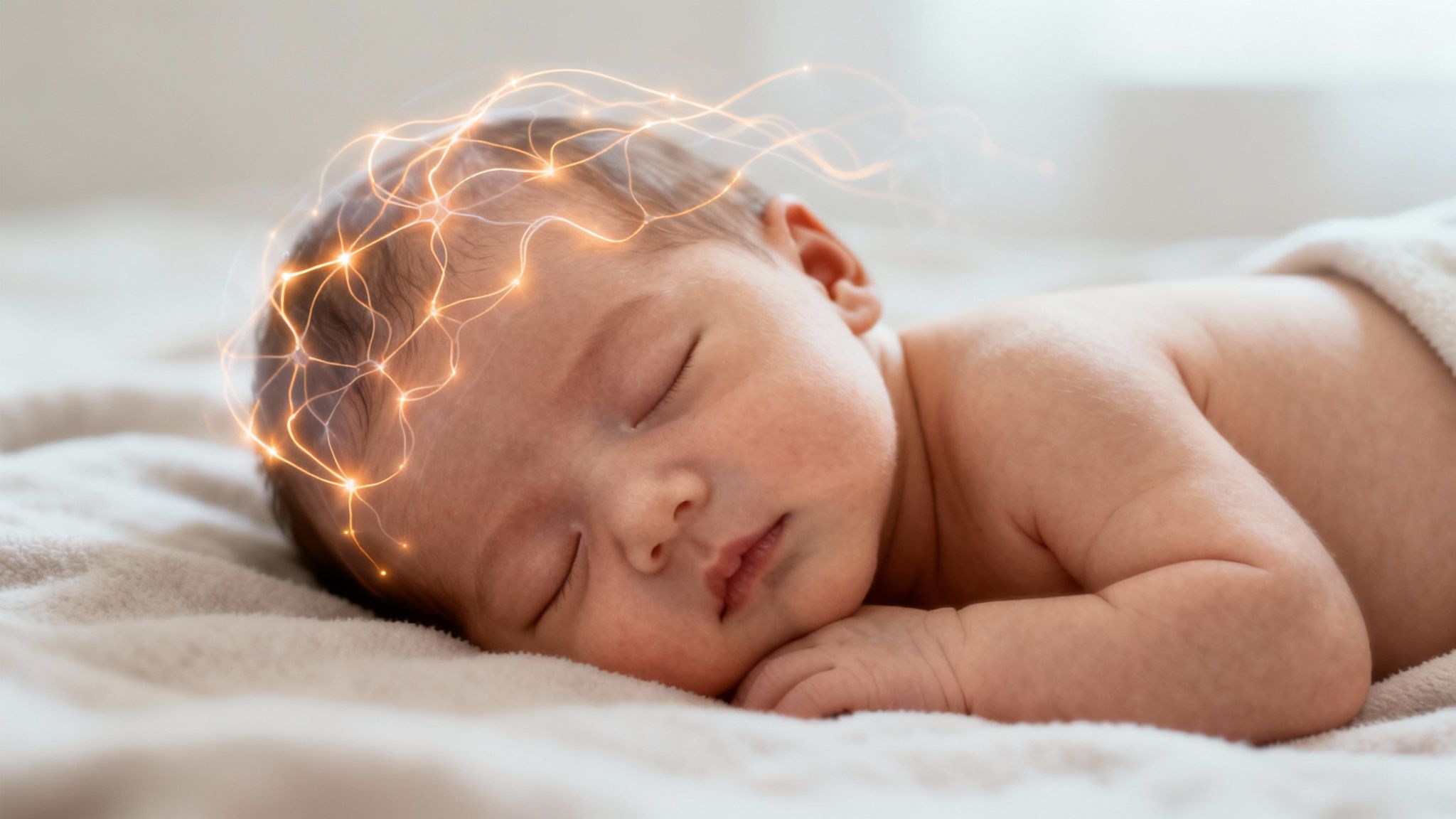
To really get why newborns do not have nightmares, we need a quick peek inside their incredibly busy, developing brain. The answer is all about how they spend their sleeping hours, which is a world away from how adults sleep.
Let's break it down. Newborns spend a huge amount of their sleep, around 50%, in a stage called REM (Rapid Eye Movement) sleep. This is the same stage where we adults do most of our dreaming.
But for a brand new baby, this phase is less about spinning yarns and more about construction. During REM sleep, the brain is flat out connecting all the essential wiring. It forms crucial neural pathways for things like learning, memory, and making sense of the world.
Building the Brain Brick by Brick
While their brain is incredibly active, it just has not developed the capacity for complex imagination or fear. And those are the key ingredients needed to cook up a proper nightmare. The "furniture" for their mental house, like emotions and memories, has not really moved in yet.
What you see as restless sleep, the little twitches, eyelid flutters, and soft grunts, is actually a wonderful sign. It is their brain hard at work, laying the foundations for all the learning and development to come.
This intense brain-building is essential for processing the new world around them. It helps them make sense of simple sensations, like the sound of your voice or the feeling of being held close. For a deeper look into this amazing process, you can learn more about when babies start dreaming and what it means for their growth.
Why REM Sleep Is Different for Newborns
The reason for all this REM sleep is purely functional. It is all about maturing their central nervous system. So, if newborns do dream, it is not in any way we would recognise. Their "dreams" are more likely simple, sensory replays without a story.
Instead of some wild adventure, their dream-like states might just be:
- Flashes of familiar faces they have seen during their waking hours.
- Comforting sensations, like the warmth of being swaddled.
- Vague impressions of light, sound, or movement from their day.
Essentially, their brain is just replaying and organising the basic sensory information it received. It is an automatic process, a bit like a computer organising files, rather than a conscious act of imagination. So, when you wonder "do newborns have nightmares," the answer is rooted in this unique developmental stage. They are simply too busy building their brain to have bad dreams.
So, What Are All Those Nighttime Noises and Movements?
If it is not a bad dream, then what is behind those sudden cries, twitches, and flailing arms you see in the middle of the night? Let's decode your baby’s unique sleep language.
These behaviours are not only common but completely normal. They are actually a sign that your baby's nervous system is maturing just as it should.
What you see is not distress. They are involuntary reflexes and the natural stirring that happens as a baby moves through their sleep cycles. These cycles are much shorter than an adult's, which means your little one shifts between light and deep sleep more often. This creates more opportunities for these little disturbances to happen.
Understanding what these actions mean can turn your nighttime worries into confident reassurance. Instead of asking "do newborns have nightmares," you can start to recognise these movements for what they really are: tiny developmental milestones.
Common Newborn Sleep Behaviours
Here are some of the most common nighttime noises and movements that parents often mistake for a bad dream. Each one is a sign of healthy development.
-
The Moro (Startle) Reflex: This is a dramatic, full-body jerk that often happens when a baby is startled by a noise or even their own movement. They might fling their arms out to the sides, arch their back, and then pull everything back in. This is a primitive survival instinct that usually fades by around four months.
-
Grunting and Gurgling: A newborn’s digestive system is brand new and still figuring things out. Grunting, gurgling, and other little noises are often just the sounds of their body processing milk and passing gas. It is all part of the process.
-
Twitching and Small Movements: You might see your baby’s eyelids flutter, their mouth twitch into a smile, or their tiny fingers clench. These small movements are really common during active REM sleep as their brain sends out random signals while it works hard building new neural pathways.
It is helpful to remember that babies are just naturally noisy, active sleepers. If you want to dive deeper, you can explore our guide on what it means when a baby is crying in their sleep to learn more about these typical behaviours.
The key takeaway here is that these actions are reflexes, not reactions. Your baby is not consciously responding to a scary thought; their body is simply reacting to internal signals as their brain and nervous system grow.
Knowing what to look for helps you respond calmly and confidently. Often, the best thing you can do is simply pause and wait a moment. Many babies will make these noises and movements without ever fully waking up, settling back into a deeper sleep all on their own. This actually empowers them to start learning how to connect their sleep cycles independently.
Looking Ahead to Nightmares and Night Terrors
So, we know that true nightmares are off the cards for your newborn. But as your little one grows, their sleep patterns will change in ways that can feel dramatic. Getting your head around what is coming up can help you feel ready for future sleep challenges. This is especially true for two that often worry parents: nightmares and night terrors.
Knowing the difference between these is key. While they might seem similar when you are woken in the middle of the night, they are completely different experiences for your child. Being able to tell them apart will help you respond in the most supportive way possible.
Next steps. This timeline shows you the typical sleep behaviours you will see in the early months, long before proper nightmares are on the radar.
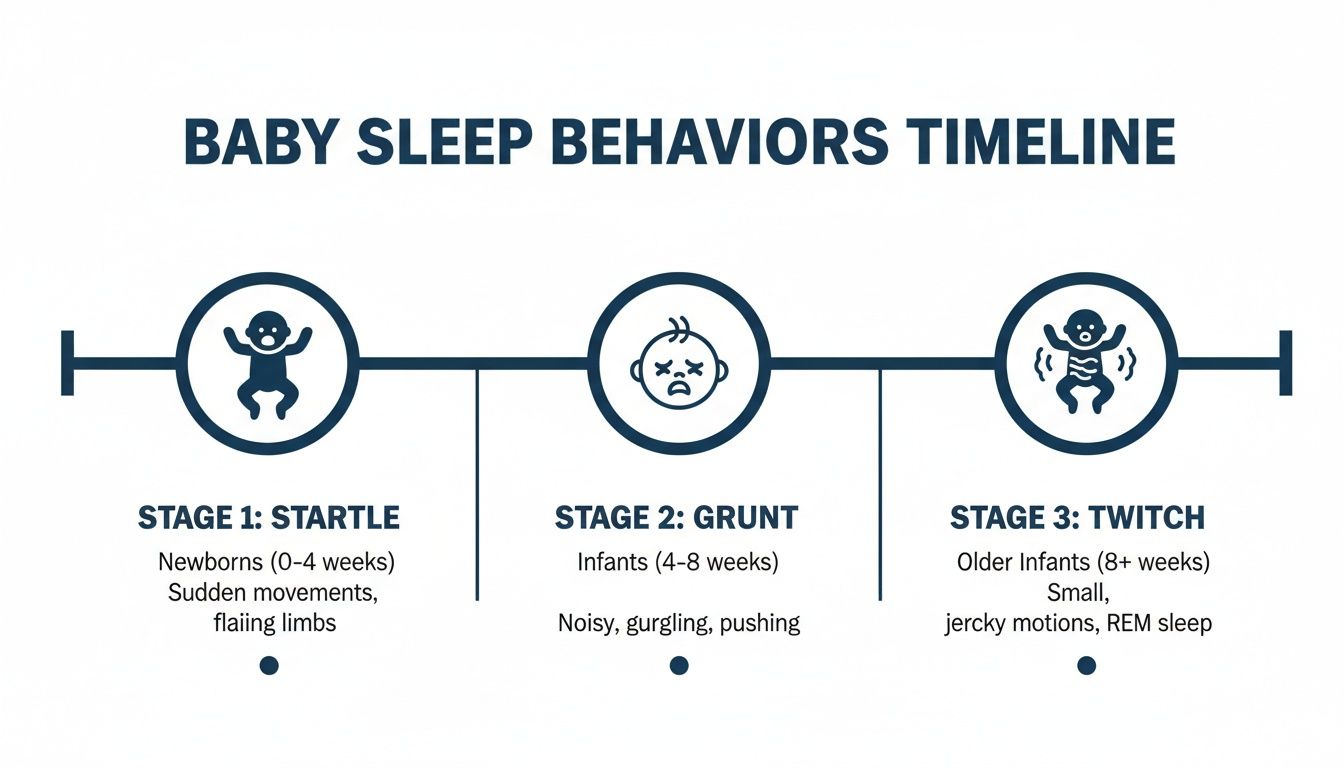
As you can see, those early grunts and twitches are reflexive, not a sign of emotional distress. This is the foundation for understanding the more complex sleep events that come later.
Understanding Nightmares
At its core, a nightmare is just a bad dream that is scary enough to wake your child up. It is a completely normal part of development, especially as their imagination and grasp of the world start to expand. Nightmares usually make their first appearance between the ages of three and six.
When your child has a nightmare, they will likely wake up fully and be genuinely frightened. The good news is that your comfort makes a massive difference. They will remember bits of the bad dream and will need your reassurance to feel safe again before they can drift back off to sleep.
Decoding Night Terrors
Night terrors, on the other hand, are much more dramatic but thankfully, far less common. A night terror is an intense episode of screaming, thrashing about, and fear that happens while your child is still deep asleep. Even if their eyes are open, they are not actually awake.
Unlike a nightmare, a child experiencing a night terror is not conscious of their surroundings and will have no memory of it the next morning. It is almost always more frightening for the parent watching than for the child themselves.
The best thing you can do is stay calm and make sure they cannot hurt themselves. Trying to wake them up can often make them more agitated. Australian research shows that night terrors affect roughly 1 in 20 children, most commonly between two and four years old. You can learn more about night terror findings from trusted Australian parenting resources.
Nightmare vs Night Terror At A Glance
To make it even clearer, here is a quick comparison to help you tell the difference in the moment.
| Feature | Nightmare | Night Terror |
|---|---|---|
| Awareness | Child wakes up fully and is scared. | Child is asleep and unaware of your presence. |
| Timing | Often happens in the second half of the night. | Usually occurs in the first few hours of sleep. |
| Memory | Child can often remember the scary dream. | Child has no memory of the event afterward. |
| Response | Needs comfort and reassurance to go back to sleep. | Best to not wake them; just keep them safe. |
By understanding these key differences, you will feel more confident handling whichever sleep disruption comes your way. It helps you move from wondering "do newborns have nightmares" to being fully prepared for the sleep challenges of toddlerhood and beyond.
How to Create a Soothing Sleep Environment
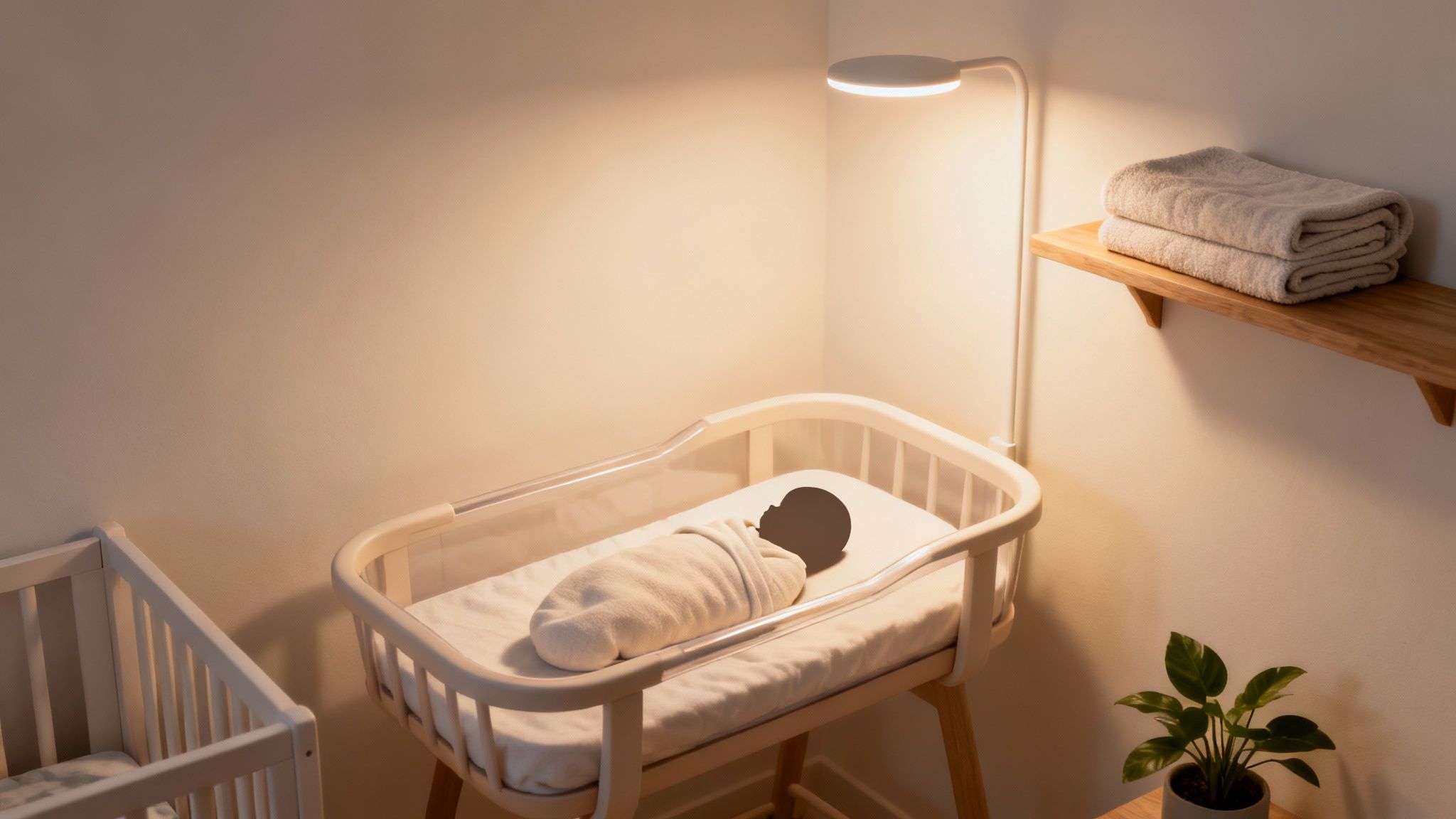
While we know the answer to "do newborns have nightmares?" is no, setting up a peaceful sleep environment is still one of the most powerful things you can do for your baby. A calm, consistent space and routine helps to regulate their brand-new internal clock.
Let's break it down. Think of it as building healthy sleep foundations from day one. By clearly signalling that it is time to rest, you make bedtime a more positive and restful experience for everyone.
Building a Predictable Bedtime Routine
Consistency is everything when it comes to newborn sleep. A predictable sequence of events cues your baby’s brain that sleep is on its way, helping them to wind down naturally.
Your routine does not need to be long or complicated at all. Even just 15-20 minutes of quiet activities can make a world of difference.
Here are a few simple steps you can combine:
- A Warm Bath: This is a classic for a reason. A warm bath is wonderfully soothing and a perfect start to a calming bedtime routine. Adding products like gentle baby bath oils can make the experience even more relaxing.
- A Gentle Massage: After their bath, a soft baby massage can relax their muscles and provides that comforting, secure touch they crave.
- Quiet Cuddles or a Story: Dim the lights and spend a few minutes reading a soft book or simply holding them close. Your calm presence is incredibly reassuring for them.
For a deeper dive, check out our complete guide on creating a newborn baby sleep routine.
Optimising the Sleep Space
Your baby's nursery should be a haven for sleep. The goal is to create an environment that is safe, comfortable, and free from anything that might overstimulate their little minds.
Creating the right atmosphere is less about fancy gadgets and more about consistency. A dark, quiet, and cool room is the ideal setting for restorative sleep.
Research tracking Australian children found that good bedtime routines started in the newborn period have benefits that extend right throughout childhood.
Consider these simple elements for the perfect sleep space:
- Darkness: Use blackout blinds to block out external light. This helps their body produce melatonin, the sleepy hormone.
- White Noise: A consistent, low hum from a sound machine can mimic the sounds of the womb and block out sudden household noises.
- Temperature: Keep the room at a comfortable temperature, not too hot, not too cold, to ensure they can sleep soundly.
Knowing When to Talk to a Health Professional
It is completely normal to worry about your baby's sleep. We have established that newborns do not really have nightmares, but that does not stop us from feeling anxious when they are unsettled. Your parental instincts are your greatest tool here, trust them.
Most nighttime fussing is just part of the newborn package. But sometimes certain signs hint that something more than a simple sleep cycle transition is going on. Knowing what to watch for can give you peace of mind and a clear path forward.
Recognising Red Flags
Newborn sleep can be all over the place, but it is worth keeping an eye out for any persistent changes that feel out of character for your little one. Your GP or a local child and family health nurse is always the best person to talk to if you have any concerns.
Consider seeking professional advice if you notice any of these signs:
- Inconsolable Crying: This is not just normal fussing. We are talking about crying that is unusually intense, high-pitched, or lasts for long stretches and is almost impossible to soothe.
- Sudden Changes in Sleep: A dramatic and lasting shift in your baby’s sleep patterns that does not seem to have an obvious cause (like teething or a growth spurt).
- Changes in Feeding: A sudden refusal to feed, obvious difficulty feeding, or a significant drop in appetite that goes hand-in-hand with sleep issues.
- Signs of Discomfort: Your baby consistently arches their back during or after feeds, pulls their legs up to their tummy, or generally seems to be in physical pain.
- Fever or Other Symptoms: Any signs of illness, like a fever, rash, or breathing difficulties, should be checked out by a health professional straight away.
Your intuition as a parent is invaluable. If something just feels off with your baby's sleep or general wellbeing, never hesitate to seek reassurance from a medical professional.
Next steps. A chat with your doctor can help rule out underlying issues like reflux, allergies, or other discomforts that might be messing with your baby’s rest.
According to the trusted Australian resource, Raising Children Network, it is always best to see a doctor if you are worried. Seeking help is not a sign of failure. It is a sign of proactive, loving parenting that ensures your little one gets the best possible care.
Common Questions About Newborn Dreaming
Got questions about what is happening in that little head while your baby sleeps? You are not alone. Let's tackle some of the common queries new parents have about newborn sleep and the possibility of dreams.
Here is why. This quick guide will help make sense of those middle-of-the-night wonderings.
Can My Newborn Dream At All, Even If They Aren't Nightmares?
Yes, experts believe newborns absolutely do dream, but it is nothing like the complex stories we adults experience. Think of their "dreams" as simple sensory flashes connected to their brand-new world.
It is likely their brain just replays basic information: the warmth of being held, the muffled sound of your voice, or the hazy image of a face. This happens during their long stretches of REM sleep and is a crucial part of how their brain organises a flood of new experiences.
Why Does My Baby Smile or Cry in Their Sleep?
Those adorable little sleep-smiles or tiny whimpers are almost always just reflexes, not a reaction to a dream. They are a totally normal part of what is called 'active sleep'.
During the REM stage, a newborn's brain fires off random signals that can trigger these involuntary facial movements and sounds. It is just their developing nervous system testing out all its new connections. Seeing it is a perfectly healthy sign of growth.
A sleeping smile or frown is more about maturing neurology than emotional dream content. It is a physical reflex, much like their hand twitches or leg kicks during sleep.
Understanding the emotional world of young children is key, even before they can talk. For great insights, you can explore resources on children's books about emotions.
Could My Newborn Be Crying From Pain Instead of a Dream?
Absolutely, and it should always be the first thing you check. If your baby's crying sounds different, maybe it is sharper, more intense, or much harder to soothe, it is important to rule out physical discomfort first.
The culprits are often simple and fixable.
- Trapped Gas: A very frequent reason for sudden, sharp cries.
- Reflux: Discomfort from milk coming back up can definitely be painful.
- Temperature: Are they too hot or too cold? A quick check of their neck or back can tell you.
- A Wet Nappy: An obvious one, but easily overlooked in the middle of the night.
Always investigate these physical needs first. They are a far more likely reason for a newborn’s distress than any dream could be.
At Wallaby Collective, we create beautifully soft and practical linen play mats that provide a safe, comfortable space for your little one's rest and play. Discover our range of OEKO-TEX certified mats designed for modern Australian homes. Explore the collection.