

When Do Babies Start Dreaming? A Guide to Infant Sleep
Scientific evidence suggests babies dream in some form right from birth. We cannot ask them directly, but the secret lies in their unique sleep patterns, which are very different from our own.
Understanding Your Baby's Dream World
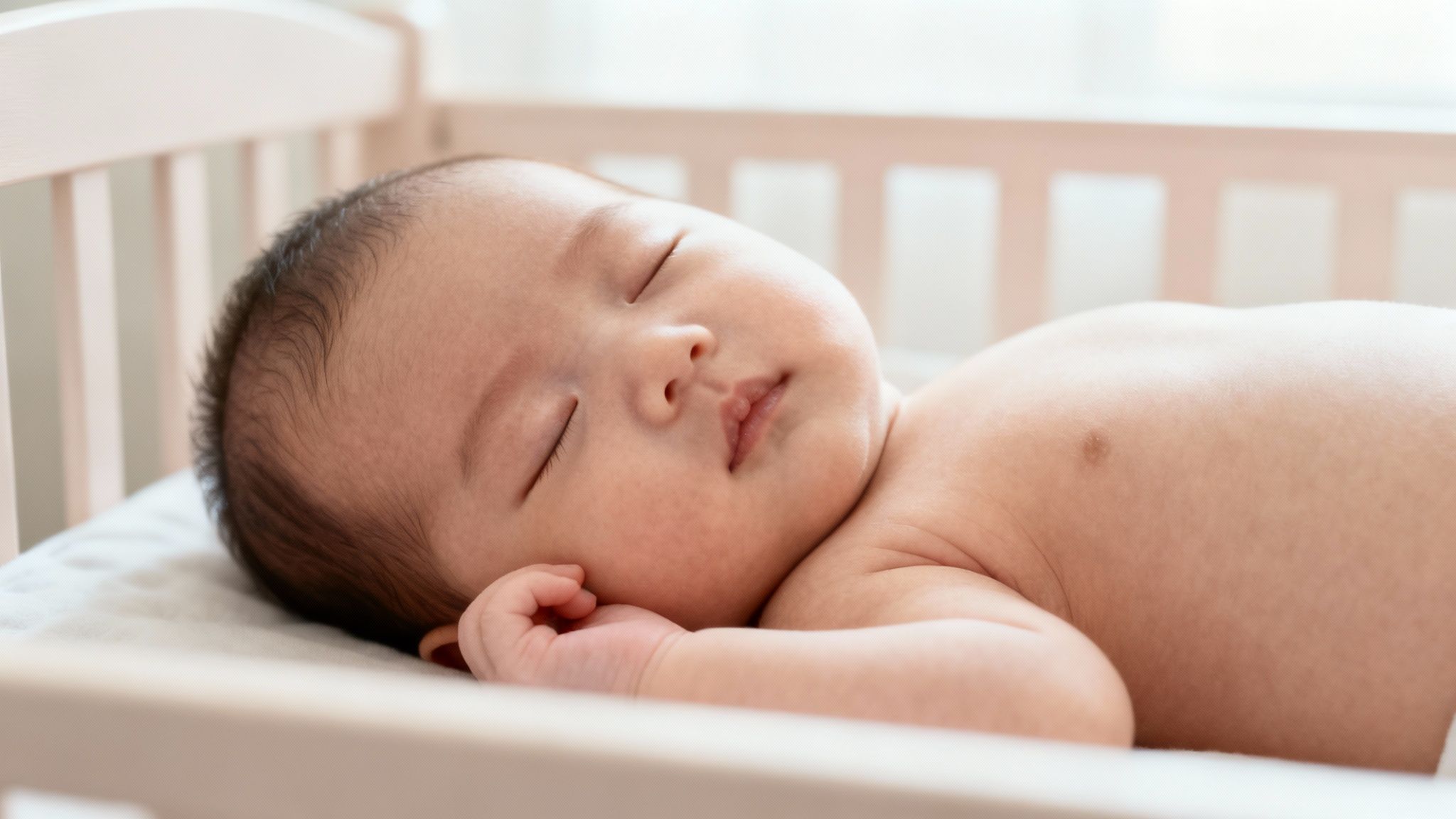
You may watch your sleeping baby and notice their eyelids flutter, their fingers twitch, or a tiny smile cross their lips. It is natural to wonder if they are in dreamland. Babies cannot tell us what is happening in their minds. However, we know their brains are incredibly active during sleep.
Let's break it down. Adult sleep cycles through several stages. Our most vivid, story-like dreams happen during Rapid Eye Movement (REM) sleep. This stage makes up about 20-25% of our night's rest.
Newborns are in a league of their own.
The Power of REM Sleep
A newborn spends a massive 50% of their sleep time in the REM stage. This is not just for rest. It is a crucial period for rapid brain development. Think of it as a busy construction site where vital neural connections are built and strengthened around the clock.
Here is why. This intense REM activity helps a baby’s brain organise and process the flood of new daily experiences. These include the feeling of being held, the sound of a parent's voice, and the sight of new faces and objects.
This constant brain activity is essential for:
- Learning and Memory: It lays the foundation for all future learning.
- Sensory Processing: It helps them make sense of sights, sounds, and touch.
- Neural Pathway Development: It builds the brain's internal communication network from the ground up.
So, when you see those little twitches and flutters, you likely witness this incredible developmental process. Their ‘dreaming’ experience is probably not like our complex narratives. It is more likely a simple collage of the day's sensations and feelings.
Infant vs Adult REM Sleep at a Glance
To put it in perspective, let’s look at how different a newborn’s sleep architecture is compared to ours. This quick comparison shows why REM sleep is so central to early development.
| Sleep Characteristic | Newborn Baby | Adult |
|---|---|---|
| Total Sleep Time | 16–18 hours per day | 7–9 hours per day |
| % of Sleep in REM | ~50% | ~20-25% |
| Primary Role of REM | Brain development, neural pathway formation | Memory consolidation, emotional processing |
| Dream Content | Likely sensory fragments (warmth, sounds) | Complex, narrative-driven stories |
This huge difference highlights that for a baby, sleep is not just downtime. It is one of the most productive and important parts of their day.
The Link Between Infant Sleep and Brain Development
To figure out when babies might start dreaming, we first need to look inside their brains during sleep. A newborn's brain works incredibly hard. It takes in massive amounts of information from the world around them. Sleep, particularly REM sleep, is when the brain sorts and stores all this new data.
Let's break it down. All human sleep has two main stages: non-REM (quiet sleep) and REM (active sleep). For adults, a full sleep cycle takes about 90 minutes. For a newborn, it is much shorter at only 50–60 minutes long. This is why they wake so often. They simply move through sleep cycles much faster than we do.
Why REM Sleep Is So Important
This constant cycling is not a bug. It is a feature of their development. The huge amount of time babies spend in REM sleep drives their brain growth. Their brain gets to work every time your little one enters this active sleep phase.
During REM sleep, their brain is busy with:
- Memory Consolidation: Storing memories of faces, sounds, and the feeling of being held.
- Language Acquisition: Laying down the neural pathways needed to understand and eventually speak.
- Motor Skill Development: Refining the brain signals that control all their tiny movements.
Think of REM sleep as your baby's own personal neuro-developmental workout. It is the biological process that helps them make sense of their brand-new world. This is especially vital when you consider that a massive 90 per cent of brain development happens before five years of age. The most rapid growth is packed into that first year. You can discover more insights about early childhood development and sleep from Australian experts.
This intense brain activity during REM sleep is the closest thing we can observe to dreaming in a newborn. It is less about stories and more about sensory processing. The feeling of a warm cuddle or the sound of a lullaby becomes integrated into their developing mind.
The Sleep-Development Connection
So, what does this all mean for your baby's development? The connection is direct and powerful. The more time they spend in REM sleep, the more opportunities their brain has to build and strengthen essential pathways.
This process underpins everything from recognising your face to learning how to roll over. Every twitch, flutter, and tiny smile you see during their active sleep is an outward sign of this amazing internal work. Their sleep architecture is perfectly designed to fuel the most explosive period of growth they will ever experience. This lays the groundwork for all future learning and milestones.
Your Baby's Dream Development Timeline
Figuring out when your little one starts dreaming is like trying to solve a sweet mystery. We cannot peek directly into their minds. However, we can piece together some fascinating clues by watching how their sleep and brain activity change over time.
This timeline breaks down the key stages in your baby's dream development. It moves from the simple sensory flashes of a newborn to the imaginative stories of a preschooler.
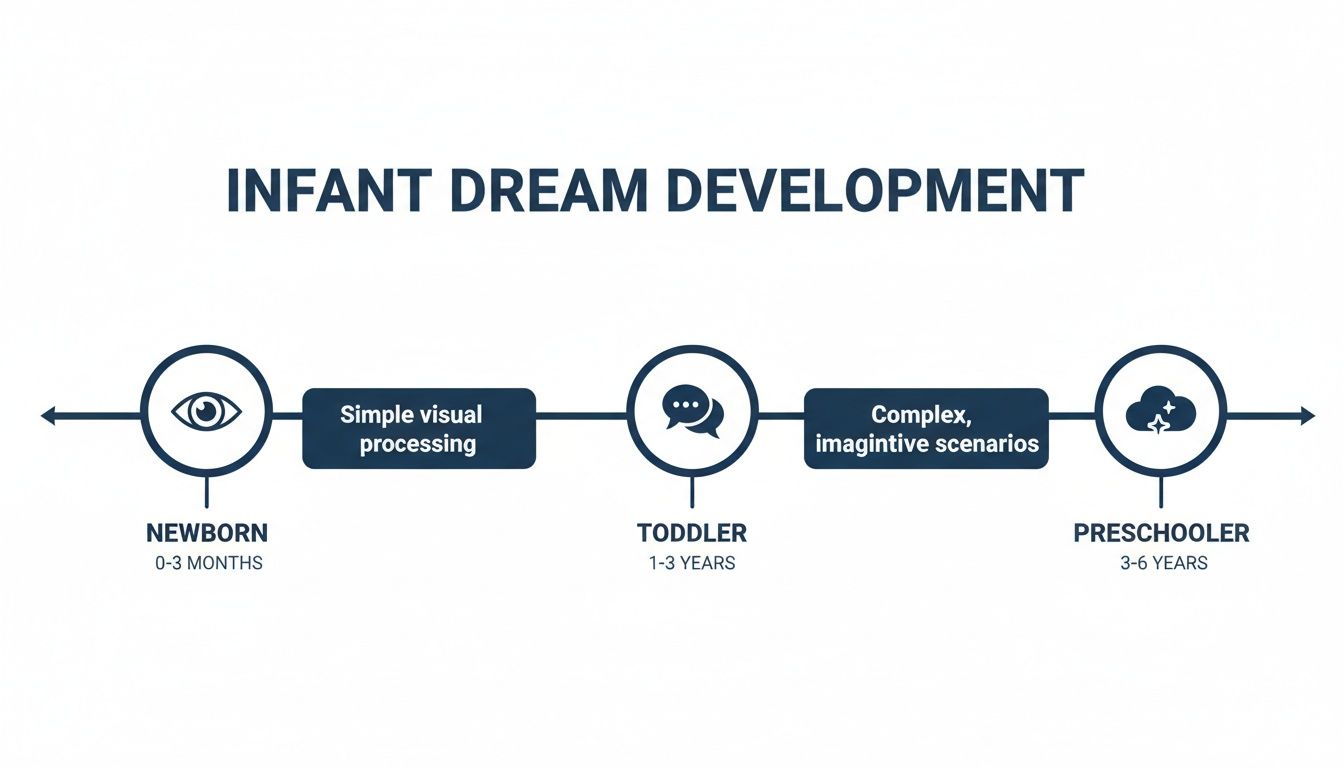
As the infographic shows, it is a clear journey. Dreams evolve from basic sensory replays into complex, story-like adventures as a child’s world and cognitive skills expand.
Newborns (0–3 Months)
In those first few months, your baby's sleep is a whirlwind of intense brain activity. You get a front-row seat to their brain working overtime during REM sleep when you see their eyelids flutter, their tiny fingers twitch, or a little smile cross their face.
These little movements are not necessarily reactions to a dream's plot. Think of it more as the brain’s construction phase. It is busy building neural pathways, processing all the new sensory information, and laying the foundation for future learning. Their "dreams" are most likely simple sensory fragments, like the warmth of your arms or the gentle sound of your voice.
The 3–6 Month Shift
Around the three or four-month mark, you might notice your baby’s sleep patterns suddenly feel different. This is a huge step. Their sleep cycles start to mature and look more like an adult's, with more defined stages. This can sometimes trigger the famous four-month sleep regression.
Here is what is going on:
- Longer Sleep Cycles: Their cycles are stretching out. This means they spend proportionally less time in that light, active REM sleep.
- Growing Awareness: They are becoming much more aware of their surroundings. This can make it a bit trickier for them to settle back to sleep between cycles.
This shift is a completely normal and healthy part of their development. It is a key milestone on their sleep journey. It signals that their brain is organising itself in a whole new way.
Toddlers (1–2 Years)
As your little one starts talking and their memory blossoms, their dream world likely becomes much more recognisable. Their dreams might begin to feature familiar people, places, and daily activities with a growing ability to form memories and understand simple ideas.
This is also when you might first hear them muttering or talking in their sleep. They are starting to connect their waking experiences with their inner, sleeping world. Their dreams might be replaying exciting new skills like walking or simple, comforting routines from their day.
Preschoolers (2+ Years)
By the preschool years, a child's imagination is in full flight. Their dreams can become vivid, creative, and story-like, much like our own. It is a truly wonderful sign of their cognitive and emotional growth.
But with this expanding imagination comes the potential for less pleasant experiences. This is often the age when nightmares can first appear. Their brains begin to process bigger feelings like fears and anxieties. When this happens, simple comfort and reassurance are the best tools you have to help them feel safe and sound again.
Common Signs Your Baby Is Dreaming
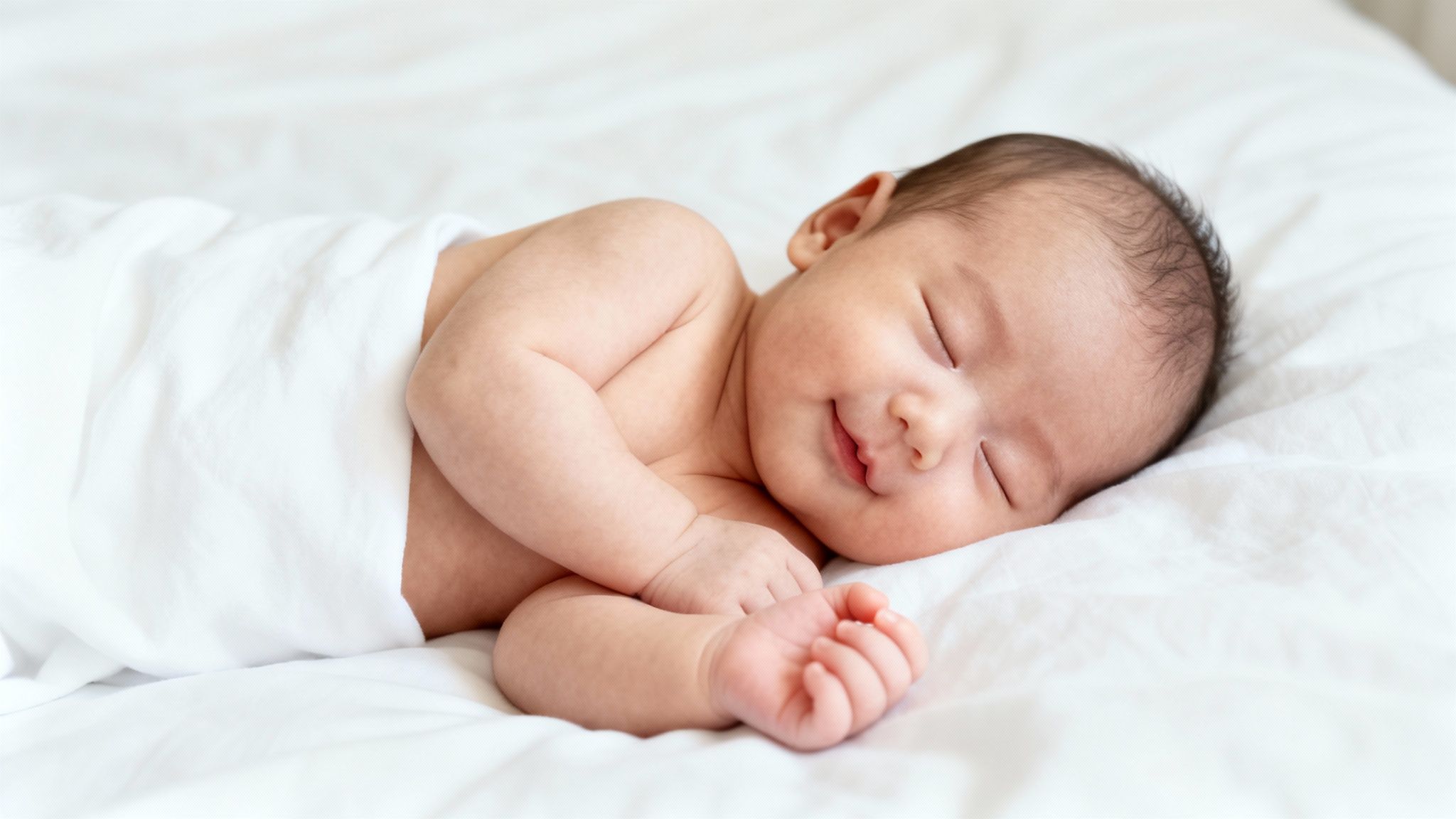
You have probably found yourself gazing at your sleeping baby. You wonder what is really going on behind those tiny, closed eyelids. Is that a smile? A twitch?
We cannot peek inside their minds just yet. However, we can learn to spot the tell-tale signs of REM sleep. This is the active sleep stage where the brain is buzzing. It is our best clue that dreaming might be happening.
Let's break down what to look for. These fascinating little behaviours are your window into their rapidly developing world.
Observing the Signs of Active Sleep
When your baby slips into the REM stage, their little body often puts on quite a show. These are not just random movements. They are the outward signs of some serious neurological work. Their brain is busy building connections and processing all the new information from their day.
Here are the most common signs to watch for:
- Rapid Eye Movements: You might notice their eyes darting back and forth beneath their eyelids. This is the classic, hallmark sign of REM sleep.
- Facial Expressions: A sudden smile, a little grimace, or even a frown might flash across their face. These are often reflexes tied to that busy brain activity, not necessarily a reaction to a dream’s storyline.
- Twitching and Jerks: Small twitches in their fingers, toes, arms, or legs are completely normal. These little movements, known as myoclonic jerks, are just a sign of their immature nervous system developing.
- Irregular Breathing: You may notice their breathing becomes a little faster or less regular for short periods. This is another typical feature of REM sleep.
These signs can be subtle. But they are clear indicators that your little one is in a deep, active phase of sleep. Understanding them helps you tell the difference between dreaming and other common baby tired cues.
What These Behaviours Really Mean
It is important to remember that these twitches and expressions are perfectly healthy and normal. They are a sign that your baby's brain is doing exactly what it is supposed to do. It is growing, learning, and organising all the sensory experiences of their day.
Think of these twitches and smiles not as a direct playback of a dream, but as the sparks flying from a busy neurological workshop. Every flutter and flicker is a sign of progress.
Many Australian resources give excellent guidance on sleep duration and safer practices. However, the specifics of when babies actually start dreaming can be harder to find. It is a topic that is less commonly discussed, as you can see in this approach to common sleep presentations in infants.
Recognising these signs helps you appreciate the incredible work happening while your baby rests. The next step is figuring out what those early dreams might even be about.
What Do Babies Dream About?
It is the question every parent whispers as they watch their little one twitch and smile in their sleep. We cannot exactly ask them. But what we know about their development gives us some pretty good clues.
So, what is happening in that tiny dreaming mind? The answer changes as they grow. A newborn’s dreams are probably less like a movie and more like a collage of feelings and sensations.
A Sensory Collage for Newborns
Think of a newborn’s dream world as a simple collection of sensory snapshots. Their brain works overtime to process and file away the powerful new experiences of life outside the womb.
Their dreams are likely made up of fragments from their day, such as:
- The warmth and security of being held close.
- The comforting sound of a parent’s voice or heartbeat.
- The familiar sensation of feeding and feeling full.
- Fuzzy impressions of light, shadow, and muffled sounds.
These are not complex stories with a clear beginning, middle, and end. Instead, they are the building blocks of memory. They help that little brain make sense of its brand-new world.
A baby's early dreams are likely a replay of simple feelings and physical sensations. It is the brain’s way of sorting through the day’s most important inputs. These inputs are primarily related to comfort, safety, and nourishment.
Evolving Dreams for Older Babies and Toddlers
As your baby grows and their world expands, so does the material for their dreams. It makes sense. More experiences mean more for the brain to process during those active REM sleep sessions.
Once they become more mobile and interactive, their dreams might start to feature new skills and memories. An older baby might dream about the feeling of successfully crawling across the room for the first time. Or they might dream of the exciting blur of a beloved family pet.
Later on, their dreams start to look more familiar to us as language and memory take off in the toddler years. This is when you might see them replaying simple daily events or dreaming of familiar faces.
Researchers believe that true, story-like dreaming probably starts around age two or three. This is when kids can finally start telling you what they dreamt about. It gives us a real peek into their rich inner world, both awake and asleep.
How to Support Healthy Sleep and Dreaming
Understanding when babies start dreaming is more than just a fascinating bit of trivia. It gives us real, practical ways to support their healthy development. You help foster all that crucial brain work happening during those quiet hours when you create a sleep-positive environment.
Here is why it matters. A consistent, calming bedtime routine signals to your baby that it is time to wind down. This predictability helps them feel secure. This makes it much easier to drift off to sleep where all that important brain-building happens.
Creating a Safe and Soothing Sleep Space
The absolute foundation of healthy sleep is a safe environment. Always place your baby on their back to sleep in a cot or bassinet. The cot should be completely free from loose blankets, pillows, and toys. A firm, flat surface is essential for their safety.
Next steps. Focus on creating a calm atmosphere. A dark, quiet room can help minimise distractions and encourage longer, more restorative stretches of sleep. For more in-depth strategies, check out our guide on establishing a solid newborn baby sleep routine.
If you would like to explore how routines can foster peaceful nights, you might also be interested in creating a gentle Islamic bedtime routine for toddlers for a culturally sensitive approach.
Responding to Night Wakings and Distress
It can be confronting to see your baby looking distressed in their sleep. But it helps to know the difference between a bad dream and a night terror, as they are quite distinct.
- Bad Dreams: These usually happen during REM sleep, often in the second half of the night. Your child will likely wake up fully, remember the scary dream, and need your comfort.
- Night Terrors: These occur during deep, non-REM sleep. A child might scream or thrash but is not truly awake and will not remember the episode in the morning.
If your baby seems distressed, a gentle touch or a soft shushing sound is often all it takes to soothe them without fully waking them. Sleep problems have been documented in Australian infants. Understanding these distinctions helps you respond in the right way.
Your calm and reassuring presence is the most powerful tool you have. It teaches your baby that their sleep space is safe, even if they wake up feeling unsettled.
Responding gently helps build a positive association with sleep. It empowers them to self-soothe as they grow.
Common Questions About Baby Dreaming
It is completely normal to have questions as you try to understand your baby’s sleep. Here are a few common ones that pop up for parents.
Can a Baby Have a Nightmare?
True nightmares are the kind of scary, story-like dreams we have. They need imagination and memories that babies have not developed yet. Most experts agree these do not typically start until around age two or three.
If your little one wakes up crying, it is far more likely due to something simpler. Think hunger, a wet nappy, or just struggling to connect their short sleep cycles.
Why Do Babies Twitch in Their Sleep?
Those little twitches and jerks are actually a great sign. They are a completely normal part of REM (or active) sleep.
This is when your baby’s brain is busy building neural pathways and their nervous system is developing. It is the healthy, essential work of a growing brain.
Should I Wake My Sleeping Baby?
It is almost always best to let a sleeping baby lie. Waking them can disrupt the important brain development happening during their sleep cycles.
If they seem briefly upset but are still asleep, give them a moment. They will often settle back down on their own without your help.
At Wallaby Collective, we create beautifully understated play mats designed to provide a safe, comfortable space for your little one's development, both awake and asleep. Discover our collection at https://wallabycollective.com.
Sources:
- An approach to common sleep presentations in infants, The Royal Australian College of General Practitioners, June 2024.
- Newborn sleep, Raising Children Network (Australia), 10 May 2024.
- Sleep and your growing baby, Pregnancy, Birth and Baby, Australian Government Department of Health and Aged Care, April 2024.
- The first five years, Australian Government Department of Education, N/A.