

Why Is My Baby Crying in Sleep and How Can I Help
It’s one of those sounds that can jolt you awake instantly: your baby crying in their sleep. But more often than not, it’s a completely normal part of their development. These little whimpers and fusses are usually tied to their busy sleep cycles and developing nervous system, not actual distress. Think of it as your baby just being a noisy sleeper while they move between different sleep stages.
Why Your Baby Crying in Sleep Is Often Normal

Hearing your little one cry out while they seem fast asleep can send you rushing to their cot, worried they’re hurt or having a bad dream. While it’s natural to assume the worst, these sounds are rarely a sign of trouble. Instead, they’re typically brief "sleep cries" that happen as a baby shifts between light and deep sleep.
Let's break it down. A big chunk of a baby's sleep is spent in a phase called active sleep. You can think of it like the REM (Rapid Eye Movement) stage in adults, but for babies, it’s a whole lot more dynamic.
During active sleep, it’s common to see your baby:
- Twitching their little arms or legs
- Making sucking motions
- Smiling, grimacing, or frowning in their sleep
- Making small noises, like whimpers, grunts, or even a short cry
These are just reflexes kicking in due to their immature nervous system. It is not usually a cause for alarm. Your baby is most likely still sound asleep and will settle back down on their own without you needing to do a thing.
Understanding Normal Crying Patterns
Crying is your baby’s main communication tool. It’s how they tell you they’re hungry, tired, or need a nappy change. For newborns in Australia, it is completely normal to cry and fuss for nearly three hours a day during the first few months. This is not a sign of a problem. It is just part of their development as their sleep-wake rhythms are still figuring themselves out.
The real skill is learning to tell the difference between a sleepy whimper and a genuine cry that signals a need. A sleep cry is often short-lived and happens while their eyes are still closed. In contrast, a cry for hunger or discomfort will usually get louder and wake your baby fully.
To help you figure out what’s going on, here’s a quick guide to decoding those cries without waking your baby up.
Sleep Cries vs Wakeful Cries at a Glance
| Characteristic | Sleep Cry (Often Normal) | Wakeful Cry (Needs Your Attention) |
|---|---|---|
| Duration | Brief, lasting only a few seconds to a minute. | Persistent and often gets louder over time. |
| Sound | Whimpering, fussing, or a single sharp cry. | A continuous, escalating cry. |
| Eyes | Usually closed or fluttering. | Wide open, or squeezed shut in distress. |
| Body Language | May twitch or move slightly, but body is mostly relaxed. | Tense body, clenched fists, may be kicking legs. |
| Settling | Settles back to sleep on their own quickly. | Will not settle without intervention (feeding, changing, comfort). |
Learning these differences helps you decide when to rush in and when to just wait a moment. Sometimes, intervening too quickly can properly wake a baby who would have settled themselves back to sleep. It is also a good idea to get familiar with your baby's tired signs to prevent overtiredness, which can lead to more unsettled sleep. You can check out our guide on how to recognise your baby's tired cues to better understand their needs before they get too distressed.
Common Reasons for Nighttime Crying
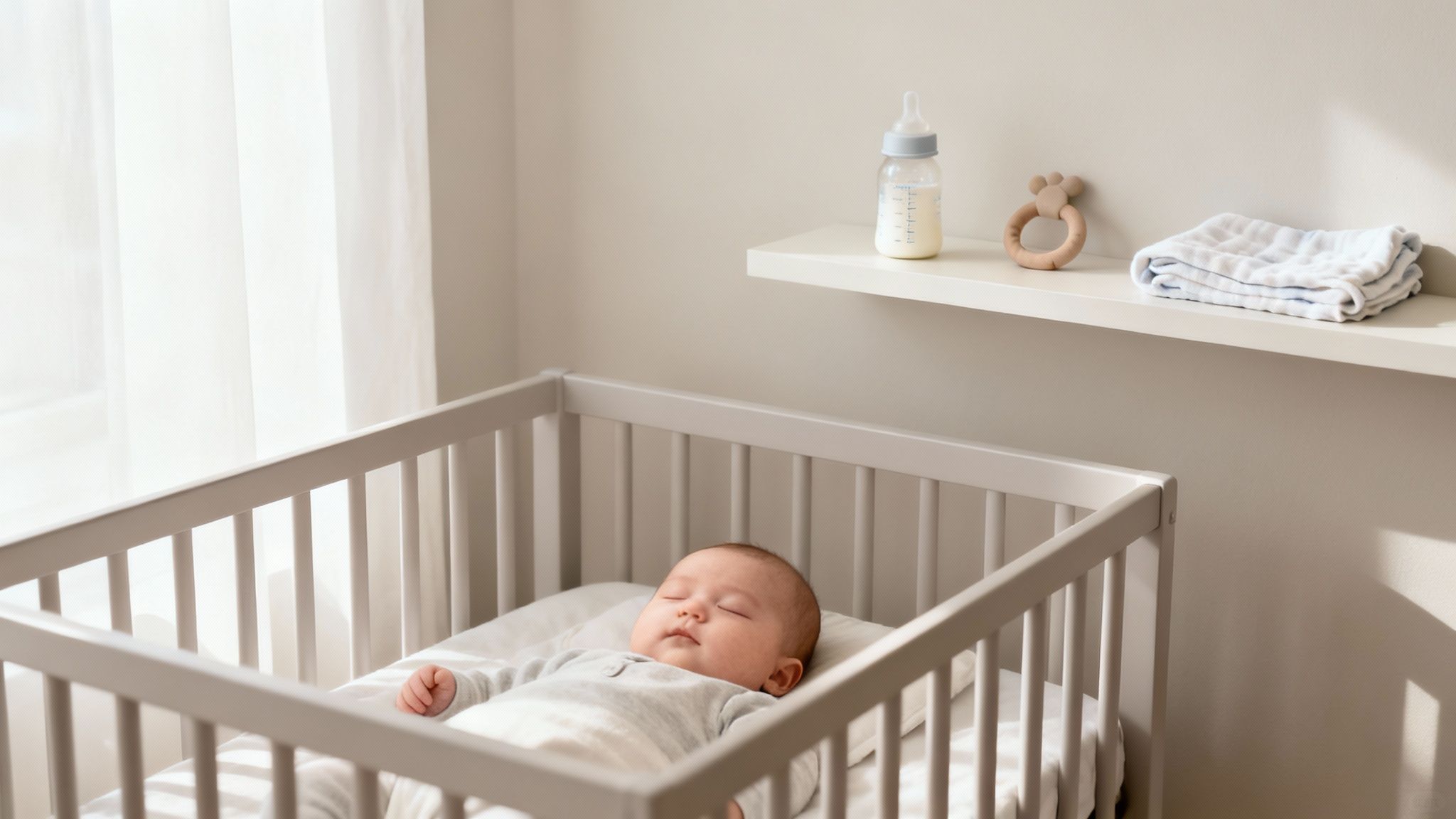
Figuring out why your baby is crying in their sleep often feels like a bit of detective work. The reasons can be anything from a completely normal part of their development to a clear sign they need your help with some discomfort.
The good news is that many of those sleepy cries are harmless and just part of how a baby sleeps. It does not always mean your little one is in distress.
Here is why.
Normal Developmental Causes
Some of the most common reasons your baby might cry out while sleeping are simply a natural part of growing up. In these cases, they usually settle back down all on their own, without you needing to do a thing.
-
Transitioning Sleep Cycles: Babies have much shorter sleep cycles than we do. As they shift between light and deep sleep, it is common for them to fuss, squirm, or let out a little cry before drifting off again. This is perfectly normal.
-
Hunger Cues: Especially in those first few months, hunger is a huge motivator. Your baby might start making little grunts or whimpers in their sleep as an early signal that they are getting hungry, long before they wake up properly for a feed.
-
Brief Night Terrors: This sounds scarier than it is. A night terror, or ‘confusional arousal,’ is not the same as a nightmare. Your baby might cry out or thrash while still mostly asleep, but they will not remember it and will usually settle quickly if left undisturbed.
These are just temporary disruptions. On the other hand, some cries are a clear signal that your baby is uncomfortable and needs you.
It’s important to remember that crying is your baby's only way to communicate. A persistent cry that gets louder is their way of saying, "Hey, I need you!"
Discomfort and Physical Needs
Sometimes, a baby crying in sleep is a definite sign that something is physically bothering them. These cries are often more intense, will not stop, and they will likely wake your baby up completely if you do not step in.
Think of these as action items on your parenting checklist.
-
Teething Pain: A classic culprit. The soreness from new teeth pushing through can easily disrupt sleep. A teething cry often sounds whiny and might come with other clues like extra drool, swollen gums, or a sudden desire to chew on everything in sight.
-
Reflux or Gas: An immature digestive system can cause sharp, painful cries. If your baby arches their back, seems pained, or pulls their legs up towards their chest while crying, gas or reflux is a likely suspect.
-
Illness: An ear infection, a cold, or a fever can make anyone feel miserable, especially a baby who cannot tell you what hurts. A cry related to illness often sounds different. It might be weaker, higher-pitched, or just completely inconsolable.
-
Temperature: Being too hot or too cold is a common sleep-wrecker. A quick check of the back of your baby's neck will tell you if they are sweaty or cool to the touch. You can then adjust their clothing or the room temperature to help them get comfortable.
Learning to read these different cries and the context around them will help you meet your baby’s needs more effectively and, hopefully, lead to more peaceful nights for everyone.
The Hidden Toll on Parents
When you hear your baby crying in their sleep night after night, it is not just their rest that’s being disturbed. The constant worry and broken sleep take a real toll on parents, impacting everything from your mood to your mental health. It is an exhausting cycle that can leave you feeling completely overwhelmed.
Let’s be honest, sleep deprivation is so much more than just feeling tired. It clouds your thinking, shortens your patience, and can make even the smallest daily tasks feel monumental. This persistent lack of restorative sleep, combined with the anxiety of hearing your baby cry, creates the perfect storm for parental stress.
It is so important to acknowledge these feelings. They are completely valid, and you are definitely not alone. Acknowledging the emotional and mental strain is the first step toward finding solutions that support the entire family, not just the baby.
The Connection to Parental Mental Health
The link between a baby's sleep troubles and a parent’s wellbeing is well-documented. Persistent crying and frequent night waking are major contributors to stress. They can be significant risk factors for postnatal depression and anxiety in both mothers and fathers.
This is not just a feeling; it’s a widespread reality for new parents. Infant crying and sleep issues are reported by over 25% of parents during the first six months. Research from The Royal Children’s Hospital Melbourne found a strong connection between these challenges and poorer parental mental health. In fact, nearly two-thirds of mothers with infants experiencing sleep problems reported heightened symptoms of depression. You can read more about these important findings on parental health.
(Source: Infant crying and sleep in the first 12 months, The Royal Children's Hospital Melbourne, 2011)
This data highlights a critical message for parents: Your wellbeing matters just as much as your baby's. Seeking support for your child’s sleep is also a powerful act of self-care.
Why You Need to Prioritise Your Own Rest
Feeling exhausted and emotionally drained is not a sign that you are failing. It is a biological response to an incredibly demanding situation. Here is why it’s so important to find ways to protect your own mental health:
- Better Decision-Making: When you are well-rested, you are better equipped to handle the challenges of parenting with a clear head.
- Stronger Connection: Managing your own stress allows you to connect more positively with your baby and partner.
- Improved Physical Health: Chronic sleep loss can weaken your immune system and affect your overall physical health.
Next steps are all about finding gentle, effective strategies to improve your baby’s sleep. This will not only help your little one but also give you the breathing room you need to recover and thrive.
Gentle Soothing Techniques That Actually Work
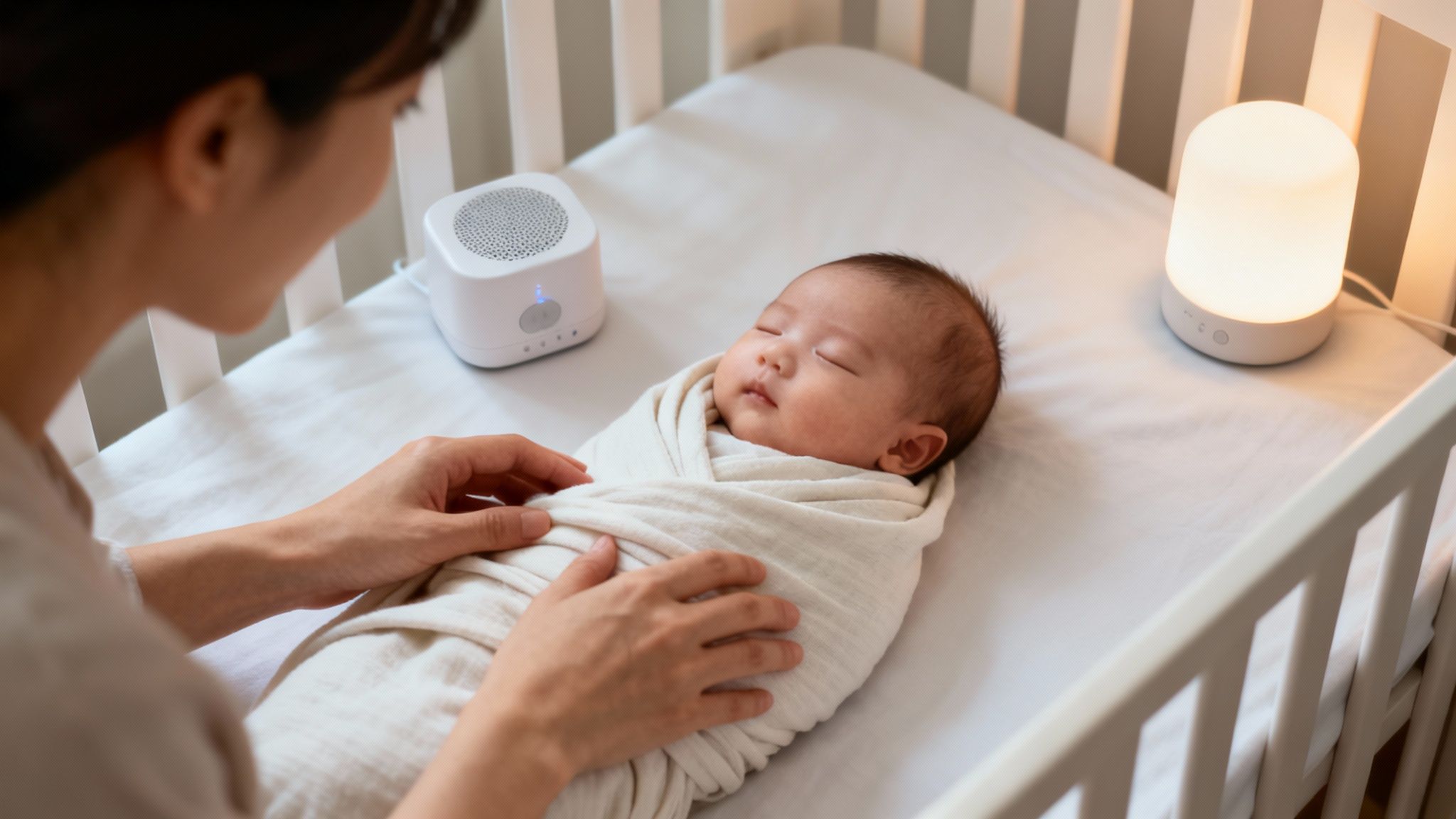
When your baby needs a little help settling, knowing what to do can make all the difference. For younger babies, simple, gentle techniques often work best to calm a baby crying in sleep and encourage longer stretches of rest. These methods are all about recreating the comfort and security of the womb.
Let's break it down. Your first goal is to create a calm, predictable environment. This does not need to be complicated.
Start with the basics. A consistent bedtime routine signals to your baby that it is time to wind down. This could be a warm bath, a gentle massage, and a quiet feed in a dimly lit room.
Foundational Soothing Strategies
For newborns, two methods are especially effective. These time-tested approaches help soothe their immature nervous systems and control the startle reflex that so often wakes them.
-
Effective Swaddling: A snug swaddle mimics that secure, held feeling, which can be incredibly calming for a newborn. It also prevents their own little arm movements from startling them awake. If you are new to this, our guide on how to wrap a baby safely and effectively is a great place to start.
-
White Noise: The womb is not a silent place. Constant, low-level sound can help block out sudden household noises that might disrupt sleep. Many parents find a white noise sleeping aid instrument helps mask those disruptive sounds and foster a calmer environment.
These strategies build a strong foundation for healthy sleep habits. As your baby gets older, though, you might start thinking about more structured approaches.
Sleep Training for Older Infants
For babies over six months, some parents choose to explore sleep training. This is a very personal decision, and it’s all about finding an approach that aligns with your family's philosophy. At its core, it involves teaching your baby to fall asleep independently.
One common method in Australia is known as 'controlled comforting'. It's a widely discussed topic, so here's how it works. The approach involves letting your baby cry for gradually longer intervals before you go in to briefly comfort them. The goal is to give them the space to learn self-soothing skills while still reassuring them that you are nearby.
The idea of letting a baby cry can be really stressful for parents, but research offers some reassurance. The key is to have a structured, consistent plan rather than leaving a baby to cry indefinitely.
A notable study from Flinders University looked at this exact method. It found that after three months, infants fell asleep nearly 15 minutes faster on average. The study also measured cortisol (the stress hormone) and found levels were actually lower in these babies. A year later, there were no adverse behavioural issues reported.
(Source: Behavioral Interventions for Infant Sleep Problems, Pediatrics, May 2016)
Ultimately, the best technique is the one that feels right for you and your baby. Whether you choose gentle settling or a more structured approach, consistency is the key to helping everyone get a bit more rest.
Building a Safe and Soothing Sleep Space
A baby's room plays a massive part in how well they sleep and can be a big reason why a baby is crying in sleep. Creating a space that feels both safe and calm does not mean you need a total nursery overhaul. It is really about getting a few key things right, all based on proven safety standards.
Let’s break it down. The foundation for good sleep starts with the basics recommended by Australian safety organisations like Red Nose Australia. These guidelines are all about reducing risks so your baby can rest more easily.
The Essentials of a Safe Cot
Think of your baby’s cot as their little sanctuary. Making sure it is a secure space is always the number one priority. The goal is to create a blank canvas for sleep, completely free from potential hazards.
Here is a simple checklist for a safe sleep surface:
- A firm, flat mattress: The surface needs to be firm enough that your baby does not sink into it.
- Place your baby on their back: Always put your baby on their back for every single sleep.
- Keep the cot clear: Make sure there is no loose bedding, pillows, bumpers, or soft toys in the cot. These things can pose a suffocation risk.
Sticking to these safe sleep rules is the single most important thing you can do to protect your baby while they sleep. It creates a baseline of safety that you can then build on with other soothing elements.
Creating a Soothing Atmosphere
Once you have got the safety essentials sorted, you can start making the room a calm, sleep-friendly haven. This is all about managing the sensory environment to cut down on disruptions that might cause your baby to stir or cry out. Small tweaks to light, sound, and temperature can make a world of difference.
Next up is optimising the room for comfort. For some lovely and practical inspiration, take a look at these newborn nursery ideas.
Controlling the environment helps signal to your baby that it is time to rest. This means keeping the room at a comfortably cool temperature, not too hot or too cold. You can also use a white noise machine to help muffle any sudden household sounds.
When you are setting up a soothing sleep space, do not forget important details like choosing the optimal blinds for nursery safety and sleep. Blackout blinds are fantastic for managing light. They help regulate your baby’s internal clock by keeping the room dark for naps and nighttime, which encourages longer, more restorative sleep for everyone.
When to Chat with Your Doctor
While most of the time a baby crying in sleep is perfectly normal, your gut instinct as a parent is a powerful thing. You know your baby better than anyone. If something just does not feel right, it is always worth checking in with a professional.
Trust that feeling. Sometimes, persistent crying is your baby's only way to let you know something bigger is going on, something that needs a doctor or child health nurse to take a look at.
So, when should you make that call? Certain signs are clear signals to get on the phone right away. Do not wait and wonder if you spot any of these.
Red Flags to Watch For
If your baby’s crying comes with other symptoms, it is a definite sign to get them checked out. Keep an eye out for these specific red flags.
- Inconsolable Crying: This is not just fussing. It’s when your baby cannot be soothed no matter what you try, or if the crying is continuous, shrill, or sounds unusually high-pitched.
- Signs of Illness: A fever, any trouble with breathing, a new rash, vomiting (not just spit-up), or diarrhoea are all reasons to call for immediate medical advice.
- Changes in Feeding or Nappies: A sudden disinterest in feeding or a noticeable drop in the number of wet nappies can be a sign something is wrong.
- Lethargy or Unresponsiveness: If your baby seems floppy, unusually sleepy, or is very difficult to wake up.
Before you even start the soothing process, it is a good habit to do a quick safety check of the cot. This little flowchart can help you think through it.
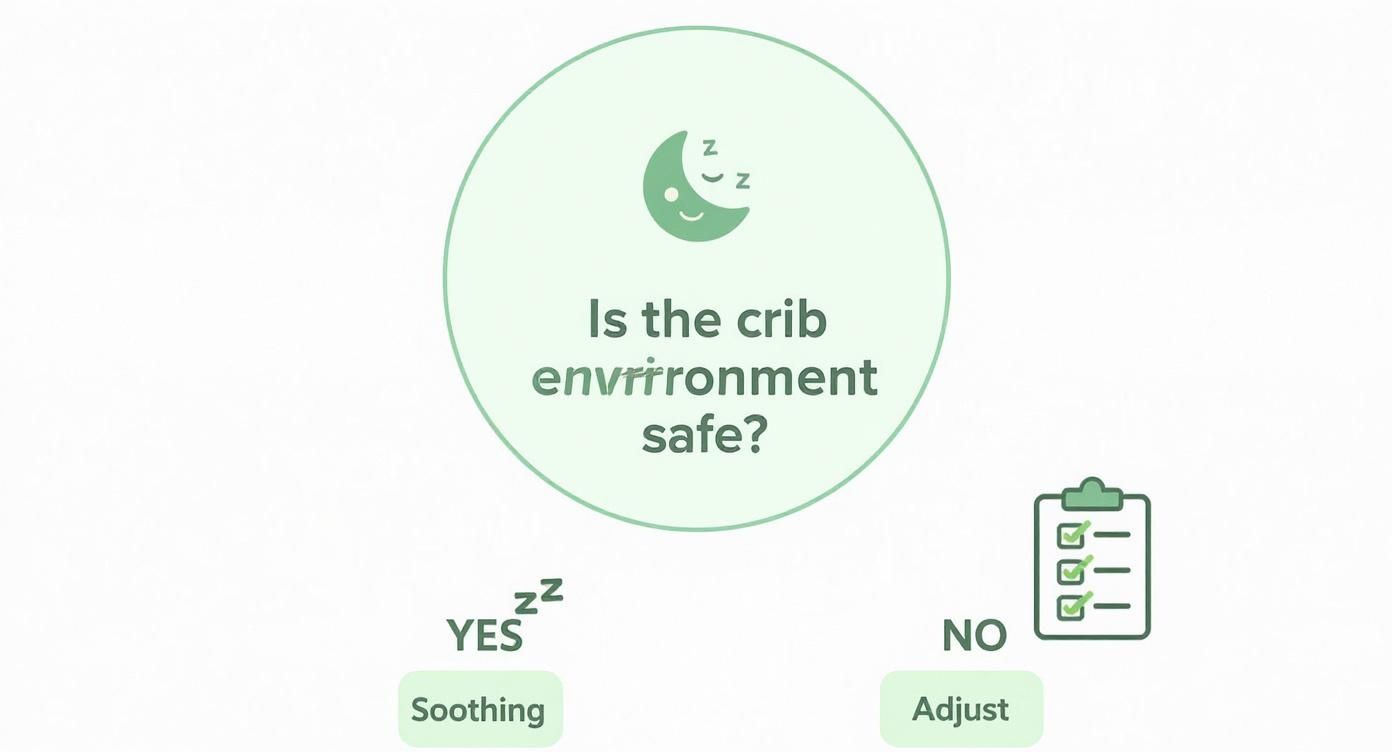
The idea is simple: a safe space is the foundation for a calm baby. If you see any hazards, fixing them is the very first step.
Don't Forget to Look After Yourself, Too
It is also really important to reach out for help if you are feeling overwhelmed, anxious, or just not coping. Listening to a baby cry constantly takes a huge emotional and physical toll.
You are not meant to have all the answers. Your GP and child health nurse are there to support you just as much as your baby.
Asking for help is a sign of strength, not weakness. It is the best thing you can do for your entire family's wellbeing.
Answering Your Top Questions About Sleep Crying
When your baby cries in their sleep, a million questions can run through your mind. It is completely normal to feel unsure. We get it.
Let's break down some of the most common worries parents have.
Is It Okay to Let My Baby Cry in Their Sleep?
This really comes down to your baby’s age and your own parenting philosophy. For tiny newborns, a quick response helps them feel safe and secure. It is all about building that trust.
Once they are a bit older (think over six months), some parents explore 'controlled comforting'. This involves waiting in short, gradually longer intervals before going in. Australian research suggests this approach can work without causing long-term stress. But remember, it is always best to have a chat with your child health nurse or GP before starting any new sleep strategy.
Could My Baby Be Having Nightmares?
It is a natural thought, but true nightmares are very rare for infants. What you are likely seeing is something called a 'night terror' or 'confusional arousal'. This happens when your little one gets a bit stuck between sleep stages.
They might cry out or thrash around, but they are still mostly asleep and will not remember a thing in the morning.
Often, the best thing to do is just wait and watch. Rushing in to wake them fully can sometimes make them more confused and upset.
Does Swaddling Help a Baby Who Cries in Their Sleep?
For newborns, absolutely. A good swaddle can be a game-changer. It recreates that snug, secure feeling of the womb and helps manage the startle reflex – those little arm jerks that can wake them up. This feeling of security often leads to less crying during sleep.
The key is to always use safe swaddling techniques. Most importantly, it is time to stop swaddling as soon as your baby starts showing signs of trying to roll over, which is usually around two to three months of age.
A safe, comfortable surface is the first step towards better sleep. At Wallaby Collective, our beautiful, machine-washable play mats create the perfect calm space for your little one to rest and play. Discover the difference at https://wallabycollective.com.