

What Age to Start Tummy Time A Guide for Australian Parents
So, you’re wondering what age to start tummy time? The answer is beautifully simple: from day one.
Australian health experts recommend starting this gentle practice as soon as you bring your newborn home from the hospital. Even just a minute or two at a time is the perfect beginning. This early start is the secret to building strength and preventing common issues right from the get-go.
Why Starting Tummy Time From Birth Matters
Many new parents think tummy time is for older, stronger babies, but that’s a common myth. Starting immediately actually sets the foundation for healthy physical development. Think of it as your baby’s very first workout, strengthening the core muscles they will need for every single milestone to come.
If you are getting ready for your first baby, a comprehensive guide to new parenting can be a great resource for understanding these early, foundational activities.
Let's break it down. When your baby lies on their tummy, they must work against gravity to lift their head, turn their neck, and eventually push up with their arms. This simple movement is so important for developing head control and strengthening their neck, shoulders, back, and core.
To help you get started with confidence, here is a quick summary of what the experts recommend for Australian parents.
Quick Guide for Starting Tummy Time
| Key Question | Australian Expert Recommendation |
|---|---|
| When should I start? | From day one, as soon as you are home from the hospital. |
| How long should sessions be? | Start with just 1-2 minutes at a time, a few times a day. |
| Where should we do it? | On a firm, flat surface like a play mat on the floor, or on your chest. |
| What's the goal? | To build strength in the neck, back, and shoulders for future milestones. |
This table is just a starting point, of course. The most important thing is to listen to your baby’s cues and keep the experience positive.
Building Strength From Day One
This early muscle development is the first step on a long journey of movement. The strength gained in these first few sessions directly helps with future skills like rolling over, sitting up without support, crawling, and eventually, pulling up to stand. Starting from birth also helps your baby get used to the position, making it a normal part of their day.
Tummy time is not just an exercise; it is the groundwork for all future motor skills. By starting early, you give your baby a developmental head start, making each next step a little easier to reach.

Preventing Common Issues
Beyond building strength, regular tummy time is crucial for preventing positional plagiocephaly, also known as flat head syndrome. Since the "Back to Sleep" campaign successfully lowered SIDS rates, babies spend much more time on their backs. While this is essential for safe sleep, it can lead to flattened spots on their soft skulls.
Consistent tummy time sessions provide the perfect counterbalance. It is a key reason why Australian health experts, including those from The Royal Children's Hospital Melbourne, unanimously recommend starting tummy time right from birth. It is now seen as a cornerstone of newborn care. Their guidance makes it clear that it is perfectly safe to start immediately, and babies who do often build up their tolerance for it much faster.
Next steps. Now that you know when to start, learn how to introduce tummy time gently so it becomes a positive, happy experience for both of you.
The Developmental Benefits of Tummy Time
Tummy time is much more than just a simple exercise for your baby. Think of it as laying the groundwork for all the big milestones to come, from rolling and sitting to crawling and walking. The benefits go far beyond just building strength; they shape everything from your little one's motor skills to how they see the world.
Let's break it down. When your baby is on their tummy, they are working against gravity. This simple act strengthens the crucial muscles in their neck, shoulders, and back. These are the exact muscles they will need to push up, roll over, sit up, and eventually start crawling.
Building a Strong Foundation for Movement
The physical rewards of tummy time are huge, and they build on each other day by day. It is like a workout that is perfectly tailored to your baby’s growing abilities. Each little effort stacks on the last, creating a chain reaction of development.
Here is why it is so effective:
- Head and Neck Control: At first, your baby will just learn to lift their head for a second or two, then turn it from side to side. This is the first step towards controlling their body and builds essential neck strength.
- Upper Body Strength: As they get stronger, they will start pushing up on their forearms and then their hands. These little “mini push-ups” strengthen their arms, chest, and shoulders, getting them ready for bigger movements.
- Core Muscle Development: Just balancing on their tummy engages their core muscles. A strong core is vital for giving them the stability they will need when they start to sit and crawl.
Tummy time directly paves the way for future mobility. The strength and coordination gained during these sessions are the building blocks for every major motor milestone, from rolling over to taking their first steps.
This consistent muscle training ensures your baby is physically ready for each new stage of exploration. For a deeper look, our article on the benefits of tummy time for babies provides even more detail on this important topic.
Enhancing Sensory and Cognitive Skills
Beyond the physical workout, tummy time is a feast for your baby’s senses. It gives them a completely new perspective on their world, swapping a view of the ceiling for a view of everything happening at eye level. This simple shift is a massive boost for their developing brain.
This new viewpoint encourages visual tracking as they follow your movements or look at a toy. They also get to experience different textures against their skin, like the softness of a play mat or the feel of carpet on their hands and cheeks. All this sensory input is critical for cognitive development and helps them learn about their body and where it is in space.
As they get stronger, they will start using this newfound awareness to interact more. When they learn to shift their weight and reach for objects, they are developing hand-eye coordination and problem-solving skills. Every session is a chance for learning and discovery, making tummy time an essential part of their daily routine.
Your Tummy Time Schedule From Newborn to Six Months
Figuring out how much tummy time your baby needs can feel a bit daunting, but it is simpler than you might think. The goal is not one long, marathon session. It is all about weaving short, playful moments into your daily routine.
Think of it like learning any new skill. You would not expect to master it all in one go. Instead, you build up strength and endurance over time. The same idea applies here. The sessions will naturally get longer and more interactive as your little one grows stronger.
Let's break it down with a practical guide, from those first gentle moments with your newborn to active floor play with your six-month-old.
The Newborn Stage: 0 to 2 Months
When your baby is a newborn, the focus is all on frequency over duration. The main goal is just to help them get comfortable with being on their front.
Start with very short sessions of just 1 to 3 minutes, a few times a day. You can aim for a total of about 10-15 minutes spread throughout the day. These brief moments are enough to start strengthening their neck muscles, encouraging them to lift their head, even if just for a second or two.
A lovely way to begin is by lying on your back and placing your baby on your chest. This "tummy-to-tummy" time is a gentle, bonding introduction to the feeling of being on their tummy.
This visual timeline shows how tummy time supports key developmental areas as your baby grows, from building strength to enhancing skills.
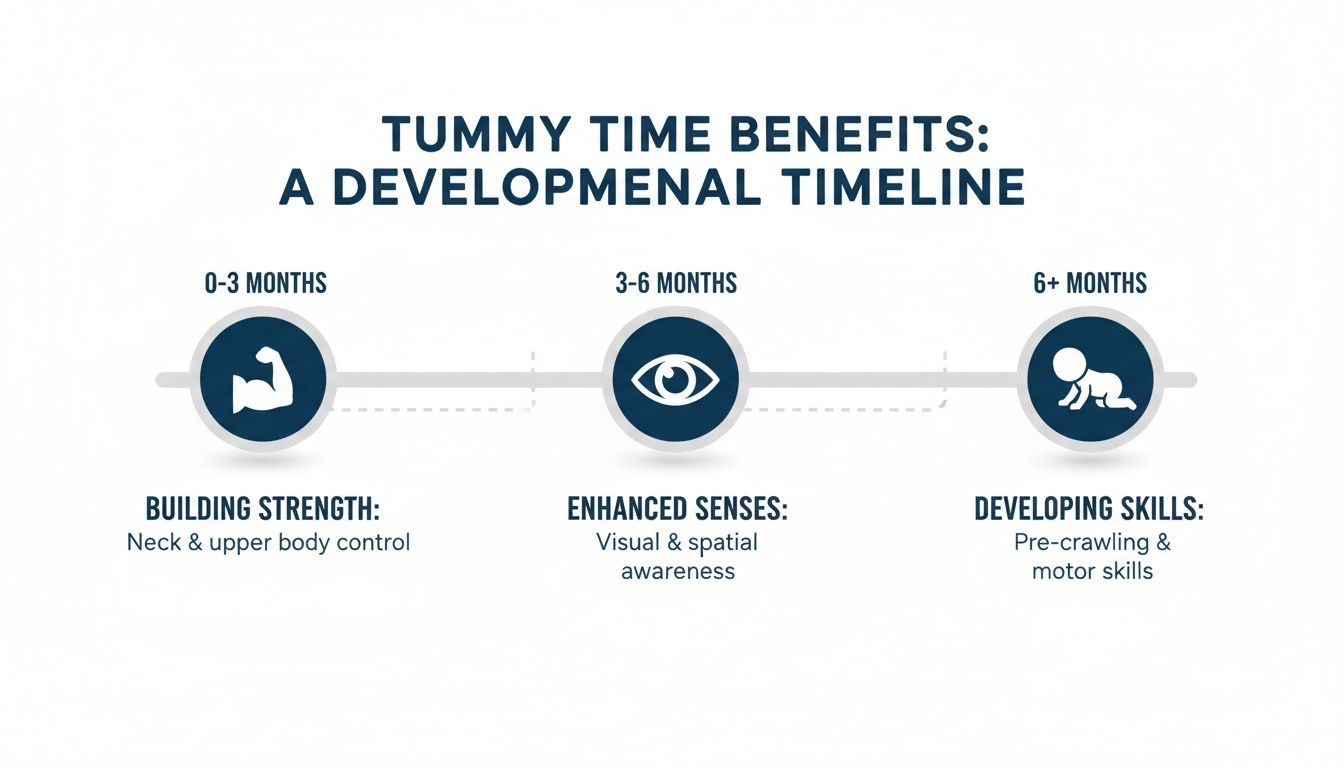 The infographic clearly shows how consistent tummy time is a catalyst for physical strength, sensory exploration, and motor skill progression over the first six months.
Growing Stronger: 3 to 4 Months
As your baby enters their third and fourth month, you will probably notice a big difference in their strength and head control. They can now lift their head more consistently and might start pushing up on their forearms.
At this stage, you can stretch the sessions out to 3-5 minutes each, still aiming for multiple sessions per day. The total daily goal is to build towards 20 to 30 minutes. This is a key period for strengthening the upper body, which is what prepares them for rolling over.
It is interesting to note that while this is a national guideline, many families find it hard to hit this target. A 2018 study of 455 Australian infants found that only 29.7% met the recommendation of at least 30 minutes daily. If you would like to dive deeper, you can explore the full research on infant tummy time.
Remember, the 30-minute goal is not meant to be done all at once. Breaking it into five or six shorter sessions throughout the day makes it much more achievable and keeps your baby from getting overtired or fussy.
This is also a great time to introduce a few stimulating toys or a baby-safe mirror to make sessions more engaging.
Becoming a Tummy Time Pro: 5 to 6 Months
By five to six months, your baby is likely much more comfortable on their tummy. Many babies at this age have started rolling and may even choose to be on their tummy during play. Tummy time now becomes less structured and more about playful exploration.
Sessions can last for 10-15 minutes or even longer, as long as your baby is happy. The daily goal remains at least 30 minutes, but you will probably find they easily go over this during their regular floor play.
At this age, you will see them:
- Pushing up on straight arms, lifting their chest right off the floor.
- Pivoting in circles to get a better look at toys.
- Reaching for objects with one hand while balancing on the other.
These movements are the final building blocks before they start to crawl. Your role now shifts from encouraging them to stay on their tummy to simply providing a safe, engaging space for them to move and explore on their own terms.
To help you keep track of these milestones, here is a simple table summarising the goals.
Tummy Time Goals by Age
This table offers a clear, progressive guide for parents on how much tummy time to aim for as your baby grows and gets stronger.
| Baby's Age | Session Length | Total Daily Goal |
|---|---|---|
| 0-2 Months | 1-3 minutes per session | 10-15 minutes |
| 3-4 Months | 3-5 minutes per session | 20-30 minutes |
| 5-6 Months | 10-15+ minutes per session | 30+ minutes |
Just remember, these are flexible goals. The most important thing is to listen to your baby’s cues and make tummy time a positive part of your day together.
How to Create a Safe and Engaging Tummy Time Space
Getting the right setup is what turns tummy time from a daily task into a lovely moment of connection and play. A safe, comfy, and interesting space does not just encourage your baby to join in; it makes sure they get all the developmental goodness out of every session. Think of it as creating their very first developmental playground.
The absolute foundation of a great tummy time space is the surface. It needs to be firm and flat. This is non-negotiable, both for your baby's safety and for the effectiveness of the activity itself. A solid surface gives your baby the stable base they need to push up against, which is exactly how they build that crucial strength in their arms, shoulders, and neck.
Soft surfaces like beds, sofas, or even big, puffy blankets might look cosy, but they actually make tummy time much harder and less safe. Your little one’s arms will just sink in, so they cannot get the leverage they need to lift their head and chest. More importantly, these soft surfaces can be a serious fall and suffocation risk. Always, always choose the floor.
Choosing the Right Surface
A dedicated play mat is the perfect solution here. It provides just enough cushioning to be comfortable on a hard floor but is not so soft that it gets in the way of their movements. Look for a mat that lies nice and flat and gives your little one a non-slip surface to work with.
When you are picking a mat, keep a few things in mind:
- Material: Go for safe, non-toxic materials. Something like OEKO-TEX certified linen, which we use for our Wallaby Collective mats, ensures the fabric is completely free from harmful substances.
- Cushioning: The mat should be soft, but not puffy. A slimmer profile lets your baby get a firm push-off while still protecting them from the hard floor underneath.
- Cleanliness: Let’s be honest, babies are messy. A machine-washable mat makes cleanup simple and stress-free, so their little play space stays hygienic.
Investing in a quality surface really does make all the difference. To help you find the perfect one, have a look at our detailed guide on the best tummy time mats for infants and what to look for.
Making the Space Engaging
Once you have sorted a safe surface, the next step is to make it fun. An engaging environment grabs your baby’s attention and motivates them to lift their head, look around, and eventually start reaching for things. You do not need a mountain of toys; a few simple items are all it takes.
Your presence is the most engaging toy your baby can have. Getting down on the floor with them, making eye contact, and talking or singing provides comfort and powerful motivation.
Let's break it down. Simple additions can transform a plain mat into an exciting play zone. The goal is to spark their natural curiosity and encourage them to move.
Here are a few simple ideas to get you started:
- Use High-Contrast Toys: In the early months, babies see best in black and white. Placing high-contrast cards or soft toys just within their line of sight will capture their focus and encourage them to lift and turn their heads.
- Introduce a Baby-Safe Mirror: A non-breakable mirror placed in front of your baby works wonders for engagement. They will be completely fascinated by their own reflection, which encourages them to push up to get a better look.
- Get Down to Their Level: Lie on your tummy facing your baby. To them, your face is the most interesting thing in the world. Sing songs, make funny faces, and just talk to them to make the experience feel interactive and reassuring.
By creating a space that is both safe and stimulating, you are setting the stage for positive and productive tummy time sessions. This dedicated little area will soon become a special place for connection, learning, and growth.
Troubleshooting Common Tummy Time Problems
What do you do when your baby starts to fuss or cry during tummy time? First, take a deep breath. This is completely normal. For a little one, lifting their head is hard work, and it is natural for them to protest a bit.
Think of it as their first workout. This section is all about gentle, practical solutions to help you both through the most common tummy time hurdles. The goal is to turn it into a positive, happy part of your day.
When Your Baby Seems to HATE Tummy Time
This is hands-down the most common challenge parents face. It can feel a bit disheartening when your baby cries the second their tummy touches the mat, but a few simple adjustments can make a world of difference.
Let's shift the goal. Instead of aiming for long stretches, focus on short, successful moments. Even 30-60 seconds of happy tummy time is a huge win.
Here are a few strategies to try:
- Keep it Short and Sweet: If your baby fusses after a minute, that is your cue to stop. Try five or six tiny sessions throughout the day instead of pushing for one long, stressful one.
- Change the Scenery: Tummy time does not always have to happen on the floor. Laying your baby across your lap or holding them tummy-down in your arms (the "football hold") are brilliant alternatives that still build that crucial strength.
- Be Their Favourite Toy: Get down on their level. Your face is the most interesting thing in the world to them. Sing songs, make funny faces, or show them a baby-safe mirror. Your interaction is the best motivation.
For a deeper dive, our guide on what to do if your baby hates tummy time has even more tips to help turn those protests into play.
Managing Spit-Up and Reflux
Another worry for many parents is spit-up. The gentle pressure on a baby’s stomach can sometimes cause them to bring up a bit of milk, especially if they are prone to reflux.
The solution is all about one thing: timing. Avoid doing tummy time right after a feed when their little tummy is full.
A good rule of thumb is to wait at least 20-30 minutes after feeding before you start. This gives their milk time to settle and makes spit-up much less likely.
If your baby still seems uncomfortable, a little bit of support can help. Roll up a small towel or a thin blanket and place it under their chest, just below their armpits. This slight incline can ease the pressure on their tummy while still encouraging them to lift their head and work those neck muscles.
What If My Baby Just Lays There?
Sometimes, a baby will not cry, but they also will not seem to do much of anything. They might just rest their cheek on the mat, not even trying to lift their head. This is also very common, especially for newborns who are just starting to figure out how their muscles work.
Your job here is to be their personal cheerleader. Create a little intrigue to encourage them to look up.
- Be the Main Attraction: Lie on the floor right in front of them, so your face is the first thing they will see when they lift their head.
- Use Sound and Light: Gently shake a soft rattle or use a toy with gentle, flashing lights to pique their curiosity and encourage them to turn their head.
Remember, every little effort is a milestone. Even just turning their head from one side to the other is an important step in building neck control. Stay patient, keep it positive, and celebrate those tiny victories.
Simple Activities to Make Tummy Time Fun
Tummy time does not have to feel like a chore. With a few simple ideas, you can turn it from a daily task into a lovely, connected moment. The secret is not fancy toys; it is you.

It all comes down to interaction. When you get down on the mat with them, you create a little space for discovery. These shared moments do not just make tummy time easier; they boost your baby’s development and strengthen that special bond between you.
Getting Started with Newborns
For your brand new baby, your presence is everything. Newborns are completely captivated by faces and find so much comfort in your voice. You are their favourite toy.
Here is why simple connection works wonders:
- Face-to-Face Connection: Get right down on the floor so you are at eye level. Seeing your face is the best motivation for them to try and lift their little head.
- Sing Songs and Talk: The sound of your voice is incredibly reassuring. Chat about your day, sing a few nursery rhymes, or just tell them what you are doing. This encourages them to turn their head towards the sound.
- High-Contrast Books: A newborn's vision is still developing, so they are drawn to bold, simple patterns. Place a black-and-white book or card nearby to catch their attention and motivate that little head lift.
These gentle activities create a calm, reassuring space. They teach your baby that tummy time is a safe, loving part of their day.
Remember, the goal is not really to entertain, it is to connect. Simple, focused interaction is far more stimulating for a young baby than a pile of toys. Your gentle presence makes them feel secure, turning effort into exploration.
Engaging Older, Stronger Babies
As your little one gets stronger, usually around three to six months, their play will get a lot more interactive. They will be able to lift their chest right off the mat, start reaching for things, and stay on their tummy for longer. This is the perfect time to introduce activities that challenge their new skills.
You can build on the simple things you started with, just adding a bit more movement and purpose to their play.
Here are a few ideas for this stage:
- Introduce a Baby-Safe Mirror: Place an unbreakable mirror in front of them. Babies are absolutely fascinated by their own reflection and will push up to get a better look, strengthening their arms and shoulders in the process.
- Encourage Reaching: Put a favourite soft toy just out of their immediate grasp. This encourages them to shift their weight, reach, and eventually pivot—all crucial pre-crawling skills.
- Play Tummy Time Aeroplane: For something a bit different, lie on your back and carefully lift your baby, holding them securely so they are "flying" above you. They will love the new view, and this position works their back and neck muscles in a really playful way.
From here, it is all about watching their cues. The moment they start to fuss, it is time for a break. Keeping tummy time sessions short and positive ensures they always see it as a fun, connected time, setting them up for a lifetime of happy movement.
Common Tummy Time Questions
Even with the best plan, you might still have a few questions floating around. Let's tackle the most common ones with some quick, practical advice to give you that extra bit of confidence.
When Can We Stop Doing Tummy Time Sessions?
You can officially relax the scheduled sessions once your baby is confidently rolling both ways. This means from their back to their tummy, and then from their tummy back to their back again. This milestone usually happens between five and seven months.
By then, your little one will naturally choose to spend time on their tummy during floor play. They are getting all those fantastic developmental benefits while they explore, so you no longer need to pop it in the calendar.
Is Tummy Time on a Bed or Sofa Okay?
No, it is best to avoid this. For tummy time to be safe and effective, it should always happen on a firm, flat surface on the floor, like a play mat.
Soft surfaces like beds or sofas make it much harder for your baby to push up and build that crucial strength. More importantly, they pose a serious fall risk and are a suffocation hazard. Always stay close and supervise your baby on the floor.
A stable surface is the secret to great tummy time. It gives your baby the solid ground they need to push against, turning all that effort into strength while keeping them safe from accidents.
What if My Baby Falls Asleep During Tummy Time?
If your baby drifts off while on their tummy, gently roll them onto their back and move them to their cot or bassinet. It is so important to follow the "Back to Sleep" safe sleeping guidelines recommended by Australian health authorities.
Remember this simple rule: tummy time is for when your baby is awake and supervised, and their back is always for sleep.
Can a Baby Have Too Much Tummy Time?
It is highly unlikely. Babies are brilliant at letting us know their limits. They will give you clear cues like fussing, crying, or resting their head down when they are tired and have had enough for one session.
The key is simply to listen to your baby and respond to those signals. Honestly, the main concern for babies today is not too much tummy time—it is not getting enough. A supervised, awake baby exploring on their front is a healthy, developing baby.
Ready to create a beautiful and safe space for tummy time? The Wallaby Collective linen play mat is designed in Australia to be wonderfully soft but not overly puffy, giving your baby the perfect firm surface for building strength. Its minimalist style fits right into your home, and it is machine-washable for easy care. Explore our collection at https://wallabycollective.com.