

How to Do Tummy Time: A Guide for Aussie Parents
Tummy time is placing your baby on their stomach while they are awake and you are right there with them. Think of it as your baby’s first little workout. It gets them ready for all the big moves to come, like rolling over and crawling. It’s a foundational activity health experts recommend to support healthy development from the very beginning.
Why Tummy Time Is a Game Changer for Your Baby
Supervised tummy time is one of the most important things you can do with your baby. It plays a massive role in their physical development. It lays the groundwork for strength, coordination, and even sensory awareness. A few minutes each day makes a world of difference.
Here is why. When your baby is on their tummy, they have to work against gravity to lift their head. That simple action strengthens all the crucial muscles in their neck, shoulders, and upper back.
These are the exact same muscle groups they will rely on for major milestones later on. Building good neck control is the first step towards rolling over. That then leads to sitting up independently, and eventually, crawling off to explore their world.
Tummy time is not just about physical strength. It is a full sensory experience. It lets your baby see the world from a brand new perspective and feel different textures against their skin. This is amazing for their developing vestibular system.
The Core Benefits for a Strong Start
This simple practice offers a few key advantages that contribute to your baby’s overall wellbeing. It’s so much more than a quick exercise; it's a building block for all the skills that follow.
Let's break it down:
- Prevents Flat Spots: Spending time on their tummy helps prevent positional plagiocephaly, or flat spots. These can appear on the back of a baby's head from lying on their back too much.
- Builds Foundational Strength: It's essential for strengthening the neck, core, back, and shoulder muscles needed to progress through all their motor skills.
- Promotes Motor Skills: This activity is the groundwork for rolling, sitting, crawling, and pulling up to stand. You can explore more about how tummy time develops your baby's gross motor skills to see just how connected it all is.
Despite how crucial it is, many Australian families find it tricky to fit enough tummy time into the day. Australian research shows that fewer than one in three infants meet the national recommendation of at least 30 minutes of tummy time per day (1). These findings highlight a gap between expert advice and what happens in real life. They show a clear need for more support and education for parents.
This guide is designed to give you that support. You can discover more about the key benefits of tummy time for babies in our detailed article. Next steps, we’ll show you how to start this practice with your newborn in a way that feels gentle and positive for both of you.
Starting Tummy Time with Your Newborn
Feeling unsure about how to start tummy time? You are not alone. Introducing your newborn to anything new can feel like a big deal. Tummy time is a gentle process that builds connection and strength right from day one. It’s all about starting small and keeping it positive.
Those first few days home are the perfect time to begin. You can do it using the most comforting surface your baby knows: you. This skin to skin contact makes them feel safe and bonded while they get in their very first workout.
Gentle Beginnings on Your Chest or Lap
The easiest way to start is to lie back on the couch or in bed, propped up with pillows. Let your baby rest on your chest, tummy to tummy. This position is brilliant because it encourages eye contact and you can give them plenty of reassuring cuddles.
You could also sit in a chair and lay your baby across your lap. Make sure their head and chest are supported. In these early days, the goal is not endurance. It is just a gentle introduction. Even 30 to 60 seconds a few times a day is a wonderful start. Talk to them, sing a little, and just let them hear your voice. It turns the whole experience into connection, not just exercise.
This visual shows the key benefits your baby gains from these simple sessions. It shows everything from building neck strength to preparing for future movement.
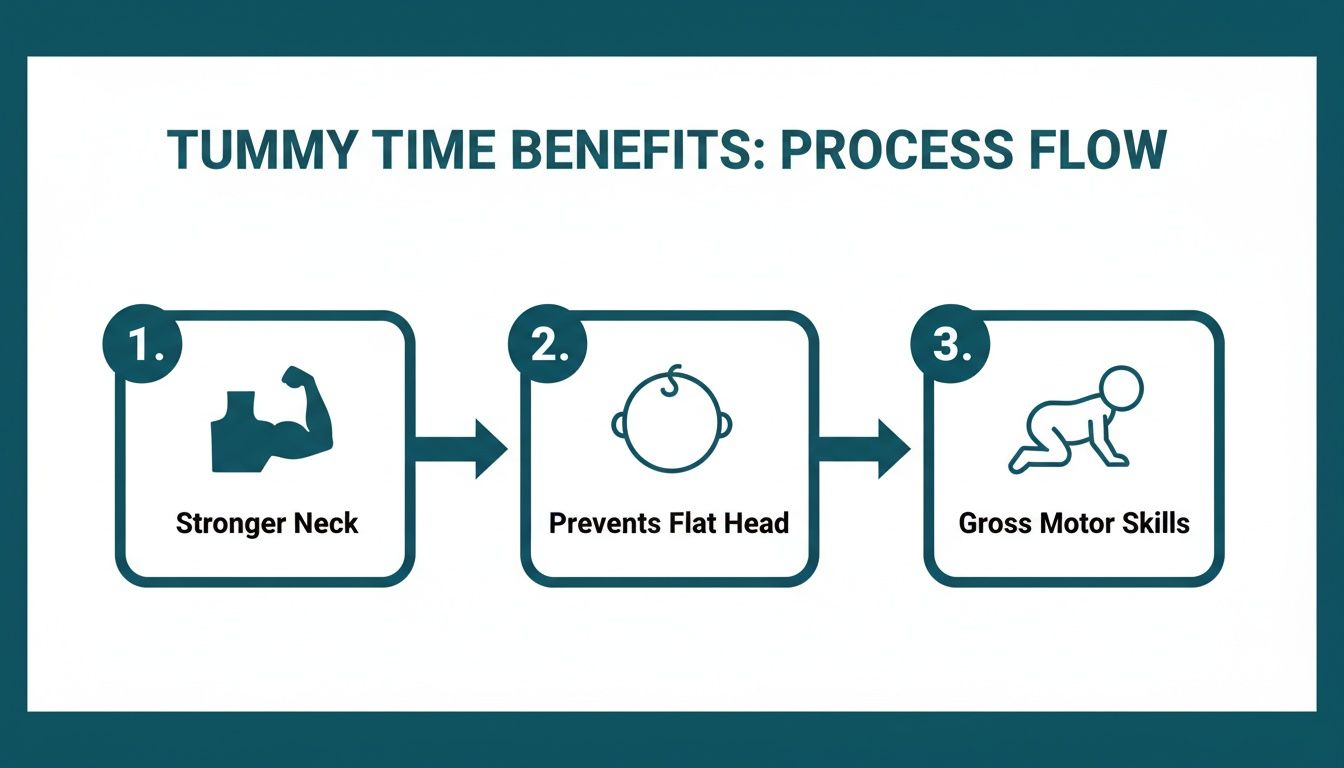
As you can see, every short session is a building block for stronger muscles, better head control, and preventing flat spots on the back of their head.
Moving to a Safe Floor Surface
Once you and your little one are comfortable with tummy time on your chest or lap, you can graduate to a safe spot on the floor. This is an important step because a firm surface gives them the support they need to start pushing up and developing new skills. A soft, fluffy blanket might seem cosy. It can actually make it harder for them to get the leverage they need.
A firm but cushioned play mat is your best bet. A quality mat, like a Wallaby Collective linen play mat, offers the perfect balance. It’s gentle on their sensitive skin but firm enough to provide a stable base for them to lift their head and eventually push up on their arms.
Here is why a dedicated play mat is a great choice:
- Firm Support: It provides the stability needed for muscle development, which a bed or plush rug just cannot offer.
- Safety First: It creates a clean, dedicated zone away from household dust and hazards.
- Comfort: A good mat cushions them from the hard floor, making the experience much more pleasant.
How to Do Tummy Time on the Floor
When you are ready, pick a time when your baby is happy, awake, and alert. After a nappy change is a good time. It's best to avoid tummy time right after a feed. The pressure on their full belly can be uncomfortable.
Lay the play mat on a clear patch of floor. Gently roll your baby onto their tummy. Bring their arms forward so they are positioned under their shoulders. This helps them learn to prop themselves up.
The most important part of floor time is getting right down to their level. Lie on your tummy facing them, make eye contact, and offer plenty of smiles and encouragement. Your presence transforms it from a chore into a fun, shared activity.
Setting a Positive Routine
Consistency is far more important than duration, especially at the start. Australian health experts recommend starting supervised tummy time right from birth and slowly increasing the time (2). The guidance is to begin with short bursts of one to two minutes, several times a day.
As your baby gets stronger, you can build towards a total of at least 30 minutes spread throughout their waking hours. You can explore the full Australian guidelines for more information on building up tummy time duration.
Remember, it’s completely normal for babies to grunt and fuss a bit. This is hard work for them. If they get really upset, it’s always okay to pick them up, give them a cuddle, and try again later. The aim is to build positive feelings. Show them that tummy time is a safe and enjoyable part of their day with you. Each tiny effort is a huge win for their development.
Creating the Perfect Tummy Time Setup
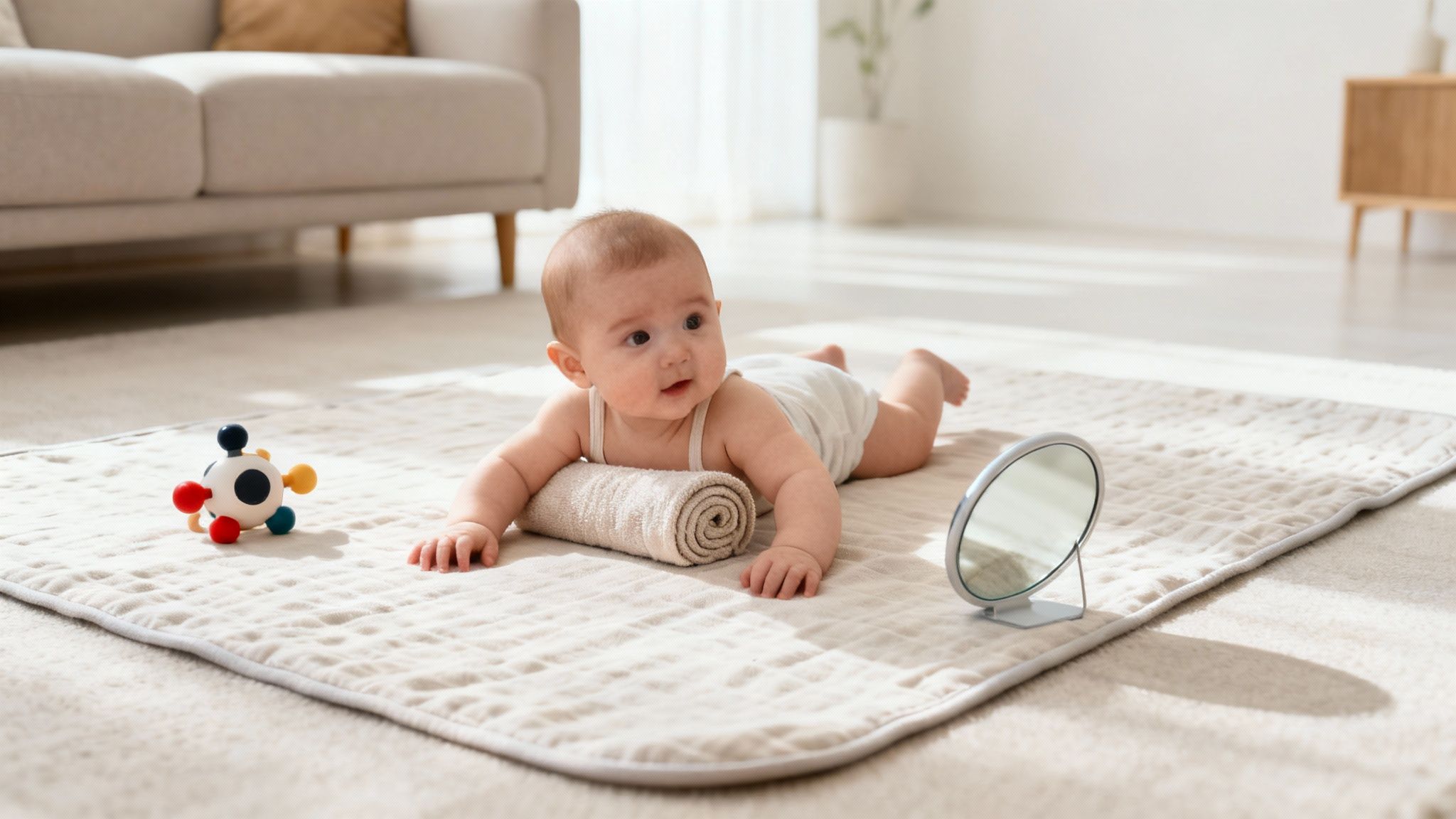
Setting the stage for a happy tummy time session is simpler than you might think. It really just comes down to creating a spot that’s safe, comfy, and interesting for your little one. The goal is to make the floor feel like an inviting place to be.
Let’s break it down. You do not need a mountain of fancy gear. A few key things can make all the difference. They turn tummy time from a chore into a favourite part of your day.
Choosing the Right Surface
First things first: the surface. This is probably the most important part of your setup. A plush, shaggy rug might seem cosy. It can actually make it harder for your baby to push up. They need something firm enough for stability but soft enough for comfort.
This is where a purpose designed play mat really shines. It offers a clean, dedicated space with the perfect balance of support and cushioning. This is exactly what they need to get the leverage to lift their head and build those tiny muscles.
A mat like the Wallaby Collective linen play mat is a brilliant choice. Its OEKO TEX certified linen is gentle on sensitive skin. Just as importantly, it is not so puffy that it gets in the way. It lies flat, giving your baby the stable base they need to push up properly.
Timing Your Sessions for Success
As any parent knows, timing is everything. The golden window for tummy time is when your baby is awake, alert, and generally content. Straight after a nappy change or once they have woken up from a nap feeling refreshed is often perfect.
Try to avoid doing tummy time right after a feed. Lying on a full belly is uncomfortable and can lead to spit ups. This is not fun for anyone and can create a negative vibe around the activity. A good rule of thumb is to wait at least 20-30 minutes after they have finished feeding.
Remember, the aim is for several short, happy bursts throughout the day, not one long, drawn out session. Watch for their cues. A yawn or a bit of fussing is your sign to wrap it up and try again later.
Gathering Your Tummy Time Toolkit
Once you have your mat and timing sorted, a few simple props can turn tummy time from a workout into playtime. You do not need to go overboard. One or two engaging items are more than enough to capture their attention.
Here are a few simple but effective tools to have on hand:
- A Rolled Towel: For newborns or babies still finding their strength, a small, tightly rolled hand towel placed under their chest offers a little boost. Their armpits should be just over it. This gentle lift makes it easier for them to raise their head and look around.
- High-Contrast Toys: In the early months, a baby’s vision is still developing. They are drawn to bold, black and white patterns and bright colours. Pop a toy just within their line of sight to encourage them to lift and turn their head.
- An Unbreakable Mirror: A baby safe mirror is one of the best tummy time tools out there. Lay it on the floor in front of them so they can see their own reflection. Babies are often so fascinated by the "other baby" that they will hold their head up for longer.
Creating a Safe and Engaging Zone
Safety always comes first. Before you start, give the area a quick scan to make sure it’s clear of any hazards. Your play mat should be on a flat floor, away from curious pets, older siblings, and any small objects they might be able to reach.
The best way to make the space more engaging? Get down on the floor with them. Your face is your baby’s favourite toy. Lie opposite them, make eye contact, sing a few songs, or just chat. Your presence is incredibly comforting and motivating. It turns the whole experience into a sweet bonding moment.
This simple interaction shows them they are safe and supported, which is key to building their confidence. To learn more about picking the perfect foundation for these activities, you can explore our guide on finding the best tummy time mats for infants.
Troubleshooting Common Tummy Time Hurdles
It can be a little disheartening when you set up the perfect tummy time space, only for your baby to start crying the moment their belly touches the mat. If this sounds familiar, please know you are not alone.
Many babies fuss during tummy time. It's usually just their way of saying, "This is hard work!" Most of the time, this resistance is not a sign of a major problem. It’s often linked to simple things like feeling tired, a bit of reflux, or just getting used to a brand new sensation.
The key is to respond with patience and find gentle ways to build their tolerance. Turn a potential struggle into a positive bonding moment. Let's break down some practical solutions to navigate any protest with confidence.
Understanding Why Your Baby Resists
Before jumping into solutions, it helps to understand the "why" behind the tears. For a tiny baby, working against gravity to lift their head is a huge physical effort. A little grunting is completely normal. It just means they are trying hard and building those important muscles.
However, inconsolable crying is a different story. It could be due to a few common reasons:
- Discomfort: Pressure on a full tummy can be uncomfortable, especially for babies prone to reflux.
- Fatigue: Like any workout, tummy time is tiring. An already sleepy baby is more likely to protest.
- Underdeveloped Vestibular System: This system helps us understand where our body is in space. Being on their tummy is a new sensation that can feel strange or insecure at first.
- Frustration: They cannot move as they want to yet, and this can be frustrating for them.
Identifying the likely cause helps you choose the right strategy to make the experience better for both of you.
Gentle Alternatives and Support Techniques
If floor time is proving too much, do not force it. There are plenty of modified positions that still offer the same developmental benefits while making your baby feel more secure. These gentle alternatives are perfect for building strength without the stress.
One of the best approaches is the ‘tummy down carry’, also known as the football hold. To do this, slide one forearm under your baby’s tummy and between their legs. Let their cheek rest near the crook of your elbow. Use your other hand to support their back. This position provides gentle pressure on their tummy, which can be soothing. It still encourages them to lift their head.
Another fantastic technique involves using a small prop for support.
A tightly rolled up hand towel or a small receiving blanket placed under your baby's chest can make a world of difference. Position it so their armpits are just over the top of the roll. This frees up their arms and gives them a slight lift. It makes it easier to raise their head and look around.
Making Tummy Time a Pleasant Experience
Creating positive associations is the secret to overcoming tummy time hurdles. Your presence and encouragement are the most powerful tools you have. Get right down on the floor at their eye level. Offer plenty of smiles, and talk to them in a soothing voice.
Distraction is also your best friend. Use a baby safe mirror, a high contrast book, or a favourite soft toy to capture their attention. Placing an engaging item slightly in front of them encourages them to lift their head. They focus on something other than the effort they are exerting.
Remember to keep sessions very short to begin with. Even 30 seconds is a win. It's far better to have five happy 30 second sessions throughout the day than one tearful five minute one.
As they get stronger and more comfortable, you can gradually extend the time. For more tips on this topic, our guide offers extra advice on what to do when your baby hates tummy time. With a little patience and a few creative tweaks, you can help your baby learn to enjoy this crucial part of their development.
Fun Activities to Make Tummy Time Playtime

This is where the magic really happens. Once your baby gets the hang of short tummy time sessions, you can start turning it into a proper playtime. The idea is to make it a fun, engaging part of their day, not a chore they have to get through.
Simple exercises and little games are brilliant for boosting their development while keeping them happy. When you add playful activities, you will encourage them to lift their head, reach for things, and even start to pivot. These are all crucial movements for building up that core strength and coordination.
A good approach is to try one new activity each week. It keeps things interesting for them, stimulates their senses, and it’s a beautiful way to strengthen that special connection between you and your bub.
Using Toys to Encourage Movement
Toys are your best friend here. The trick is to use them strategically to encourage those specific little movements that build strength and skill.
One of the simplest but most effective techniques is placing a favourite soft toy or rattle just beyond their grasp. You will be amazed at how this motivates them to stretch out their little arms and neck. It fires up their back and shoulder muscles as they try to grab it. That tiny act of reaching is a huge first step towards crawling.
Another great idea is to slowly move a toy from one side to the other in front of them. This encourages them to track it with their eyes and turn their head. This is fantastic for strengthening both sides of their neck evenly.
The Magic of Mirrors and Visuals
Babies are absolutely fascinated by faces, especially their own. A baby safe, unbreakable mirror might just be the most powerful tool in your tummy time kit.
Just place it on the floor right in front of them. The moment they spot that "other baby" in the reflection, you will often see them lift and hold their head up for much longer. They will be desperate for a better look. It’s an amazing little trick for promoting head control and self awareness.
Using a mirror turns tummy time into a social activity, even when it's just them. They are so captivated by their own reflection that they often forget they are doing hard work, extending the session naturally.
Besides mirrors, high contrast items work wonders too.
- Black and White Cards: In those early months, a baby’s vision is still developing. Bold, black and white patterns are the easiest things for them to see and will really capture their attention.
- Picture Books: Prop up a sturdy board book with simple, colourful pictures. This gives them something to look up at and focus on, strengthening those important neck muscles.
Making It Musical and Interactive
Never underestimate the power of your own voice and presence. Getting down on the floor with your baby is hands down the best way to create a positive vibe around tummy time.
Singing songs, especially ones with little actions, can make the time just fly by. The rhythm and the familiar sound of your voice are both soothing and engaging. Try classics like "Twinkle, Twinkle, Little Star" or "Row, Row, Row Your Boat" while you gently tap their back.
Simple games like peek a boo are also perfect. Lie on your tummy facing them and use your hands or a soft muslin cloth to play. That little moment of anticipation and your smiling face will encourage them to keep their head lifted. You will strengthen their muscles while you share a giggle. These shared moments build a really strong, happy association with being on their tummy.
Common Tummy Time Questions, Answered
Even with the best tips, it’s natural for questions to pop up. You are navigating a brand new world with your baby, and every little detail feels important. Here are some straightforward answers to the questions Australian parents ask us most.
We have gathered advice from the experts to help you feel confident as you guide your baby through this big developmental milestone. Let’s get straight into it.
When Is the Best Time of Day for Tummy Time?
The golden rule is to choose a time when your baby is happy, awake, and alert. A great window is often after a nappy change or once they have woken from a nap. They will feel refreshed and ready for a little play.
Try to avoid tummy time right after a feed. The pressure on their full tummy can be uncomfortable and often leads to spit ups. It’s far better to aim for several short, happy sessions throughout the day rather than pushing for one long one. This way, you will slowly build their strength and stamina without them getting tired or fussy.
What if My Baby Cries During Tummy Time?
First off, it’s completely normal for babies to protest at first. Remember, this is hard work for their tiny muscles. If your little one cries, start with incredibly short sessions. Even 30 to 60 seconds is a fantastic start.
You can also try modified positions to help them feel more secure and comfortable. Lying your baby on your chest or across your lap keeps them close and reassured. Get down on the floor to their eye level, use a soothing voice, and show them engaging toys to distract and encourage them. If they get too upset, pick them up for a cuddle and try again later. The goal is to build a positive connection with this new activity.
A bit of grunting during tummy time is normal. It often just means your baby is working hard and building those important muscles. But if they become really upset, it’s always best to give them a break. This is about progress, not perfection.
Can I Just Use a Soft Blanket on the Floor?
While a fluffy blanket might seem like the cosiest choice, it can actually make tummy time much harder for your baby. To build their neck, back, and arm muscles, they need a firm, stable surface to push against. A plush blanket can make this almost impossible.
A purpose made play mat provides the right mix of comfort and firm support. A quality linen play mat, for example, is soft on their delicate skin but stable enough for them to get the leverage they need to lift their head and push up. Whatever surface you choose, make sure it’s clean and clear of any hazards. Never leave your baby unsupervised.
When Should I Worry About My Baby's Progress?
Every baby develops at their own unique pace, so try not to compare your little one to others. Progress with tummy time is usually gradual. That said, there are a few things to keep an eye on as your baby grows.
It’s a good idea to have a chat with your child health nurse or paediatrician if you notice any of the following:
- By three months, your baby still is not able to lift their head at all during tummy time.
- Your baby has a strong preference for turning their head to only one side. This could be a sign of tight neck muscles (torticollis).
- You are concerned about persistent flat spots developing on your baby's head.
Your healthcare provider can assess your baby’s development properly. They will offer personalised advice and support to ensure everything is on the right track, giving you peace of mind.
At Wallaby Collective, we understand that creating a safe and beautiful space for these moments is important. Our OEKO-TEX certified linen play mats provide the perfect firm-yet-cushioned surface for your baby to explore, play, and grow strong. Discover our collection at https://wallabycollective.com.
Sources:
- New research shows babies aren't getting enough 'tummy time', University of Wollongong, 02 August 2022.
- Tummy time for babies, Pregnancy, Birth and Baby, Healthdirect Australia, December 2022.