

A Guide To Contact Napping For Australian Parents
Contact napping is the simple, intuitive practice of letting your baby sleep on you. For many new parents, it becomes the go-to for soothing a fussy newborn. It can also help them get those longer, more peaceful naps that just do not seem to happen in a cot.
Understanding Contact Napping And Its Appeal

If you have ever settled onto the sofa with your tiny baby snoozing on your chest, you have been contact napping. It is a deeply instinctual behaviour for both parents and babies. It taps into an infant’s fundamental need for warmth, security, and closeness.
Let's break it down. Newborns are biologically hardwired to seek proximity to their caregivers. The rhythmic sound of your heartbeat, the gentle rise and fall of your breathing, and your familiar scent create a comforting, womb-like environment. This sensory comfort helps regulate their own little systems, promoting deeper and more restorative sleep.
Why Parents Choose This Method
For many parents, contact napping is not just a choice, it is a necessity. This is especially true during that challenging "fourth trimester". Navigating sleep deprivation is a massive hurdle for Australian families.
A recent study found that Aussie parents with children aged 0-3 spend an average of 64 minutes each night just trying to settle them. This often involves close physical contact and a lot of rocking, patting, and shushing.
Source: Real Sleep Report 2023, Real Insurance, 2023. See the full report here.
This reality makes contact napping a common and practical strategy for survival. It can turn a stressful naptime battle into a quiet moment of connection and much-needed rest for both parent and child.
Next steps? Here is a quick summary of why so many parents embrace it.
Contact Napping At A Glance
| Aspect | Description |
|---|---|
| Soothing Power | Calms fussy or colicky babies who really struggle to settle on their own. |
| Bonding Opportunity | Fosters a strong emotional connection and secure attachment through skin-to-skin contact. |
| Improved Sleep | Often leads to longer and more consistent naps for babies who wake easily in a cot. |
| Parental Rest | Allows the supervising parent to finally sit down and rest while the baby sleeps peacefully. |
Ultimately, this practice is a beautiful response to a baby’s core needs. It is a way to provide comfort and security while ensuring your little one gets the sleep they need to grow and thrive.
The Science Behind Why Your Touch Is So Powerful
Have you ever wondered why your baby settles almost instantly when you hold them close? It is not magic; it is pure biology. The power of your touch during a contact nap is wired into deep, instinctual responses that help your baby feel safe, secure, and right at home.
Let’s break it down. When your baby is snuggled up against you, their whole world is filled with familiar sensations. The steady rhythm of your heartbeat, the gentle rise and fall of your chest, and your unique scent are all comforting echoes of the womb. This closeness has a direct, measurable effect on their tiny body.
Your Touch As A Natural Regulator
One of the most incredible things that happens during skin-to-skin contact is co-regulation. Think of your body as a natural thermostat and pacemaker for your little one. Being held close helps stabilise their:
- Heart rate: Your calm, steady heartbeat can help regulate their faster, more variable one.
- Breathing patterns: The rhythm of your breathing provides a calming template for them to sync with.
- Temperature: Your body instinctively adjusts to warm up or cool down your baby as needed.
This clever biological process creates a stable, peaceful state for your baby. Instead of their body working overtime to regulate itself, it can relax completely into the safety of your arms. This allows for a deeper, more restorative sleep.
The Hormone Of Connection
Beyond the physical regulation, your touch triggers a powerful hormonal response in both you and your baby. This is where oxytocin, often called the ‘love hormone’ or ‘cuddle chemical’, comes into play.
When you hold your baby close, both of your brains release this amazing hormone. For your baby, oxytocin works to lower stress hormones like cortisol. This creates a deep sense of calm and security. For you, it strengthens bonding, melts away anxiety, and nurtures those fierce feelings of love and protectiveness. It is a beautiful, self-reinforcing cycle of connection.
This shared release of oxytocin during contact napping strengthens the parent-child attachment. It builds a foundation of trust and emotional wellbeing and turns a simple nap into a profound bonding experience.
Here is why this matters. Understanding the profound role of sleep as an emotional anchor shows just how much this practice matters. It is not just about getting them to sleep; it is about meeting a fundamental human need for connection. In essence, contact napping is a powerful, biological tool that supports your baby’s development and strengthens your family bond right from the very beginning.
How To Practice Safe Contact Napping Every Time
There is nothing quite like the warmth of a contact nap, but your baby’s safety always comes first. The good news is, with a few simple guidelines, you can create a secure space. This lets you both relax and soak up all that closeness, worry-free.
Let’s walk through the essentials. The whole idea is to manage the known risks so you can focus on the cuddles.
Create A Secure Environment
Where you choose to settle in for a contact nap is one of the most important safety decisions you will make. Your location and position can make all the difference.
- Choose a safe spot: Settle into a couch or armchair where you can sit comfortably upright. It is best to avoid super soft surfaces like beds, recliners, or beanbags where you could accidentally doze off and roll.
- Keep your surroundings clear: Before you sit down, clear away any pillows, loose blankets, or cushions from around you and your baby. These items are a serious suffocation risk. Your baby just needs their own clothes and maybe a single, lightweight blanket tucked securely below their armpits.
- Secure your baby: Often, just holding your baby in your arms is enough. For longer naps, a well-fitted baby carrier or wrap can add an extra layer of security. It helps keep them in a safe, upright position on your chest. You can learn more by checking out this great guide on how to wrap a baby.
This simple flowchart shows how your touch can trigger a positive response, helping your baby’s little system regulate itself.
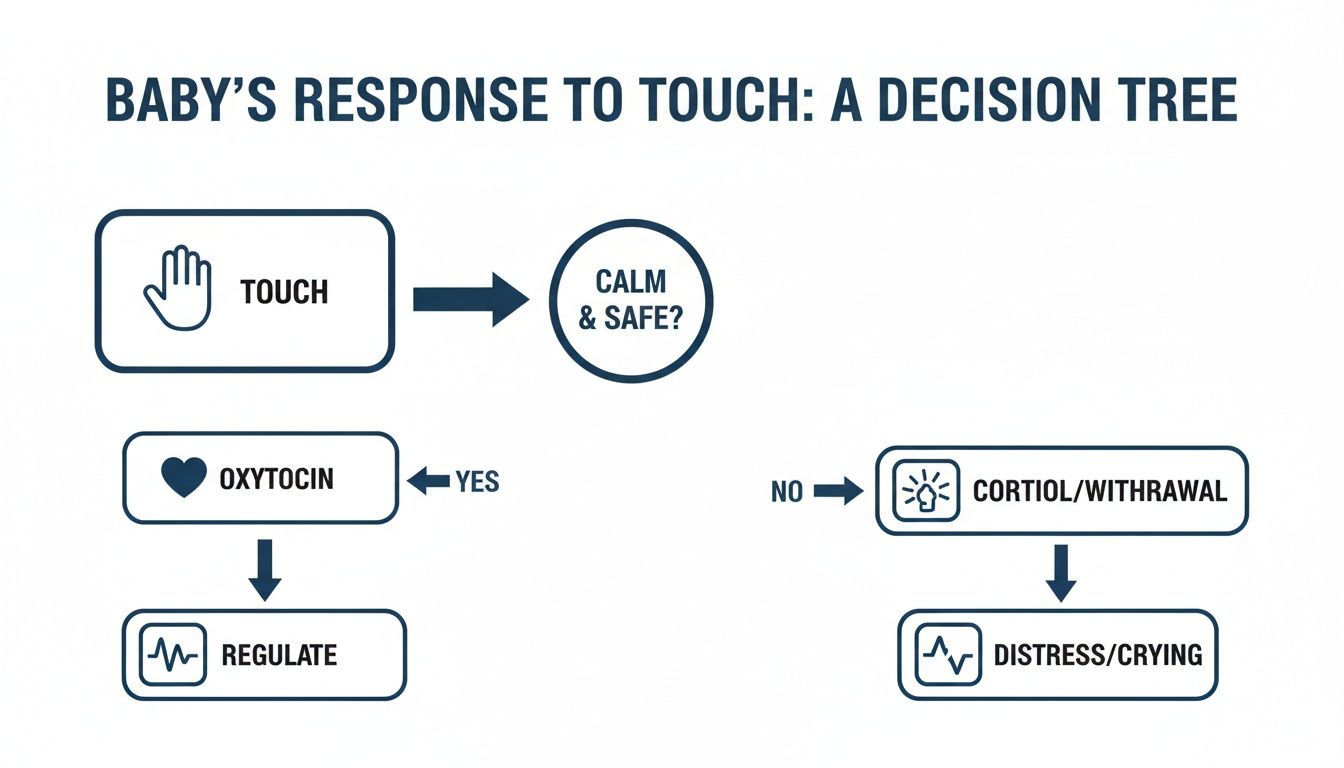
When your baby feels that secure physical contact, it kicks off a calming biological process. This is why getting the setup right is so important.
Stay Awake And Alert
This is the golden rule of contact napping: the adult holding the baby must be awake and alert at all times. Feeling even a little bit drowsy is a major red flag.
Falling asleep with your baby on a couch or armchair is incredibly dangerous. Red Nose Australia, our country’s leading authority on safe sleep, is very clear that this situation dramatically increases the risk of Sudden Unexpected Death in Infancy (SUDI).
The risk of SUDI is 50 times higher for babies who are slept on a sofa or couch with an adult.
Source: Safe Sleeping, Red Nose Australia, 21 February 2023.
If you start feeling tired, it is always safer to place your baby on their back in their own safe sleep space, like a cot or bassinet. If you think there is even a small chance you might drift off, it is time to end the contact nap or ask another alert adult to take over.
Follow General Safe Sleep Rules
Even though it is a cuddle on the couch, the core principles of safe sleep still apply. Think of your chest as a temporary sleep surface and give it the same attention you would their cot.
To help you remember the key points, we have put together a simple checklist. Run through it every time you settle in for a contact nap.
A Simple Checklist For Safe Contact Napping
This quick reference helps you compare safe practices with unsafe ones, so you can make the best choice every time.
| Safe Practices To Follow | Unsafe Practices To Avoid |
|---|---|
| Baby on their back or upright: Position your baby on their back on your chest, with their head turned to one side. | Baby on their stomach: Never place a baby face down on your chest or body. |
| Clear airways: Make sure their chin is not tucked down and that their nose and mouth are completely clear. | Covering baby's head: Avoid any blankets, wraps, or clothing that could cover their face. |
| No smoking: Always keep a smoke-free environment around your baby. | Sleeping after drinking alcohol: Never contact nap if you have had alcohol or taken medication that makes you drowsy. |
| Firm support: Hold your baby securely so they cannot slip down into cushions or the side of the chair. | Using soft bedding: Keep all pillows, doonas, and soft toys well away from you and the baby. |
By keeping these practical steps in mind, you can confidently enjoy the connection and warmth of contact napping while knowing your baby is safe and sound. It is all about creating that secure bubble for a peaceful, cuddly rest.
What Are The Benefits Of Contact Napping?
Contact naps offer some really beautiful benefits for both you and your baby. They create a positive little loop of rest and connection. For many tiny ones, sleeping in your arms is the secret to unlocking longer, better-quality naps. This closeness often means less crying and a more settled baby throughout the day.
When your baby naps on you, they are in what feels like the safest, most comforting place in the world. This builds a deep sense of security, which is the foundation for healthy emotional development. They are not just sleeping; they are learning that their world is a safe place and that you are their source of comfort and protection.
This feeling of safety can directly lead to better sleep. A baby who feels secure is more likely to relax into a deep, restorative nap. Naps shorter than 50 minutes are common for newborns. The extra comfort of a contact nap can often help them connect their sleep cycles, leading to those gloriously longer snoozes we all dream of.
Benefits For Your Baby
The upsides for your little one go far beyond just how long they sleep. That close physical contact helps them feel secure and supports their developing systems in a few key ways.
- Longer Naps: Many babies will nap for longer stretches when held, as the comfort helps them drift between sleep cycles instead of waking up startled.
- Less Crying: Feeling secure and comfortable often means less fussing and crying, both during nap time and afterwards.
- Emotional Security: Consistent, responsive touch builds a strong attachment. It teaches your baby on a primal level that they are safe and cared for.
Benefits For You
It is not just about the baby. Contact napping has some powerful benefits for parents, too. In the whirlwind of the newborn phase, these quiet moments can be a welcome anchor.
Holding your sleeping baby can be a deeply calming experience that measurably reduces your own stress and anxiety. It is a powerful opportunity to bond, learn your baby's unique sleep cues, and take a much-needed moment to rest your own body and mind.
On top of that, this practice allows you to become an expert on your baby. You start to recognise their sleepy little sighs, their subtle hunger cues, and their unique rhythms. This deep connection builds your confidence as a parent, making the demanding newborn phase feel that much more manageable. For many, contact naps become cherished moments of quiet connection in an otherwise hectic time.
Setting Up Your Home For Naps And Play
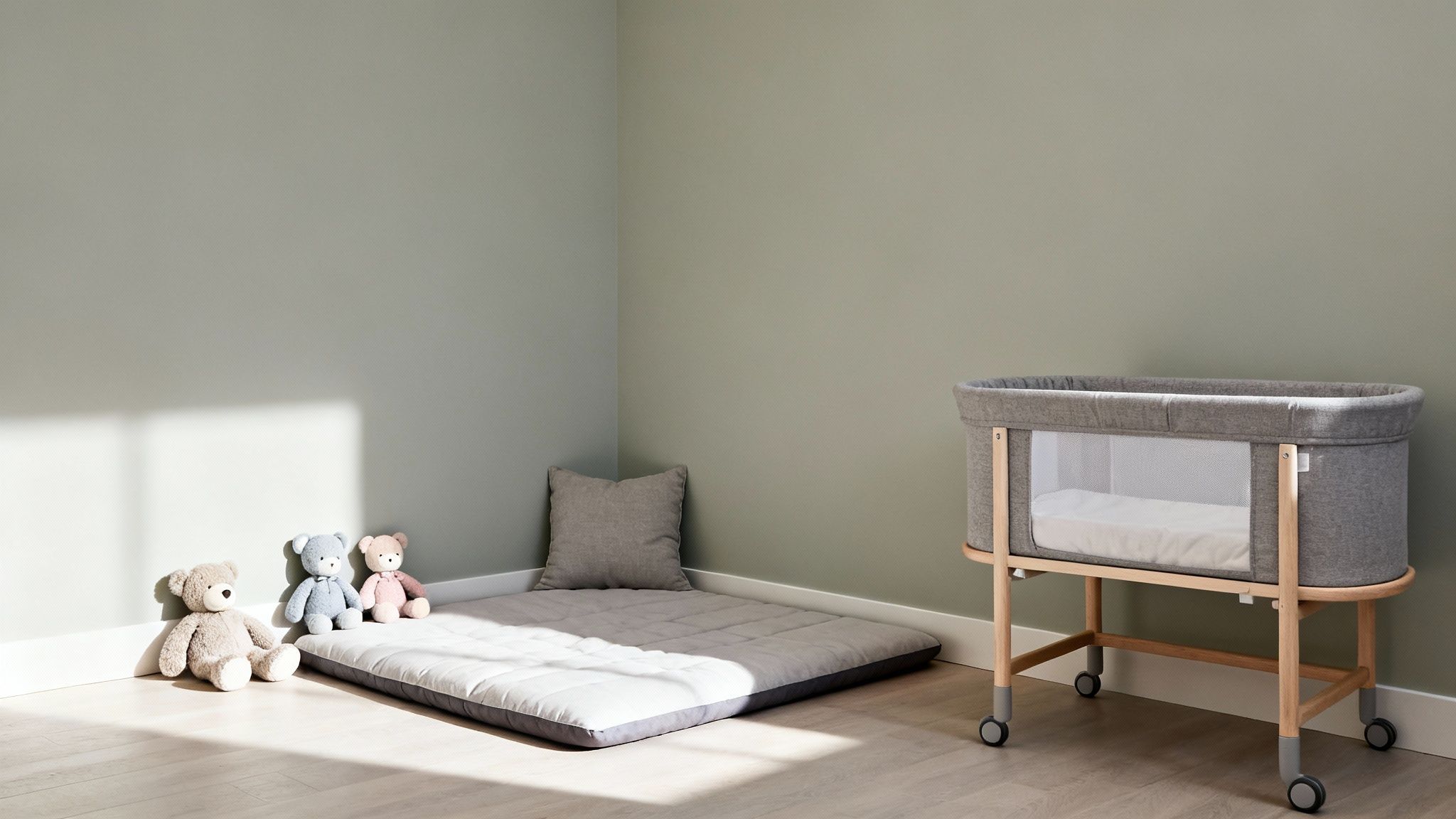
Creating a comfortable and safe space is everything when it comes to successful contact napping. It also makes a world of difference for encouraging independent play when your baby is awake. The trick is blending practicality with your home’s style to create a supportive environment that works for the whole family.
Let’s get into how to design a cosy nook that serves both needs. It could be a corner of your living room or nursery that feels calm, comfortable, and is set up with everything you need. As you prepare your home, simple things like choosing durable and easy-to-clean sofa covers can be a lifesaver for those inevitable spills, keeping your space hygienic and protected.
Creating A Versatile Space
Think about multi-purpose items that can easily transition from nap time to play time. A high-quality play mat is one of the most useful pieces you can invest in.
For example, a soft, cushioned mat gives you a safe spot if you need to gently move your sleeping baby from your arms to the floor. It means you can finally stand up and stretch without waking them.
A well-designed play space does more than just contain toys. It becomes a familiar, comforting area that supports your baby’s development, from restful naps to crucial awake-time activities.
When your baby is awake, this same mat becomes the perfect spot for tummy time. Having a designated, comfortable area encourages this super important developmental exercise. You can learn more about choosing the best tummy time mats for infants to support your baby's growth.
Practical Tips For Your Nook
A thoughtful setup honestly makes a huge difference. It reduces stress and makes the whole daily routine feel smoother. Here is why.
- Keep essentials nearby: Get a small basket and fill it with everything you need for a contact nap session. Think your phone, a water bottle, snacks, and a book so you do not have to get up.
- Use soft lighting: A dimmable lamp creates a calming atmosphere that signals it is time to wind down, helping your baby settle more easily.
- Prioritise your comfort: Make sure your chosen chair or sofa offers good back support for those longer naps. You deserve to be comfortable too.
By creating a functional and beautiful space, you can seamlessly blend your baby’s needs with the style of your modern Australian home.
How To Gently Transition Away From Contact Naps
While contact naps are a beautiful way to bond, there might come a day when you or your baby are ready for a change. The goal is not a stressful battle, but a gentle, respectful shift towards independent sleep. It is all about honouring your baby’s need for security while slowly building their confidence to nap on their own.
Let's break it down. The key is to move gradually. Think of it as a slow dance rather than a sprint to the finish line. Rushing the process often creates more stress for everyone involved. We will introduce new sleep associations while still offering plenty of comfort.
Recognising The Signs Of Readiness
So, how do you know it is time? Your baby might start dropping subtle hints that they are ready for a little more independence. Sometimes, it is the parent who needs the change, and that is perfectly okay too.
- Increased Squirming: If your baby seems restless or is fighting to get comfortable during a contact nap, they might be craving their own space.
- Shorter Naps: You might notice naps on you are getting shorter, as they are more easily disturbed by your movements.
- Parental Need: You might simply need your arms back to get things done, look after other children, or just have a moment to yourself. Your wellbeing matters immensely.
Babies typically begin to consolidate their naps and develop more consistent sleep patterns around five months of age. Before this, short and varied naps are completely normal.
Gentle Transition Strategies
A slow, patient approach is always the kindest way forward. The idea is to swap one comfort measure for another, avoiding any abrupt changes that can feel unsettling for your little one.
Next steps? Here are a few gentle strategies to try:
- Start with One Nap a Day: Begin by aiming for just the first nap of the day in their cot or bassinet. This one is often the easiest and helps set a positive tone for the rest of the day.
- The "Wait and Place" Method: Hold your baby until they are in a deep sleep, which usually takes about 10-15 minutes. Then, ever so gently, place them in their cot. If they stir, rest a reassuring hand on their chest.
- Introduce New Sleep Cues: Create a predictable and calming naptime routine. This could be as simple as a short story, a soft lullaby, and closing the curtains. A consistent routine signals that it is time for sleep, no matter where they are.
- Practice Makes Progress: Do not get discouraged if it does not work perfectly at first. Some days will be smoother than others. The consistency of your practice is far more important than achieving a perfect cot nap every single time.
Remember, this transition is a big step. As your baby grows, their nap needs will continue to change. For more guidance on shifting sleep schedules, you can explore our detailed article on when to transition a baby to one nap.
The goal is progress, not perfection. Every attempt, even a short one, helps your baby build familiarity and trust with their own sleep space. Celebrate the small wins and offer yourself grace.
Common Questions About Contact Napping
So many Australian parents wonder about contact napping. It feels so natural, yet it is normal to question if you are creating bad habits or how it fits into any kind of routine.
Let’s break down some of the most common concerns. We have gathered direct answers to give you a bit of reassurance and clear guidance on this popular practice.
Will Contact Napping Create Bad Habits?
This is probably the number one worry. For young babies, comfort is not a want, it is a need. Responding to your baby's need for closeness by contact napping helps build a secure attachment. This is the very foundation for their future independence.
You are not creating a "bad habit"; you are meeting a deep biological need for safety and connection. As babies grow and their sleep patterns mature, you can gently guide them towards more independent sleep when the time feels right for both of you.
How Long Should a Contact Nap Last?
For newborns, any nap that stretches past the 50-minute mark is considered a longer, more restorative one. Why? Because it means they have successfully connected two sleep cycles. That said, naps of any length are still beneficial.
Do not stress about the clock. Focus on your baby's sleepy cues instead. Some days, a quick 30-minute cuddle might be all they need. Other times, they might snooze on you for a couple of hours.
Can Contact Napping Spoil My Baby?
No, you absolutely cannot spoil a newborn. Holding your baby, responding to their cries, and offering comfort are essential for their emotional and neurological development.
Physical touch and responsiveness teach your baby that the world is a safe place and that their needs will be met. This sense of security is vital for their long-term wellbeing and confidence.
At Wallaby Collective, we create beautiful, practical linen play mats. They provide a soft, safe space for your baby's awake time and can support gentle transitions from contact naps. Discover our collection at https://wallabycollective.com.