

When to Transition a Baby to One Nap: A Parent's Guide
Most toddlers are ready to make the switch from two naps to one sometime between 13 and 18 months old. This is a major milestone in their sleep journey. It happens when they can handle longer awake windows and consolidate their daytime sleep into one restorative rest.
Your Complete Guide to the One Nap Transition
Welcome to a big moment in your toddler's sleep journey: dropping a nap. This shift from two naps down to one can feel a little daunting. Knowing what to expect makes the whole process smoother for everyone.
Here is why this is important. Every child moves at their own pace. While the typical age range is between 13-18 months, some toddlers show they are ready a bit earlier or later. Pushing the transition before they are truly ready can lead to an overtired and fussy toddler. It is better to watch for their cues rather than focus on their age.

Why This Transition Matters
Moving to a single nap is a natural part of your child’s development. Their internal body clock, or circadian rhythm, is maturing. This means they can handle being awake for longer stretches without getting exhausted. When timed right, this transition helps them get the deep, restorative sleep they need for growing.
A well timed transition to one nap can lead to better consolidated daytime rest, easier bedtimes, and more consistent night sleep. The goal is to align their schedule with their evolving biological needs.
This guide will walk you through everything you need to know. We will explore the real signs that it is truly time for a change, helping you avoid switching too soon.
Next steps. We will cover:
- How to decode the subtle and not so subtle signs your toddler is ready.
- A gentle, step by step plan to manage the change smoothly.
- Sample schedules to help you picture your new daily rhythm.
- Tips for handling those longer awake windows and troubleshooting common hiccups.
Let's make this process as calm and positive as it can be, for both you and your little one.
Figuring Out if Your Baby is Ready to Drop a Nap
How do you know if it is really time for one nap, or just a sleep regression throwing you for a loop? Knowing the difference is key to keeping things smooth. We are looking for a consistent pattern here, not just a one off bad nap day. These signs show your toddler's sleep needs are genuinely changing.
Let's break it down. One of the biggest giveaways is when your little one starts fighting a nap, usually the afternoon one. If this nap strike continues for more than a week or two, it is a strong sign they might be done with that second rest.
From Two Naps to One
You might also spot some more subtle clues. Is their morning nap suddenly getting very long, while the afternoon one is a tiny 30 minute catnap? This happens because a big morning sleep lowers their “sleep pressure,” so they are not tired enough for another proper nap later on.
Another classic sign is a new bedtime battle. If your toddler, who used to drift off easily, is now playing, chatting, or fussing in their cot for ages, they are probably undertired. Too much daytime sleep from two naps can make it hard for them to settle at their usual bedtime.
It is important to tell the difference between a real readiness for one nap and a passing phase. True readiness means you see these patterns consistently for one to two weeks, not just a couple of off days because of teething or a cold.
Behavioural Cues to Watch For
Pay close attention to your toddler’s mood throughout the day. Are they still happy and energetic after skipping their afternoon nap? Or do they have a complete meltdown by late afternoon? A child who is truly ready for one nap can handle that longer stretch of awake time without becoming a fussy, overtired mess.
Here are a few specific signs to watch for:
- Consistent Nap Refusal: They fight or totally skip the afternoon nap for several days in a row.
- Bedtime Battles: Bedtime suddenly becomes a nightly struggle, often pushing well past their normal time.
- Sudden Night Wakings: They start waking up during the night or are up for the day very early, feeling totally refreshed.
- Short Naps: One or both naps become consistently short, often lasting less than 45 minutes.
A baby's total sleep time goes down mostly because they nap less during the day. This shift to one nap usually happens between 12 to 18 months, which helps them settle into longer night sleeps of 10 to 12 hours (Source: Typical sleep behaviour (6-12 months), Better Health Channel, November 2021). Getting good at spotting your baby’s tired cues will help you know when they are ready and prevent them from getting overtired during the change. You can find more tips in our detailed guide on understanding your baby's tired cues to help you through it.
Your Gentle Step by Step Transition Plan
Once you are confident your little one is ready, it is time to come up with a solid plan. A gentle, practical approach will minimise fuss and help everyone get the rest they need. Consistency is your best friend during this period, which can sometimes take a few weeks to settle.
Let's break it down. There are two main strategies you can try. You can pick the one that feels right for your child's temperament.
Method 1: The Gradual Shift
This is often the most popular and gentle way to manage the change. The idea here is to slowly push that morning nap later and later, until it naturally lands in the middle of the day.
- Start Small: Begin by pushing the morning nap later by just 15 to 30 minutes. If their nap is usually at 9:30 am, aim for 9:45 am or 10:00 am.
- Hold for a Few Days: Keep this new time for two or three days to let your toddler adjust before making another change.
- Repeat the Process: Continue nudging the nap forward in small steps every few days. The end goal is to reach a midday nap time, usually between 11:30 am and 12:30 pm.
This gradual method helps your child slowly get used to longer awake windows without becoming overtired.
Method 2: Capping the Morning Nap
Another effective strategy is to shorten the morning nap to preserve sleep pressure for the afternoon. This works well if your child happily takes their morning nap but then refuses the afternoon one.
Simply wake your toddler from their morning nap a bit earlier than usual. For example, if they usually sleep for 90 minutes, try capping it at 60 minutes. This can help them build enough sleepiness to still take a second, shorter nap in the afternoon as you make the full transition.
The transition from two naps to one is a marathon, not a sprint. It is completely normal to have a mix of one nap days and two nap days for a while. Be flexible and follow your child's cues.
To help ease this change, Australian sources suggest parents should watch for awake windows stretching to 4 to 6 hours (Source: Baby sleep: 6-18 months, Raising Children Network, 14 December 2022). By 18 months, about 75% of babies are comfortably on one nap. A consistent routine, including a bedtime around 7 pm, helps them get the recommended 11 to 14 hours of total sleep.
This infographic shows the common signs that often lead parents to begin the nap transition process.
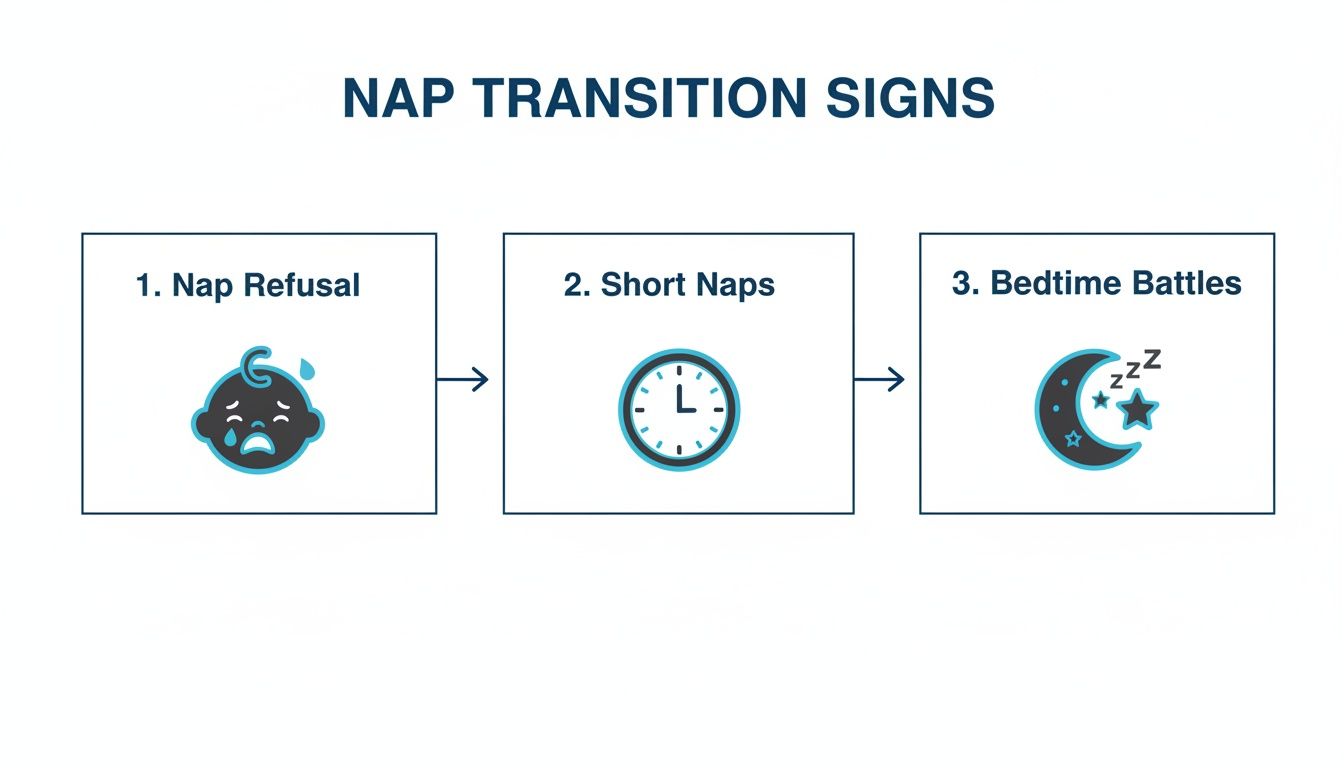
This visual highlights how consistent nap refusal, shorter naps, and new bedtime struggles are key indicators that it might be time for a schedule change.
As you plan the one nap transition, you might also find these practical tips for supporting children through broader life transitions helpful. The core principles of routine and patience apply to many developmental milestones.
No matter which method you choose, a calming pre nap routine is essential. Dimming the lights, reading a quiet story, or singing a song can signal that it is time to wind down and sleep.
Sample One Nap Schedules for Your Toddler
Visualising what your new day might look like can make the leap from two naps to one feel less daunting. While every toddler is unique, having a sample schedule gives you a solid framework to build from. Remember, these are starting points, not strict rulebooks.
So, let's break it down. The main goal is to have one long, restorative nap right in the middle of the day. You are aiming for a nap that lasts between 1.5 to 2.5 hours. The trick is to balance the awake time on either side of this nap so your little one is not completely overtired by bedtime.
Finding a Flexible Rhythm
As your toddler grows, so does their ability to stay awake and play for longer stretches. A 13 month old who is just making the switch will have shorter awake windows than an 18 month old who has already settled into their one nap routine.
Because of this, their daily schedules will look a little different. An older toddler can usually handle a slightly later nap and, in turn, a later bedtime. You can see how this unfolds in the examples below.
The best schedules bend and flex with your child’s unique sleep needs and daily cues. Your biggest asset during this transition is flexibility.
Here is a table showing what a typical day could look like at different stages of the one nap journey. Use these as a guide to structure your day, but always be ready to adjust based on your toddler's tired signs. It can also be helpful to see how much things change from earlier routines, like the sleep schedule for a 6-month-old baby.
Example One Nap Daily Schedules
Here are a couple of examples to give you an idea of how the day might flow. Notice the small shifts in nap and bedtimes as your toddler gets older.
| Time | Activity for a 13-Month-Old | Activity for an 18-Month-Old |
|---|---|---|
| 7:00 am | Wake up and have milk | Wake up and have milk |
| 8:00 am | Breakfast | Breakfast |
| 8:30 am - 11:30 am | Playtime and morning activities | Playtime and morning activities |
| 11:30 am | Lunch | Lunch |
| 12:00 pm - 2:00 pm | Nap (2 hours) | Nap (2.5 hours) |
| 2:00 pm | Wake up and have a snack | Wake up and have a snack |
| 2:30 pm - 5:00 pm | Playtime and afternoon activities | Playtime and afternoon activities |
| 5:00 pm | Dinner | Dinner |
| 6:00 pm | Start wind-down routine (bath, books) | Start wind-down routine (bath, books) |
| 6:30 pm | Bedtime | Bedtime |
These schedules are just a guide. Your toddler might need a slightly earlier bedtime on days with a shorter nap, and that is perfectly fine. The key is to watch them, not the clock.
How to Manage Longer Awake Windows
As your baby drops that second nap, their awake windows will get much longer. The biggest challenge here is keeping your little one happy and engaged without letting them become overtired. It is a delicate balance. Thinking of these longer stretches as a chance for connection and learning can make the day feel smoother.
Let’s break it down. The key is to switch up activities to keep them stimulated. It is helpful to think of the awake window in two parts: an active, high energy phase first, followed by a quiet, wind down period just before their nap is due.

Productive Play Ideas
Keeping a toddler busy is not a small feat. Here are a few simple, age appropriate ideas to fill those longer awake times and make them genuinely fun:
- Sensory Bins: Fill a shallow container with toddler safe materials like dry pasta, oats, or water. Add a few scoops and cups for pouring and exploring different textures.
- Outdoor Adventures: It does not have to be a huge outing. A trip to the park, a simple walk around the block, or time in the backyard gives them fresh air and a change of scenery.
- Creative Play: Simple art activities are brilliant for this age. Think finger painting with edible paint or drawing with chunky crayons that are easy for little hands to hold.
- Building and Sorting: Blocks, stacking rings, and shape sorters are fantastic for developing fine motor skills and getting their brains working on problem solving.
This is a significant developmental milestone. Australian health authorities note that babies around 12 to 18 months move to one nap as they manage longer wake windows of four to five hours. This transition is crucial for cognitive growth and can help reduce family stress once you are through it. You can find out more about typical sleep behaviours and routines on Better Health Victoria.
The Pre-Nap Wind-Down
That final hour before the nap can be the trickiest part of the day. Crankiness often peaks as your toddler starts getting sleepy. This is your cue to bring the energy down. A predictable wind down routine is your best friend for signalling that it is time to rest.
A consistent pre nap routine helps a toddler's brain and body prepare for sleep. This is not about rigid rules but about creating a peaceful rhythm that makes naptime easier and less of a battle.
Here is what a calming routine could look like:
- Switch to Quiet Activities: About 30 minutes before naptime, put away the noisy, stimulating toys. Bring out puzzles, picture books, or their favourite soft toys instead.
- Lower the Lights: Dim the lights and close the curtains to create a sleepy, cosy atmosphere. This simple environmental cue works wonders.
- Offer a Cuddle: Spend a few minutes cuddling, singing a soft song, or reading a favourite story. That bit of connection time helps them feel secure and ready for sleep.
Troubleshooting Common Nap Transition Problems
Even with the best plan, the move to one nap can get bumpy. It is completely normal to hit a few snags along the way, so do not worry. Let's walk through some of the most common hurdles you might face and find simple, practical solutions.
One of the biggest frustrations is the dreaded 'disaster nap'. This is when your toddler wakes up happy and refreshed after just 30 or 45 minutes, leaving a huge awake window until bedtime.
When this happens, an overtired meltdown in the evening feels almost inevitable.
The Overtiredness Cycle
Overtiredness is the main challenge during this transition. A toddler who is too tired often struggles more to fall asleep and stay asleep. This can create a tricky cycle where a short nap leads to a difficult bedtime, which then causes more frequent night wakings or an extra early start the next day.
Sometimes, these new sleep issues can feel like a regression. Often, they are just a sign that the schedule needs a small tweak. You can learn more about how to handle these phases in our guide to the 9-month sleep regression, as many of the principles are similar.
Your best tool for a short nap day is an early bedtime. Do not be afraid to put your toddler to bed as early as 6:00 or 6:30 pm to help them catch up on lost sleep and prevent overtiredness from building up.
Finding the Right Balance
What if your child seems constantly overtired and fussy, no matter what you try? This might be a sign that they are not quite ready for a one nap schedule every single day. That is okay.
Next steps. Here are a few strategies to try:
- Alternate Nap Days: It is perfectly fine to flip flop between one and two nap days for a few weeks. If your toddler seems exhausted, offer a two nap day to help them 'reset'.
- Offer a Catnap: On days where the main nap is short, you can try offering a brief, 20 minute catnap in the late afternoon. This can be just enough to bridge the gap to bedtime without ruining their night sleep.
- Watch for Cues: Pay close attention to their tired signs. This entire transition period can take two to four weeks, so patience and flexibility are your best friends. Trust your toddler’s cues over the clock.
One Nap Transition Questions Answered
Moving your little one from two naps down to one always brings up questions. It is a big step. We get it. So, let’s get straight into the most common worries we hear from parents navigating this change.
"What if I Transitioned Too Early?"
This is a common fear, so you are not alone in asking. If you have switched to a one nap day and find your toddler is consistently overtired, grumpy, or waking up through the night for more than a week or two, you might have jumped the gun. That is okay.
It is perfectly fine to go back to two naps for a little while longer. This is not a step backwards. It is just tuning into what your child really needs right now. Reintroduce that second nap and give it another go when you see those readiness signs pop up more consistently.
The key here is flexibility. Do not be afraid to switch back to two naps if the one nap schedule is making everyone miserable. Your toddler will give you clear signals when they are truly ready to make the move for good.
"How Long Should the One Nap Be?"
Once your little one has fully settled into their new rhythm, you will be aiming for that single nap to last between 1.5 and 2.5 hours. This long, restorative sleep helps them get through the rest of the afternoon feeling happy and recharged.
If their nap is consistently shorter than the 90 minute mark, it could be a clue that they are a bit overtired by the time they go down. Try bringing naptime forward by just 15 minutes. It might also be that they need more time and patience to learn how to connect their sleep cycles and consolidate that daytime rest.
"How Do We Manage Naps With Daycare?"
This is a big one, as many centres start moving all children to a one nap schedule around the 12 month mark, which is often much earlier than some are ready for. The best thing you can do is start a conversation.
Have a chat with your child's educators about what you see at home. Let them know about your toddler's sleep cues and the schedule that works best for them. You can usually find a way to meet in the middle.
Some ideas to suggest:
- Ask if they can offer a quiet rest time in the afternoon, even if your toddler does not sleep.
- Work together to find a consistent naptime that helps bridge the gap between their schedule at home and at care.
- Bring bedtime forward on daycare days to help them catch up on any missed rest.
At Wallaby Collective, we believe in creating calm, beautiful spaces for your little one's biggest milestones. Our machine-washable, OEKO-TEX certified linen play mats are perfect for tummy time, quiet play, and all the moments in between. Discover our collection at https://wallabycollective.com.