

How to Wrap a Baby Safely: An Aussie Parent's Guide
Wrapping a baby snugly, also known as swaddling, is a timeless skill passed down through generations. The technique creates a secure, womb-like feeling that calms a baby’s natural startle reflex. This helps them settle and sleep more peacefully.
Let's break it down. The wrap needs to be firm around their arms but comfortably loose around the hips to allow for healthy development.
Why Wrapping Is a Lifesaver for New Parents
Bringing a newborn home is pure joy, but the adjustment period can feel like a steep learning curve. Wrapping is a simple yet incredibly effective tool that can ease this transition for both you and your little one.
Here is why it is so helpful:
- It Mimics the Womb: For nine months, your baby was used to a snug, secure environment. Wrapping recreates that comforting feeling, which can be incredibly soothing.
- It Calms the Startle Reflex: Newborns have a primitive reflex called the Moro, or startle reflex. It can cause them to suddenly jerk their limbs and wake themselves up. A secure wrap helps keep this in check.
- It Can Promote Better Sleep: When babies feel safe and calm, they tend to settle more easily and sleep for longer stretches. This means more rest for everyone in the house.
As you prepare for your baby's arrival, it is also a time for celebrating the journey. Many mums-to-be cherish special keepsakes, like a beautiful baby feet necklace for mom-to-be, to mark this incredible time.
Safety Is the Top Priority
While the benefits are clear, learning how to wrap a baby safely is the most important part. Incorrect techniques can pose risks, so it is vital to follow expert guidelines. Understanding the link between safe wrapping and your baby's wellbeing is the first step to getting it right.
In Australia, safe sleeping campaigns have made a massive impact on reducing Sudden Unexpected Death in Infancy (SUDI). Since these initiatives began, SUDI deaths have fallen by an incredible 80%, saving thousands of infant lives. (Source: Is it safe to wrap or swaddle my baby?, Red Nose Australia, November 2023).
These guidelines always advise using lightweight, breathable fabrics like cotton or muslin to prevent your baby from overheating. You can find more detailed information in the official statement on wrapping babies from Red Nose Australia.
This guide is designed to give you that confidence, covering everything from the essential benefits to the hands-on techniques. For more fantastic tips, check out our general parenting advice for new parents.
Choosing the Right Wrap for Australian Climates
Walking into a baby store can feel like stepping into a sea of options. You have simple squares of fabric, structured suits with zips, and velcro wraps. The best wrap for your baby will come down to your local climate, your baby’s own preferences, and what you find easiest to handle during a 3 AM feed.
Let's break down the main options to help you decide what is right for your family.
Comparing Baby Wrap Types
So, what is the difference between a classic muslin square and one of those modern zip-up swaddles? Traditional wraps are usually large, square pieces of fabric made from natural fibres. Muslin and lightweight cotton are huge favourites in Australia because they are so breathable, which is essential for preventing overheating in our warmer weather.
On the other hand, modern swaddle suits are all about convenience. They often have zips, velcro tabs, or press studs to get a snug, secure wrap without any tricky folding. For tired parents, this can be a real lifesaver. The key is finding one that fits well and is made from a breathable fabric.
Here is a quick comparison to help you weigh up your options:
| Feature | Traditional Wrap (Muslin/Cotton) | Modern Swaddle (Zip/Velcro) |
|---|---|---|
| Ease of Use | Requires practice to perfect the fold. | Very easy and fast, even in the dark. |
| Versatility | Can be used for swaddling, as a pram cover, or a burp cloth. | Primarily designed for swaddling only. |
| Adjustability | Highly adjustable to get the perfect fit for any baby. | Fit is dependent on specific sizing. |
| Hip Health | Easy to create a hip-healthy position if wrapped correctly. | Look for designs certified as "hip-healthy". |
| Breathability | Excellent, especially with natural fibres like cotton or muslin. | Varies by brand; check the fabric and TOG rating. |
| Security | A good wrap is very secure, but a wriggly baby might escape. | Often very secure thanks to zips or velcro. |
Ultimately, many parents find it handy to have one of each. A traditional wrap is great for daytime naps when you're around, while a modern swaddle can make those nighttime changes so much easier.
Key Factors for Aussie Parents
When you are deciding how to wrap a baby in Australia, there are a few extra things to keep in mind.
Fabric is probably the most important piece of the puzzle. Natural fibres are always a great choice because they are soft and help regulate your baby’s temperature.
- Breathability: Lightweight cotton, muslin, and bamboo are your best friends in summer. They let air flow freely, which really helps reduce the risk of your baby getting too hot.
- Warmth (TOG Rating): For cooler months or in an air-conditioned nursery, look for wraps with a Thermal Overall Grade (TOG) rating. This simple number tells you exactly how warm the fabric is, taking all the guesswork out of dressing your baby for the room temperature.
- Hip Health: No matter which style you choose, make sure it gives your baby’s legs plenty of room to bend up and out into that natural 'frog' position. Look for swaddles that are certified as 'hip-healthy' by groups like the International Hip Dysplasia Institute.
- Ease of Use: Picture this: it's 2 AM, the room is dark, and you have just done a nappy change. Can you re-wrap your baby without a fuss? Some modern swaddles have clever features like two-way zips that make this a whole lot simpler.
For parents who love natural, high-quality fabrics, it is also worth exploring the benefits of French linen. It is another fantastic option, well-loved for being both incredibly durable and breathable.
Next steps. Do not be afraid to try a couple of different types of wraps. What works for a newborn might change as they grow, and having options for different seasons will make life much easier.
Mastering the Art of a Safe and Secure Swaddle
Getting the wrap just right is a skill that takes a bit of practice, but it will soon become second nature. The goal is to create a snug, secure feeling for your baby that reminds them of the womb, all while keeping their safety and healthy development front and centre.
Let's break down the most popular and effective ways to wrap your little one.
This visual guide can help simplify your choice based on key factors like the weather, your baby's age, and what you will find easiest to manage.
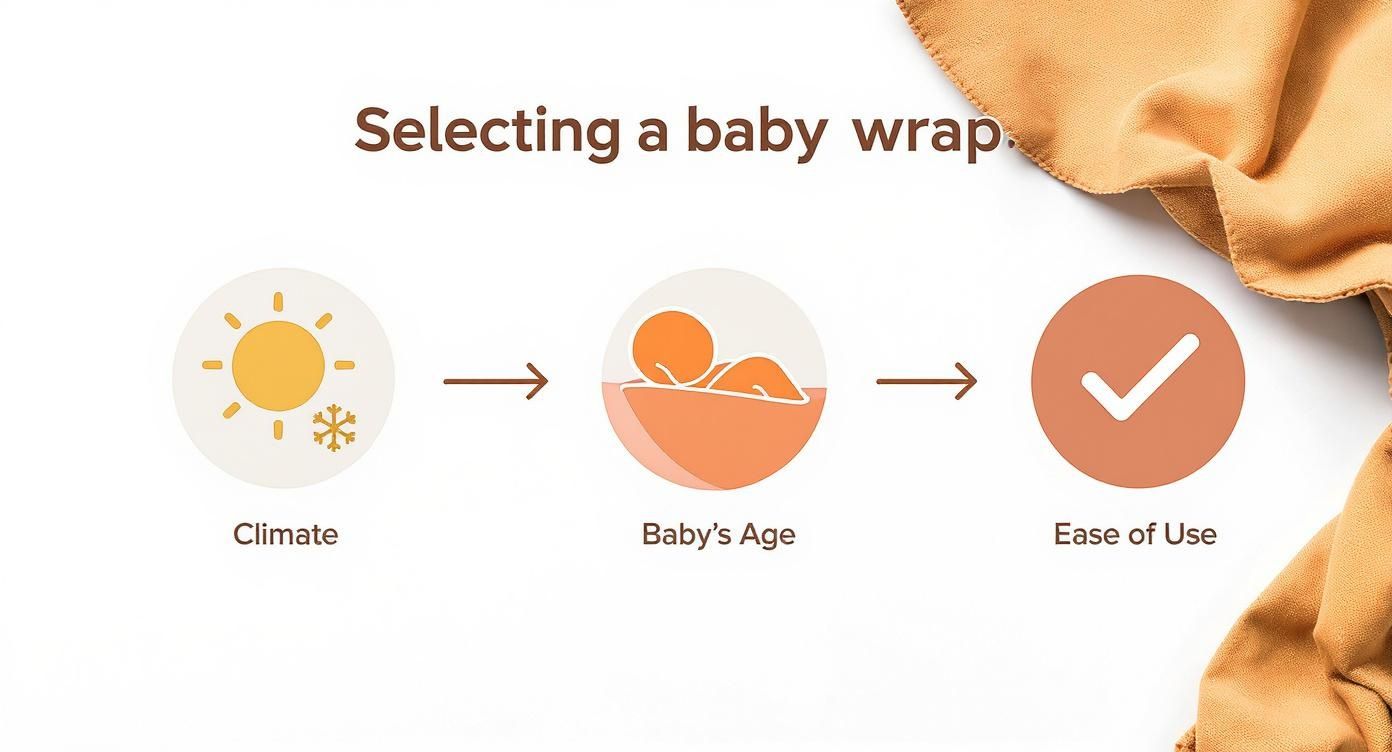
Essentially, the climate will dictate the fabric you choose, your baby's age will influence the style of wrap, and your own preference for convenience helps nail down the final decision.
The Classic Diamond Wrap
This traditional method is fantastic for newborns and uses a simple square muslin or cotton blanket. It gives them that secure wrap around the arms while leaving plenty of room for their little legs to wiggle.
Here is how you do it:
- Create the Diamond: Lay your wrap on a flat surface and turn it so it looks like a diamond. Fold the top corner down about 15-20 centimetres to make a straight edge.
- Position Your Baby: Pop your baby on their back in the centre of the wrap, with their shoulders resting just above that folded edge.
- First Tuck: Gently hold your baby's right arm down by their side. Take the left corner of the wrap, pull it snugly across their body, and tuck it firmly underneath their left side, near their back.
- Bottom Fold: Take the bottom corner of the diamond and fold it loosely up over your baby's feet. It is so important that this part is not tight. Their legs need to be able to bend up and out into that natural frog-like position.
- Final Wrap: Now, hold their left arm down. Take the remaining right corner, pull it across their chest, and tuck it securely under their back to finish.
The wrap should feel firm, but you should still be able to fit two fingers between the wrap and your baby's chest.
Arms-In Versus Arms-Out Variations
As your baby grows, their needs will change. Adapting your wrapping technique is key to making sure they stay safe and comfortable through each little milestone.
Arms-In for Newborns
Most newborns sleep better with their arms snugly inside the wrap. This simple step helps control the startle reflex that jolts them awake and can lead to longer, more peaceful sleep. The diamond method we just covered is a perfect arms-in technique.
Arms-Out for Older Babies
When your baby starts showing any signs of rolling, it is officially time to transition their arms out of the swaddle. An arms-out wrap gives them the freedom to push up if they happen to roll onto their tummy.
To make the switch, just follow the classic diamond wrap method but leave one or both arms out from the start. A good way to ease into it is by leaving one arm out for a few nights before transitioning to both arms free.
Using Modern Swaddle Bags
Modern swaddle bags with zips or velcro are designed for pure convenience, especially during those sleepy 3 a.m. nappy changes. While they remove the need for folding and tucking, getting the fit right is just as important.
Here are the key points for a safe fit:
- Correct Sizing: Always use the size recommended for your baby's current weight and height. A bag that is too big can allow fabric to ride up and cover your baby's face.
- Neck and Chest Fit: The fit around the neck should be snug but never tight. You should be able to slide two fingers comfortably between the fabric and your baby's chest.
- Hip-Healthy Design: Look for a swaddle bag with a wide, bell-shaped bottom. This design allows your baby's legs to fall into the natural "frog" position, which is essential for healthy hip development. Avoid any swaddle that straightens or restricts their leg movement.
The Golden Rules for Safe Baby Wrapping

Knowing how to wrap your baby is a great start, but understanding the safety rules makes it a truly secure and positive sleep tool. Think of this as your non-negotiable checklist, based on trusted advice from Australian health authorities.
Here is why it is so important: when done correctly, wrapping is incredibly safe. But when guidelines are missed, it can introduce risks we all want to avoid. Let’s break down the rules for every single sleep.
The Back to Sleep Rule
This is the most critical rule of safe infant sleep. You must always place your baby on their back for every sleep, whether it is a daytime nap or at night. It is the absolute cornerstone of safe sleeping practices in Australia.
Wrapping actually helps with this, as a securely swaddled baby is less likely to accidentally roll into a riskier position. Never place a wrapped baby to sleep on their side or tummy.
Ensure a Firm but Gentle Fit
Your wrap should feel snug around your baby's chest and arms to give them that calming, secure feeling, but it must never be too tight. A wrap that is too restrictive can make it harder for them to breathe.
A good way to check is with the two-finger test. You should be able to easily slide two or three fingers between the wrap and your baby’s chest. This gives them plenty of room to breathe comfortably while still feeling held.
Protect Healthy Hip Development
While you want the wrap firm around their upper body, it must always be loose around their hips and legs. This is so important for supporting healthy hip development and preventing issues like developmental dysplasia of the hip (DDH).
Your baby’s legs need to be able to bend up and out into a natural ‘frog’ position inside the swaddle.
Prevent Overheating
Babies cannot regulate their body temperature as well as we can, so overheating is a serious risk. The wrap itself counts as a layer of clothing, which means you need to be mindful of what they are wearing underneath.
Here are a few simple tips to keep your bub comfortable:
- Choose Breathable Fabrics: Lightweight cotton and muslin wraps are perfect for Australian climates because they let air circulate.
- Dress Lightly Underneath: In warm weather, a nappy and a singlet might be all they need under the wrap. For cooler nights, a light cotton onesie is a better choice.
- Check Their Temperature: Do not just feel their hands or feet, as they are often naturally cooler. Instead, feel the back of their neck or their tummy. If they feel hot or sweaty, it is time to remove a layer.
While deaths directly linked to swaddling are rare, unsafe sleep conditions can contribute to infant deaths. There were 117 SUDI deaths in Australia in 2022, some of which were linked to unsafe sleep environments. (Source: Causes of Death, Australia, 2022, Australian Bureau of Statistics, September 2023). This reinforces just how critical safe wrapping and sleeping practices are. Sticking to these guidelines is one of the best ways to reduce risks. You can discover more insights about safe swaddling practices for extra peace of mind.
Knowing When It Is Time to Stop Wrapping
While wrapping your newborn is a wonderful tool for those early months, it is a temporary comfort. Knowing the right moment to transition away from the swaddle is a crucial safety milestone for your growing baby. This change is not about hitting a specific age, but all about your baby's physical development.
Let’s break it down. The single most important cue that it is time to stop wrapping is when your baby shows any sign of starting to roll over. This can look like pushing up on their arms during tummy time, rocking from side to side, or even just using their legs to twist their little body.
Why Rolling Changes Everything
A swaddled baby who manages to roll onto their tummy is in a very dangerous position. Because their arms are tucked inside the wrap, they cannot push their face up or away from the mattress to clear their airway. This significantly increases the risk of suffocation.
This is why, the moment you spot those first attempts at rolling, you must stop swaddling with their arms in.
Making the Transition Smoothly
The thought of moving on from the wrap can feel a bit daunting, especially if your baby absolutely loves being swaddled. The good news is, a gradual approach can make it much easier for both of you. You do not have to go cold turkey.
Here is how you can gently phase it out:
- Start with One Arm Out: For a few nights, wrap your baby as you normally would, but leave one arm free. This lets them slowly get used to the new freedom of movement.
- Move to Both Arms Out: Once they have adjusted to having one arm out, you can move to leaving both arms free. At this stage, the wrap around their torso can still offer that familiar feeling of security.
- Introduce a Sleep Sack: The final step is to switch from a wrap to a safe infant sleeping bag or sleep sack. These are essentially wearable blankets that provide warmth without any loose fabric, making them the safest option for a baby who can roll.
Most babies start showing signs of rolling between 3 and 6 months of age. But remember, this is a developmental stage, not just a number on the calendar. Keep a close eye on your baby’s unique progress. For a deeper dive, you can learn more about when babies start rolling in our dedicated guide.
Your Questions on Baby Wrapping Answered
Even with the best guides, questions always pop up when you are in the middle of a 3 am wrap attempt. I have gathered some of the most common queries I hear from new parents, with clear, straightforward answers to help you feel more confident.
Let’s dive in.
Can I Wrap My Baby Too Tightly?
This is a common and valid concern. The short answer is yes, you can. While the wrap needs to be snug around your baby’s arms to calm their startle reflex, it must never restrict their breathing.
A good rule of thumb is to make sure you can comfortably slide two or three fingers between the wrap and your baby’s chest.
Most importantly, the wrap must always be loose around their hips and legs. This gives them the freedom to bend their legs up and out into that natural 'frog' position, which is critical for healthy hip development and helps prevent issues like hip dysplasia.
What Should My Baby Wear Under the Wrap?
This really depends on the room temperature and the wrap's fabric. For a warm Aussie summer day, just a nappy under a light muslin or cotton wrap is often all you need to keep them comfortable.
In winter or in a cooler, air-conditioned room, a lightweight cotton onesie is a better choice under a warmer swaddle. Always check your baby's temperature by feeling their tummy or the back of their neck. It should feel warm and dry, not hot or sweaty. This is a much more reliable indicator than feeling their hands or feet, which are often cooler.
My Baby Fights Being Wrapped. What Should I Do?
It's a classic scenario: some babies resist the wrapping process but then settle beautifully once they are all tucked in. Try wrapping your baby when they are calm, fed, and ready for a sleep to make the experience more positive. A gentle, reassuring voice can also work wonders.
However, if your baby consistently fights it and seems genuinely distressed, wrapping might just not be their thing. And that is okay. You could try an alternative, such as:
- A transitional swaddle: These often allow a baby’s arms to be up by their face, which some little ones prefer.
- An infant sleeping bag: This provides a sense of security with more freedom of movement and is the next safe step after wrapping anyway.
Every baby is different. It is all about finding what helps your little one feel safe and secure.
For a safe and stylish space for your baby to relax, play, and grow, explore the beautiful, machine-washable linen play mats from Wallaby Collective. Discover the perfect foundation for your nursery at https://wallabycollective.com.