

Navigating the 9 Month Sleep Regression
Just when you thought you had cracked the code to your baby’s sleep, everything seems to fall apart. If your once-angelic sleeper is now staging a protest every time you put them in their cot, you have likely hit the infamous 9-month sleep regression.
Do not panic. This is not a step backwards. It is actually a sign that your little one's development is right on track. It is a temporary, although exhausting, side effect of some pretty incredible upgrades happening in their brain and body.
What Is the 9-Month Sleep Regression?

If you feel like your baby’s sleep has suddenly gone completely off the rails, you are in good company. The 9-month sleep regression is a very common and temporary phase. It happens when a baby who was sleeping well suddenly starts fighting bedtime, refusing naps, and waking up all through the night.
Here is why. The most important thing to remember is that this is not really a "regression" at all. It is a progression. Your baby's brain is just so busy processing a whole suite of new skills that it has a hard time switching off.
Think of it like your computer running a massive software update. While it installs, things might get a bit glitchy or slow down. But once the update is finished, it comes back faster and more powerful than before. That is exactly what is happening with your baby.
Let's break it down. Here is a simple overview of what is going on.
| Aspect | Description |
|---|---|
| What It Is | A temporary disruption in a baby's sleep patterns, typically occurring around 9 months of age. |
| Common Signs | Fighting naps, resisting bedtime, frequent night wakings, increased fussiness, and separation anxiety. |
| Key Causes | Major developmental leaps: learning to crawl/pull up, understanding object permanence, and social growth. |
| Duration | Usually lasts between 2 to 6 weeks. |
| Parent's Goal | Stay consistent with routines and offer comfort without creating new, unsustainable sleep habits. |
| Quick Guide to the 9 Month Sleep Regression |
This table highlights that the regression is a normal developmental phase, not a problem you need to "fix" in the traditional sense.
Key Milestones Driving the Disruption
So, what are these big updates causing all the chaos? Around nine months, your baby is hitting several huge developmental milestones at once, and their brain is buzzing with activity.
Here are the main culprits behind those sleepless nights:
- New Physical Skills: Most babies are mastering crawling, pulling themselves up to stand, and cruising along furniture. They are so thrilled with these new moves that they want to practise them constantly, even at 2 AM in their cot.
- Cognitive Leaps: Your baby is starting to grasp object permanence. This is a huge mental leap where they realise you still exist even when you have left the room. It is a brilliant development, but it can also spark a new wave of separation anxiety at bedtime.
- A Budding Sense of Self: They are also becoming more aware of their own opinions and desires. This newfound independence can lead to protesting naps or bedtime simply because they would rather stay up and hang out with you.
This is a well-documented pattern. One study found that nearly two-thirds of infants aged 6 to 12 months wake during the night. The research highlights just how common sleep disruptions are during this developmental window.
A "sleep regression" is simply a sign that your baby's development is right on track. It is a temporary disruption caused by exciting new milestones, not a permanent setback.
Realising that these changes are completely normal is the first step. The challenges you are facing right now are actually a positive sign of your baby’s amazing growth, even if it really does not feel like it in the middle of the night.
Why This Sleep Disruption Happens

It can feel completely baffling when your baby's sleep suddenly goes off the rails. But this disruption is not random. It is fuelled by a perfect storm of incredible developmental progress happening all at once. The 9-month sleep regression is a direct result of your baby's brain and body levelling up in a big way.
Let's break it down. Three main areas of growth are responsible for these new sleep challenges. They include a huge leap in physical skills, major cognitive advancements, and a surge in emotional awareness. Understanding what drives this change is the first step to navigating this phase with confidence.
An Explosion in Motor Skills
Around nine months, your baby transforms into a little person on the move. Their brain is working overtime to master amazing new skills like crawling, pulling themselves up to a standing position, and cruising along the furniture.
This is absolutely thrilling for them. Their brain is so stimulated by these new abilities that it just does not want to switch off. Think of it like a child who gets a brand-new, exciting toy they cannot possibly put down. Your baby's new "toy" is their own body. They want to practise standing, crawling, and exploring 24/7, even in their cot in the middle of the night.
Your baby is not waking up to be difficult. They are waking up because their brain is buzzing with the impulse to practise their new physical superpowers.
This intense desire to move can easily override their ability to settle down and sleep. You might put them down on their back, only to peek at the monitor and see them practising push-ups or trying to pull up on the cot railings moments later.
Major Cognitive Leaps and Object Permanence
While their body is learning to move, their mind is also taking giant leaps forward. One of the most significant cognitive milestones firing up right now is the development of object permanence.
This is the huge realisation that people and things still exist even when they are out of sight. Before this, when you left the room, it was a classic case of "out of sight, out of mind." Now, your baby knows you are still somewhere nearby. They might start to wonder why you are not with them.
Here is why this is a game-changer for sleep:
- Bedtime becomes a separation. When you walk out of the nursery, your baby now fully grasps that you have left them alone.
- Night wakings feel different. If they wake up in the dark, they are more aware of your absence and will probably call out for you to come back.
- Cause and effect is clearer. They are also learning that if they cry, you will likely reappear. This is not manipulation. It is them testing out their new understanding of how the world works.
These cognitive shifts are all signs of healthy brain development. They show your baby is forming secure attachments and a more sophisticated understanding of their world. These changes are distinct from typical infant growth spurts, though they can happen around the same time.
A Peak in Separation Anxiety
The combination of new physical and cognitive skills leads directly to the third culprit: a peak in separation anxiety. Your baby's growing mobility means they can move away from you, but their growing awareness makes them want to stay even closer.
This creates an emotional tug-of-war. They understand you exist when you are gone, and they now have a very strong preference for being with their favourite people. This can make them feel anxious or upset when you leave them for a nap or at bedtime.
This emotional development is actually a positive sign of a strong, healthy bond. It just makes falling asleep independently much more challenging for a little while. Your baby is not just fighting sleep. They are protesting the separation from their favourite person in the world, you.
Common Signs of the 9 Month Sleep Regression
So, how can you be sure you have been hit by the infamous 9-month sleep regression? While every baby is unique, this phase usually brings a whole cluster of new behaviours that can leave you feeling completely bewildered and, frankly, exhausted. Pinpointing these signs is the first step to understanding what is really going on and figuring out how to respond.
Let's break it down. The changes you are seeing are not random. They are classic indicators that your little one is navigating a massive developmental leap. Recognising these patterns can help you feel more in control and a little less worried.
Sudden Changes in Sleep Patterns
The most glaring sign is a dramatic shift in your baby’s established sleep habits. It often feels like it happens overnight, especially if you were just starting to enjoy having a reliable little sleeper.
Here are the key changes to look out for:
- Increased Night Wakings: Your baby might suddenly start waking multiple times a night after previously sleeping for lovely long stretches.
- Fighting Bedtime: The bedtime routine that once calmed your baby might now turn into a full-blown battle, complete with lots of crying and protesting.
- Nap Refusals: Your baby may flat-out refuse one or both of their naps, or their naps might become frustratingly short.
If your baby was sleeping well and is now suddenly resisting sleep and waking frequently, it is a strong indicator of a developmental regression, not a failure on your part.
This abrupt change is often the most jarring for parents. It is an incredibly common experience. Research shows that sleep problems are particularly noticeable around this age. One Australian study found that 39% of parents with a baby aged 8 to 10 months described their child as having a sleep problem. It really highlights how widespread this phase is.
Increased Daytime Fussiness and Clinginess
The fallout from the 9-month sleep regression is not just confined to night-time. Disrupted sleep almost always leads to a tired, grumpy baby during the day. This is not just about them being sleepy. It is also tied to the very developmental milestones causing the regression in the first place.
You might notice your baby is:
- More Fussy and Irritable: A lack of quality sleep can make your baby easily frustrated and quick to cry during their awake hours.
- Extra Clingy: Separation anxiety often peaks around this time. Your baby might cry every time you leave the room or constantly need to be held for comfort.
- Seemingly Always Tired: Despite fighting sleep, your baby might show clear signs of being overtired, like rubbing their eyes and yawning.
Distinguishing Regression from Other Issues
It is also important to make sure you are not confusing a sleep regression with other issues like teething or illness. While teething can definitely cause discomfort and disrupt sleep, it usually comes with other symptoms. These can include drooling, swollen gums, or maybe a low-grade fever.
An illness will typically present with more obvious signs, like a high fever, changes in appetite, or lethargy. The 9-month sleep regression, on the other hand, is mostly defined by a behavioural shift in a baby who is otherwise healthy and thriving. If you suspect something more is going on, always trust your instincts and check in with your GP or child health nurse.
Practical Strategies to Get Through It
Alright, let’s talk about how to navigate the 9-month sleep regression without losing your mind. This phase is tough. But with a bit of patience and a solid game plan, you can guide your little one back to restful nights. The goal is not to stop these developmental leaps. They are amazing. The goal is to manage the sleep chaos they bring.
Next steps. We will focus on reinforcing those healthy sleep habits you have worked so hard on. We will make sure their daytime activities set them up for night-time success. And we will gently address the big feelings that come with separation anxiety. These practical steps can make a world of difference.
Double Down on Your Bedtime Routine
If there is one thing you can lean on right now, it is your bedtime routine. Think of it as a powerful signal to your baby’s busy little brain that the day is winding down and it is time to get ready for sleep. If you already have a great routine, stick to it. Consistency is everything.
If things have gotten a bit loose lately, now is the perfect time to tighten it up. A simple, calming sequence of events before bed can work wonders.
Here is why it is so effective:
- It creates strong sleep cues. Things like a warm bath, a gentle massage, reading a book, and having a final feed in a dimly lit room all work together. They help your baby transition from the buzz of playtime to a state of sleepy calm.
- It provides comfort and security. Routines are predictable. A baby navigating huge developmental changes and feeling a bit clingy will find it incredibly reassuring to know exactly what is coming next.
A consistent bedtime routine does not just prepare your baby for sleep. It builds a sense of safety and predictability that can calm the anxieties fuelling the regression.
Just make sure the whole process is calming and screen-free. The aim is to lower stimulation, not ramp it up. That quiet, loving wind-down period is your secret weapon for helping their mind switch off.
Optimise the Sleep Environment
Take a look at your baby’s bedroom. It should be a calm, quiet, and pretty boring place to be at night. During a sleep regression, even the smallest distraction can be enough to jolt them out of a light sleep cycle or stop them from settling down in the first place.
Make sure the room is:
- Dark: Blackout blinds are a game-changer. Darkness is a key ingredient for producing melatonin, the sleepy hormone.
- Quiet: A white noise machine can be a lifesaver. It muffles those sudden household sounds, like a dropped spoon or a barking dog, that might otherwise wake your baby.
- A comfortable temperature: A room that is not too hot and not too cold is essential for good, safe sleep.
You are trying to create a space that signals "sleep time" and nothing else. It is also a good idea to remove any super exciting toys from the cot. This can help reduce the temptation for a 2 AM session of pulling-to-stand practice.
Manage Daytime Activity and Nutrition
What happens during the day has a massive impact on what happens at night. With the 9-month sleep regression in full swing, you want to be sure their daytime schedule supports their sleep needs, not works against them. This means giving them plenty of chances to practise their new skills. It also means making sure they are getting enough to eat during their awake hours.
Here is why that matters:
- Practise skills during the day. Get them on the floor and let them crawl, pull up, and cruise around as much as they want. The more they can get these new moves out of their system while they are awake, the less likely they will feel the urge to do it in their cot at 2 AM.
- Ensure full feeds. Babies at this age are very distractible. Try to offer feeds in a quiet space so they can really focus and get the calories they need during the day. This makes it less likely they are waking up from genuine hunger overnight.
Beyond these traditional methods, some parents have found success by integrating sensory toys into a sleep routine to provide extra comfort and help with self-regulation.
Address Separation Anxiety Head-On
Separation anxiety is a huge piece of the 9-month puzzle. Your baby now understands that you still exist even when you are not in the room. They simply want you close. While it is tempting to do anything to stop the crying, creating new habits you cannot maintain long-term can make things harder down the track. Rocking them to sleep for an hour is a good example.
Instead, try this:
- Play connection-building games. Games like peek-a-boo and hide-and-seek are fantastic during the day. They are a fun, low-stress way to teach object permanence. They gently reinforce the idea that even when you go away for a moment, you always come back.
- Offer gentle reassurance at night. When your baby wakes and cries for you, it is absolutely fine to go to them. You can offer quiet, brief reassurance with a soft voice and a gentle pat on the back. The key is to try and avoid picking them up and rocking them all the way to sleep. This is especially true if that is not a habit you want to start. The goal is to be a comforting presence without becoming a sleep prop.
Consistency is your best friend here. Responding in the same calm, predictable way each time helps your baby learn that you are there for them, but that night-time is for sleeping. I know it feels endless, but this phase is temporary. With these strategies, you can get through it with confidence.
A Sample Sleep Schedule for a 9-Month-Old
Having a predictable daily rhythm can be an absolute game-changer during the 9-month sleep regression. When your baby knows what to expect next, their body and mind find it much easier to wind down and transition from playtime to sleep.
Think of this sample schedule as a flexible template. You can tweak it to fit your little one’s unique personality and needs. At this age, most babies are doing well on a two-nap schedule. Wake windows usually last around 3 to 3.5 hours. But remember, this is just a guide. The real secret is to watch your baby for their tired cues, rather than watching the clock too strictly.
A Typical Day for Your 9-Month-Old
So, what might a day actually look like? This example balances active playtime, meals, naps, and a lovely, calming wind-down period before bed. This kind of structure helps regulate their internal clock, which makes settling at night a whole lot easier.
Here is a sample routine to get you started:
Sample 9-Month-Old Daily Schedule
| Time | Activity |
|---|---|
| 7:00 AM | Wake up, milk feed, and cuddles. |
| 7:30 AM | Breakfast (solids). |
| 8:00 AM | Playtime (a great time for practising new skills like crawling and pulling up). |
| 9:45 AM | Start wind-down for nap (quiet story, lullaby). |
| 10:00 AM | Morning nap (aim for 1 to 1.5 hours). |
| 11:30 AM | Wake up, milk feed. |
| 12:30 PM | Lunch (solids). |
| 1:00 PM | Playtime (perhaps an outing or a walk). |
| 2:45 PM | Start wind-down for nap. |
| 3:00 PM | Afternoon nap (aim for 1 to 1.5 hours). |
| 4:30 PM | Wake up, milk feed. |
| 5:30 PM | Dinner (solids). |
| 6:00 PM | Quiet family time. |
| 6:45 PM | Begin bedtime routine (bath, massage, pyjamas, final milk feed, story). |
| 7:15 PM | Into the cot, sleepy but awake. |
| 7:30 PM | Bedtime. |
This schedule is really about finding a good flow for your family. It should feel natural and supportive.
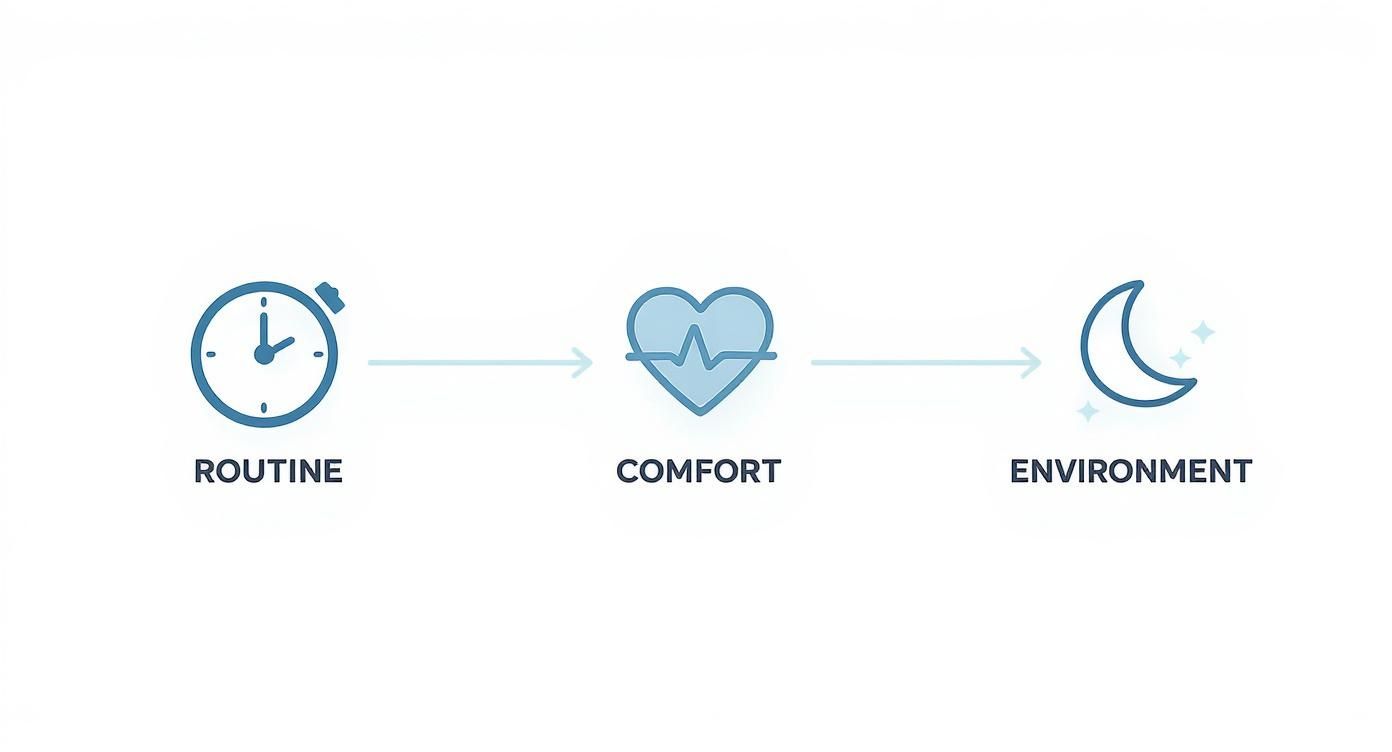
As you can see, a solid routine is built on the pillars of predictability, comfort, and a sleep-friendly environment. When these three work together, you create a powerful foundation for healthy sleep. This is exactly what you need during a regression.
Adapting the Schedule for Your Baby
Of course, every baby is different, so being flexible is key. Use this schedule as a starting point. Do not be afraid to adjust it based on your family’s rhythm and your baby's cues.
- Watch Wake Windows: The time your baby is awake between sleeps is often more important than the exact time on the clock. An overtired baby is a wired baby. They will have a much harder time falling asleep and staying asleep.
- Keep Naps Consistent: Try to have naps in the cot as often as you can. This really helps build a strong sleep association with their own space.
- Be Patient: When you are in the middle of a regression, it might take a week or two for a new schedule to click. Just stay consistent, and you will see progress.
It is amazing to think how much has changed in just a few short months. If you are curious, you can compare this routine to our sleep schedule for a 3 month old to see their incredible development in action.
When to Talk to a Health Professional
While the 9-month sleep regression is a completely normal part of your baby’s development, it is also important to trust your instincts as a parent. Sometimes, what seems like a regression can be a sign that something else is going on. Knowing when to reach out for professional advice is a key part of navigating this period with confidence.
Let's be clear. Your parental intuition is a powerful tool. If you have a gut feeling that something just is not right, it is always best to get it checked out. A qualified professional can give you personalised guidance and, most importantly, peace of mind.
Red Flags to Watch For
Most of the time, the challenges of a sleep regression will fade within a few weeks. This is especially true with a bit of consistency and a whole lot of patience. However, there are a few specific signs that should prompt a chat with your GP or a child health nurse.
Keep an eye out for these indicators:
- Poor Weight Gain: If your baby is not gaining weight as they should, or if the sleep disruptions are seriously impacting their feeding schedule.
- Signs of Pain or Discomfort: Persistent crying that sounds different from their usual protest cry. If you cannot seem to soothe it, it could indicate they are in pain.
- Breathing Concerns: Any snoring, noticeable pauses in breathing, or consistently laboured breathing while they sleep is something a doctor should look at straight away.
- Extreme Distress: If your baby is completely inconsolable for long stretches and nothing you do brings them any comfort.
Trust your gut. If your baby's sleep issues are happening alongside other worrying symptoms, or if the disruption just feels more severe than a typical regression, seeking a professional opinion is always the wisest move.
Your Wellbeing Matters Too
It is not just your baby's health that needs monitoring during this time. The chronic sleep deprivation that often comes with a sleep regression can take a massive toll on your own mental and physical health. It is absolutely okay to admit you are struggling and need a bit of backup.
Feeling overwhelmed, anxious, or simply unable to cope with the exhaustion is a perfectly valid reason to seek help for yourself. Your GP can point you to resources and support for your own wellbeing. This is just as crucial as caring for your little one. For parents looking into professional help, understanding what online doctor services can offer is a great way to see what accessible healthcare options are out there. Reaching out is a sign of strength, not weakness.
Your Questions Answered
When you are in the thick of the 9-month sleep regression, it can feel like you are the only one dealing with these very specific challenges. This phase is tough, but you are not alone, and your questions are completely valid. When you are sleep-deprived, you need clear, straightforward answers.
Let's break down some of the most common worries we hear from parents.
How Long Does the 9-Month Sleep Regression Last?
This is the big one. The question on every tired parent's mind. While it can feel like an eternity in the middle of the night, the 9-month sleep regression typically lasts between two and six weeks. How long it sticks around really comes down to your baby’s unique development and how you handle the disruptions.
The key thing to hold onto is that this is a temporary phase. If you can stick to your routines and resist creating new sleep habits that you cannot maintain long-term, you will help your baby move through this developmental leap much more smoothly. The more predictable and reassuring you are, the faster they will find their way back to their usual sleep patterns.
Consistency is your best friend here. Try to avoid introducing new sleep props you are not prepared to keep up, as this can accidentally make the regression drag on.
Should I Sleep Train During This Regression?
Deciding whether to start or continue sleep training right now is a really personal choice. However, many sleep experts agree that a regression is actually a great time to lean into consistency. Consistency is the heart of any sleep training method. You definitely do not need to put everything on pause.
Here is why sticking with it, or starting, can be so effective:
- It reinforces clear expectations. Your baby's world feels a bit chaotic with all these new skills they are learning. A consistent sleep routine provides the structure and security they crave.
- It prevents new habits from forming. It is so easy to fall into the trap of rocking or feeding your baby back to sleep every time they wake up. Continuing with your sleep plan helps you avoid starting habits that are hard to break later.
If you already have a solid sleep foundation, your best bet is to maintain it. If you have not started sleep training yet, you can still begin now. Just be prepared for a few extra challenging nights while your baby adjusts.
What if My Baby Starts Refusing Their Second Nap?
It is incredibly common for a 9-month-old to suddenly fight or completely refuse their afternoon nap. This often makes parents wonder if it is time to switch to just one nap a day. The answer is almost always no.
Most babies are not ready to drop to one nap until they are between 15 and 18 months old. Transitioning too early can backfire. It can lead to an overtired baby who then has an even harder time sleeping at night.
Instead of dropping the nap, try making a few small adjustments:
- Try stretching the wake window just a little bit before that second nap.
- Make the wind-down routine before the nap extra calm and soothing to help them switch gears.
- Remember that even a short "quiet time" in the cot is better than skipping the nap altogether.
This nap strike is usually temporary. Stick with your two-nap schedule, as your baby really does still need that restorative daytime sleep to grow and thrive.
At Wallaby Collective, we create beautiful, safe, and practical linen play mats designed for your baby’s comfort and your home’s style. Discover our collection and create the perfect space for tummy time, play, and peaceful moments. Explore our range at https://wallabycollective.com.