

When Can You Stop Burping Baby: A Practical Aussie Guide
You can usually stop burping your baby between 4 and 6 months old. The real answer depends on your baby's physical development. As their digestive system strengthens, the need for burping naturally fades.
Reading the Signs: The Burping Milestone
New parents often ask when they can stop burping their baby. Burping is a temporary and important part of newborn care.
Here is why. It helps your little one release swallowed air that their new digestive system cannot handle alone. Trapped air causes discomfort, fussiness, and spit-ups. A good burp provides essential comfort.
Think of this phase as a journey from constant patting to happy feeding times. The goal is to learn your baby’s unique cues.
Why Your Baby’s Cues Matter Most
Australia has no strict rule for when to stop burping because every baby is different. Many babies can manage air on their own by 3 to 4 months. Your baby's individual progress is the only guide you need.
The government-funded Pregnancy, Birth and Baby service advises that observing your baby's development is key. By this age, many infants show they need less help with burping as their digestive systems mature. This resource helps you understand your baby's wind and burping needs.
This simple decision aid can help you decide when to keep going based on your baby's mood.
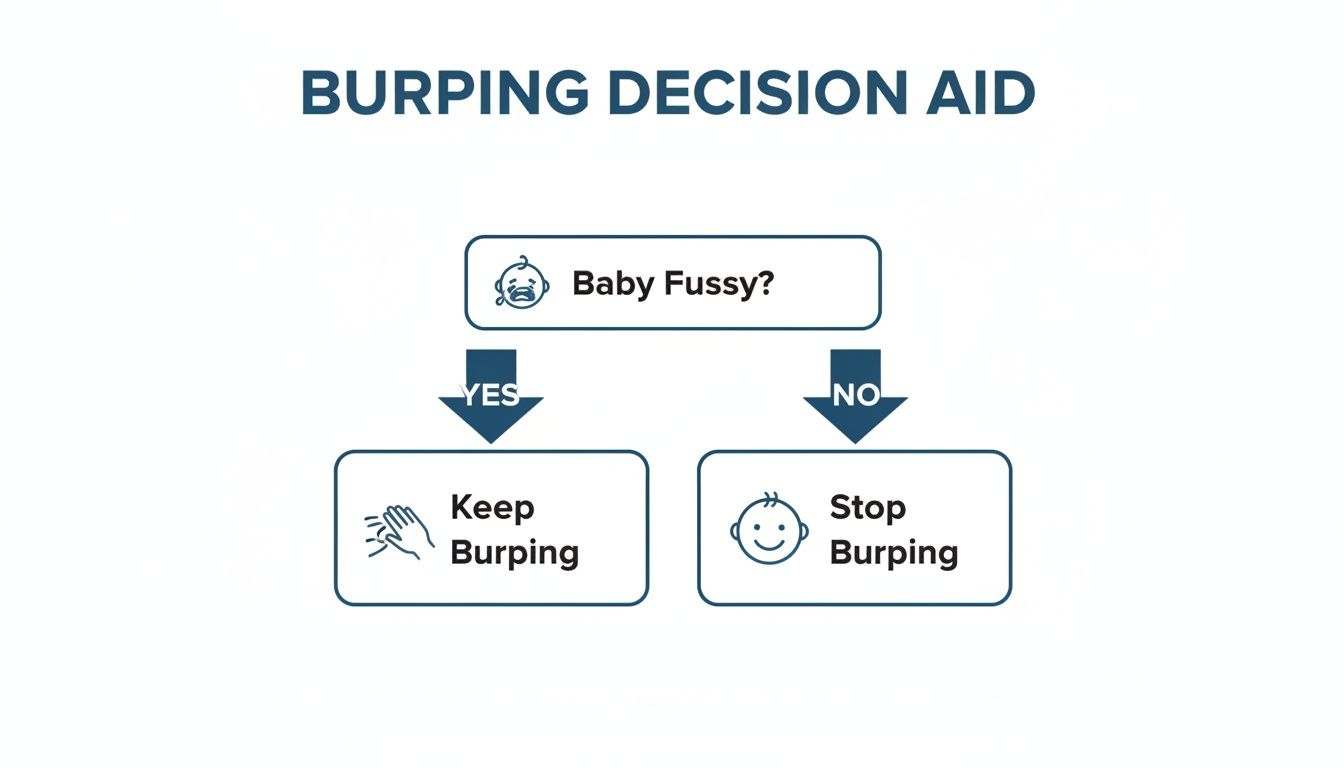
The main takeaway is simple. A fussy baby probably needs a burp. A content baby likely does not.
Next steps. As you read on, you will learn the specific signs that signal your baby is ready to graduate from burping. This will give you the confidence to know when to stop.
Why Newborns Need a Helping Hand with Wind
Why is burping a newborn important? Your baby’s new digestive system is still developing. This phase is temporary, but getting it right makes a big difference to their comfort.
During feeding, babies swallow tiny air bubbles with their milk. This is normal, but a newborn’s body is not ready to handle it alone.

The Mechanics of Trapped Wind
A newborn's core and digestive muscles are not yet strong. These air bubbles get stuck in their tummy. This can cause pressure and discomfort, leading to fussiness and spit-up.
Let's break it down. A baby's digestive system is immature in two key ways:
- Weak Muscles: The muscles in their digestive tract cannot effectively push air bubbles up and out on their own.
- Immature Oesophageal Sphincter: This valve between the oesophagus and stomach is not fully developed. This makes it easy for milk and air to travel back up.
This combination means that trapped air has nowhere to go without your help. Burping is a practical way to relieve that pressure and keep your baby comfortable. For some babies, trapped wind can be part of more persistent issues. You can find helpful context by understanding acid reflux in babies.
Once you understand the simple mechanics, burping feels less like a task and more like a crucial comfort measure. It is an active way you can help your baby feel settled and secure after each feed.
Why It Gets Better with Age
The good news is that this phase does not last forever. As your baby grows, so does their digestive system.
Usually, you will see significant developmental leaps between 4 to 6 months. Their core muscles strengthen. This allows them to sit up with more control and move around.
These new movements naturally help them work out any trapped air themselves. At the same time, their oesophageal sphincter matures. It does a better job of keeping everything down.
This is why there is no magic date for when you can stop burping your baby. Instead, you just need to watch for the signs. Once they can manage their own wind, you will know the job is done.
Signs Your Baby Is Becoming a Burping Pro
Forget watching the calendar. The best way to know when you can stop burping is to watch your baby. They will give you clear signs that they are mastering bringing up wind on their own. Learning these cues is the first step to understanding your baby’s rhythm.
Let's break it down. As your baby gets bigger, their physical strength improves. This development directly links to their ability to manage trapped air without your help.
Stronger Head and Neck Control
One of the first signs is better head and neck control. When your baby can hold their head steady without support, their upper body is getting stronger.
This new strength helps keep their oesophagus straighter. This creates a clearer path for air to escape. You might notice a burp pops out almost instantly when you lift them to your shoulder.
This milestone is a big clue that their body is starting to do the work for you. Stronger core muscles also help push air up and out.
A key sign is when they start burping on their own as you move them into an upright position. This shows their developing muscles are becoming efficient at releasing trapped air independently.
Many parents notice these changes around the three-month mark. Happiest Baby Australia notes that while many babies can burp independently around this time, some may still need help until they are seven to nine months old. Raising Children Network's research shows many Australian parents stopped assisted burping between three and six months. This period often lines up with babies gaining better head control.
Sitting Up with Less Help
Another major signal is your baby’s ability to sit up, even with some support. Sitting upright is the best position for natural burping.
Here is why. Gravity helps settle milk in their tummy while allowing air bubbles to rise and escape. Once your baby can sit more independently, their digestive system becomes more efficient.
Becoming Less Fussy After Feeds
The most telling sign is a change in their mood after a feed. If your baby is consistently calm and comfy after eating without being burped, they are likely managing wind fine on their own.
You will see a noticeable drop in:
- Squirming or arching their back: These are classic signs of gas discomfort. A settled baby no longer feels that pressure.
- Excessive spit-up: As their oesophageal sphincter matures, they can keep milk down more effectively.
- General fussiness: A baby not bothered by trapped wind is a happier baby after a feed.
When these signs of discomfort fade, you can feel confident it is time to stop burping.
How Feeding Methods Change Burping Needs
Does it matter if your baby is breastfed or bottle-fed? Absolutely. The way your baby takes in milk impacts how much air they swallow. This changes how often they might need a burp.
Getting your head around these differences will help you tailor your approach for a happier baby.

Why Bottle Fed Babies Often Need More Burping
Bottle-fed babies usually swallow more air. This makes burping a standard part of the routine in the early months.
Let's break it down. The flow from a bottle’s teat can be faster than your baby can manage. This can cause them to gulp, swallowing air with their milk. If the bottle is not held at the right angle, air can get trapped in the teat.
Here is a quick rundown of why this matters:
- Teat Flow: A flow that is too quick can lead to gulping.
- Air Gaps: Holding the bottle incorrectly can create air pockets that get swallowed.
- Less Control: Babies have less control over milk flow from a bottle compared to the breast.
Many parents have success with paced bottle feeding. This technique involves holding the bottle more horizontally. It lets your baby draw the milk in, which mimics the rhythm of breastfeeding. Anti-colic bottles, designed with vents to reduce air bubbles, can also help.
Breastfeeding and Air Intake
Breastfed babies generally swallow less air. A good latch creates a seal around the nipple and areola, which blocks air. That said, they can still get windy.
A shallow latch is often the main cause. If your baby is not latched deeply enough, they might suck in air. A fast milk let-down can also make your baby gulp to keep up. You might notice this during growth spurts or cluster feeding. Our guide on how long newborn cluster feeding lasts could be a helpful read.
No matter how you feed your baby, the goal is the same: keep the swallowed air to a minimum. For bottle feeding, control the flow. For breastfeeding, perfect the latch.
Ultimately, pay close attention to your baby's cues whether they are breastfed or bottle-fed. As their digestive system matures, you will find they need less help from you. This brings you one step closer to figuring out when you can stop burping your baby.
When to Give Extra Burping Support
Most babies follow a similar path. Some need more time and support with burping. That is perfectly okay. Reflux, colic, and being born prematurely can mean you will be on burping duty for longer.
If your baby has reflux, getting burps up is even more important. It helps ease the pressure in their tummy. This can mean less spit-up and a more settled baby after a feed.
For premature babies, their digestive and muscular systems are still catching up. They often need help with burping for longer than full-term babies while their bodies get stronger.
Colic and Trapped Wind
Colic can be tough, and its exact causes are still a mystery. However, many parents find that patiently burping their baby can ease discomfort from trapped wind.
It is not a magic cure for colic. It is a practical step that can offer some relief during fussy periods. This is especially true during the newborn witching hour, when fussiness peaks.
It is good to remember that while burping is a common practice, its direct scientific link to reducing colic is still debated. The best approach is always to focus on what brings your individual baby comfort.
Research shows that while wind-related fussiness affects many babies at birth, this drops significantly by four months old. This is a great sign that you might be able to wind down the burping sessions. Many Australian parents keep burping until their baby is three to six months old, often based on family advice. For more details, you can learn more about these findings on Newborn Baby Australia.
When to Seek Advice
If your baby seems consistently distressed, spits up a lot, or appears to be in pain after feeds, it is best to talk with a professional.
Your child health nurse or GP can offer personalised advice. They can rule out any underlying issues and give you strategies tailored to your baby's needs. Always trust your gut. If something feels off, getting professional advice is the right move.
Life After Burping: Gentle Ways to Manage Wind
Once you see signs that your baby is handling wind on their own, you can phase out burping. This opens the door to new, gentle ways to help your baby manage any lingering gas naturally.
Let's break it down. Instead of interrupting feeds for a burping session, you can introduce simple movements afterwards. These alternatives help your baby's maturing digestive system do its job more easily.
Gentle Alternatives to Traditional Burping
As your baby gains more body control, a few simple techniques can replace back patting. These methods work with your baby's development.
- Infant Massage and Leg Bicycles: Gently massaging your baby's tummy clockwise or bicycling their legs can help move trapped gas. It is a calm way to ease any discomfort.
- Upright Holding: The simplest method is often the best. Hold your baby upright against your chest for 10 to 15 minutes after a feed. Gravity helps milk settle while allowing air to rise and escape.
This small shift can reframe post-feed time, turning it from a task-focused routine into a calm, bonding experience. It supports their digestive health while building a secure attachment.
The Power of Tummy Time
Tummy time becomes an even more valuable tool during this transition. It strengthens your baby's neck and core muscles. The gentle pressure on their belly also helps them expel trapped gas on their own.
Next steps. Add short, supervised tummy time sessions after a feed. This transforms it from a developmental exercise into a productive part of their routine. For more tips, our guide to tummy time for newborns can help you get started safely. This simple activity empowers them to manage wind independently.
Common Questions About Stopping Burping
Deciding to stop burping can feel like a big step. It is natural to have a few questions. Let’s clear them up so you can feel confident.

What Happens If I Stop Burping My Baby Too Soon?
If you stop burping before your baby is ready, they will let you know. They will likely get fussier after feeds or spit up more.
Do not worry, you have not done any harm. It is their body’s way of saying they still need help. Simply go back to burping for another few weeks and watch their cues.
Is It Okay If My Baby Falls Asleep Without Burping?
Absolutely. This becomes more common as they get older. If your baby dozes off during or after a feed, there is no need to wake them for a burp.
You can try holding them upright against your shoulder for about 10 minutes to see if a burp comes up on its own. If not, lay them down safely on their back. If they wake up later feeling uncomfortable, you can try burping them then.
My Six Month Old Still Seems Gassy. Should I Keep Burping?
By six months, most babies manage their own gas. They have better core strength, sit up, and move around more.
If your six-month-old still seems gassy, talk with your child health nurse or GP. Sometimes, extra gassiness can be linked to the introduction of solid foods. A health professional can offer tailored advice to keep your baby happy.
At Wallaby Collective, we design beautiful, practical linen play mats that create the perfect soft space for your baby's development, from their first tummy time sessions to independent play. Discover our collection of modern, machine-washable play mats today.