

Discover tummy time positions for newborns: Safe ways to support development
Tummy time is more than just floor play. Think of it as your newborn's first workout. These short, supervised sessions on their belly are essential for building strength in their neck, shoulders, and core. This strength sets them up for future milestones.
Why Tummy Time Is So Important For Your Baby
Welcome to the world of tummy time. This simple activity is one of the most powerful things you can do for your newborn’s development. It is like their own baby gym, laying the foundation for healthy movement.
Let's break it down. The strength your baby builds during tummy time provides the groundwork for major motor milestones. Every time they lift their head, they strengthen the muscles needed to roll over, sit up, and crawl.
The Foundation For Healthy Growth
This simple exercise affects several key areas of your baby's development.
- Motor Skills: Tummy time strengthens the neck, back, shoulder, and core muscles, which are all crucial for future mobility.
- Sensory Awareness: Lying on their tummy lets your baby experience different textures on their hands and cheeks. They also see the world from a new perspective.
- Preventing Flat Spots: It helps prevent positional plagiocephaly, or flat spots on the back of the head, by taking pressure off their skull.
- Aiding Digestion: Gentle pressure on the tummy can sometimes help relieve wind and discomfort.
Tummy time is a critical building block for a wide range of developmental skills. It supports everything from motor control and sensory processing to visual tracking and even future feeding skills.
Following Australian Health Advice
Experts recommend making tummy time a part of your baby’s daily routine from the start. The Australian 24-Hour Movement Guidelines for the Early Years advise a daily total of at least 30 minutes of tummy time while your baby is awake.
Here is why this advice is important. It helps counteract the effects of back sleeping. The prevalence of flat heads in Australian infants has risen to between 16% and 22%. By six months, consistent practice helps babies learn to push up on their hands, a key step towards crawling.
A little floor time each day makes a huge difference in their physical journey. You can discover more about the specific benefits of tummy time for babies in our detailed guide.
How to Gently Introduce Your Newborn to Tummy Time
Working out when to start tummy time with a newborn can feel uncertain for new parents. The great news is you can begin from day one, as soon as you are home from the hospital. The secret is starting with gentle positions that make comfort and bonding the top priority.
Let's walk through the perfect first step. It is all about creating a positive and secure first experience so your baby feels safe and loved.
Start with Tummy to Tummy Contact
The easiest and most comforting way to begin is with the tummy-to-tummy position. Lie back in a reclined position on the couch or propped up with pillows in bed. Then, place your baby directly on your chest or stomach.
This position is effective for a few reasons:
- It feels secure: The warmth of your body, the sound of your heartbeat, and your familiar scent are incredibly soothing for a newborn.
- It encourages bonding: With your baby so close, you can talk, sing, and make eye contact. It turns the exercise into a beautiful moment of connection.
- It's a gentle start: Your reclined body provides a soft, angled surface. This makes it less work for your baby to lift their head compared to a flat floor.
This face-to-face interaction makes the whole experience feel more like a cuddle than a workout. It helps your baby build positive feelings about being on their front.
For a newborn, even a few seconds of trying to lift their head while on your chest is a big effort. This simple action begins strengthening their neck and upper body muscles from the very first days of life.
Keep Sessions Short and Sweet
When you first start, timing is everything. A newborn does not need long sessions to get the benefits. The real goal is frequency over duration.
Begin with just one or two minutes at a time, aiming for two or three times a day. These brief, regular sessions are enough to start building strength without overwhelming your little one. You can slowly add more time as your baby gets stronger and more used to the position.
A great time to try is after a nappy change or when your baby is calm and alert. Avoid doing it right after a feed to prevent pressure on their full tummy.
Focus on Safety and Supervision
While tummy time is a fun activity, safety is always the top priority. You must fully supervise your baby every single time. Think of it as an active, awake-time exercise, never a position for sleeping.
Here are the essential safety cues to follow:
- Always supervise: Never leave your baby alone during tummy time, not even for a second. Stay right there with them.
- Use a firm surface: Once you progress to the floor, use a firm but comfortable surface, like a baby play mat. Avoid soft surfaces like adult beds or sofas, where a baby could accidentally bury their face.
- Ensure they are awake: Tummy time is strictly for when your baby is awake and alert. If they seem sleepy or doze off, immediately roll them onto their back in their safe sleep space.
Creative Tummy Time Positions as Your Baby Grows
Once your newborn gets a little stronger, tummy time can become more dynamic and playful. Moving beyond the gentle tummy-to-tummy position opens up a new world of building strength while keeping your little one engaged.
Let’s break it down by stage. Different positions suit different phases of development. Mixing things up helps your baby work various muscle groups and keeps things interesting for both of you.
This simple flow chart shows the basics for any gentle tummy time session.
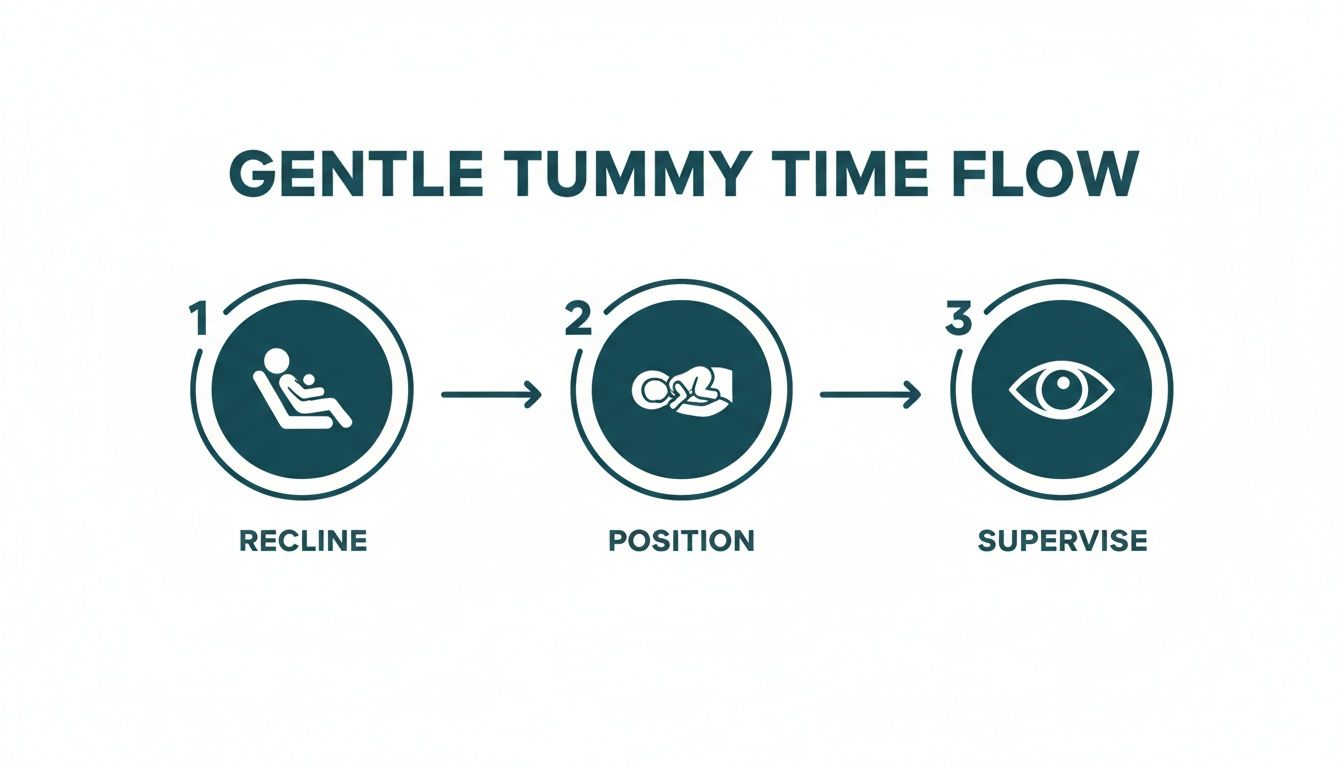
As you can see, every session starts with you getting comfortable, then safely placing your baby, and always keeping a close eye on them.
Positions for the First Few Weeks
In those early weeks, your baby is still building initial head and neck strength. The positions you choose should offer plenty of support while encouraging them to start lifting their head.
The Lap Lay is a fantastic option during this phase. Sit comfortably in a chair or on the floor with your feet flat. Gently lay your baby across your thighs, tummy-down. One leg can support their chest and arms, while the other supports their hips. This gives them a new view of the world, and you can gently pat or rub their back.
Growing Stronger from One to Three Months
Once your baby has more head control, you can introduce positions that ask a little more of them. This is when tummy time starts to look more like an active workout.
A popular and effective one is the Tummy-Down Carry, sometimes called the "football hold." To do it, slide one hand between your baby's legs and under their belly. Use your other hand to support their head and neck. Holding them close to your body provides security as you walk around the house.
Another great technique is using a prop for extra support on the floor.
- Towel Roll Support: Place a small, tightly rolled-up towel or blanket under your baby's chest and armpits.
- Benefits of Support: This slight elevation makes it easier for them to lift their head and frees up their hands to touch the mat or reach for toys.
- Safety First: Always make sure the roll is positioned correctly under the chest, never under the throat or belly, to keep their airway clear.
Here's a quick guide to help you track progression.
Tummy Time Progression Plan Newborn to 4 Months
This table gives you a simple summary of what to aim for as your baby grows stronger. Remember, every baby is different, so treat this as a guide, not a rulebook.
| Age | Recommended Position | Session Duration | Daily Goal |
|---|---|---|---|
| Newborn | Tummy-to-Tummy, Lap Lay | 1-2 minutes | 2-3 sessions |
| 1 Month | Lap Lay, Tummy-Down Carry | 3-5 minutes | 3-4 sessions |
| 2 Months | Floor time with towel roll, Tummy-Down Carry | 5-10 minutes | 4-5 sessions |
| 3 Months | Floor time (unsupported), Reaching for toys | 10-15 minutes | 30-60 minutes total |
| 4 Months | Pushing up on hands, Pivoting on belly | 15-20 minutes | 45-90 minutes total |
The key is consistency. Short, frequent sessions are more effective and less stressful than one long, tear-filled one.
Making Tummy Time a Joyful Connection
The secret to successful tummy time is turning it from a chore into a special moment of connection. It is not just about the physical position; it is about the interaction you share.
Try lying on the floor face-to-face with your baby. Your presence at their eye level is incredibly reassuring. You can chat, sing songs, or pull funny faces to capture their attention.
Using a baby-safe, unbreakable mirror placed in front of them can also work wonders. Babies are often fascinated by their own reflection, which might encourage them to lift and turn their head.
If you have older children, get them involved. A sibling singing songs or rolling a soft ball nearby provides wonderful entertainment. You can also explore other fun tummy time activities to try with your baby to keep sessions fresh.
It can feel disheartening when your baby fusses the moment you place them on their tummy. If this sounds familiar, take a deep breath. You are not alone. Many babies protest during tummy time, especially in the early newborn days.
First, let’s understand why it happens. For a tiny baby, lifting their heavy head against gravity is hard work. Crying is often their way of saying, “This is a tough workout.” It does not mean they are in pain or that you should stop straight away.
Think of those little grunts and wiggles as muscle-building in action. Your reassurance and a few clever adjustments can turn a tearful session into a positive one.
Making Tummy Time More Comfortable
If your baby consistently dislikes floor time, it is worth troubleshooting your setup. A few small changes can make a world of difference.
Timing is everything. A baby with a full belly is more likely to be uncomfortable when placed on their stomach. That pressure can cause discomfort or even bring up milk.
- Wait after feeds: Try to schedule tummy time at least 20 to 30 minutes after a feed. This gives their stomach time to settle.
- Pick a happy time: Choose a moment when your baby is calm, alert, and well-rested, like after a nappy change or a good sleep. A tired or hungry baby is far less likely to cooperate.
Remember that every little effort counts. Even 30 seconds of calm tummy time is a success. The goal is to build positive associations, not push through genuine distress.
Use Distractions and Engagement
A bored baby is a fussy baby. One of the best ways to extend a session is by making it interesting. You are their favourite plaything, so getting down on their level is your most powerful tool.
Let’s break it down. Your presence is incredibly comforting. Lie on the floor so you are face-to-face with your little one. Your voice and expressions can capture their attention and make them feel secure.
Next steps include adding simple, engaging props:
- Unbreakable Mirror: Place a baby-safe mirror in front of them. Babies are fascinated by reflections and will work hard to lift their heads for a better look.
- High-Contrast Toys: A newborn's vision is still developing. Use black-and-white cards or brightly coloured, simple toys to give them something interesting to focus on.
- Involve Family: Get a sibling to sing songs nearby or gently roll a soft ball in their line of sight.
When to Seek Professional Advice
While a bit of fussing is completely normal, persistent distress or specific physical signs could point to an underlying issue. It is important to know the difference between a simple dislike and something that needs a professional opinion.
For instance, if you notice your baby always tilts their head to one side or has difficulty turning their neck, it could be a sign of torticollis, or tight neck muscles. This condition can make tummy time very uncomfortable.
If your baby is consistently distressed despite trying different positions, or if you suspect something like torticollis, it is always best to chat with your local Maternal and Child Health Nurse or your GP. They can assess your baby and offer tailored advice.
Using a Play Mat to Make Tummy Time Engaging
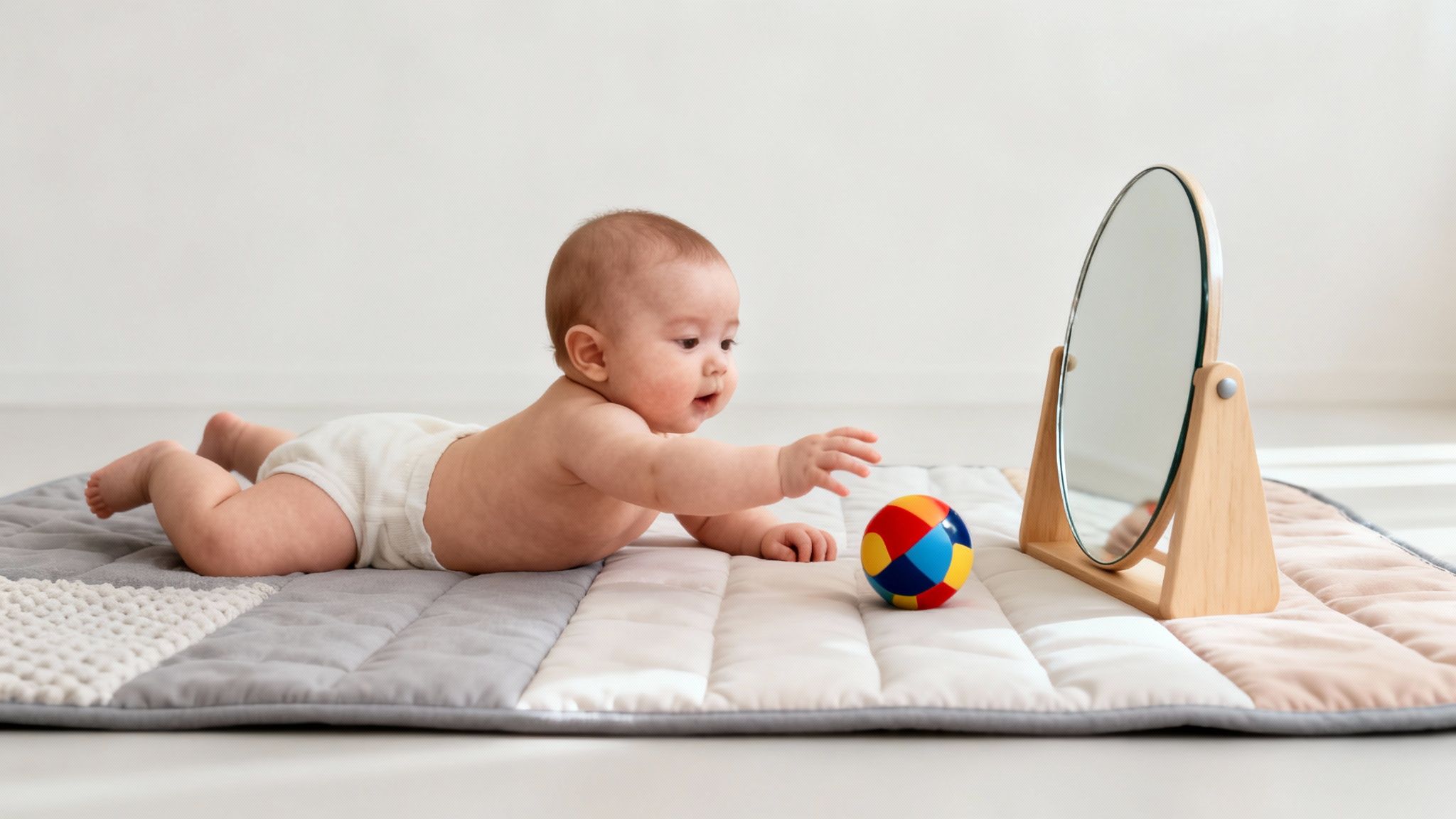
The right environment can turn tummy time from a daily task into a sensory adventure. A good quality play mat creates a dedicated ‘tummy time station’. This is a comfortable, stimulating space that encourages exploration.
This little spot helps your baby build a positive connection with the activity. A well-designed mat is more than a soft surface; it becomes a tool for learning and play.
Choosing the Perfect Play Mat
When you are looking for a mat, a few key features can make a world of difference to your baby’s experience. Safety and comfort are always the best places to start.
Keep an eye out for these elements:
- Sufficient Padding: The mat needs to be soft enough to cushion your baby, but firm enough to give them a stable surface to push up from.
- Non-Toxic Materials: Always opt for mats made from safe, baby-friendly materials. An OEKO-TEX certification gives you peace of mind that the fabric is free from harmful substances.
- Engaging Design: For newborns, high-contrast patterns like black and white are fantastic for stimulating their developing vision.
A durable and machine-washable mat also makes life easier for busy parents. You can explore different styles of tummy time mats for infants to find the perfect one for your home.
Creative Ways to Use Your Mat
Once you have your mat, you can use it to motivate movement and make sessions more fun. The main goal is to encourage your baby to lift their head, reach out, and eventually pivot.
A simple trick is to place one of their favourite toys just out of immediate reach. This encouragement gets them to stretch and reach, strengthening their arm, shoulder, and core muscles. These movements are the building blocks for bigger milestones like crawling.
Tummy time on a play mat offers a world of new sensory experiences. Feeling different textures and seeing everything from a new perspective helps develop body awareness and the vestibular system, which is crucial for balance and spatial orientation.
You can also lie down on the mat with your baby for some lovely face-to-face interaction. When picking out toys for the mat, it helps to understand the safety standards for plush animals to make sure everything your little one plays with is secure.
Common Questions About Tummy Time
Even with the best advice, it is normal to have questions pop up as you get into the swing of tummy time. Let's walk through some of the most common things parents ask.
Think of this as your go-to guide for those "is this normal?" moments.
How Long Should a Newborn Do Tummy Time Each Day?
With newborns, the goal is always short and frequent. Start with just a minute or two at a time, but try to sprinkle these little sessions throughout the day. You are aiming to build up their strength and tolerance bit by bit.
As your baby gets stronger, you can gradually make each session a little longer. The target is to work up to a total of at least 30 minutes of tummy time spread across the day by the time they are around three to four months old.
What If My Baby Falls Asleep During Tummy Time?
This is a really important one. Your baby must always be awake and supervised during tummy time. It is an active workout for them, not a nap position.
If you notice your little one getting drowsy or they doze off, gently and immediately roll them onto their back in a safe sleep space, like their cot. This follows Australian safe sleep practices, which help reduce the risk of SIDS.
Tummy time is for play time, not nap time. Always keep a watchful eye and move your baby to a safe sleeping surface if they get sleepy to ensure their airway is always clear.
Can We Do Tummy Time If My Baby Has Reflux?
Spitting up is very common, and tummy time can sometimes bring it on. But you do not have to skip it. A few simple adjustments can make it much more comfortable for a baby with reflux.
Here is what you can do:
- Wait after feeds: Try to schedule tummy time for at least 20 to 30 minutes after a feed. This gives their milk a chance to settle.
- Use an incline: Positions that keep your baby’s head and chest slightly raised are a game-changer. Laying them over your lap or using a nursing pillow for gentle support can help take the pressure off their tummy.
If the spit-up seems excessive or your baby is consistently upset, it is a good idea to chat with your GP or Maternal and Child Health Nurse.
When Do Babies Typically Roll From Tummy to Back?
Rolling from their tummy to their back is one of the huge milestones that tummy time directly builds towards. Most babies master this exciting new skill somewhere between four and six months of age.
You will probably see them start by pushing up higher on their arms. Then one day, they might accidentally topple over to the side. Encouraging them to reach for toys just out of their grasp during tummy time is a great way to build the core and arm strength they need to make that purposeful roll happen.
At Wallaby Collective, we create beautifully soft and supportive linen play mats perfect for making tummy time a safe and stylish experience. Discover our collection and find the perfect space for your little one to play and grow. Shop our play mats today.
Sources:
- Australian 24-Hour Movement Guidelines for the Early Years (Birth to 5 years): An Integration of Physical Activity, Sedentary Behaviour, and Sleep. Australian Government Department of Health, 2017.
- Plagiocephaly (flat head) in infants. The Royal Children's Hospital Melbourne, December 2018.