

Signs Baby Doesn't Want to Be Swaddled And What To Do Next
For many new parents, the swaddle feels like a secret weapon. It is that snug, womb-like hug that calms the startle reflex and hopefully unlocks longer stretches of sleep. It is a lifesaver until it is not.
So, what happens when your little one starts protesting this cosy cocoon?
Recognising the signs that your baby is done with swaddling is a normal part of their development. It is not a failure on your part. It is simply a sign that their needs are evolving. They are telling you they are ready for a little more freedom.
Is Your Baby Fighting the Swaddle? Key Signs to Watch For

Let's break down what this "swaddle rejection" actually looks like. Some cues are subtle, while others are impossible to miss. Your baby communicates in the only way they know how, and it is our job to listen.
Behavioural and Physical Cues
Here are the most common signs that your baby is ready to break free:
- Intense Crying When Wrapped: A bit of fussing when they are overtired is one thing. But if wrapping them up consistently triggers intense, unhappy crying, that is a major red flag. They are telling you loud and clear they do not like it.
- Constantly Breaking Free: Do you have a tiny escape artist on your hands? If your baby regularly wriggles one or both arms out, they are not just being difficult. They are actively seeking more freedom and might be trying to self-soothe by getting their hands to their mouth.
- Fighting the Process: Does swaddle time look more like a wrestling match? If your baby arches their back, kicks their legs frantically, or stiffens their whole body as you try to wrap them, that is a direct message. They feel restricted and they are not happy about it.
In Australia, paying close attention to these signals is crucial for both comfort and safety. One trusted local resource, Pregnancy Birth and Baby, advises parents to stop swaddling as soon as a baby shows a consistent dislike for it or starts showing signs of rolling. A swaddled baby who rolls onto their tummy is at a higher risk, so this is not something to ignore.
Trust your gut. If your baby just seems unsettled or constantly fussy whenever they are swaddled, they are probably telling you they feel too confined. Every baby is different, so pay attention to their unique cues.
Seeing this shift is actually a good thing. It is a developmental milestone. It means your baby is getting stronger, more coordinated, and ready for the next stage of sleep.
Quick Guide to Swaddle Rejection Signs
Sometimes you just need a quick checklist. This table breaks down the common physical and behavioural signs that your baby is ready to move on from being swaddled.
| Sign | What It Looks Like | Why It Matters |
|---|---|---|
| Crying and Fussing | Getting upset as soon as you start wrapping them. | Indicates genuine discomfort, not just tiredness. |
| Breaking Arms Free | Consistently wriggling one or both arms out of the wrap. | Shows a need for more movement and the ability to self-soothe. |
| Physical Resistance | Arching their back, kicking legs, or stiffening their body. | A clear physical protest against feeling restricted. |
| Showing Signs of Rolling | Trying to roll from back to tummy during play or sleep. | CRITICAL SAFETY ISSUE: A swaddled baby on their front is at risk. |
| Waking Up More | Sleep seems more disturbed in the swaddle than out of it. | The swaddle is no longer a sleep aid and has become a disruption. |
Watching for these signs helps you respond to your baby's changing needs, ensuring they stay both comfortable and, most importantly, safe as they grow.
Decoding Your Baby's Behavioural Cues

Long before their first word, your baby is a master communicator. Their little actions, cries, and body language are their way of telling you exactly what they need. Learning to read these behavioural cues is your best tool for figuring out if the swaddle is a comforting hug or a frustrating restriction.
It is all about looking for a consistent pattern. A single fussy moment might just mean they are a bit overtired. But when the protest happens every single time the swaddle blanket appears, your baby is sending you a very clear message.
Let's break it down.
Interpreting Active Resistance
One of the most obvious signs that a baby does not want to be swaddled is active, physical resistance. This is not a bit of wriggling; this is a full-body protest.
Imagine trying to wrap a tiny, surprisingly strong octopus. If your baby arches their back, stiffens their legs, or flails their arms wildly the moment you lay them on the swaddle, they are showing strong disapproval. This physical fight is a sure sign they feel trapped rather than comforted.
These actions are their most direct way of saying, "No, thanks!" It means the swaddle has become a source of frustration, not security.
When a baby's main response to being wrapped is to fight it with their entire body, the swaddle has stopped being a calming tool. They are telling you they need more freedom to move.
It can be really helpful to learn more about your baby's unique communication style. Getting to know their expressions and movements can make a huge difference, and you can explore our detailed guide on how to read your baby's tired cues.
The Language of Crying and Fussiness
Not all cries are created equal, as any parent knows. A sleepy, whiny cry is worlds away from an intense, angry scream that starts the second the swaddle comes out. If swaddling consistently makes crying worse instead of better, the wrap itself is likely the problem.
Think of it as simple cause and effect. If wrapping your baby is the cause and intense crying is the immediate effect, it is a clear sign of discomfort. A baby who is perpetually fussy and unsettled while swaddled might also be feeling too restricted to get truly comfortable.
Sometimes their discomfort is not just about the wrap. If your baby's behaviour suggests they are overstimulated or bothered by noise, exploring options like gentle baby noise cancelling headphones can help create a calmer space for sleep.
Consistent Escape Attempts
Another huge behavioural cue is the constant escape act. If your baby treats their swaddle like a straitjacket they are determined to break free from, it is a sign their needs are changing.
- Arms Always Out: Do you find them with one or both arms out every single morning? This shows a strong desire to self-soothe by bringing their hands to their mouth or face.
- Wriggling and Shifting: A baby who constantly squirms and shifts until the swaddle is loose is actively working against the wrap's purpose.
These little escape attempts are not just random movements. They are purposeful actions driven by a developmental need for more freedom, signalling it is time to think about transitioning away from the swaddle.
Beyond the usual fussing, your baby’s own body language can tell you a lot about whether the swaddle is still working for them. These are not just random wiggles. They are often signs of developmental progress and changing physical needs. Learning to read these cues is key for their comfort and, most importantly, their safety.
A huge one is when your baby constantly breaks their arms free. This is not just a twitch in their sleep. It is a determined, purposeful move. They might be showing you they need more freedom, or they might be trying to get their hands to their mouth to self-soothe.
The Great Escape Artist
If you are constantly finding your little one with an arm (or both!) out of the swaddle, treat it as a powerful signal. A baby who repeatedly breaks out of their wrap is telling you they are ready for more arm freedom.
This behaviour often ramps up around the three-month mark, right when their Moro (or startle) reflex starts to fade. Their little bodies are getting stronger and more coordinated.
That newfound strength is the same they are building for bigger skills, like rolling over. For a deeper dive into this milestone, check out our guide on when do babies start rolling.
Checking for Overheating
Another really important physical sign to watch for is overheating. A swaddle is essentially an extra layer of clothing, and it is surprisingly easy for a baby to get too warm. This is a significant safety risk we need to stay on top of.
You cannot go by the feel of their hands or feet, as they are often a bit cooler naturally. The best way to check is to feel their chest or the back of their neck. If their skin feels hot or sweaty, they are too warm.
A baby who is too warm might have flushed cheeks, damp hair, a heat rash, or be breathing more quickly than usual. These are urgent signs to remove layers and help them cool down right away.
To avoid this, always opt for swaddles made from lightweight, breathable fabrics like cotton or muslin. Keep an eye on the room temperature and dress your baby in just a light layer underneath, especially during those warmer Australian nights. Getting the temperature just right is a cornerstone of safe sleep.
The Critical Safety Reason to Stop Swaddling
While your baby's comfort and preferences are a big deal, there is one non-negotiable sign that means you must stop swaddling immediately. This is not about fussiness or your little one fighting the wrap. It is a critical safety milestone that overrides everything else.
Let's get straight to it: the moment your baby shows any sign of being able to roll from their back to their tummy, the swaddle has to be retired for good. This is the single most important safety rule when it comes to swaddling.
Here is why. A swaddled baby who manages to roll onto their stomach is in a very dangerous position. Their arms are pinned inside the wrap, which means they cannot push their head up to clear their airway. This significantly increases the risk of SUDI (Sudden Unexpected Death in Infancy).
The Rolling Milestone and Swaddle Safety
Recognising the early signs of rolling is key. It does not just start with a full, successful roll one day out of the blue. Keep an eye out for these little preliminary movements when your baby is having some awake time on their play mat:
- Rocking from side to side: This shows they are building that all-important core strength.
- Lifting their legs and dropping them to one side: This little shift of weight is a classic precursor to rolling.
- Arching their back and twisting their hips: These are the foundational movements that lead to a full roll.
According to Red Nose Australia, the country’s leading authority on safe sleep, you should stop swaddling your baby from the time they first show signs of being able to roll. This is usually between 2 to 6 months of age, but it can definitely happen earlier for some babies.
I know this decision-making process can feel a bit overwhelming, especially when you are sleep-deprived. This chart can help you visualise whether you should keep swaddling or start the transition out.
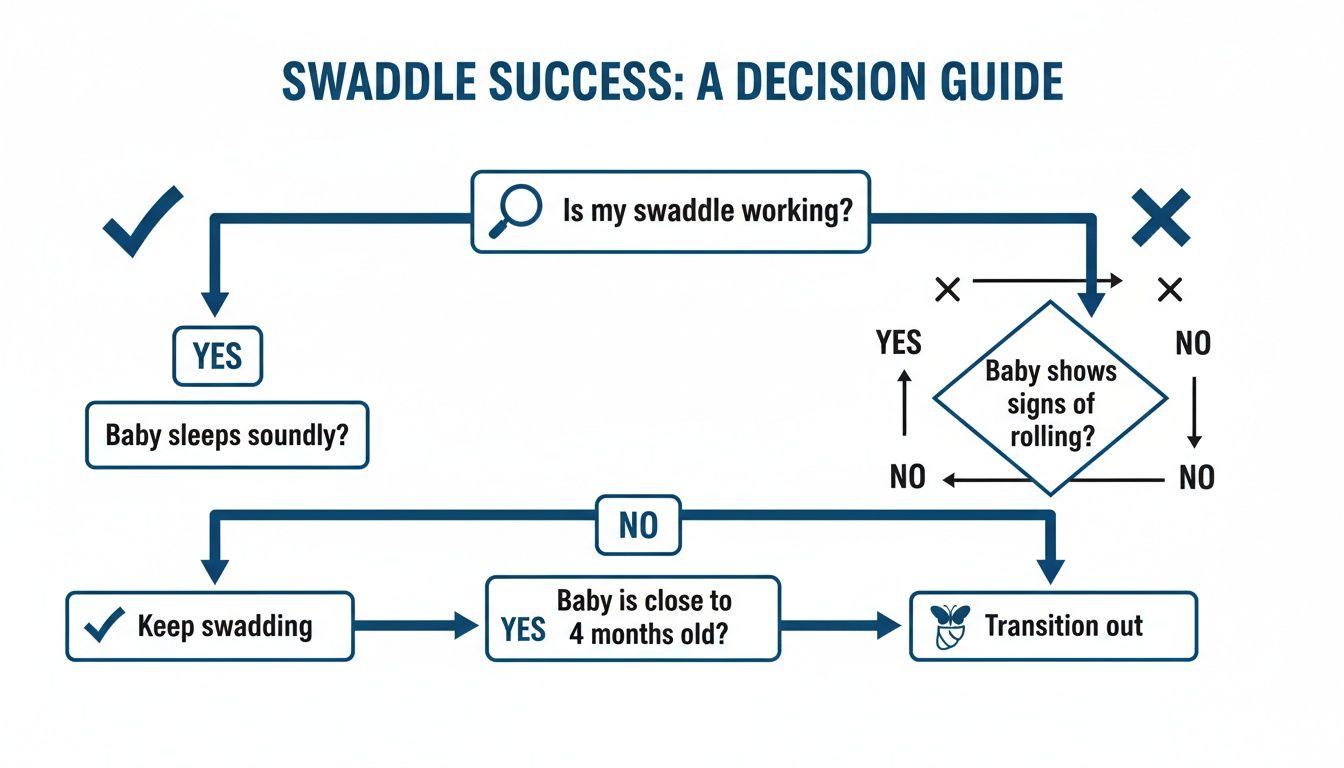
The main takeaway here is pretty clear: any sign of rolling immediately moves you into the "transition out" path. It is all about safety.
Why This Rule Is So Strict
Unlike behavioural signs, which can sometimes be misinterpreted (is my baby fussy because they hate the swaddle, or are they just gassy?), the ability to roll is a clear developmental marker with serious safety implications.
A baby might fuss in a swaddle one day and love it the next. But the risk that comes with rolling while swaddled is constant and severe.
This is not a gradual transition you can test out. The rule is absolute: once they show signs of rolling, swaddling must stop for all sleep, including naps. Their safety depends on having their arms free to move and protect themselves if they end up on their tummy. This is not just one of the signs baby doesn't want to be swaddled—it is a sign they can't be swaddled safely anymore.
Source
- Safe Swaddling, Red Nose Australia, 21 September 2022.
Safe and Simple Alternatives to the Swaddle

Once you have spotted the signs baby doesn't want to be swaddled, the next question is pretty simple: what now? The good news is, moving on from the swaddle opens up a world of safe, simple, and comforting alternatives that actually support your baby’s next stage of development.
The goal is to find something that still offers that feeling of security without the risks of a traditional wrap, especially once your baby starts showing signs of rolling.
Let's break down the best options.
Embrace Wearable Blankets and Sleep Sacks
The most highly recommended alternative is a baby sleep sack, often called a wearable blanket. Think of it as a cosy, wearable sleeping bag your baby cannot kick off, which means no more loose blankets in the cot.
This is a huge safety win. Sleep sacks keep your little one warm and secure while leaving their arms completely free. This freedom is vital, as it allows them to use their arms to push up and reposition their head if they happen to roll onto their tummy.
Baby sleeping bags are designed to provide warmth and a feeling of security without restricting arm movement. This aligns perfectly with Australian safe sleep guidelines, making them the top choice for babies who have outgrown the swaddle.
Understanding the different types will help you choose the best one for your baby and your home. Creating a safe and consistent sleep space is a cornerstone of a great routine; you can learn more by exploring tips for establishing a newborn baby sleep routine.
When you are looking at swaddle alternatives, it helps to see how they stack up. Here is a quick comparison to guide you.
Swaddle Alternatives Comparison
| Alternative | Best For | Key Benefit | Safety Note |
|---|---|---|---|
| Sleep Sack | Babies who are rolling or outgrowing swaddles. | Allows complete freedom of arm movement for safety. | Ensure correct size to prevent fabric from covering the face. |
| Transitional Swaddle | Babies with a strong startle reflex who need a gradual change. | Eases the transition by allowing one or both arms out. | Stop using once baby can roll consistently, even with arms out. |
| Sleep Suit | Active sleepers or toddlers who need more mobility. | Padded for comfort and allows full movement of arms and legs. | Check TOG rating to avoid overheating; less snug than a sack. |
Each option offers something slightly different, but the goal is always the same: a safe, comfortable sleep for your little one as they grow.
Understanding TOG Ratings
When you shop for a sleep sack, you will see a TOG rating. This is simply a measure of how warm the fabric is. A lower TOG is for warmer weather, while a higher TOG is for cooler temperatures.
Here is a general guide to help you choose:
- 0.2 - 0.5 TOG: Ideal for hot Australian summers when room temperatures are 24°C or higher.
- 1.0 TOG: A versatile option for most of the year, suitable for rooms around 20-24°C.
- 2.5 TOG: Best for chilly nights and winter, for rooms between 16-20°C.
Choosing the right TOG ensures your baby stays at a comfortable temperature all night long, which seriously reduces the risk of overheating.
Consider Transitional Swaddles
For babies who still have a strong startle reflex but are fighting the swaddle, a transitional product can be a perfect middle step. These clever designs are made to ease the change from a snug wrap to the freedom of a sleep sack.
Many of these have zip-off wings or arm openings. This lets you start by freeing one arm for a few nights, then the other, before moving to a fully arms-out sleep sack. It is a gentle, gradual approach that gives your baby time to adjust.
Importance of Unswaddled Awake Time
Finally, do not forget about movement during awake time. Once you stop swaddling for sleep, make sure your baby gets plenty of unswaddled time on a safe, firm surface like a play mat.
This uninhibited tummy time is crucial. It helps them build the neck, arm, and core strength they need for big milestones like rolling over and pushing up. These skills are key for their safety and development.
Common Questions About the Swaddle Transition
Ending the swaddling phase always brings up a bunch of questions. Even when you spot the signs your baby doesn't want to be swaddled, it can feel a bit scary to change a routine that has worked so well. Trust me, you are not alone in wondering what comes next.
Let's tackle the most common worries parents have during this big step. We will break down the answers with clear, practical advice to help you feel confident as you move into this new stage of safe sleep.
My Baby Still Has a Strong Startle Reflex but Hates the Swaddle. What Should I Do?
This is a classic dilemma, and the good news is you have a couple of great options. If your baby's startle reflex is still strong enough to jolt them awake, but they fight being wrapped up, a gentle, step-by-step approach is your best bet.
You could try swaddling with just one arm out for a few nights. This gives your baby a little more freedom to move and self-soothe while still feeling secure. Once they get used to that, you can free the other arm, which makes the final move to a sleep sack much smoother.
Another fantastic tool is a transitional sleep sack. These are specifically designed to soften the jolt of the startle reflex without completely pinning their arms down, hitting that perfect middle ground between a swaddle and a sleeping bag.
How Long Does It Take for a Baby to Get Used to Sleeping Unswaddled?
Every baby is different, so the adjustment time really can vary. Some little ones take to their newfound freedom in just a night or two, while others might need a week or even a little longer. The most important thing you can do is stay consistent.
Expect a few bumpy nights as your baby figures out a new way to settle themselves. Next steps include:
- Sticking to your consistent bedtime routine to signal that sleep is on its way.
- Offering extra comfort with gentle pats or quiet, soothing words.
- Making sure their sleep space is calm, dark, and quiet.
Be patient with your baby and with yourself. Remember, this is a positive and necessary step towards them becoming a safe and independent sleeper.
Is It Safe to Use a Loose Blanket Instead of a Swaddle?
No, it is never safe to have a loose blanket in a cot or bassinet for a baby under one year old. This is one of the most critical rules for safe sleep.
According to Red Nose Australia, any loose bedding, including blankets, pillows, and bumpers, creates a serious suffocation and SIDS risk. A baby can easily pull a loose blanket over their face, which can block their airway.
The safest alternative is a well-fitting baby sleeping bag or wearable blanket. They are designed to provide warmth without the danger of loose fabric, giving you total peace of mind.
Can I Still Swaddle My Baby for Naps Once They Start Rolling?
The answer here is a definite no. The moment your baby shows any signs of being able to roll, you have to stop swaddling immediately for all sleep, and that absolutely includes naps.
A baby's ability to roll is unpredictable. They could master it for the very first time during a daytime nap. The risk of them rolling onto their tummy while their arms are trapped is just far too high. The rule is simple and non-negotiable: once you see signs of rolling, the swaddle has to be retired completely, day and night.
At Wallaby Collective, we know that creating a safe and beautiful space for your little one is everything. Our stylish, machine-washable play mats are the perfect foundation for unswaddled tummy time, helping your baby build the strength they need for their next big milestone.