

Newborn growth spurts: A quick guide to feeding and sleep for parents
If your usually calm newborn has suddenly turned into a fussy, constantly hungry little being, you are likely in the middle of a newborn growth spurt. These are short, intense periods where your baby grows quickly in length, weight, and even head size. It is completely normal, temporary, and a great sign that your baby is thriving.
What Are Newborn Growth Spurts, Really?
Welcome to one of the most demanding yet completely normal phases of your baby's first year. Think of a growth spurt as your baby's own personal training montage. It is a brief but intense burst of development that fuels amazing new abilities and noticeable size increases. This drives them from a sleepy newborn to a more interactive infant.
These spurts are powerful signals that your baby is developing exactly as they should be. The sudden changes in hunger, sleep, and mood can feel a bit overwhelming, but they are positive milestones. Let's break down what is happening so you know what to expect.
The Science Behind the Spurt
A growth spurt is not just a random fussy phase. It is a period of accelerated physical development. During this time, your baby's body works overtime. This demands a huge increase in energy, which explains that sudden, seemingly insatiable hunger.
Their tiny body constructs new bone, muscle, and brain tissue at an incredible rate. This construction project needs a constant supply of fuel in the form of milk and plenty of rest to get the job done right.
Why Timing Can Feel So Unpredictable
While there are common times for growth spurts, every baby follows their own unique timeline. These developmental leaps are part of what is known as "pulsatile growth," where intense bursts of growth follow slower periods. It is just a natural rhythm of infant development.
Here is why. Newborns in Australia often have their first major spurt shortly after birth. Healthy newborns typically gain around 30 grams per day until they are 3 months old. This rapid increase is why babies often double their birth weight so quickly. You can explore more about these infant growth patterns from CAHS to understand the journey ahead.
A growth spurt is your baby’s way of placing a big order for the calories and nutrients needed for their next stage of development. Their fussiness and constant feeding simply communicate this urgent need.
The key is to recognise that these phases are temporary but crucial. Understanding what happens beneath the surface helps demystify the experience. It reassures you that the chaos is actually a sign of healthy progress.
A Timeline for Your Baby's Growth Spurts
Knowing when to expect a newborn growth spurt can make all the difference, especially in those blurry early days. While every baby is on their own unique schedule, these intense bursts of growth tend to follow a pretty predictable pattern.
Think of this timeline as a friendly heads-up, not a strict rulebook. It is here to help you see the method behind the madness when your usually settled bub suddenly becomes fussy and insatiable. Realising it is just a sign of healthy development can turn a stressful week into a reassuring one.
The First Few Months Are the Busiest
The most frequent and noticeable growth spurts happen in the first three months. This is when your baby grows at an incredible rate. Some even double their birth weight in this short time. It is a whirlwind period that lays the foundation for everything to come.
This visual guide breaks down the most common timings in those crucial early months. It helps you see when to brace yourself for the next big leap.
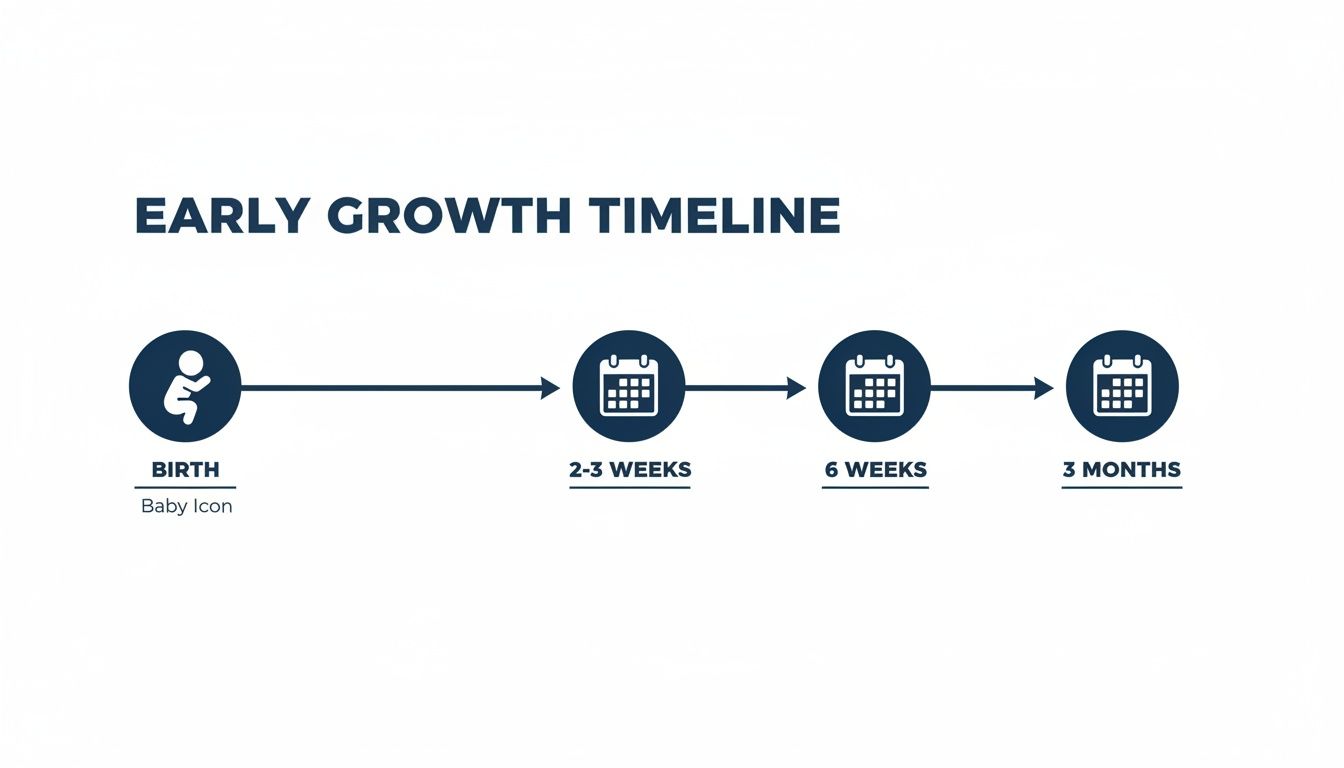
As you can see, the gaps between these spurts get longer as your baby gets older. That means more time to catch your breath and settle into a bit of a routine before the next one hits.
Mapping Out the First Year
So, when can you expect these developmental surges? While the exact timing is different for every baby, a common timeline can help you prepare for a few days of extra demands on your time and energy.
Let's break it down. Here is a quick reference guide for when growth spurts typically pop up during the first year, how long they usually stick around, and the behaviours you might notice.
Typical Newborn Growth Spurt Timeline
| Age (Approximate) | Typical Duration | Common Signs and Behaviours |
|---|---|---|
| Around 2-3 weeks | 2-3 days | A big jump in hunger, lots of cluster feeding, and more fussiness, especially in the evenings. |
| Around 4-6 weeks | 2-4 days | Your baby might seem constantly hungry, sleep more than usual (or wake more often), and become extra clingy. |
| Around 3 months | 3-5 days | Often a more intense spurt with major changes in feeding and sleep, right around the time new social smiles appear. |
| Around 6 months | 3-7 days | Increased appetite to fuel new motor skills like sitting up, which can sometimes disrupt sleep. |
| Around 9 months | 4-7 days | Another hunger surge as your baby gets more mobile (crawling or pulling up), sometimes triggering a sleep regression. |
Remember, these are just averages. A spurt might last a single day for one baby and a full week for another. The key is to watch for the pattern of behaviour, not the calendar.
What to Expect Beyond the Timeline
It is important to remember that growth spurts are not just about getting bigger. They often happen right before an exciting new milestone. For instance, the spurt around three months often lines up with your baby gaining better head control and finally rewarding you with their first proper social smiles.
The timing of physical growth and developmental leaps often overlap. While not every new skill is tied to a growth spurt, you might notice your baby mastering something new right after a fussy period ends.
This connection makes those tricky days feel more purposeful. All those extra cuddles, feeds, and moments of patience directly fuel your baby’s next big achievement. That could be rolling over, babbling, or reaching for a toy for the very first time.
Decoding the Signs of a Growth Spurt
Is it a newborn growth spurt, or is something else going on? Figuring this out can bring so much relief in those confusing early weeks. This section will help you become an expert at reading your baby's cues. This way, you can see the complete picture beyond just ‘more feeding’.
Let's break down the three core signs you will notice. These are changes in feeding patterns, shifts in sleep, and a definite difference in your baby's overall mood. Once you can spot these, you can respond with confidence and feel a lot less stressed during these intense but temporary phases.
More Frequent Feeding and Cluster Feeds
The most classic sign of a growth spurt is a sudden, dramatic increase in hunger. Your baby, who might have settled into a nice little feeding rhythm, now seems ravenous. They want to feed almost constantly. This is simply their body’s way of putting in a big order for the extra fuel needed for all that rapid development.
This often looks like cluster feeding, where a baby has several feeds very close together, sometimes with barely a break in between. It is especially common in breastfed babies and cleverly serves two purposes at once.
- Meeting Immediate Needs: It gets them the immediate calories and nutrients they need to build new bone, muscle, and brain tissue.
- Boosting Milk Supply: For breastfeeding mums, the increased demand from cluster feeding is a natural signal for your body to ramp up milk production. This makes sure your supply keeps up with their growing appetite.
This part can feel absolutely relentless, but it is an amazing biological system at work. Trusting your baby's cues and feeding on demand is the best thing you can do to support them through it.
The Great Sleep Paradox
When it comes to sleep during a growth spurt, babies tend to go one of two ways, creating a bit of a sleep paradox. Some babies will sleep much more than usual. Others will be up far more frequently.
Some little ones use the extra sleep to conserve energy for all that growing. You might notice longer naps or even an extra nap squeezed into the day. Their bodies work incredibly hard, and rest is crucial for recovery and development.
On the other hand, many babies have their sleep completely disrupted. The same hunger that drives cluster feeding during the day does not just switch off at night. This can lead to more frequent night wakings as their tiny tummies empty out faster and need refuelling for that 24/7 growth cycle.
A change in sleep patterns, whether it is more or less, is one of the most consistent signs of a growth spurt. The key is noticing a sudden shift from their usual routine.
A Shift in Mood and Behaviour
The final piece of the puzzle is your baby’s mood. All this growing can be tiring and even a bit uncomfortable. This often results in a fussier, crankier, or more clingy baby. They might cry more than usual or just seem unsettled for no obvious reason.
You might also find your baby wants to be held constantly. This need for extra cuddles and comfort is completely normal. They are going through a physically demanding process and seek the security and reassurance that only you can give.
Here is why it happens:
- Growing Pains: While not proven in infants, some think the rapid stretching of muscles and bones might cause some discomfort.
- Overstimulation: The combination of intense hunger and fatigue can leave them feeling pretty overwhelmed.
- Developmental Leaps: Often, these physical spurts are tied to big developmental leaps in their skills, which can be disorienting for a baby.
Recognising that this fussiness is just a symptom of growth can help you respond with patience and lots of extra snuggles. These behavioural changes usually disappear once the spurt is over. They often leave you with a slightly bigger, more alert baby who might even have a brand new skill to show off.
How to Manage Feeding and Sleep Challenges

This is your survival guide for the toughest parts of a newborn growth spurt. When your baby’s feeding demands feel relentless and their sleep schedule goes out the window, it can feel incredibly overwhelming. With a few practical strategies, you can navigate this temporary phase with confidence.
Let's break it down. We will walk through some simple, actionable tips for managing both feeding and sleep. We will focus on what you can do right now to make things easier. Most importantly, we will remind you to look after yourself, because your wellbeing matters just as much.
Navigating Increased Feeding Demands
The most obvious sign of a growth spurt is a sudden, seemingly bottomless appetite. Your baby works hard to fuel their rapid development. Those constant hunger cues are simply their way of ordering the energy they need. Trusting these signals is your most powerful tool.
When your baby wants to feed more often, the best thing you can do is follow their lead. This is called feeding on demand. Whether you are breastfeeding or formula-feeding, responding to their hunger cues helps ensure they get exactly what they need, right when they need it.
For breastfeeding mums, this frequent feeding sends a crucial message to your body to increase milk supply. Your body will naturally adjust to meet their new demands, so there is usually no need to supplement with formula. For a deeper dive on this intense period, check out our guide on how long newborn cluster feeding lasts.
“This can temporarily increase milk demand, but maternal milk supply typically adapts to meet increased needs.”
If you are formula-feeding, you might need to offer smaller, more frequent feeds. Or you could slightly increase the amount in each bottle. Just watch your baby for signs of fullness, like turning their head away, to avoid overfeeding.
This rapid growth fuels some of their most exciting milestones. Healthy full-term babies often double their birth weight by around four months. They might triple their birth weight by their first birthday. This explains why feeding becomes so intense during these spurts.
Soothing a Fussy and Sleepless Baby
Just like feeding, sleep patterns can become pretty unpredictable during a growth spurt. Some babies sleep more, but many wake up constantly due to hunger or general fussiness. Creating a calm, soothing environment can help you both get through those disrupted nights.
Here are some tried-and-true techniques to help settle an unsettled baby:
- Swaddling: Wrapping your baby snugly in a blanket can recreate the secure feeling of the womb. This helps calm their startle reflex and can lead to longer stretches of sleep.
- White Noise: The constant, gentle hum of a fan, a white noise machine, or even a soft shushing sound can be incredibly soothing. It helps block out other household noises that might disturb them.
- Gentle Motion: Rocking, swaying, or a walk in the pram can work wonders. Rhythmic movement is familiar and deeply comforting for babies.
Remember, it is completely okay if your established sleep routine temporarily falls apart. The goal during a growth spurt is not to enforce a strict schedule. It is to respond to your baby’s needs for comfort and rest.
The Importance of Parental Self-Care
During these intense periods, it is incredibly easy to let your own needs slide. You pour all your energy into your baby, but you cannot pour from an empty cup. Looking after yourself is not selfish. It is essential for being the best parent you can be.
Simple acts of self-care can make a huge difference.
- Rest When You Can: The old advice "sleep when the baby sleeps" is not always practical, but do try to rest. Put your feet up, close your eyes for ten minutes, or ask your partner to take over so you can have a proper break.
- Stay Hydrated and Nourished: Keep a water bottle and some easy, healthy snacks nearby, especially where you usually feed your baby. Staying hydrated is particularly important if you are breastfeeding.
- Lean on Your Support System: You are a team. Talk to your partner about how you are feeling and divide tasks. Do not hesitate to accept help from friends or family who offer it.
A growth spurt is a short-term challenge. By focusing on your baby’s cues and making your own wellbeing a priority, you will get through it together.
Supporting Development Through Play and Tummy Time

Newborn growth spurts are not just about outgrowing another onesie. These intense bursts are also about your baby getting stronger. They prep their tiny body for big milestones like rolling over, sitting up, and eventually, crawling. As their little frame lengthens and muscles develop, simple developmental play becomes key.
This is where floor time really shines, especially tummy time. It is the workout your newborn needs to build essential strength in their neck, shoulders, and core muscles. With the right approach, it can be a beautiful moment of connection for you both.
Let's get into how to make tummy time a happy experience and why a safe, supportive surface is your best friend on this journey.
The Importance Of Tummy Time During Growth Spurts
During a growth spurt, your baby's body changes at lightning speed. For newborns, this is not just about putting on weight. It is also about incredible gains in length. In their first year alone, infants can grow 18 to 25 cm. Their head circumference also expands to accommodate rapid brain growth.
With all this fast-paced development, a supportive play surface is a must. Tummy time on a cushioned but firm mat helps babies build the neck and core strength they need to manage their growing bodies.
Tummy time is your baby’s first strength-training session. It gives them the resistance needed to develop the muscles that will soon let them lift their head, push up on their arms, and see the world from a whole new angle.
This simple activity is foundational. The strength they build in these short sessions directly paves the way for future motor skills. This makes it a non-negotiable part of their daily routine.
Creating a Positive Play Environment
It is completely normal if your baby protests tummy time at first. The secret is to start small and make it a positive, engaging experience. Aim for just a few minutes at a time, several times a day. You can gradually extend the sessions as they get stronger.
Here are a few tips to make it more fun:
- Get Down on Their Level: Lie on the floor with your baby. Make eye contact, chat, and sing to them. Your presence is the best comfort.
- Use Engaging Toys: Place a high-contrast toy or a baby-safe mirror just within their line of sight. This encourages them to lift their head and look.
- Choose the Right Surface: A soft yet firm surface is perfect. A purpose-built play mat offers cushioning for comfort while being stable enough to support their little push-ups.
The right environment truly makes all the difference. Beyond playtime, creating a supportive nursery environment is also wonderful for encouraging calm and growth. For a deeper dive, check out our expert tips on making tummy time for newborns a success.
When to Trust Your Instincts and Seek Advice
The fussiness and marathon feeding sessions of a growth spurt are totally normal. However, your gut feeling as a parent is a powerful thing. You know your baby best. If something feels off, it is always worth listening to that little voice. Most of the time, these changes are just temporary signs of your little one growing. But it is good to know when it might be time to get a second opinion.
Let's walk through the signs that suggest it could be more than just a growth spurt. This will help you feel more confident in trusting your instincts and knowing what to do next.
Recognising Red Flags
A growth spurt can definitely make a baby cranky and tired, but it should not make them genuinely unwell. Some key signs of illness can look a bit like growth spurt behaviour at first glance. Knowing the difference is key. Sometimes parents wonder if their little one is just extra sleepy from all that growing, or if something else is going on. For more on that, you can learn about the reasons babies might sleep more when sick in our detailed guide.
Pay close attention to anything that seems to go beyond typical fussiness. Here are some clear signs that you should get in touch with a health professional.
You know your baby better than anyone else. If your gut is telling you something is wrong, do not hesitate to seek medical advice. It is always better to be cautious and get some reassurance.
When to Make the Call
If your baby shows any of the following signs, it is time to reach out to your doctor or a child health nurse.
- A High Fever: Any fever at all in a newborn under three months is a reason for immediate medical attention. For older babies, a high or persistent fever is definitely worth a call.
- Signs of Dehydration: This can look like fewer than six wet nappies in 24 hours. Other signs include a sunken fontanelle, crying without tears, or dark-coloured urine.
- Extreme Lethargy or Irritability: While a growth spurt can make a baby sleepy, they should still wake up for feeds and have some alert periods. If your baby seems unusually floppy, is really hard to wake, or is inconsolable for long stretches, it is best to seek advice.
- Feeding Difficulties: Refusing to feed altogether, vomiting repeatedly, or showing signs of pain during feeding are not typical growth spurt behaviours.
Reliable Australian Support Resources
You are never alone in this. Australia has fantastic, easy-to-access health services for parents who need a bit of support or advice.
Here are your next steps if you are concerned:
- Contact Your Local Child and Family Health Nurse: They are a brilliant first point of contact for non-urgent questions about your baby’s health, feeding, and development.
- Book an Appointment with Your GP: Your family doctor can assess your baby and give you a diagnosis or a referral if it is needed.
- Call Healthdirect: This is a free, government-funded service where you can speak to a registered nurse 24/7. Just call 1800 022 222 for health advice anytime.
Your Questions About Newborn Growth Spurts Answered
Let’s wrap things up by looking at some of the most common questions that pop into parents’ heads during these intense periods. This FAQ is designed to give you quick, clear, and reassuring answers. It will help you navigate newborn growth spurts with a bit more confidence.
How Long Do Newborn Growth Spurts Last?
Most newborn growth spurts are surprisingly quick. They usually only last for about two to three days. Some can definitely stretch out for up to a week.
The main thing to remember is that this phase is temporary. Just when you feel like you cannot handle another cluster feed, things often settle back down. They leave you with a slightly bigger and sometimes more skilled baby.
Are Growth Spurts and Developmental Leaps the Same Thing?
It is easy to mix these two up because they often happen around the same time. But they are not exactly the same thing.
A growth spurt is all about rapid physical growth. Think weight, length, and head circumference. A developmental leap, on the other hand, is a jump in your baby's cognitive or motor skills. This includes learning to smile for the first time, roll over, or grasp objects. The intense energy needed for a physical growth spurt can often fuel the brain development for these new skills. You will probably see them happen close together.
Will a Growth Spurt Affect My Breast Milk Supply?
Yes, but in a really positive way. When your baby cluster feeds during a growth spurt, their constant demand sends a powerful signal to your body to ramp up milk production.
Within a few days, your supply will naturally adjust to meet their new needs. It is a clever system, so trust your body and your baby. There is usually no need to supplement with formula if breastfeeding is already going well.
How Can I Tell if It Is a Growth Spurt or Something Else?
This is a big one for new parents, and it is a great question. A growth spurt is typically defined by three main signs. These are increased hunger, changes in sleep patterns, and a whole lot more fussiness.
If these behaviours come with other symptoms like a fever, extreme lethargy, vomiting, or signs of dehydration, it is time to call a health professional. Always trust your instincts.
As new parents find their feet with the intense demands of newborn care, it is so important to remember that looking after yourself is crucial. For some gentle guidance on safely rebuilding your own strength, especially your core, have a look at resources on postpartum core strengthening exercises.
At Wallaby Collective, we understand that creating a safe, calm, and beautiful space is essential for your baby's development. Our OEKO-TEX certified linen play mats provide the perfect cushioned surface for tummy time, play, and those precious moments of connection. Discover our collection of modern, understated play mats and find the perfect foundation for your little one's journey.
Sources:
- Child growth patterns, Child and Adolescent Health Service, 2024.
- Your baby's growth and development – 1 month old, Pregnancy, Birth and Baby, June 2023.
- Health checks for your baby, Healthdirect, July 2022.