

Do Babies Sleep More When Sick?
When your baby gets sick, their sleep habits can change in a heartbeat. You might be wondering, do babies sleep more when sick? The short answer is yes, they often do. But sometimes, you might find they sleep less or wake up more than usual.
Let's break down what's happening.
Understanding Your Sick Baby's Sleep Changes

When your little one comes down with something, it’s completely normal for their familiar sleep patterns to go right out the window. Their tiny body is working overtime to fight off the illness, and that takes a huge amount of energy.
Here is why. Sleep is the body’s natural repair mode. To power this healing process, your baby's immune system releases proteins called cytokines. These not only help fight off bugs but also have a sleep-inducing effect, which is why your bub might seem much drowsier than usual.
Think of it like this: your baby’s body is redirecting all its energy away from playing and exploring and towards one critical mission—getting better. More sleep is the most efficient way to do that.
This is why you might notice longer naps or an earlier bedtime when your baby has a cold or a fever. Their body instinctively knows that rest is the best medicine for a quick recovery.
Why Some Babies Sleep Less When Sick
On the flip side, some illnesses bring discomfort that can really disrupt sleep. This is why your baby might wake up more often or seem to sleep less soundly than they normally would.
Here are a few common reasons for this:
- Discomfort and Pain: Aches from a fever, a sore throat, or the pressure from an ear infection can make it tough for a baby to get comfortable and stay asleep.
- Breathing Difficulties: A stuffy or runny nose makes breathing a real challenge, especially when they're lying down. This can cause them to wake frequently through the night.
- General Irritability: Feeling unwell can make your baby more fussy and clingy. They might need extra cuddles and comfort from you to settle back to sleep.
The first step is simply understanding these changes. It’s also a good time to tune into your little one’s signals, which can be different when they're unwell. Learning to spot their unique baby tired cues can make a world of difference.
How Sleep Helps Your Baby's Immune System Recover
When your baby is sick, you’ve probably noticed they want to sleep a lot more. There’s a powerful biological reason for this. Sleep is not just about resting; it’s an active, essential part of your little one's recovery. It gives their tiny body the energy it needs to fight off illness.
Think of sleep as your baby’s dedicated repair crew. This crew works tirelessly behind the scenes. Its most important work happens when the rest of the body is quiet and still. During deep sleep, their immune system really gets down to business.
Sleep as a Superpower for Healing
Here’s why sleep is so crucial when your baby is feeling unwell. While sleeping, their body focuses on producing specific proteins that are vital for fighting infection and reducing inflammation. These proteins, called cytokines, are like messengers that coordinate the entire immune response.
This is a key reason why the answer to "do babies sleep more when sick?" is often a definite yes. Their body is demanding this downtime to ramp up its defences. It’s a completely natural and intelligent response, allowing all available energy to be channelled towards getting better.
Sleep is the ultimate support system for a sick baby. It allows their immune system to perform its job without distractions, leading to a faster and more efficient recovery.
How Common Illnesses Disrupt Sleep
Even though a sick baby needs more sleep, the symptoms of their illness can often get in the way. Knowing how common sicknesses interfere with rest can help you anticipate your baby’s needs and provide the right comfort.
Let's break it down:
- Colds and Congestion: A blocked or runny nose makes breathing much harder, especially when your baby is lying flat. This discomfort can cause them to wake frequently throughout the night, searching for relief.
- Ear Infections: The pain from an ear infection often gets worse when lying down because of pressure changes in the middle ear. This can make settling for sleep and staying asleep a real challenge.
- Fevers and Body Aches: A fever can make your baby feel hot, then cold, and generally miserable. The body aches that often come with it make it tough for them to find a comfortable position.
These disruptions are why, even though your baby sleeps more overall, their sleep might seem broken or restless. For the best recovery, it's also important to ensure your baby's environment is clean and conducive to healing, as unaddressed issues like dirty air ducts can contribute to various health problems associated with dirty air. By understanding these mechanics, you can better explain the 'why' behind their behaviour and offer targeted comfort when they need it most.
Knowing When to Worry About Your Sick Baby
It’s completely natural to feel on edge when your baby is sick. Every little cough or whimper can feel huge. It’s often hard to know what’s just normal sick-baby behaviour versus something more serious. Your parental intuition is your best guide here—always trust it.
While things like extra clinginess or a change in feeding are pretty standard, some symptoms need a closer look. A good first step is to get a handle on the difference between viral and bacterial infection symptoms. This can help you make sense of what’s happening.
This little flowchart can help you figure out if your baby's sleep changes are a typical response to being unwell.
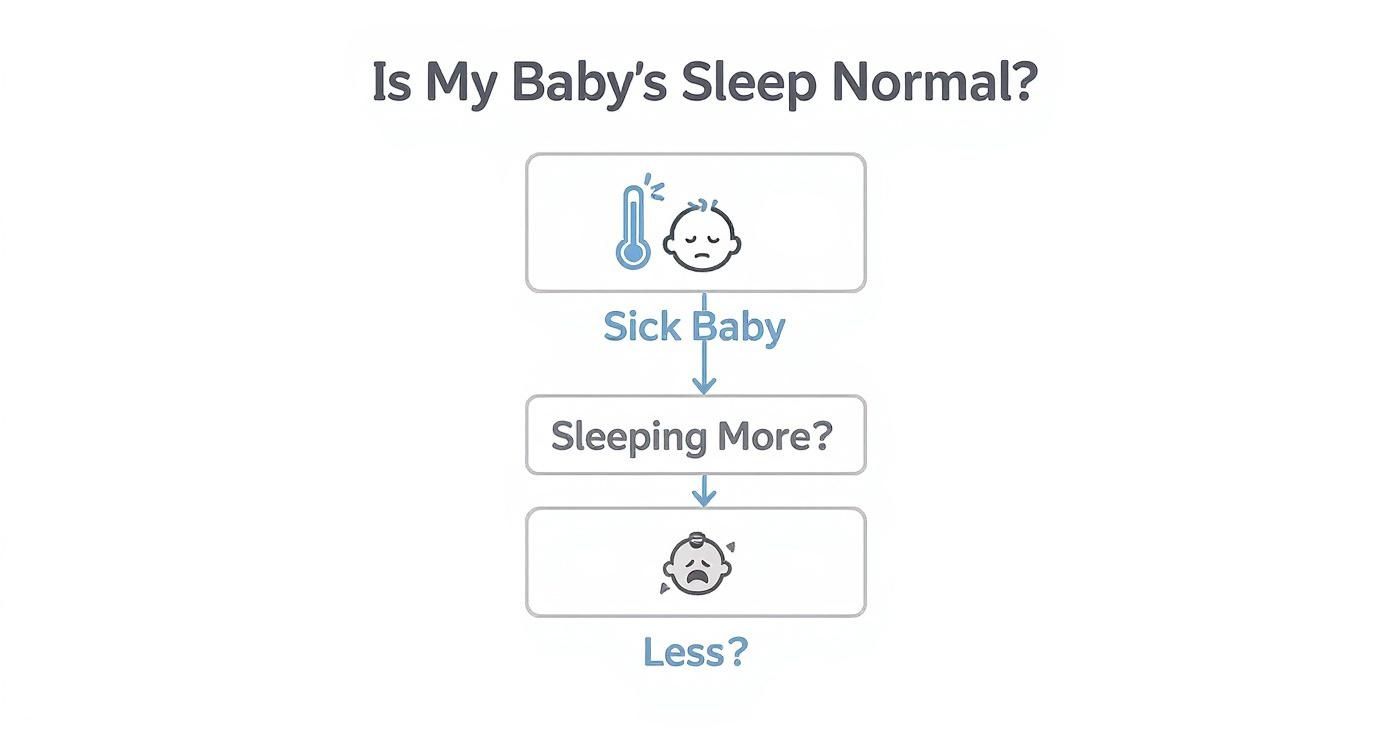
As you can see, both sleeping more and sleeping less can be part of the package. The other symptoms that pop up alongside the sleep changes tell you whether it's time to act.
Red Flags That Need Medical Attention
While extra sleep is usually part of the healing process, some signs are clear signals to get medical advice right away. These symptoms suggest your baby's body is having a tougher time than expected and needs a professional to take a look.
Keep an eye out for these things:
- High or Persistent Fever: For any baby under three months old, a temperature over 38°C is a reason to see a doctor immediately. For older babies, a fever that doesn’t come down with paracetamol or hangs around for more than a couple of days means it's time to call your GP.
- Breathing Difficulties: Watch for fast breathing, wheezing sounds, grunting, or their nostrils flaring with each breath. If you notice the skin around their ribs sucking in as they breathe, that’s a sign to seek urgent medical help.
- Signs of Dehydration: Fewer than six wet nappies in a 24-hour period is a key sign. Also look for a dry mouth, sunken eyes, or no tears when they cry. Dehydration can get serious very quickly in little ones.
- Unusual Rash: A rash that does not disappear when you press a glass against it can be a sign of a serious infection and needs immediate medical attention.
Changes in Behaviour and Sleep
Sleep patterns almost always go a bit haywire during illness, but sometimes, those changes can be a red flag. A baby’s sleep efficiency—how soundly and continuously they sleep—often takes a hit. It's interesting to note that even when healthy, many children have fragmented sleep. A landmark Australian study, the Child Health CheckPoint investigation, found that sleep efficiency was less than optimal in a huge 42% of Australian children. This means sickness can make an already tricky situation worse.
While a sick baby sleeping more is usually a good thing, a baby who is extremely lethargic or very difficult to wake is a cause for concern. You should be able to rouse them for a feed, even if they quickly fall back asleep.
If your baby seems unusually floppy, is constantly irritable, or just won’t take any feeds for a long stretch, it’s time to call your doctor or head to the hospital. Remember, your gut feeling as a parent is incredibly powerful. If you feel like something just isn’t right, always get it checked out.
Practical Ways to Comfort Your Sick Baby
When your baby is feeling miserable, it can be tough for anyone in the house to get the rest they need. Knowing why their sleep is all over the place is one thing, but the real question is, what can you do to help? At the end of the day, comfort is everything. It’s what helps them through the illness and nudges them towards more restful sleep.
Let's break down some safe and effective ways to soothe your little one.
Create a Soothing Sleep Environment
First things first, let's make their sleep space as comfortable as possible. A calm, quiet room helps signal to their little body that it’s time to rest and heal.
A few simple adjustments can make a world of difference:
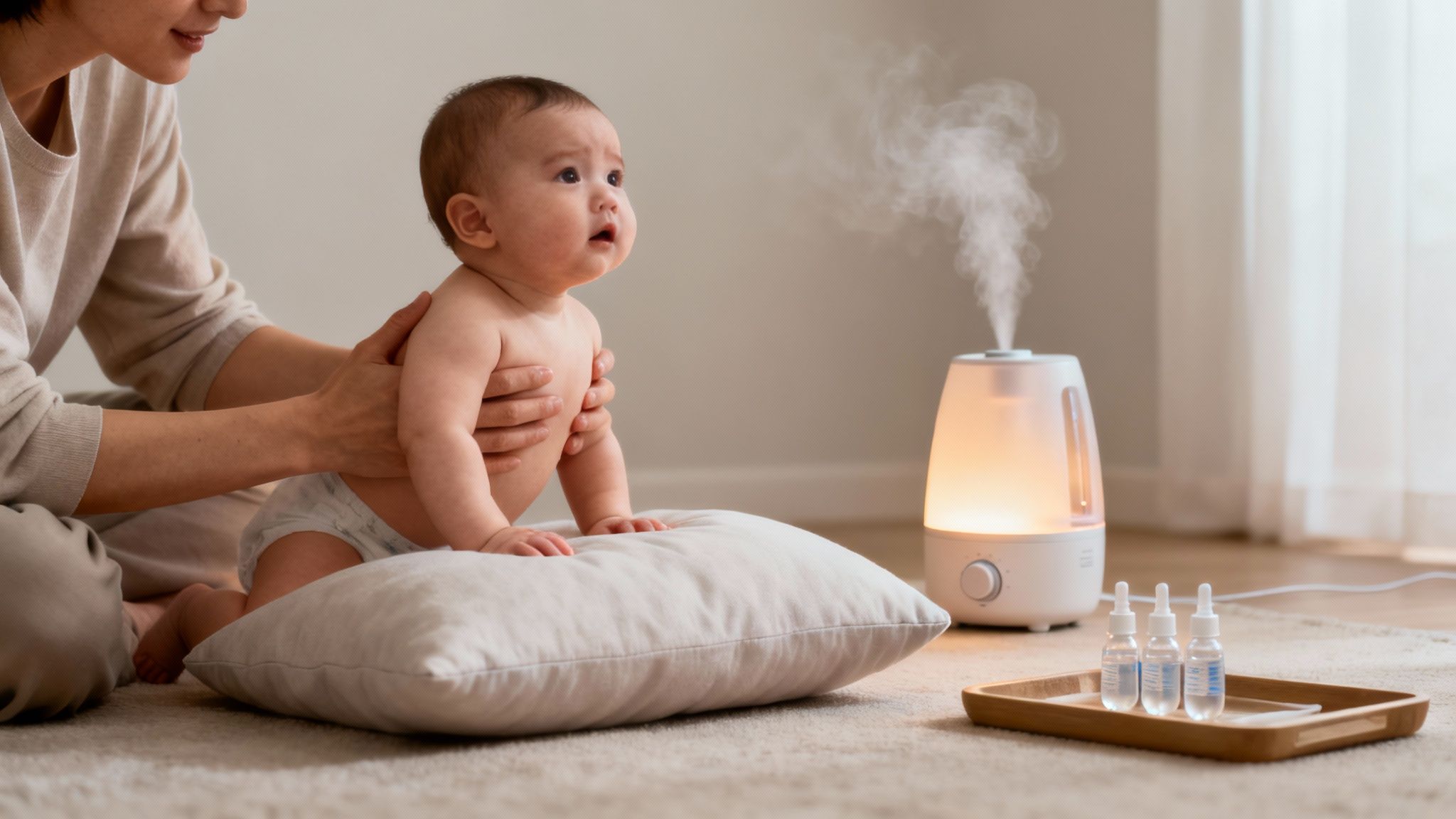
- Bring in a Cool-Mist Humidifier: Adding moisture to the air can really help soothe a dry cough or ease a stuffy nose. This makes breathing easier, which is a huge relief when your baby is lying down.
- Check the Room Temperature: Aim for a comfortable temperature, usually somewhere between 18°C and 20°C. A room that’s too warm or too cool can make it harder for a feverish baby to regulate their own temperature.
Manage Symptoms for Better Rest
Discomfort from symptoms is often the biggest hurdle to sleep. Tackling these head-on can completely change the game and help your baby finally settle.
A stuffy nose is public enemy number one. Because babies breathe mostly through their noses, congestion can be really distressing for them and can disrupt feeding and sleeping.
Saline nasal drops or a gentle spray are brilliant for loosening up mucus. Wait a few moments, then use a nasal aspirator to gently clear their little nose. It provides instant relief right before a feed or a nap.
Managing a fever is also crucial. If your baby is clearly uncomfortable and miserable with a fever, have a chat with your doctor about using infant paracetamol or ibuprofen. Always, always follow the correct dosage for your baby's age and weight.
Offer Extra Comfort and Hydration
When your baby is sick, they need more than just physical relief—they need emotional comfort, too. Extra cuddles, gentle rocking, and quiet reassurance can help calm their fussiness and make them feel safe and secure.
Forget about creating "bad habits." Right now, comfort is the top priority. That extra closeness helps soothe them, and sometimes, that physical contact is the only thing that will help them drift off. These moments can be especially helpful during that tricky newborn witching hour, which can feel even more intense when a baby is unwell.
Hydration is just as vital. Offer the breast or bottle more often, as a sick baby can get dehydrated quickly. For breastfed bubs, this also provides a powerful dose of antibodies to help fight the infection.
Prioritise Safe Sleep, Always
Even when you're exhausted and the routine has gone out the window, sticking to safe sleep guidelines is non-negotiable. It’s so tempting to do anything to get them to sleep, but safety has to come first.
Remember these key rules:
- Always place your baby on their back to sleep. This is the safest position, even if they're congested.
- Use a firm, flat sleep surface. Your baby should sleep in their own cot or bassinet, which should be clear of any loose blankets, pillows, or soft toys.
- Avoid co-sleeping on a couch or armchair. It’s completely normal for a sick baby to only want to sleep on you, but these surfaces pose a huge suffocation risk if you happen to doze off.
Next steps. By focusing on these practical steps, you’re creating a supportive space that helps your baby’s body do what it needs to do: rest, fight off the illness, and get back to their happy self.
Getting Your Baby's Sleep Routine Back on Track
When your baby is sick, your carefully crafted sleep routine can feel like a distant memory. It's completely normal for schedules to go right out the window when comfort becomes the number one priority.
A lot of parents worry they’re creating "bad habits" by offering extra cuddles or feeds to sleep. Let’s put that fear to rest. Prioritising your baby’s needs during an illness is not a step backwards; it's just responsive, loving care.
Think of this as a temporary detour, not a permanent change of direction. Your only job right now is to comfort your sick baby. Once they're feeling better, you can gently guide them back to their familiar rhythm.
A Gentle Return to Routine
Once the worst of the illness has passed and your little one is feeling more like themselves, you can start re-establishing their routine. There’s no need to rush this. A gradual approach is often the kindest and most effective.
Start by slowly returning to your usual nap and bedtimes. If they've been sleeping more, you can gently wake them a little earlier from naps to help preserve their night sleep.
Your goal is to provide gentle consistency. It’s about reminding your baby of their familiar patterns, not enforcing a strict schedule on day one of their recovery.
If new sleep associations have popped up, like needing to be rocked completely to sleep, you can slowly dial back your support. Try rocking them until they are drowsy but still awake, giving them a chance to do the last little bit of falling asleep on their own.
Patience is Your Best Tool
Getting back on track takes a bit of time and a lot of grace—for both you and your baby. Some bubs bounce back into their routine within a few days. Others might take a week or two. This is especially true after a big disruption, which can sometimes lead to issues like the four-month sleep regression.
Remember that sleep health can be complex and varies widely. For instance, research on First Nations Australian children highlights significant disparities, with an estimated 35% experiencing difficulty getting to and staying asleep. You can learn more about these sleep health findings to understand the broader context of paediatric sleep in Australia.
What to do next:
- Be consistent: Reintroduce your bedtime routine step-by-step.
- Stay patient: Do not get discouraged if the first few nights are rocky.
- Trust the process: Your baby will remember their routine with your gentle guidance.
Your Top Questions on Sick Baby Sleep Answered
When your little one is sick, sleep can feel like a confusing puzzle. You're trying to balance their need for rest with giving them medicine and comfort. We get it. It’s a lot to juggle.
Here are some clear answers to the questions we hear most from Australian parents.
Let's break it down.
Is It Okay to Wake a Sick Baby for Medicine?
Yes, it’s absolutely okay – and sometimes really important – to wake your baby for a scheduled dose of medicine. If your doctor has suggested infant paracetamol to help with a fever or pain, keeping on top of the doses is the priority.
A high fever can make a baby incredibly uncomfortable and miserable. This stops them from getting the deep, restorative sleep they need to get better. By managing their temperature, you're actually helping them rest more effectively in the long run.
When you do have to wake them, try to keep things calm and gentle. Give the medicine, have a quick cuddle, and then help them settle straight back to sleep.
How Long Until My Baby's Sleep Returns to Normal?
This is where a big dose of patience comes in handy. Every baby is different, and so is every illness. For a simple cold, you might find their sleep is back on track within a week of them feeling better. For something more serious, it could take a bit longer.
Try not to feel pressured to jump straight back into a strict routine. Your baby’s recovery comes first. Once they’re clearly on the mend and back to their usual self, you can gently and gradually reintroduce your normal nap and bedtime schedules.
If their sleep is still all over the place two weeks after they’ve recovered, it might be worth a chat with your child health nurse for a little extra guidance.
The most important thing is to be responsive to your baby. Their little body has worked so hard to get better, so a gentle transition back to their routine is always the kindest way forward.
My Sick Baby Only Sleeps on Me. Is This Safe?
It's completely normal for a sick baby to crave non-stop cuddles. They feel awful, and your closeness is the most comforting thing in the world to them right now. While it’s tempting to let them sleep on you for hours, it’s crucial to keep safe sleep practices top of mind, especially when you’re exhausted.
Sleeping with your baby on a couch, armchair, or even in your own bed can be incredibly dangerous because of the high risk of suffocation or falls. The safest place for your baby to sleep is always on their back, on a firm, flat surface in their own cot or bassinet.
Here's a safe way to manage those contact naps:
- Cuddle them to sleep: Hold and comfort your little one in your arms until they’re drowsy or fully asleep.
- Transfer them carefully: Once they're in a deep sleep, gently move them into their own safe sleep space.
- Stay close by: You can always put a mattress on the floor in their room to stay near them and respond quickly if they wake.
This way, you give them all the comfort they’re asking for while making sure they’re sleeping safely.
Should I Worry If My Baby Sleeps Much More Than Usual?
Extra sleep is a totally normal and healthy part of fighting off an illness. So, do babies sleep more when sick? Yes, they often do! It's their body’s clever way of directing energy toward healing.
However, there’s a big difference between sleeping a lot and being overly lethargic or difficult to rouse.
You should still be able to wake your baby for feeds, even if they seem extra sleepy. They might not take their full bottle or breastfeed for as long, but they should wake up and show some interest. If your baby is extremely hard to wake, seems unusually floppy, or is refusing all feeds for a long stretch, you need to get medical advice straight away. Always, always trust your parental instincts.
At Wallaby Collective, we know that creating a soft, safe, and comfortable space is essential when your baby is resting and recovering. Our cushioned linen play mats are the perfect spot for quiet playtime and gentle cuddles when your little one is feeling under the weather. Discover our collection of beautiful, easy-to-clean play mats.