

How to help baby roll over: A Practical Aussie Guide
Are you ready for one of your baby’s first big moves? Rolling over is a huge developmental leap. It paves the way for sitting up, crawling, and eventually, those first wobbly steps. It is a sure sign their muscles are getting stronger and their coordination is clicking into place.

So, how does it all happen? Your baby’s journey to rolling is all about building strength in their neck, shoulders, arms, and core. These key muscle groups all need to work together to pull off this amazing feat. Your gentle encouragement and a safe space to practise can make all the difference.
The Two Types of Rolls
Babies usually master two different types of rolls. They often figure them out at slightly different times.
-
The Tummy-to-Back Roll: This is often the first one they nail. They use their growing arm strength to push up. Then, gravity gives them a little nudge over onto their back. It can sometimes happen by accident the first time, which is always a fun surprise.
-
The Back-to-Tummy Roll: This move is a bit trickier. It requires more strength and coordination. They need to lift their head and shoulders, then use their core to twist their body all the way over.
To help you keep track of where your little one is at, here is a quick look at the typical progression.
Quick Guide to Rolling Milestones
This table breaks down the key stages and average timelines for an Australian baby learning to roll. This helps you see what skills are developing along the way.
| Milestone | Typical Age | Key Skills Developed |
|---|---|---|
| Early Neck Control | 0–2 Months | Lifting head briefly during tummy time. |
| Pushing Up | 2–4 Months | Pushing up on forearms, lifting chest. |
| Tummy-to-Back Roll | 4–5 Months | Stronger arms, accidental tumbles turn into purposeful rolls. |
| Back-to-Tummy Roll | 5–6 Months | Core strength, twisting motion, coordinated movement. |
Remember, these are just averages. Every baby develops at their own pace. Do not worry if your little one is a bit ahead or behind.
According to Healthdirect Australia, a national virtual public health information service, most babies achieve this milestone between three and six months. It marks one of their earliest independent gross motor skills.
When do babies start rolling over?, Healthdirect Australia, August 2022.
Rolling over is more than just a physical skill. It is your baby's first real taste of independent movement. It opens up a whole new perspective on their world and fuels their curiosity to explore.
As your baby masters new physical skills, their other routines, like sleep, might shift too. It can be helpful to read up on understanding your newborn's sleep schedule to support their changing needs.
For a deeper dive into the specific timelines, check out our guide on when babies start rolling. The journey all starts with building that foundational strength. Let's look at that next.
Mastering Tummy Time to Build Essential Strength
If there is one thing that lays the groundwork for rolling, it is tummy time. Think of it as your baby's first workout. It is the single most important activity for building the strength they need in their neck, back, and shoulders.
But it is more than just plopping them down on their stomach. Each session, no matter how short, helps them develop the crucial muscles needed to lift their head, push up with their arms, and eventually, twist their core to roll over.
Here is why a consistent approach is best. Short bursts of practice are far more effective than one long, overwhelming session. Aim for several brief periods throughout the day. Start with just a minute or two. Slowly build up as your baby gets stronger.
Making Tummy Time Enjoyable
Let's be honest, not every baby loves being on their tummy at first. The key is to make it a positive and engaging experience. If your baby starts fussing, do not force it. Just scoop them up and try again later.
Here are a few ways to make it more fun:
- Get Down on Their Level: Your face is the most interesting toy your baby owns. Lie on the floor with them, make eye contact, sing silly songs, and just chat. Your presence makes all the difference.
- Use a Prop for Support: A small, rolled-up towel or cushion placed under their chest and armpits can give them a little lift. This makes it easier for them to see what is going on and reduces frustration.
- Introduce Engaging Toys: Place a baby-safe mirror or some high-contrast toys just within their reach. This naturally encourages them to lift their head and look around. It strengthens those important neck muscles without them even realising it.
This simple flow chart breaks down how to set up a successful tummy time session.
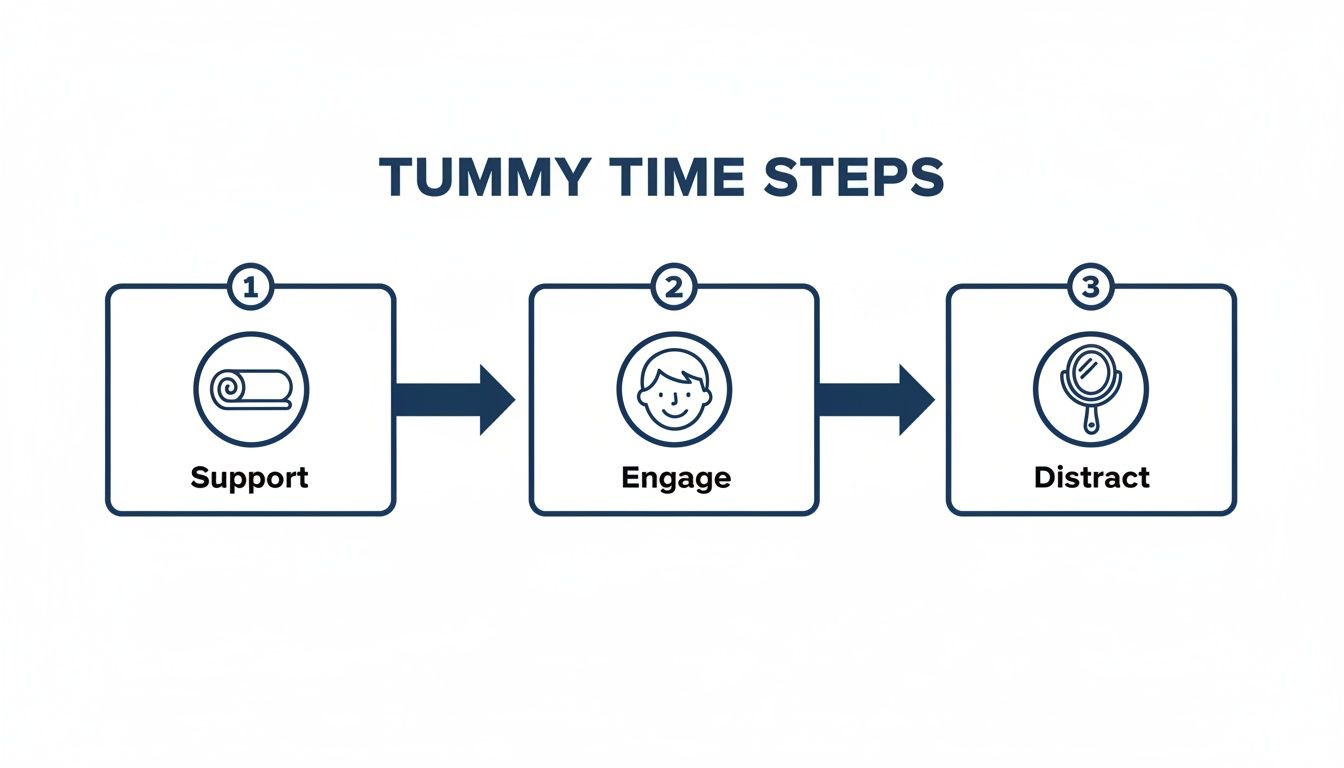
As you can see, providing a bit of support, engaging with them directly, and using fun distractions are the keys to a positive experience.
Creative Tummy Time Positions
Tummy time does not always have to happen on a play mat. Changing the scenery can keep things interesting for your little one. It also offers different developmental perks.
Tummy time for babies: in pictures, Raising Children Network (Australia), May 2023.
Here are some alternative positions to try, supported by the Raising Children Network:
- Tummy-to-Tummy: Lie on your back and place your baby on your chest. They will love the closeness and will naturally try to lift their head to see your face.
- The Lap Lay: Sit comfortably and place your baby tummy-down across your lap. You can gently rub their back or sway your legs to create a calming, rocking motion.
- The Football Hold: This one is great for getting things done. Carry your baby tummy-down, with your arm supporting their chest and stomach. It is a fantastic way to sneak in some strengthening while you move around the house.
Every minute of tummy time is a step forward. To learn more, you can explore the many benefits of tummy time for babies in our detailed guide. These foundational exercises pave the way for the next stage of playful encouragement.
Playful Exercises to Encourage Rolling
Once your baby has built some solid strength from tummy time, you can start some playful exercises. These activities help guide them through the rolling motion. This turns practice into playtime. The idea is not to force the roll, but to show them what their body can do.
Let's break down how a roll starts. It begins with a head turn. By placing a favourite toy just out of their direct line of sight, you encourage them to turn their head. Eventually, they will shift their weight to reach for it. That simple turn is the first step in kicking off a roll from back to tummy.
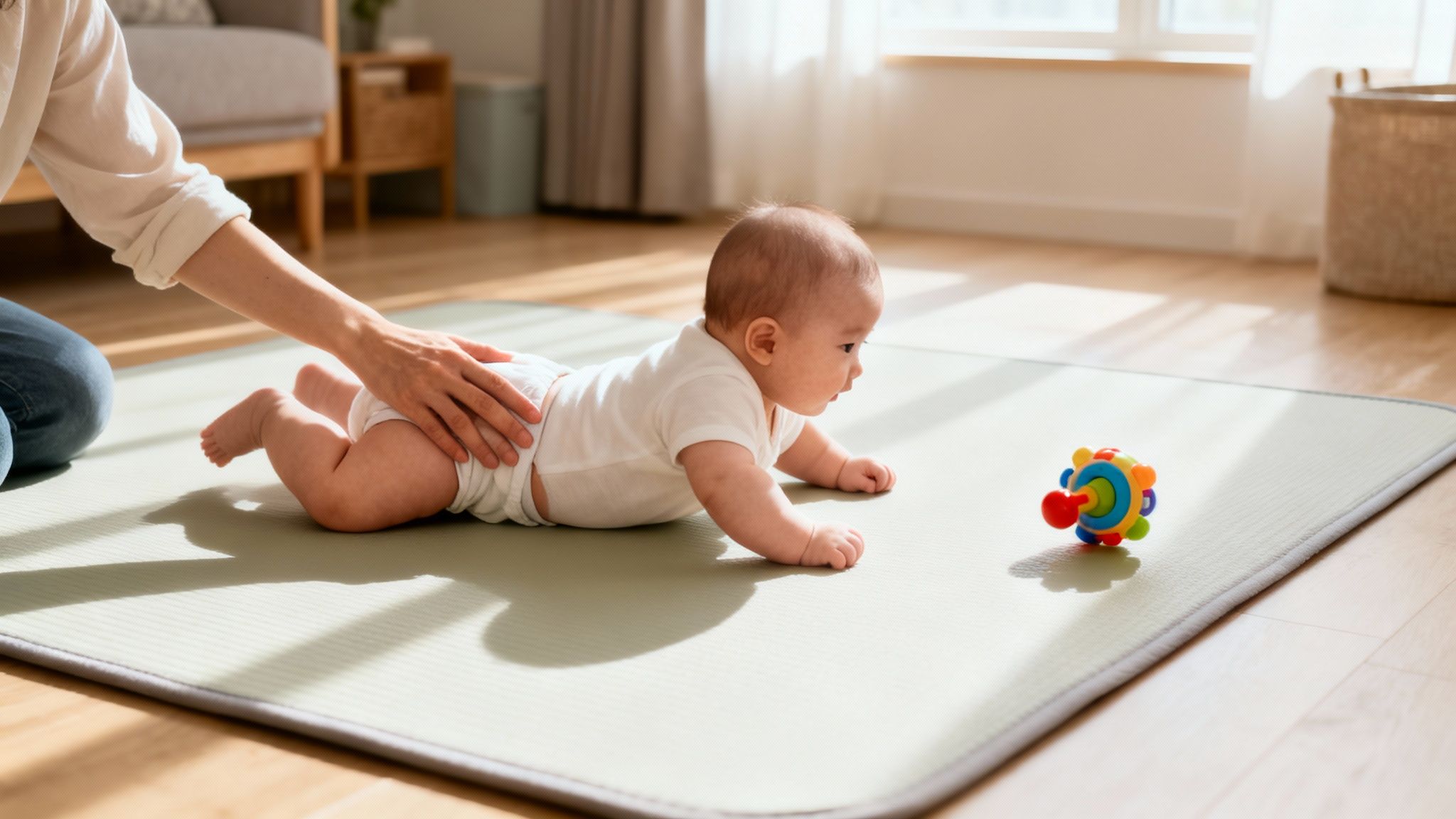
Introducing the Side Lying Position
The side-lying position is a fantastic intermediate step. It breaks down the full roll into a smaller, more manageable movement. This is a huge confidence booster for your baby. Think of it as the halfway point that makes the final destination feel much closer.
To try this, just place your baby on their side on a comfy surface like a play mat. You can pop a rolled-up towel behind their back for a bit of stability. Then, engage them with a toy in front. This encourages them to reach forward, which naturally shifts their weight. This position is brilliant for strengthening the oblique muscles they need for rolling.
According to Pregnancy, Birth and Baby, a national Australian government service, many babies start this journey around three to five months. Introducing side-lying play can support this progression. It helps them master the full tummy-to-back roll. You can find out more about these baby development milestones.
Your baby's development from 4 to 6 months, Pregnancy, Birth and Baby, September 2022.
Assisting the Roll with Gentle Guidance
Once your baby is comfortable turning their head and on their side, you can offer a little hands-on help. The key is to provide just enough support to guide them, not do the work for them. This helps their brain and muscles connect the dots.
Here are two effective techniques:
- The Hip Nudge: When your baby is lying on their back and looking to one side, gently bring their opposite leg up and across their body. This subtle shift in their centre of gravity often gives them the momentum needed to roll onto their tummy.
- The Shoulder Tuck: If your baby is on their tummy and pushing up but seems stuck, you can gently tuck one of their arms under their chest. This helps them shift weight onto the other arm. This makes it much easier to roll over their tucked shoulder and onto their back.
Remember, every baby learns differently. The goal is progress, not perfection. Celebrate the small wins, as these are the building blocks of the big milestone.
For more inspiration on making floor time both productive and fun, you can explore our detailed guide on tummy time activities to try with your baby.
Next steps in Playful Practice
Keep your practice sessions short, positive, and try to weave them into your daily routine. A few minutes of guided play after a nappy change can make a world of difference. Always make sure you are on a safe, flat surface. Never leave your baby unattended. These playful exercises are the bridge between building strength and achieving independent movement.
Creating a Safe Space for Your Mobile Baby
Once your baby starts rolling, their whole world opens up. Suddenly, that little person who was happy in one spot can move across the room with surprising speed. This exciting new skill also means it is time to look at your home with fresh eyes.
The best place for your baby to practise their new moves is on a firm, flat surface. A good quality play mat is perfect for this. It creates a dedicated, comfy, and safe zone. It has just enough cushioning for little tumbles without being so soft that it becomes a hazard.
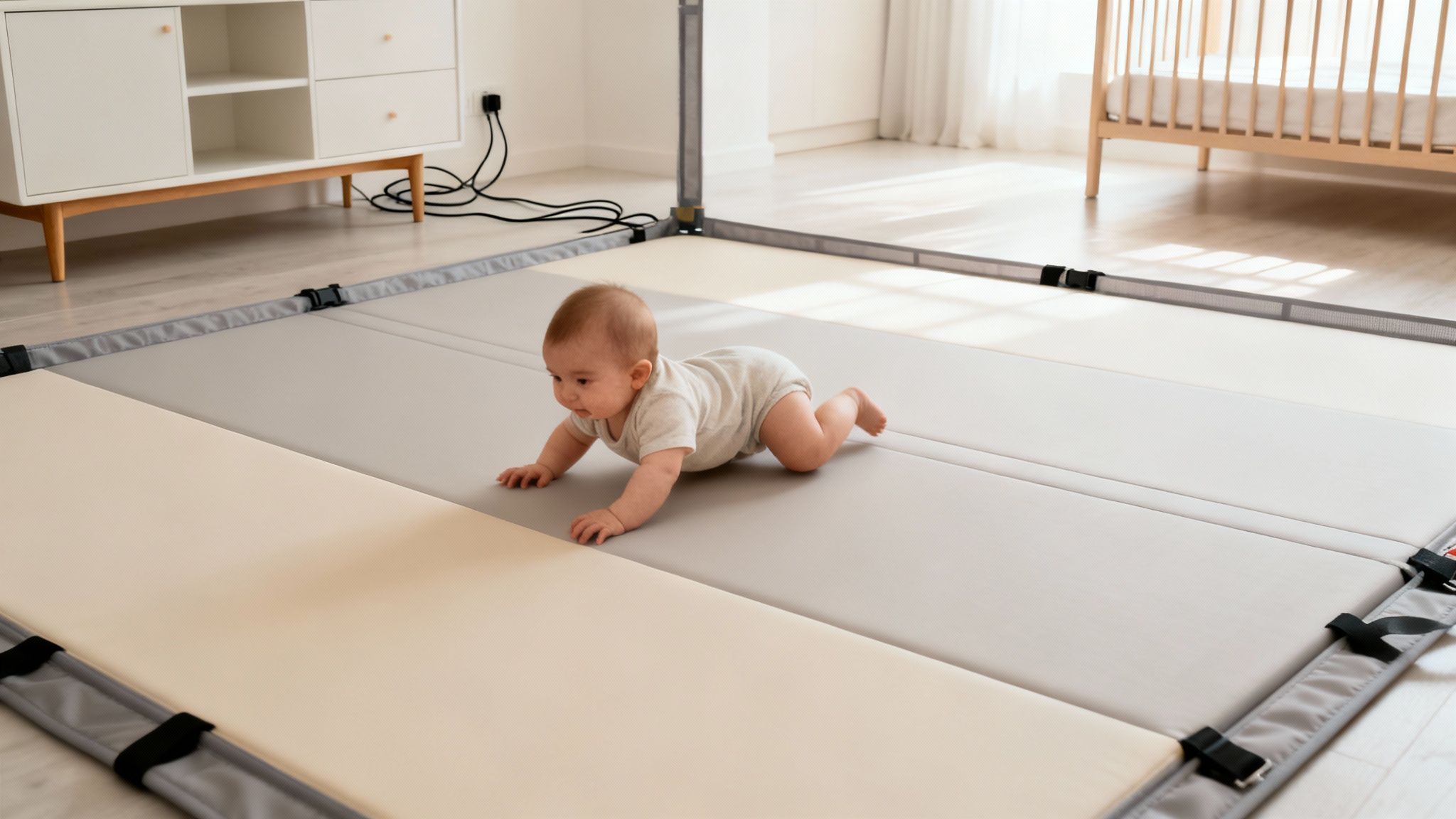
It is very important to keep them off soft surfaces like beds, sofas, or puffy duvets for practice. These can pose a serious suffocation risk, especially for a baby who is still getting the hang of lifting and turning their head.
Baby Proofing Your Home for Rolling
Now that your baby is on the move, it is time to get down on their level. You need to see the world from their perspective. A rolling baby can get into some surprisingly sticky situations.
Here are the key areas to focus on:
- Secure Heavy Furniture: Anchor bookcases, dressers, and TVs to the wall. A baby who can roll will soon be pulling up, and furniture tip-overs are a real danger.
- Manage Cords and Wires: Tie up or cover all electrical cords, including those for blinds and curtains. These can quickly become entanglement hazards.
- Clear the Floor: Get down on your hands and knees and look for small objects that could be choking hazards. Check under furniture for things like coins, buttons, or tiny toy parts.
- Cover Power Points: Pop safety plugs into any unused electrical outlets within your baby’s reach.
Running through this quick checklist makes their new play space much safer.
Sleep Safety for a Rolling Baby
Your baby’s new mobility also changes things in the cot. The moment your baby starts showing signs of being able to roll, it is time to stop swaddling. Switch to a safe sleeping bag that leaves their arms free.
Once a baby can roll onto their tummy, they absolutely need their hands free to push up and reposition their head. This simple change is a critical step in safe sleep.
This is not just a friendly suggestion. It is a key safety guideline from Australian safe sleep organisation Red Nose. They recommend moving to a bare cot with a firm, flat mattress as soon as rolling begins to reduce sleep-related risks. You can find more on these crucial baby development safety tips.
What do I do when my baby starts to roll over?, Red Nose, November 2022.
By creating a safe space for both play and sleep, you can relax and confidently support your baby as they master this exciting milestone.
What to Do If You Have Concerns
It is completely natural to wonder if your little one is on track. This is especially true with a big milestone like rolling. Every baby develops at their own pace. There is a huge range of what is considered "normal." This is a space for clear, reassuring guidance, not worry.
Our goal is to give you the knowledge to feel confident as you support your baby’s journey. Let's break down what to look for and when it might be time for a chat with a professional.
Knowing When to Seek Advice
Most babies master rolling between four and six months. But it is often fine if they take a little longer. It is more about looking at the big picture of their development. Do not focus on a single date on the calendar.
If you have a feeling that something is not quite right, trust your instincts. You know your baby best. Raising concerns with a healthcare professional is never the wrong move. It is just you being a proactive, caring parent.
A great first step is to chat with your local maternal and child health nurse during your next visit. They are a fantastic resource for tracking developmental progress. They can offer personalised advice. You can also always book an appointment with your GP.
Specific Signs to Observe
Instead of just watching the calendar, there are a few things you can look out for during floor play. These might signal it is time for a professional chat. These are not definite signs of a problem on their own. But they are worth noting if you see a pattern.
- Muscle Stiffness or Floppiness: Does your baby seem unusually stiff and rigid? Or, on the other hand, very floppy, almost like a rag doll?
- A Strong One-Sided Preference: Many babies favour one side at first. But a very strong and persistent preference for turning their head or rolling to only one side could be worth mentioning.
- Lack of Progress: If your baby does not show any interest in lifting their head during tummy time or trying to push up by four months, it is a good idea to check in.
- Avoiding Weight on Arms: Pay attention if your baby consistently avoids putting weight on their arms. Notice if they keep them bent and tucked in close to their body during tummy time.
According to the Murdoch Children's Research Institute, Australian guidelines suggest a health review if a baby is not rolling by six months of age.
Gross motor delay, Murdoch Children's Research Institute, Date unspecified.
Remember, these observations are just pieces of a larger puzzle. A single sign is rarely a cause for alarm. But bringing a pattern of concerns to a professional can provide peace of mind and access to support if needed.
If you notice your baby is struggling to reach this or other milestones, exploring strategies for overcoming developmental delay can provide valuable guidance. Early intervention can make a significant positive impact. It ensures your little one gets the help they need to thrive.
Common Questions from Aussie Parents
Watching your little one on the verge of a new skill naturally brings up a lot of questions. Let's walk through some of the things we hear most often from other Aussie parents. This way, you can feel confident cheering on your baby.
Which Way Do Babies Usually Roll First?
Most babies get the hang of rolling from their tummy to their back first. It makes sense when you think about it. This move is a bit easier and requires less coordinated strength.
They use their little arms to push up from the floor. Sometimes all it takes is a slight shift in weight for gravity to help them flop over. The back-to-tummy roll is a much bigger project. It demands more core and neck strength to lift their head and shoulders and twist their body.
You will often see the tummy-to-back roll appear a month or two before the back-to-tummy one. It is all part of building that amazing core strength they will need for crawling later. For a deeper dive into timelines, you can find some great insights on baby rolling milestones.
What If My Baby Only Rolls to One Side?
This is so common, so do not stress. Most babies will favour one side when they first start rolling. It is a bit like being right-handed or left-handed. They have found their preferred, stronger side and they are sticking with it.
You can gently encourage them to build up strength on their less-favoured side. Try placing their favourite colourful toy or positioning yourself on that side during playtime. This often entices them to turn their head and shift their weight in that direction.
If you notice a really strong preference that continues for several weeks without any attempts to roll the other way, it is worth having a chat with your maternal and child health nurse or GP at your next visit.
Should I Stop Swaddling When My Baby Starts Rolling?
Yes, absolutely. This is a non-negotiable safety step. As soon as your baby shows the first signs of being able to roll, the swaddle has to go. Australian safe sleep experts at Red Nose are very clear on this.
A rolling baby needs their arms free. If they happen to roll onto their tummy while sleeping, they must be able to push up and reposition their head to keep their airways clear.
The next step is to transition them to a safe baby sleeping bag that allows their arms to be completely free.
My Baby Rolled Over but Then Stopped. Why?
This happens all the time and is sometimes called a 'milestone regression'. It is completely normal. Your baby’s brain is a busy place, working on so many new skills at once.
They might be pouring all their developmental energy into something else right now. For example, mastering babbling, reaching for toys with more purpose, or figuring out how to sit up.
The best thing you can do is keep offering plenty of relaxed, pressure-free floor time. They will almost certainly pick up rolling again when they are ready. Just keep it fun and celebrate all their amazing efforts, big and small.
All this practice needs a safe and comfy spot. At Wallaby Collective, we design beautiful, OEKO-TEX certified linen play mats. They give your baby the perfect cushioned space to explore movement and master new skills. You can explore our collection of linen play mats right here.