

Benefits of Baby Led Weaning A Parent's Guide
If you are starting to think about introducing solids to your little one, you have probably heard the term baby-led weaning, or BLW, floating around. It is an approach that skips the purées and spoons. Instead, it lets your baby take the lead, feeding themselves soft, graspable finger foods right from the start.
What Is Baby Led Weaning?
Forget mushy rice cereal and endless spoon-feeding sessions. Baby-led weaning lets your baby feed themselves proper food from their very first meal. Author Gill Rapley brought this idea into the mainstream.
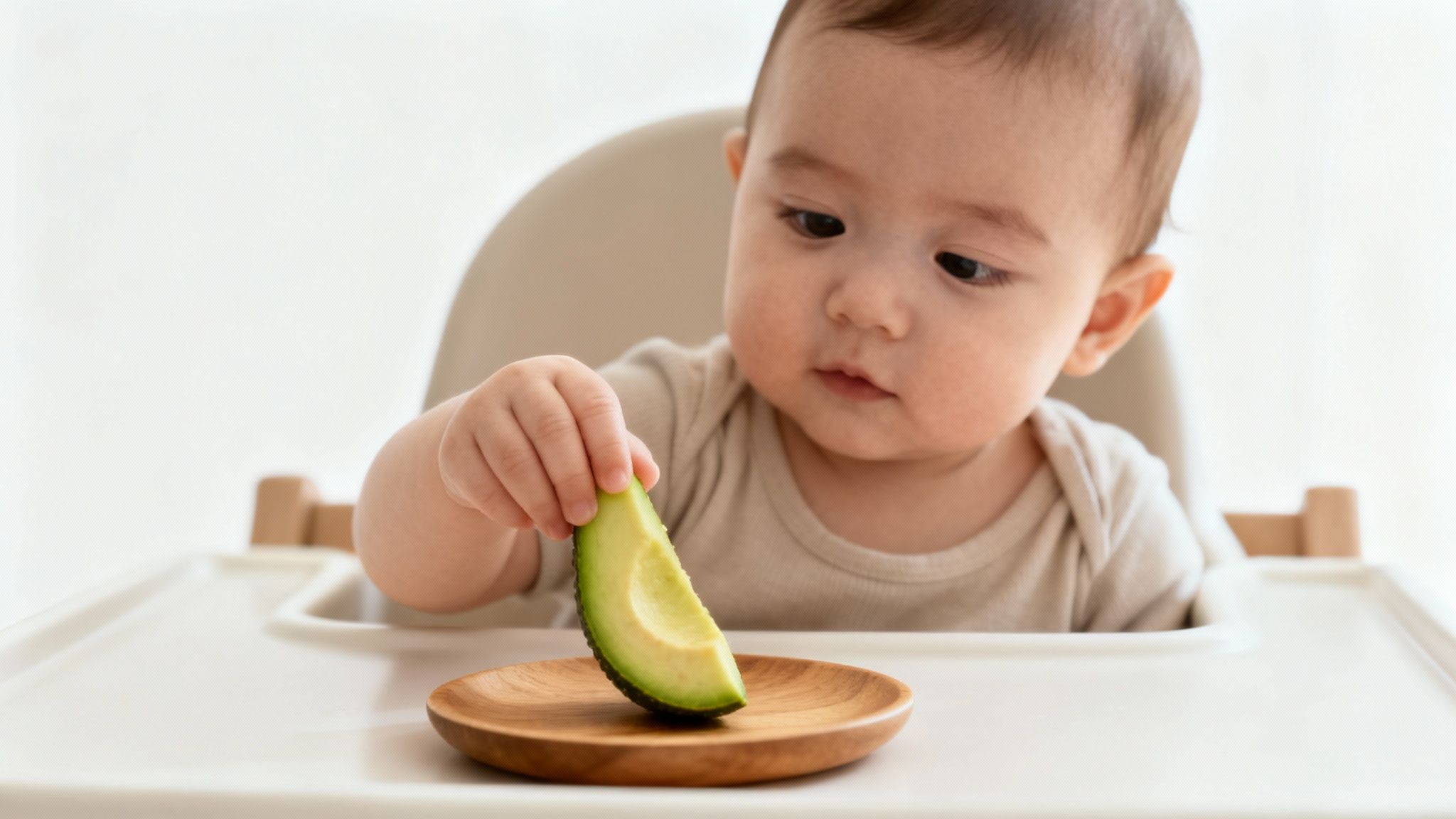
At its heart, this method trusts your baby's innate ability to manage their own appetite. It empowers them to explore different tastes, smells, and textures at their own pace. This makes mealtimes an adventure instead of a chore.
The Core Principles of BLW
This intuitive way of feeding is built on a few simple but powerful ideas. The main one is that your baby joins the family at the dinner table. They eat modified, baby-safe versions of whatever you are having.
Here is why so many parents are embracing this approach:
- Your Baby Is in Charge: You offer the safe, healthy food, and your baby decides what to eat, how much, and how fast. It gives them a sense of autonomy from day one.
- No More "Aeroplane" Spoon: Babies eat with the family and learn how to eat by watching you. This simplifies meal prep because you are not blending separate meals.
- A Full Sensory Experience: BLW encourages babies to touch, squish, smell, and taste their food. This messy exploration is a crucial part of their sensory development.
- Learning to Listen to Their Tummy: There is no pressure to "finish the jar." Your baby learns to recognise their own hunger and fullness cues, setting them up for a healthy relationship with food.
It is important to remember that "weaning" does not mean stopping milk feeds. Breast milk or formula will still be your baby’s main source of nutrition until they are one year old. Solids complement their milk, not replace it.
Starting the Journey
Most families start their BLW journey when their baby is around six months old and showing clear signs they are ready for solids. Hitting these developmental milestones is non-negotiable for keeping things safe and fun.
Let's break it down. We will dive into what those signs of readiness look like a bit later. They include things like being able to sit up unassisted with good head control and showing a real interest in what you are eating. By letting your baby take the reins with family foods, BLW can lay the groundwork for a lifetime of positive eating habits.
Building Lifelong Healthy Eating Habits
One of the best things about baby-led weaning is how it helps your little one build a healthy, positive relationship with food. This relationship can last a lifetime. It is a real shift in focus. You are no longer trying to coax them into one more spoonful. Instead, you are trusting them to lead the way.
When babies control what and how much they eat, they become incredibly tuned in to their own bodies. This independence is important for learning to recognise and respond to their natural hunger and fullness cues. It is a core skill for self-regulation that can help prevent overeating later in life.
Think about it this way: by exploring food on their own terms, babies learn to listen to their tummies. They stop when they feel satisfied, not when the jar is empty. It is a mindful approach to eating that many of us adults are still trying to master.
Fostering an Adventurous Palate
Because babies join in with family meals right from the start, they are exposed to a much wider variety of tastes and textures than they would be with traditional purées. This early, diverse exposure helps build an adventurous palate and can lead to less picky eating down the track.
A 2018 review of studies found that babies introduced to solids using BLW methods showed less food fussiness and enjoyed their food more than spoon-fed infants.
This method turns mealtimes into a sensory adventure. Your baby gets to experience the soft texture of avocado, the slight roughness of steamed broccoli, and the juicy burst of a ripe peach. All of this encourages curiosity about different foods.
Developing Positive Food Associations
Baby-led weaning frames mealtimes as a relaxed and enjoyable social event, not a stressful task to get through. When there is no pressure to eat a certain amount, babies are free to explore without anxiety. They learn that food is not just for nutrition, but also for enjoyment and connection.
This positive association is key. It helps them see a wide range of foods, including vegetables, as a normal and pleasant part of family life. If you are looking for some inspiration, we have a great guide on foods babies love to help you get started.
Ultimately, the goal is to raise a confident eater who is curious about food and trusts their own body. The benefits of baby-led weaning here are profound, setting the stage for a lifetime of healthy habits and happy, shared mealtimes.
Enhancing Motor Skills and Coordination
Think of baby-led weaning as a tiny developmental playground right at the dinner table. Every meal becomes a chance for your little one to build crucial physical skills. Their highchair basically turns into a personal gym for their hands and mouth. This is one of the most incredible benefits of this approach.
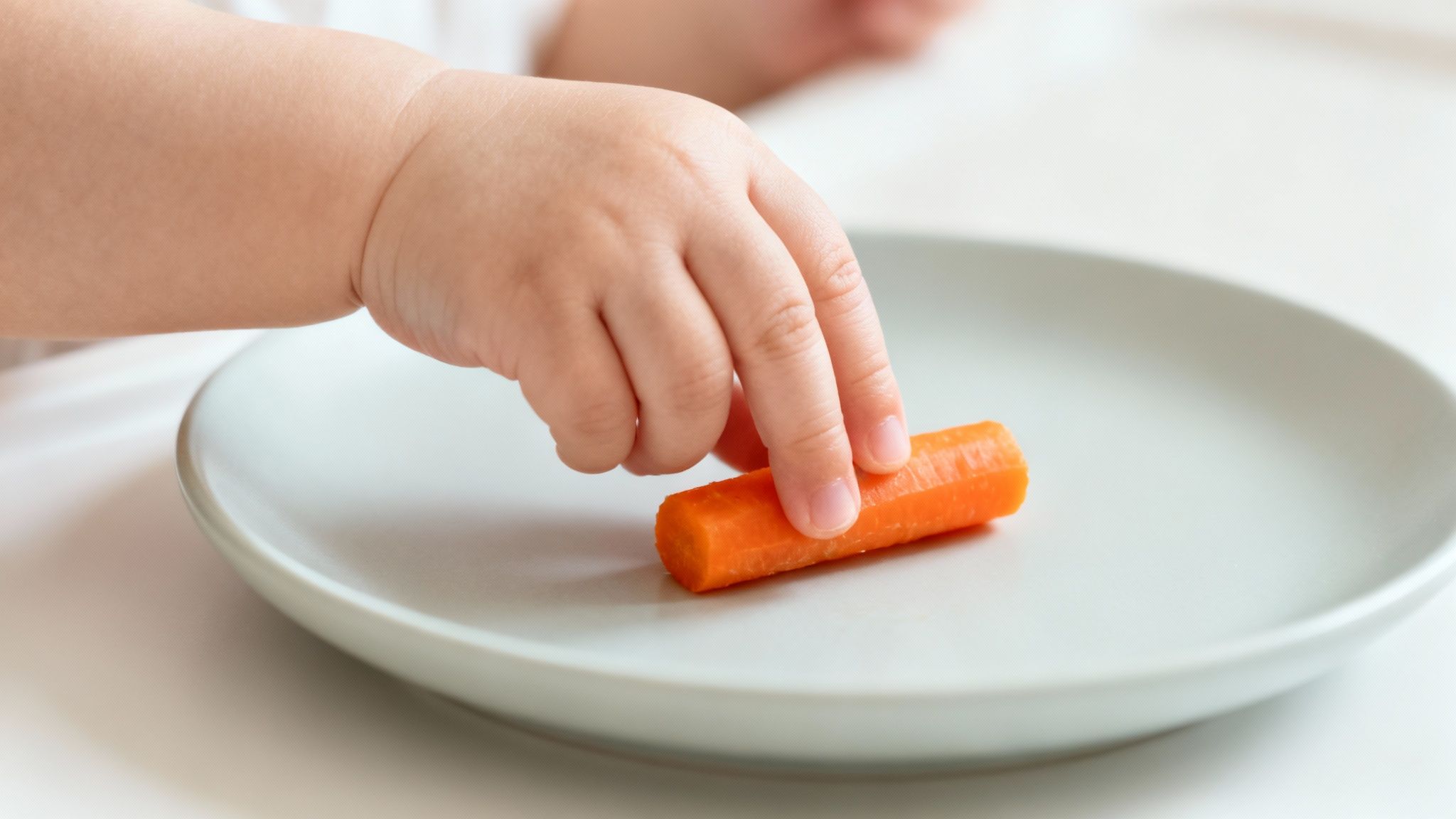
When your baby first starts out, you will probably see them use a palmar grasp. That is when they curl their whole hand around a piece of food, like a soft spear of cooked carrot or a slice of avocado. This is a big, foundational first step in their motor skill journey.
Keep watching, because the progression is fascinating. Before you know it, they will start to master the more delicate pincer grasp. They will use just their thumb and forefinger to pick up smaller things like a single cooked pea or a piece of soft pasta. It is a huge developmental leap.
Hand-Eye Coordination and Dexterity
Figuring out how to handle different food shapes and textures is a fantastic workout for your baby’s brain and body. Slippery slices of avocado, bumpy broccoli florets, and soft pieces of toast all present unique little challenges that build dexterity and hand-eye coordination.
Every time they try to pick something up and bring it to their mouth, they are strengthening the neural pathways needed for these complex movements. It is a brilliant way for them to naturally improve fine motor skills.
Think of it like this: food becomes your baby’s first set of educational toys. Just like building blocks teach an older child about shapes and physics, BLW teaches your baby about weight, texture, and grip.
Of course, these fine motor skills go hand-in-hand with the gross motor skills they are building during floor play. In fact, you can read more about the benefits of tummy time for babies in our other post.
Strengthening Oral Motor Skills for Speech
The benefits do not just stop at their hands. Baby-led weaning gives their mouth a proper workout, which is so important for future speech development.
Instead of just passively swallowing purées, a baby doing BLW has to actively engage with their food. They learn to:
- Bite off manageable pieces using their strong little gums.
- Move food around their mouth with their tongue to chew it.
- Develop strong jaw muscles needed for clear speech later on.
This whole process strengthens the muscles in their tongue, lips, and jaw. These are the very same muscles they will use to form sounds and words. So while they are learning to eat, they are also laying the essential groundwork for communication. It is a win-win.
Making Family Mealtimes Simpler and More Social
One of the best things about baby-led weaning is how much it simplifies daily life. Seriously. Forget spending ages making separate purées or being tied to a spoon while your own dinner goes cold. With BLW, your baby can often eat a slightly modified version of what you are having.
This simple shift turns mealtimes from a chore into a proper shared family experience. Picture it: you are sitting down to a hot meal, and your baby is happily exploring pieces of soft-cooked sweet potato and broccoli from their highchair. That is the reality for so many families who go down the BLW path. You just adapt what you are already cooking to be safe for your little one. This saves time and dials down the meal prep stress.
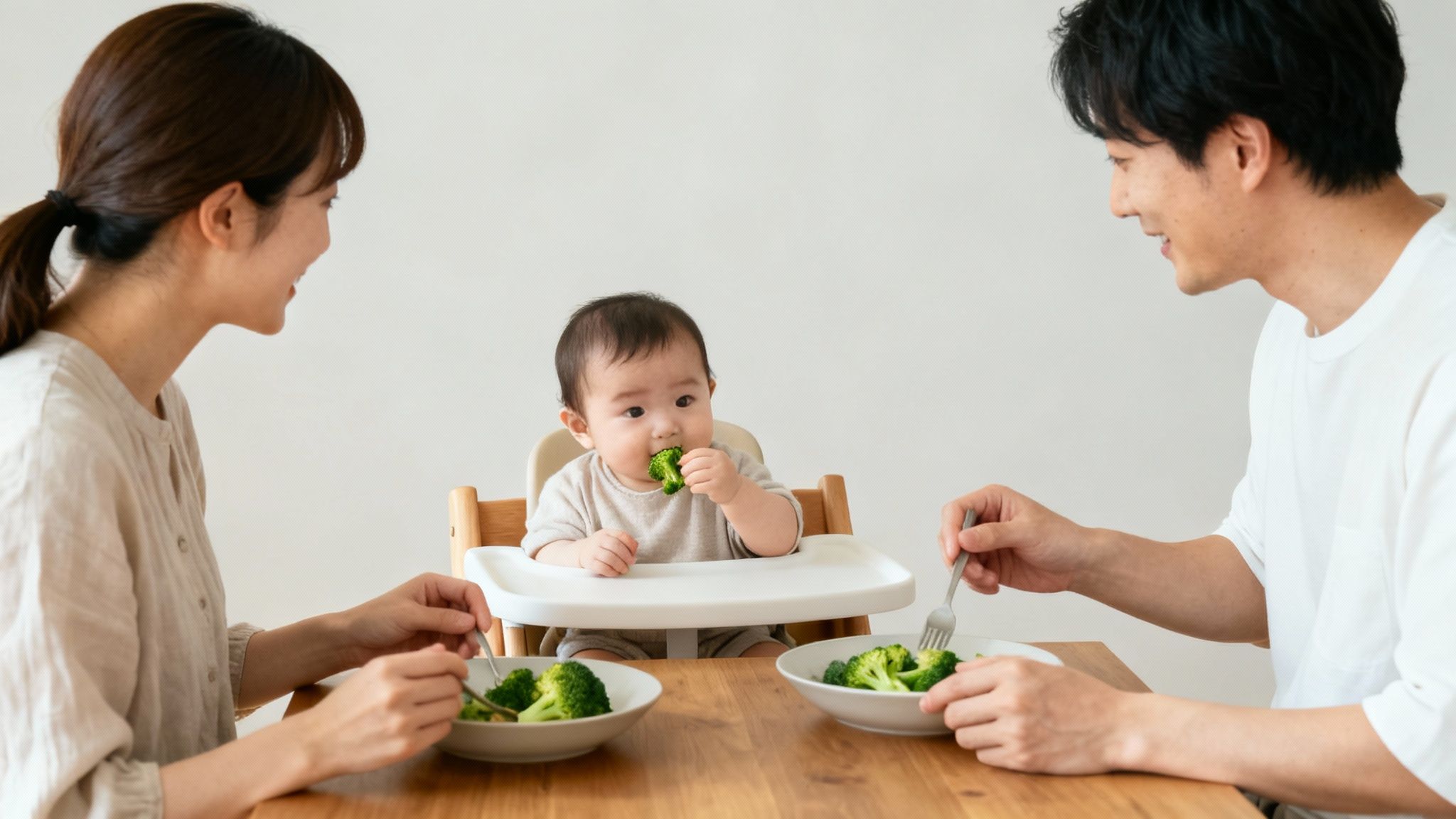
But it is not just about convenience. Including your baby in family meals is a powerful way to kickstart their social development. When babies eat with everyone else, they become tiny observers. They soak up valuable social cues just by watching you.
Learning Through Observation
Babies are natural mimics. By joining you at the table, they get a front-row seat to the social side of eating. It creates a relaxed, positive atmosphere where food is linked with connection and enjoyment, not pressure.
They watch how you use a fork, how you chat during the meal, and how you enjoy different foods. This simple act of inclusion makes them feel like a valued part of the family right from the start.
The Australian Government's parenting resource, Raising Children Network, puts it perfectly: eating together helps build stronger family relationships. It gives children a sense of belonging and creates a space for regular, positive chats.
Creating Positive Mealtime Routines
Bringing your baby into family mealtimes helps establish healthy habits that can last a lifetime. In fact, research shows that mothers who use BLW report less stress around introducing solids because it fits so neatly into their family’s lifestyle.
Here is a quick look at why this shared experience is so good for everyone:
- Encourages Social Interaction: Your baby learns to associate mealtimes with conversation and family connection.
- Models Healthy Habits: They watch you eat a variety of foods, which can inspire them to be more adventurous.
- Reduces Mealtime Stress: When everyone eats together, there is less pressure on the baby and a more relaxed vibe for parents.
Next steps. Let's talk about keeping your baby safe. We will explore the crucial difference between gagging and choking to help you feel confident as you get started.
Understanding Gagging vs Choking
Safety is always front of mind when you start exploring something new with your baby, and baby-led weaning is no exception. One of the biggest fears for parents is choking. So, getting clear on the difference between gagging and choking is the first, most important step. It will give you so much more confidence at the dinner table.
Gagging is a completely normal, built-in safety reflex. Think of it as your baby’s training wheels for learning to eat solids. In babies, the gag reflex is triggered much further forward on the tongue than it is for us adults. This means their body instinctively pushes food forward if a piece is too big to swallow. This helps to prevent choking before it even happens.
You will know it when you see it and hear it. Gagging is noisy. You might hear sputtering, coughing, or even loud retching sounds. Your baby's face might go a bit red and their eyes could water, but they are actively managing the food all by themselves. It can be a little startling to watch, but it is a crucial part of them figuring out how to bite, chew, and move food around their mouth.
What Gagging Looks and Sounds Like
When a baby gags, their airway is still clear. It is a productive process, even if it looks dramatic.
- It’s Loud: Gagging involves very audible coughing, spluttering, and retching noises.
- They Are Active: Your baby will be actively trying to clear the food by pushing their tongue forward.
- Colour is Normal: Their face might get red from the effort, but you will not see any blueish tones around their lips or skin.
Your job during a gag is to stay calm and give them space to work it out. As tempting as it is to jump in, intervening could startle them or accidentally push the food further back.
Choking Is Different and Requires Action
Choking, on the other hand, is a true medical emergency. It happens when the airway is actually blocked, meaning no air can get in or out. The most critical difference is that choking is silent.
Because there is no air moving, a choking baby cannot cry, cough, or make any sound at all. They might have a panicked look on their face. Their skin, lips, or nail beds may start to turn blue from the lack of oxygen. This is a clear signal that you must step in and help immediately.
While learning to tell the difference between gagging and choking is vital for baby-led weaning, being prepared is even better. This paediatric first aid guide is a comprehensive resource that all parents can benefit from.
To help you tell the difference in a split second, here is a quick reference table.
Understanding Gagging vs Choking
| Indicator | Gagging (Normal Reflex) | Choking (Medical Emergency) |
|---|---|---|
| Noise | Loud coughing, sputtering, retching | Silent, unable to cry or cough |
| Airway | Airway is clear | Airway is blocked |
| Action | Baby is actively pushing food out | Unable to breathe, may look panicked |
| Colour | Face may turn red | Face and lips may turn blue |
Knowing these signs helps you respond in the right way. Trust your baby’s incredible natural reflexes during a gag, but be prepared to act decisively if you ever see the silent signs of choking.
How to Get Started with Baby-Led Weaning
Ready to start this exciting food adventure? The first step is to watch for a few key signs of readiness in your little one. Let’s break it down.
Before you offer that first piece of avocado, make sure your baby can sit up well with only a little bit of help and has good control over their head and neck. They should also be showing a real interest in your food, maybe by watching every bite you take! It is also important they have lost that tongue-thrust reflex that automatically pushes things out of their mouth.
These signs usually pop up around the six-month mark, but every baby moves at their own pace. Getting this foundation right is the most important step for a safe and happy start. You might find our general parenting advice for new parents helpful as you navigate these early milestones.
Choosing the Right First Foods
When you first begin, you will want to stick with foods that are soft enough to squish between your fingers. Think long, chip-like shapes that are easy for a baby’s whole-hand (or palmar) grasp to manage.
Here are a few great starter foods to try:
- Avocado spears: Soft, full of healthy fats, and perfectly shaped for little hands.
- Steamed broccoli or cauliflower florets: The stalk makes a perfect built-in handle.
- Soft-cooked carrot or sweet potato sticks: Just steam or bake them until they are very soft.
- Banana spears: A naturally sweet and soft option that is easy to prepare.
- Thick strips of toast: You can spread a thin layer of avocado or nut butter on top.
One of the biggest benefits of baby-led weaning (BLW) we see here in Australia is how it encourages healthy eating habits from day one. BLW lets babies control what and how much they eat. This teaches them to listen to their own hunger and fullness cues. This helps them learn to self-regulate their food intake early on, which can be a protective factor against overeating later in life.
This decision tree shows the key difference between gagging and choking. It all comes down to whether your baby is making any noise.
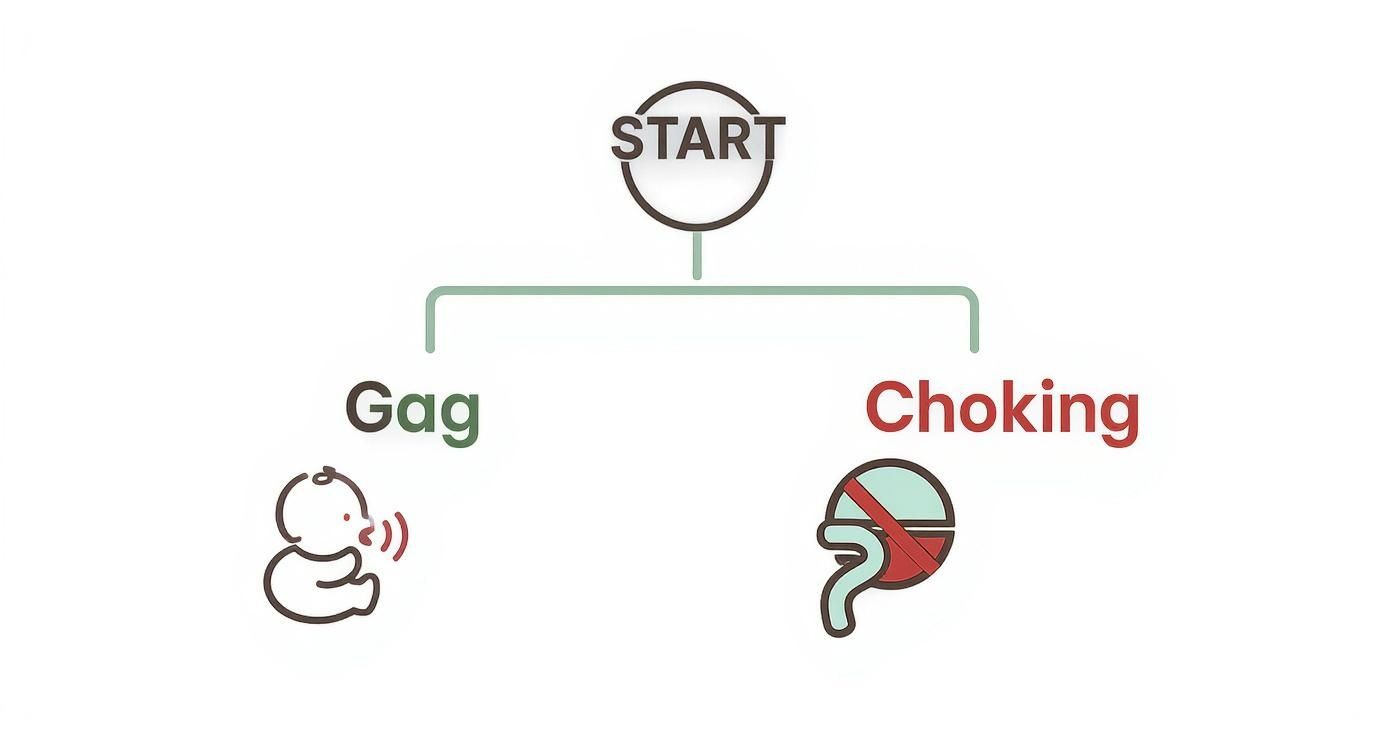
The key takeaway is that sound is your guide. Gagging is noisy, while choking is silent. It is a simple but vital distinction to remember.
Your Top BLW Questions Answered
Starting baby-led weaning can bring up a lot of questions. It is a completely different way of thinking about solids, but with the right info, you will feel ready to dive in. Let's tackle some of the most common things parents ask.
Is My Baby Getting Enough to Eat?
Yes, they definitely can. Remember, for the first year, breast milk or formula is still your baby’s main source of nutrition. Think of solids as a fun, hands-on science experiment where they get to explore food, not replace their milk.
As your little one gets the hang of self-feeding, you will notice they naturally start eating more. You can help them along by offering a good mix of nutrient-dense foods like avocado, scrambled eggs, soft-cooked meats, and steamed veggies alongside their usual milk feeds.
The Australian Government's Starting Blocks initiative points out that babies need iron-rich foods from around six months. Offering small, soft pieces of red meat, chicken, or iron-fortified cereals is a great way to meet this crucial need.
How on Earth Do I Handle the Mess?
The mess is real, but it is also a really important part of the journey. See it as sensory play. Your baby is learning about textures and building motor skills with every squish and splatter.
A few simple tricks can make clean-up much more manageable:
- Find a highchair that is super easy to wipe down.
- Pop a splash mat or even just an old sheet under the highchair.
- Invest in a good, full-coverage bib. The ones with sleeves are a lifesaver.
This super messy phase does not last forever, but the skills and the positive relationship with food your baby is building will.
When Is BLW a No-Go?
Baby-led weaning is a fantastic option for most families, but it is not a one-size-fits-all solution. It is so important to wait until your baby is showing all the signs of readiness. This usually happens around the six-month mark.
Always have a chat with your paediatrician or child health nurse before you start. This is especially true if your baby was born prematurely, has developmental delays, or has low muscle tone. They will give you personalised advice to make sure BLW is a safe and positive step for your family.
At Wallaby Collective, we create beautiful, functional play mats that provide a soft and safe space for your baby’s development, from tummy time to their first foodie adventures. Discover our collection of stylish, easy-to-clean linen play mats.