

Your Guide to a Baby at 5 Weeks in Australia
Welcome to week five. That early newborn haze is starting to lift. You are stepping into a phase filled with more awake, interactive, and genuinely rewarding moments. This is a truly remarkable time of change for you and your baby.
Let's explore the subtle yet profound shifts happening with your baby at 5 weeks, from their behaviour and reflexes to their physical growth.
Your 5 Week Old Baby: A Time of Rapid Growth
At five weeks old, your baby is in the middle of an incredible transformation. While they still spend most of their day sleeping and feeding, you will start to notice more distinct periods of quiet alertness. This is when their little personality really begins to shine through.
Here is why:
- More Alertness: Your baby's wake windows are gradually getting longer. This gives you more precious time for gentle interaction.
- Developing Senses: They are beginning to focus on faces, especially yours, from about 20-30 centimetres away.
- Stronger Reflexes: You might notice their little hands have a stronger grasp. Their movements are starting to look a bit more purposeful.
This period is all about laying the foundations for all the milestones to come. Creating a safe, stimulating, and comfortable environment is crucial, even in these early days. The focus is on responsive care. This means learning your baby's unique cues and building that beautiful, unbreakable bond.
Creating a Nurturing Environment
Setting up a comforting and stimulating space is key to their development. Simple things like high-contrast patterns and familiar, gentle sounds can help their brain make important new connections. If you're looking for inspiration, a resource like this Baby Nursery Wall Stickers: A Parent's Guide can be a great place to start.
Your presence is your baby’s favourite toy. The sound of your voice, the gentle touch of your hand, and the comfort of your smell are the most powerful tools you have for connection and development during these early weeks.
At 5 weeks old, Australian babies are hitting a crucial phase of rapid growth. Thankfully, major improvements in infant care and safety over the decades have made this a much safer time for newborns. You can read more about these important health trends in Australia at abs.gov.au. This progress gives parents the confidence to nurture their little ones through this beautiful, fleeting stage.
Watching Them Grow: Your Baby’s Milestones at 5 Weeks

At five weeks, you are in the middle of some incredible changes. Those tiny, day-to-day shifts you are noticing are the building blocks for all the bigger skills to come. It is a beautiful thing to watch, and celebrating each little achievement makes it even more special.
Every baby gets there on their own timeline, of course. But there are some common milestones you might start to see popping up around now. These little wins cover everything from physical strength and sensory awareness to their very first social cues.
Getting Stronger Every Day
Physically, your baby is working so hard to get a handle on their little body. Those jerky, newborn reflexes are slowly starting to smooth out and become a bit more purposeful.
You will probably notice a few key developments:
- A Peek of Head Control: During tummy time or when you hold them against your shoulder, you might see them lift their head, even just for a moment.
- More Powerful Limbs: Their kicks are getting stronger and those arm waves are becoming more vigorous as their muscles build.
- Hands to Mouth: You might spot them bringing their tiny fists towards their face. This is a brilliant early sign of self-soothing and simply figuring out where their body is in space.
These small feats are huge. That brief head lift is the very first step towards rolling, sitting, and one day, crawling. It is a clear sign their neck and upper body are getting stronger.
A Clearer View of the World
Your baby’s senses are also firing up, helping them connect more with their surroundings. Their vision, in particular, is making some big leaps.
While their sight is still a bit blurry, they can now focus on things about 20-30 centimetres away. That is roughly the distance between your face and theirs during a feed. You might notice them trying to track a toy with their eyes as you move it. This skill shows their focus and coordination are coming along beautifully.
Your baby is also becoming much more tuned into familiar sounds and smells. They might turn their head when they hear your voice and will be deeply comforted by your unique scent. It is one of the most powerful ways you strengthen your bond.
First Social and Cognitive Signs
It might feel early, but your five-week-old is already a little student of communication. They are soaking up the rhythm of your voice and the expressions on your face.
Here are a few of the very first cognitive and social milestones to look out for:
- Responding to Your Voice: They might go quiet or become still when they hear you speaking.
- Making Eye Contact: Those fleeting moments of direct eye contact are becoming a little more frequent and last a bit longer.
- The First Coos: You may start to hear little gurgling, cooing sounds. These are their very first attempts at finding their voice.
These little interactions are your baby's first conversations. When you respond with smiles and gentle words, you are teaching them the absolute fundamentals of connection. Every tiny milestone is a sign that their brain is busy wiring itself up, learning all about the world with you as their guide.
Navigating Feeding and Sleep Patterns

Trying to understand your baby at 5 weeks and their unique needs for food and sleep can feel like solving a puzzle with constantly changing pieces. This stage is often intense, with unpredictable patterns that can shift from one day to the next. The best approach? Focus on responsive care rather than chasing a strict schedule.
Let’s break it down. Your baby's stomach is still tiny, which means they need to feed often. This is usually every two to three hours. This goes for both breastfed and formula-fed babies. You are their entire world right now, so learning their hunger cues before the tears start is a game-changer.
Spotting Hunger Cues and Growth Spurts
Learning to read your baby’s early signs of hunger makes feeding a much calmer and more connected experience for both of you. When you respond to these first little nudges, it builds a powerful sense of trust and security for your little one.
Look out for these common signals:
- Rooting: You will see them turn their head and open their mouth, searching for a nipple.
- Mouth Movements: They might make little sucking motions or bring their hands up to their mouth.
- Increased Activity: They will start to wriggle, squirm, or become more alert and fussy.
Right around the five-week mark, your baby might also hit their first major growth spurt. This can trigger a sudden increase in feeding frequency, a phase often called cluster feeding. It might feel like they want to feed almost constantly, especially in the evenings. This is completely normal. If you are breastfeeding, it is nature’s way of boosting your milk supply to meet their growing needs. To get a better handle on this phase, you can learn more about how long newborn cluster feeding lasts in our article.
Do not be discouraged by the constant demand during a growth spurt. It is a powerful sign that your baby is growing perfectly and your body is responding to their needs. This intense phase usually only lasts for a few days.
Decoding Newborn Sleep
Just like feeding, sleep for a baby at 5 weeks is fragmented and beautifully unpredictable. They spend a huge amount of time sleeping, but it happens in short, scattered bursts. Expect a total of 14-17 hours of sleep over a 24-hour period, broken up into many little naps.
A typical wake window, the time they are happily awake between sleeps, is only about 60 to 90 minutes at this age. Any longer than that, and they can quickly become overtired, which often makes them much harder to settle. The rhythm of your days (and nights) will be a short, repeating cycle of eat, a little bit of awake time, and sleep.
At this stage, your baby has not developed a circadian rhythm yet. This means their internal body clock does not distinguish between day and night. This is the main reason they wake so frequently overnight. The goal is not to force a schedule but to create a calm, consistent wind-down routine. Simple steps like a warm bath, a gentle song, and a snug swaddle can start to signal that it is time for a longer rest.
Creating a Safe Space for Tummy Time

Tummy time is a powerful little workout for your baby at 5 weeks. It builds the essential strength they will need for rolling over, sitting up, and eventually crawling. Think of it as your baby’s very first exercise routine, one that strengthens their neck, shoulders, and upper back.
Creating the right environment is everything when it comes to making this activity safe and effective. The goal is simple. Set up a space that encourages them to lift their head and explore, even if it is just for a minute or two at a time.
Let’s break down how to create a dedicated spot that is comfortable for them and reassuring for you.
Choosing the Right Surface
The foundation of a good tummy time session is the surface you choose. It needs to be firm and flat. A soft bed, puffy doona, or a couch might seem cosy, but they actually make it much harder for your baby to push up and can pose a safety risk.
The floor is the best place to start. A simple, clean rug or a dedicated play mat gives you that perfect mix of firmness and comfort. A well-designed mat creates a beautiful, functional, and safe zone for your little one to begin their physical development. If you need some ideas, our guide on tummy time mats for infants can help you choose the best one.
Choosing a safe space is especially important at this age. A 5-week-old is in a period with a heightened risk for SIDS. Safe play spaces, like an OEKO-TEX certified linen play mat, are essential for tummy time. They help to build neck strength while keeping risks low. You can discover more about Australian infant safety statistics at abs.gov.au.
Making Tummy Time Fun
Some babies protest tummy time at first, and that is completely normal. The key is to make it an engaging and positive experience, not a chore.
Here are a few gentle ways to get you started:
- Start Small: Begin with really short sessions, just one to two minutes, a few times a day. You can slowly add more time as your baby gets stronger.
- Get Down on Their Level: Lie on the floor so you are face-to-face. Your face is the most interesting thing in their world and will motivate them to lift their head.
- Use High-Contrast Toys: Place a simple black-and-white toy or a small, unbreakable mirror just in front of them. It will capture their attention and encourage little movements.
- Change the Scenery: Try tummy time in different rooms. A new view can make all the difference and keep things interesting for them.
Remember, the goal here is progress, not perfection. Every single second your baby spends on their tummy is beneficial. It is strengthening their muscles and giving them a whole new perspective on their world.
Next steps? Weave this into your daily routine. Try to pop them down for tummy time when they are awake, alert, and content. Perhaps after a nappy change or a feed. And always remember, never place your baby on their tummy to sleep.
By creating a beautiful and safe space, you turn this essential activity into a wonderful bonding moment for both of you.
Soothing Your Baby and Caring for Yourself
As you settle into week five, you might start to notice your baby getting a little fussier, especially in the late afternoons or evenings. It can feel a bit relentless, but this is a completely normal phase. Their tiny nervous system is still maturing, and it is all part of the process.
Let's break it down. Your baby is taking in so much new information about the world. This includes sights, sounds, and sensations. It can all become a bit much. This period of increased crying is so common it is often called the ‘period of purple crying’. It is not a reflection of your parenting. It is just a temporary developmental stage they have to move through.
Gentle Techniques for a Fussy Baby
When your little one is unsettled, your calm presence is their anchor. Creating a comforting environment that mimics the familiar feeling of the womb can work wonders.
Here are a few proven methods to try:
- Swaddling: Wrapping your baby snugly in a soft blanket helps them feel secure and contained. This prevents their own startle reflex from waking them up.
- White Noise: A consistent, gentle sound, like a fan, a shushing sound, or a white noise machine, can help block out other stimulating household noises.
- Gentle Motion: Slow, rhythmic rocking or swaying can be incredibly calming. Just think about the constant, gentle motion they experienced before they were born.
These kinds of responsive, soothing techniques are so important. Providing responsive, calming care is a vital part of keeping your baby safe and feeling secure. You can learn more about these important Australian statistics at abs.gov.au.
Shifting the Focus to You
While your baby’s needs are front and centre, it is absolutely essential to remember your own wellbeing. Caring for yourself is not a luxury. It is a necessity for being the parent you want to be. The exhaustion of the newborn stage is real, and giving yourself small moments to recover is crucial.
Self-care during the newborn phase is not about grand gestures. It is about finding small, sustainable ways to recharge your batteries so you can continue to pour your love and energy into your little one.
Taking care of yourself means actively looking after your physical and emotional health. Say yes when people offer help. Perhaps a friend brings over dinner or a family member holds the baby so you can finally have a shower in peace. While you are focusing on your newborn's needs, do not forget your own recovery. There are great resources to help with common postpartum challenges, including figuring out how to get rid of hemorrhoids after childbirth.
Even five minutes of quiet time with a cup of tea can feel restorative. Prioritise rest whenever you can get it, stay hydrated, and eat nourishing food. It will give you the strength you need to navigate this beautiful, but demanding, time with your 5-week-old.
When to Call a Doctor or Child Health Nurse
Knowing when to worry and when to just keep calm is one of the toughest parts of being a new parent. Your instincts are your best guide. But having a clear list of red flags for your baby at 5 weeks can give you that extra bit of confidence. Always trust yourself first, and never, ever hesitate to call for advice if something feels off.
Let's quickly clear up who to call for what. Your local child health nurse is a fantastic first stop for general questions about feeding, sleeping, and all those little developmental quirks. Your GP is the person to ring when you think your baby might actually be unwell.
Urgent Red Flags
While most new-parent worries turn out to be nothing, some symptoms do need immediate medical attention.
It is time to contact your GP or head to the nearest hospital if you spot any of these signs:
- Fever: A temperature of 38°C or higher in a baby this young is always considered a medical emergency.
- Breathing Difficulties: Listen for grunting noises and look for rapid breathing or a noticeable pulling-in of their chest muscles with each breath.
- Significant Changes in Feeding: This could be refusing several feeds in a row or having very few wet nappies (fewer than six in 24 hours).
- Lethargy or Unresponsiveness: If your baby is unusually sleepy, floppy, difficult to wake, or just seems completely listless.
Sometimes, all a fussy baby needs is a bit of extra comfort. This simple flowchart can walk you through the classic soothing techniques.
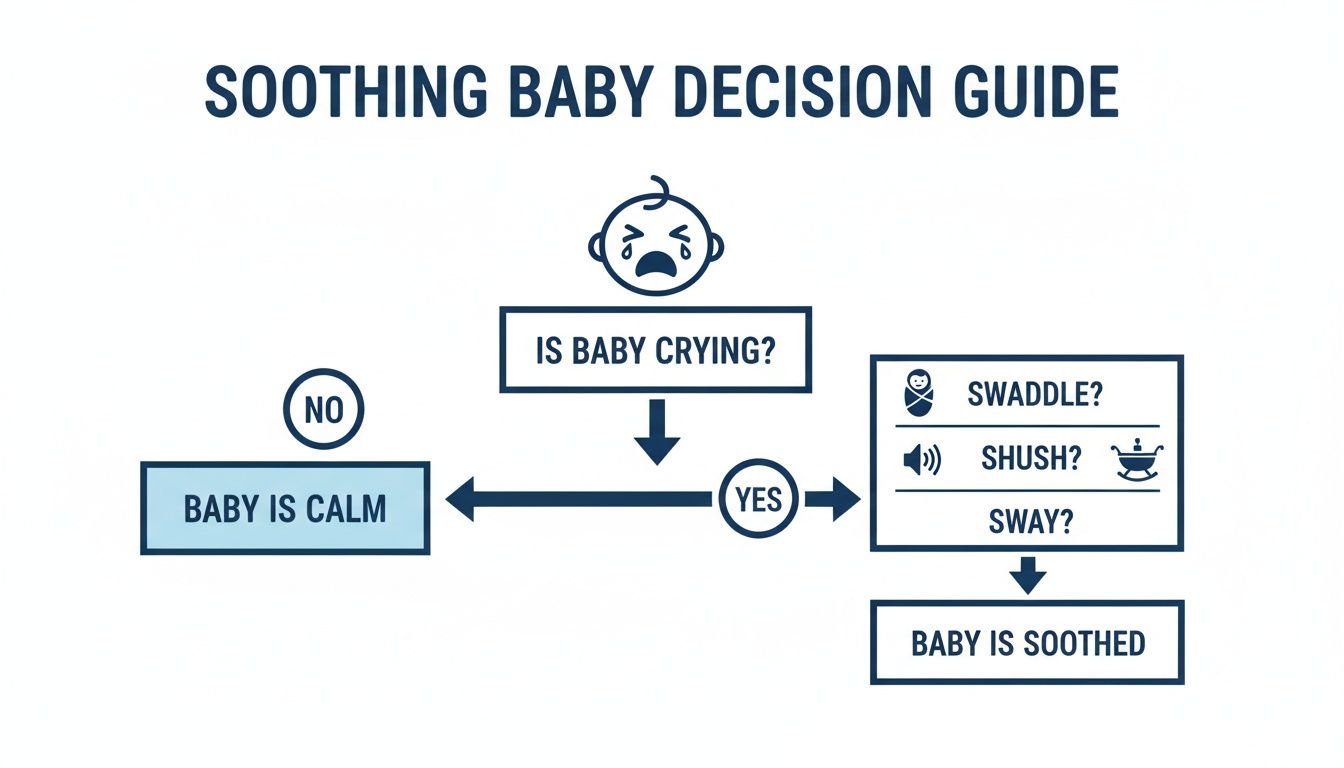
As the guide shows, simple things like a snug swaddle or a gentle sway can often be all it takes to settle them. But it is just as important to know when those cries might be signalling something more serious.
General Health Concerns
It is also a good idea to check in with your doctor if your baby just seems generally unwell or not quite themselves. For instance, you might be wondering if their sudden sleepiness is a sign of sickness. You can read more about whether babies sleep more when sick to help you understand these subtle cues.
Trusting your gut is one of the most important skills you will develop as a parent. If you are worried about your baby, seeking professional advice is always the right decision.
Keeping a close eye on your baby's health is so important, especially in these early months. This importance is highlighted by infant health statistics, which show why acting on those red flags is so vital. You can read more about these Australian health statistics at abs.gov.au.
Answering Your 5-Week-Old Questions
It is completely normal to have questions swirling around your head at this stage. You are not alone. Here are some quick, reassuring answers to the things most parents are wondering about right now.
Why Is My Baby Suddenly So Fussy?
If you have noticed your baby is suddenly fussier, especially in the evenings, it is often because their little nervous system is maturing. At five weeks old, they are so much more aware of the world around them, but they cannot quite process it all yet. This leads to them becoming easily overstimulated. It is a temporary phase and a totally normal part of their development, even though it can feel tough in the moment.
How Much Should a 5-Week-Old Sleep?
A baby at 5 weeks will typically sleep for 14-17 hours over a full 24-hour period. But do not expect long stretches just yet. This sleep is broken into short bursts, and it is completely normal for them to wake every few hours for feeds, both day and night.
Can My Baby See Me Clearly Yet?
Your baby's vision is still coming into focus. But they can now see objects about 20-30 centimetres away. This is the perfect distance for them to gaze at your face during feeds, which they absolutely love to do. They are also starting to become fascinated by high-contrast patterns and the familiar faces of their favourite people.
Trusting your intuition is everything. You know your baby better than anyone. If you ever feel that something is not right, reaching out to a healthcare professional is always the best thing to do.
It is so important that all families have access to reliable health information. Access to good information and care helps address disparities in infant health outcomes across the country. You can learn more about vital Australian health statistics at abs.gov.au.
For a safe and beautiful space for your baby to grow and play, explore the modern, understated linen play mats from Wallaby Collective. Discover the collection at https://wallabycollective.com.