

A Parent’s Guide to Australian Made Baby Products
Choosing the right things for your new nursery can feel like a huge task. Narrowing your focus to Australian made baby products is a great way to simplify your decisions. When you buy local, you get beautiful pieces. You also invest in items made to some of the highest safety standards in the world. This provides genuine peace of mind.
The Real Value of Choosing Australian Made
When you choose Australian made baby products, you do much more than decorate a room. You back local makers, boost our economy, and wrap your baby in quality you can trust. Let's break down what that really means.
This choice connects you to the people behind the products and their passion for what they do. Unlike items mass-produced overseas, locally made goods often come with a story. They also have a level of care you can see and feel.
Keeping It Local Helps Everyone
Supporting Australian businesses has a positive ripple effect. Every purchase helps create jobs, nurture skilled trades, and keep money flowing within our communities. It helps small, family-run businesses flourish alongside the bigger names. You invest in our country’s future when you buy local.
The Australian baby care market shows a clear shift towards local quality. It was valued at USD 3.22 billion in one year. This shows how much parents want premium, safe, and often organic products made right here.
Source: Australia Baby Care Products Market Report 2024-2033, IMARC Group, 2024.
This incredible growth shows how much health-conscious Aussie parents put their baby's wellbeing first. The market is expected to hit USD 5.03 billion by 2033. This growth is driven by a desire for superior quality and better baby hygiene. You can find more insights into the Australian baby care market on imarcgroup.com.
A Serious Commitment to Safety
Australia's safety standards for baby products are some of the strictest you will find anywhere. This is not just a nice-to-have. It is a regulated, non-negotiable reality. Here is why that is so important:
- Mandatory Standards: Items like cots, prams, and car seats legally must comply with specific Australian/New Zealand Standards (AS/NZS). There are no shortcuts.
- Clearer Materials: Local manufacturing gives you better visibility into the materials used. This lowers the risk of harmful chemicals like lead, phthalates, or nasty dyes ending up near your baby.
- Real Accountability: When a brand makes its products here, they are accountable and easier to reach. This makes it simpler to check their claims and sort out any issues.
How to Decode Australian Safety Standards
Navigating the world of baby product safety standards can feel like learning a new language. In Australia, these are not just vague guidelines. They are strict, legally-binding rules designed to keep our little ones safe. Understanding them is the key to peace of mind for parents.
For high-risk items like cots, prams, and car seats, compliance is not optional. This ensures every product sold here meets a high safety benchmark before it reaches the nursery floor.
The "Australian Made" promise rests on three key pillars: world-class safety, exceptional quality, and direct support for our local economy.
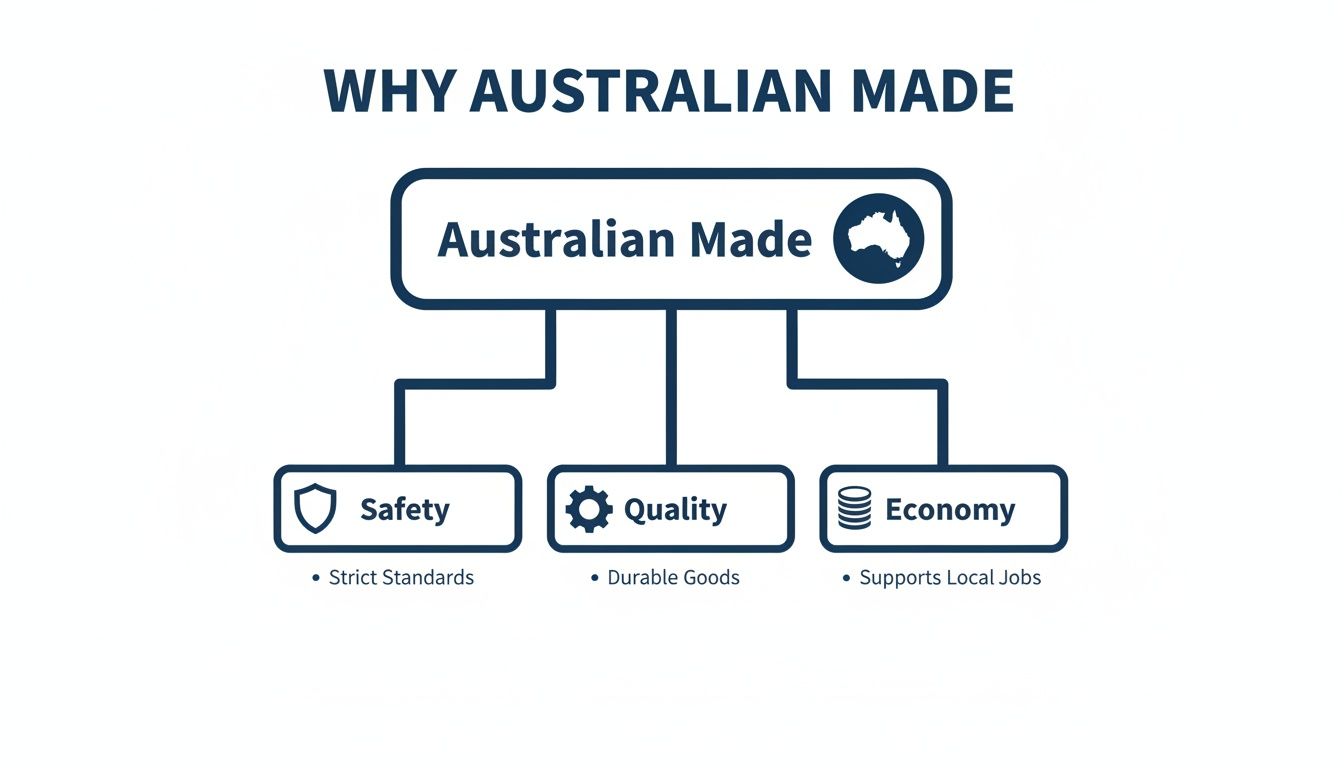
This simple breakdown shows how choosing local is about so much more than a label. It is a commitment to rigorous testing and craftsmanship.
Cracking the Code on Key Certifications
When you look at product tags or online descriptions, you will come across a few key acronyms. Getting to know what they mean takes the guesswork out of choosing safe, quality gear for your baby.
These certifications cover everything from a product’s physical design to its chemical makeup. Think of them as a safety checklist. They test for things like structural stability, choking hazards, and toxic materials.
Key Australian Baby Product Certifications
Here is a quick reference guide to the most common and important safety marks you will see on baby products in Australia.
| Certification/Standard | What It Means for Your Baby | Commonly Found On |
|---|---|---|
| AS/NZS Standards | These joint Australian/New Zealand Standards are mandatory for high-risk items. They ensure products are structurally sound and free from physical hazards. | Cots, prams, car seats, high chairs, toys. |
| OEKO-TEX STANDARD 100 | A global certification guaranteeing that every part of a textile product has been tested for harmful substances and is safe for human skin. | Clothing, bedding, play mats, soft toys. |
AS/NZS looks after the "hard" safety, like making sure cot bars are spaced correctly. OEKO-TEX handles the "soft" safety, ensuring the fabrics touching your baby's skin are pure and non-toxic.
A Closer Look at AS/NZS Standards
When you spot a label with AS/NZS, it means the product meets the joint Australian and New Zealand Standard. Technical experts developed these standards. They are some of the most rigorous safety standards in the world.
Let's break down a few you will see often:
- AS/NZS 2172 for Cots: This one is crucial. It dictates the safe spacing between cot bars to prevent a baby's head from getting trapped. It also tests the strength of the mattress base and the security of any moving parts.
- AS/NZS 2088 for Prams and Strollers: This covers everything from stability to prevent tipping over to having a secure five-point harness and effective brakes. It is all about keeping your little one safe on the move.
- AS/NZS 1754 for Child Car Restraints: This is one of the toughest car seat standards globally. It involves intense dynamic crash testing to ensure maximum protection where it matters most.
Why Fabric Certifications Matter
Beyond a product's construction, the materials touching your baby’s delicate skin are just as important. Certifications for textiles give you that extra layer of confidence that fabrics are free from nasty chemicals.
One of the best labels to look for on items like clothing, bedding, and play mats is OEKO-TEX STANDARD 100. This independent certification means every single thread, button, and accessory has been tested for harmful substances and is safe for your baby.
Source: STANDARD 100 by OEKO-TEX, OEKO-TEX, accessed 2024.
When a product has this tag, you can be sure it is free from a long list of chemicals known to cause harm, like allergenic dyes or residual pesticides. For Australian made baby products, this certification is a true hallmark of quality and care. It is proof that the softest materials are also the safest.
Choosing the Healthiest Nursery Materials
From the cot where they sleep to the play mat where they explore, every item in your baby’s nursery plays a part in their early development. Choosing the right materials is not just about style. It is fundamental to creating a safe and healthy space. Let’s look at why focusing on specific Australian resources for key nursery pieces can make all the difference.
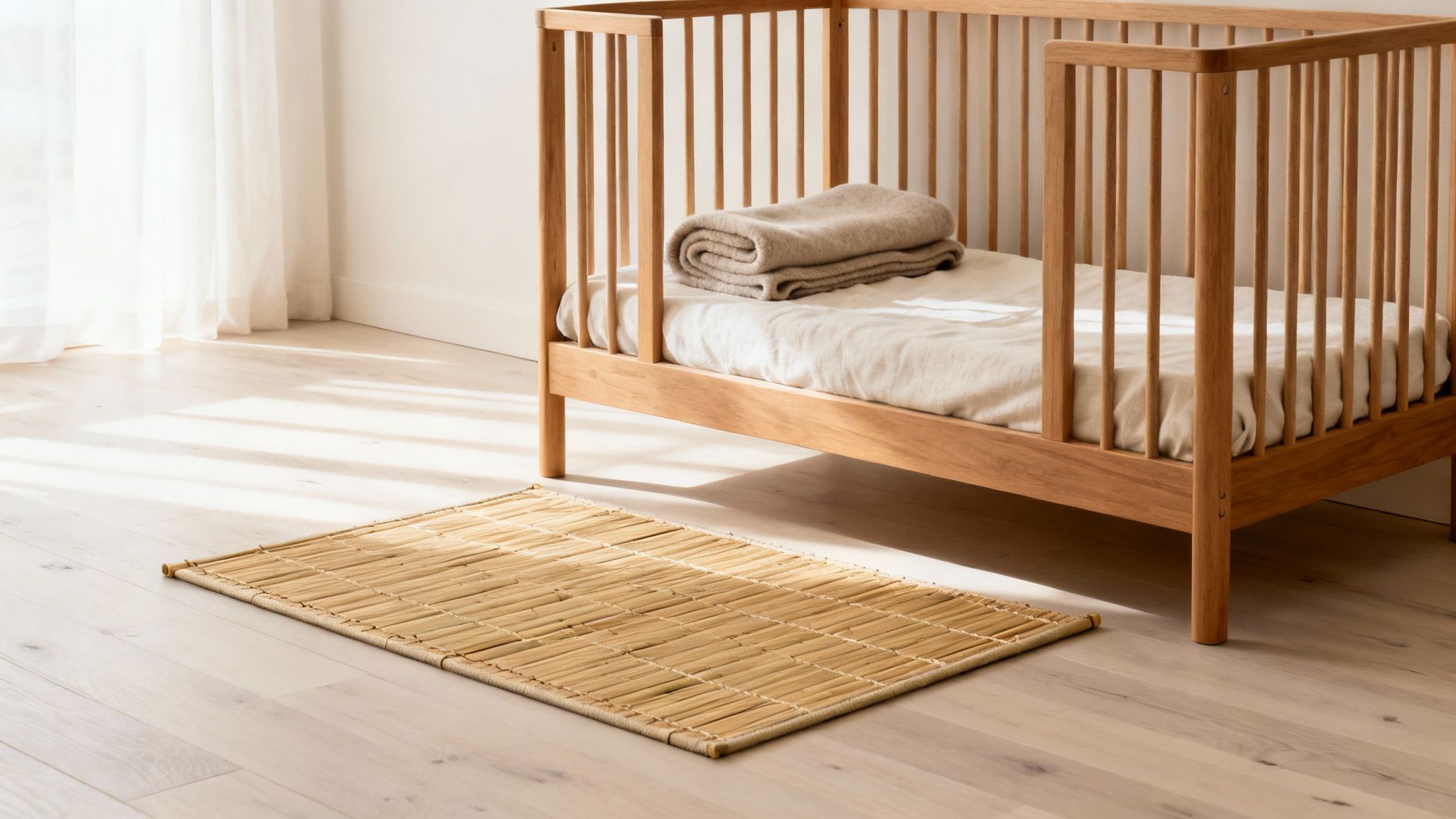
Next, we'll explore some of the best local materials for furniture and textiles. We will focus on how to create a beautiful nursery that is also fundamentally healthy for your little one.
Sustainable Timbers and Non-Toxic Finishes
The foundation of a healthy nursery often starts with its largest pieces, like the cot and change table. This is where sustainable Australian timbers like Tasmanian Oak really shine. They are incredibly durable and built to last. They are also sourced responsibly from our own local forests.
The finish used on the furniture is just as important as the wood itself. Look for brands that use low-VOC (Volatile Organic Compound) or even zero-VOC paints and sealants. These non-toxic finishes are crucial because they prevent harmful chemicals from off-gassing into the air. This protects your baby’s tiny, developing respiratory system.
For a complete look at outfitting your little one's space with healthy materials, check out this an ultimate buying guide for kids' bedroom furniture.
Gentle and Breathable Nursery Textiles
When it comes to the fabrics touching your baby’s skin, they need to be soft, breathable, and pure. Australian brands are fantastic at sourcing and using natural fibres that are perfect for sensitive skin.
Here is a quick breakdown of the best options:
- Organic Cotton: Grown without synthetic pesticides or fertilisers, organic cotton is exceptionally soft and naturally hypoallergenic. It is a wonderful choice for everything from onesies to cot sheets.
- Merino Wool: Australian merino wool is an amazing natural insulator that helps regulate body temperature. It keeps your baby warm when it is cool and cool when it is warm. This makes it ideal for sleeping bags and blankets.
- Bamboo: Known for its silky-soft feel and moisture-wicking properties, bamboo is a wonderfully gentle fabric. It is also a highly sustainable resource.
- Linen: Exceptionally breathable and durable, linen is another brilliant choice for nursery textiles. If you are curious about its unique qualities, you might like to read up on understanding the benefits of French linen.
Choosing natural, certified fibres is the best way to ensure that items like swaddles, bedding, and clothing are free from harsh chemicals and dyes. This commitment to purity is one of the key benefits of buying Australian-made baby products.
The Growing Demand for Sustainable Choices
The move towards natural materials reflects a broader trend among Australian parents. Disposable nappies still hold a large market share. However, the non-disposable cloth nappy segment is growing the fastest. Even with an 80.95% revenue share for disposables, the shift is clear. It highlights a national push towards more sustainable and eco-aware parenting choices.
By prioritising high-quality materials like local timber, organic cotton, and merino wool, you create a nursery that is safe and comfortable. You also create one that is kinder to the planet.
A Smart Shopper’s Guide to Buying Local
Knowing what to look for is the first step. Figuring out where to find authentic Australian made baby products can feel like the next big challenge. Think of this as your practical toolkit for sourcing genuine local treasures. It will help you invest in quality pieces that feel right for your family. Let’s get you ready to shop with confidence.
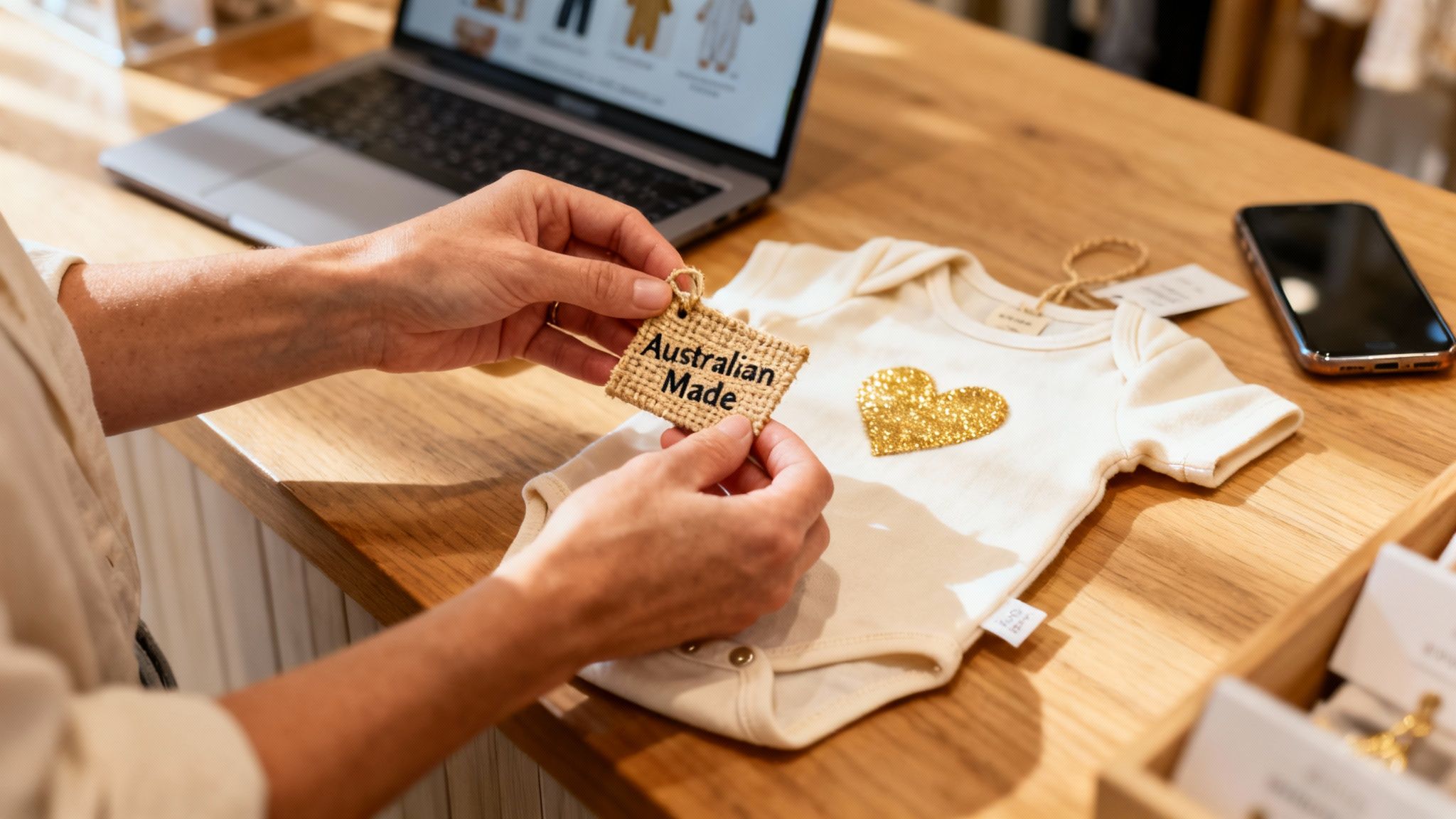
The journey begins with asking the right questions. When you find a brand you love, do not be afraid to dig a little deeper. Genuine Australian makers are usually proud of their process and happy to share the details.
Essential Questions for Australian Brands
Before you add an item to your cart, have a few key questions ready. This little bit of homework helps you see past clever marketing. It helps you confirm a brand’s commitment to local manufacturing. Getting straight answers is the best way to sidestep "Australian designed" claims.
Here are a few things worth asking:
- Where are your products actually made? Ask for the specifics. Is it assembled here from imported parts, or is the entire manufacturing process local?
- Where do you source your materials? This gives you a peek into the quality and sustainability of what they are using.
- What are your sustainability practices? A quick question about packaging, waste reduction, or ethical standards can tell you a lot about their values.
By asking these direct questions, you can quickly distinguish between truly Australian made baby products and those that are only designed here. Transparency is a key indicator of an authentic, trustworthy local brand.
Where to Find Genuine Local Products
Once you know what to ask, the next step is finding the right places to shop. You have wonderful options, from charming local stores to curated online spaces. Each offers a totally different experience.
Local boutiques are fantastic for a hands-on feel. They let you see and touch the quality of the products yourself. Plus, you get personalised service while supporting another small business in your community.
Online marketplaces and brand storefronts offer pure convenience and a wider selection. They are brilliant for discovering independent makers from all over the country. Before you buy online, check the brand's shipping and returns policies. These policies might differ for smaller businesses.
For inspiration, you can explore guides that highlight some of the best baby brands Australia has to offer.
Keeping Your High-Quality Gear Like New
You invested in beautiful, safe, and locally made pieces for your nursery. Now, let’s talk about keeping them looking and feeling brand new. Proper care is not just about aesthetics. It is about maintaining the safety and integrity of each item. This ensures your investment serves your family for years.
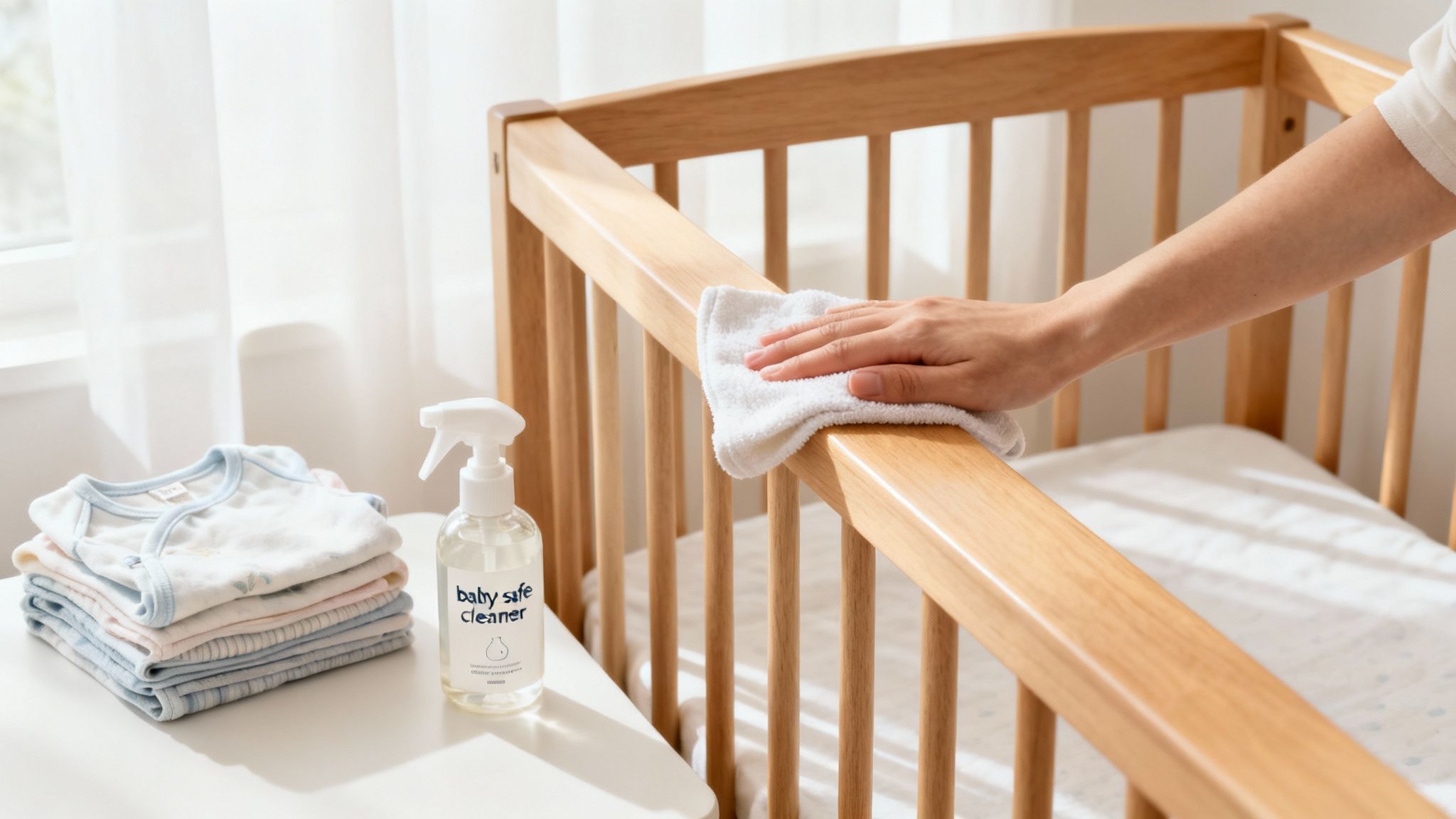
Here is a simple breakdown of the best ways to care for common nursery items. It uses gentle, baby-safe solutions that protect both your little one and your gear.
Caring for Timber Furniture
Solid timber cots and change tables are built to last. Harsh chemicals can easily damage their beautiful, non-toxic finishes. When it comes to timber, less is more.
For day-to-day cleaning, a soft, damp cloth with a little mild, pH-neutral soap is all you need. Always follow up with a dry cloth to wipe away any moisture. For stickier messes, resist the urge to grab an abrasive scourer. Stick with the same gentle soap and water solution.
For anything that might end up in your baby's mouth, non-toxic cleaning is non-negotiable. Simple solutions like diluted white vinegar or just soap and water are often much safer and more effective than commercial sprays loaded with harsh chemicals.
This simple routine preserves the integrity of the low-VOC finishes. It keeps the timber looking great and the air in your nursery clean.
Washing Natural Fibres
Organic cotton, merino wool, and linen feel incredible. They need a little extra love to maintain their softness and shape. The good news is, you can often machine wash them if you follow a few key rules.
Here is why a gentle approach is so important for these premium materials:
- Organic Cotton: Wash it in cold or warm water with a gentle, plant-based detergent. This protects the natural fibres. Line drying is best as it prevents shrinking and keeps everything soft.
- Merino Wool: This fibre is naturally temperature-regulating and antibacterial, so it does not need frequent washing. When you do wash it, use a wool-specific detergent on a cool, gentle cycle, or hand wash. Lay wool items flat to dry to avoid stretching.
- Linen Play Mats: High-quality linen play mats are usually machine washable. Use a cold, gentle cycle and a mild detergent. You can tumble dry on a low setting or line dry to keep the linen soft and durable.
Storing Your Gear for the Future
When it is time to pack things away for a future sibling, a little prep goes a long way. Make sure every item is thoroughly cleaned and completely dry before you store it.
If possible, disassemble timber furniture and wrap the pieces in breathable cotton sheets. Store them somewhere dry and temperature-stable to prevent warping. For textiles, use breathable containers, not plastic bags, which can trap moisture and lead to mildew. These extra steps will ensure your Australian-made baby products are in perfect condition for the next little one.
Why Australian Parents Are Choosing Local and Organic
The move toward local and organic baby products is more than a passing trend. It is a real shift in how Australian parents think about everything from skincare to snacks. Families want to know exactly what is going on and into their little ones’ bodies.
This growing awareness has sparked a huge demand for items made with pure, often native, ingredients. Parents are actively looking for baby food, balms, and powders free from unnecessary additives and harsh chemicals. They are putting their baby's long-term wellbeing first.
Let’s break it down.
A Focus on Nutrition and Wellness
The demand for better baby nutrition is reshaping the market for australian made baby products. Parents are more educated than ever about the benefits of whole foods and organic ingredients. They are holding baby products to that same high standard. It is no surprise we have seen a surge in local brands offering transparently sourced and minimally processed options.
The numbers back this up. The Australian baby food market is set to grow from USD 639.464 million to USD 793.835 million in just five years. This jump is almost entirely fuelled by parents prioritising nutrition, with organic choices leading the charge.
Source: Australia Baby Food Market Size & Share Analysis - Growth Trends & Forecasts (2024 - 2029), Mordor Intelligence, 2024.
Choosing local and organic is not just about what you avoid, like pesticides and preservatives. It is about what you gain: nutrient-dense foods and skincare that work in harmony with a baby’s delicate system.
Beyond what they buy, parents are always looking for practical ways to manage the day-to-day. For those looking for helpful tips, there are great resources covering strategies for less stressful parenting.
The Power of E-commerce
Getting high-quality local products has never been easier. E-commerce platforms and brand websites have closed the gap between small Australian producers and families across the country.
This digital access means parents can:
- Discover new brands that might not be on major supermarket shelves.
- Read ingredient lists and learn about a company’s ethics.
- Support small businesses directly, putting money back into local communities.
This accessibility makes it simple to invest in innovative Australian businesses. For more on this, check out our guide on finding the best natural baby products Australia has to offer.
A Few Common Questions
Here are the answers to some of the questions we hear most often from parents trying to choose the best for their little ones. We will keep it simple and straightforward.
Are Australian Made Baby Products More Expensive?
It is true that some Australian made items have a higher price tag. It is helpful to think of it as an investment in long-term value. Let's break down why.
The cost often reflects better materials, meticulous local manufacturing, and durability. This means you will not be replacing it in a year. When you choose a well-made local product, you often avoid the hidden cost of replacing a cheaper, lower-quality item later.
A higher upfront cost usually means fair wages for Australian workers and a commitment to quality control. This is tough to guarantee in offshore factories. Think of it as investing in your family's safety and the product's longevity.
How Can I Be Sure a Product Is Truly Made in Australia?
This is simpler than you might think. The easiest way is to look for the official certification.
Keep an eye out for the green-and-gold ‘Australian Made’ logo. It is a registered trademark for a reason. To use it, a product must meet strict criteria ensuring it was substantially transformed in Australia. The Australian Made Campaign Ltd, a not-for-profit organisation, manages the logo. You can trust it.
Source: The Australian Made Logo, Australian Made Campaign, accessed 2024.
Beyond the logo, check the brand’s website. Most local makers are proud of their Australian roots and are transparent about where their products are made. If you are unsure, just ask them directly.
What's the Difference Between 'Australian Made' and 'Australian Owned'?
This is a great question. The difference matters when you are focused on safety and quality.
- Australian Made: This is about where the product was physically created. It tells you it was manufactured or significantly transformed here, under our strict safety and quality standards.
- Australian Owned: This just means the company’s ownership is Australian. A business can be Australian owned but have all its products made overseas.
If your priority is the highest level of safety and quality assurance for your australian made baby products, the ‘Australian Made’ certification is the one to look for.
At Wallaby Collective, we design our OEKO-TEX certified linen play mats in Perth and ship them from within Australia, giving you peace of mind with every purchase. Explore our collection of safe, stylish, and practical play mats at https://wallabycollective.com.