

When Do Babies Laugh A Guide to First Giggles
That first real giggle from your baby is one of those moments you will remember forever. It is pure magic. Most babies let out their first proper laugh around four months old, but you might catch some early chuckles as early as two months.
This is not the same as those fleeting, reflexive smiles you see in newborns. A true laugh is a massive leap in your baby’s social and emotional world.
Your Baby’s First Laugh: The Big Milestone
Watching your baby grow is a journey packed with incredible moments. Few are as heart-melting as their first laugh. It is so much more than just a sweet sound. It is a clear signal that their brain and social awareness are connecting in exciting new ways.
Let's break it down. That first giggle shows they are starting to make sense of the world and can respond to it with pure joy. It is a beautiful thing to witness.
Before they can laugh, babies first need to master smiling. This usually happens around the two-month mark. Those initial smiles are often just little practice runs, almost like a reflex. As they grow, their smiles become intentional as a direct, social response to you.
The jump from a social smile to a full-on laugh is a huge developmental step. It shows your baby can process something, find it delightful or surprising, and express that feeling with a sound. This is the foundation for communication and the beautiful bond you are building together.
The Timeline: From Smiles to Giggles
Every baby hits milestones on their own schedule, but there is a general timeline you can expect. Knowing the typical progression helps you appreciate every tiny step your little one takes.
The image below gives you a quick look at the journey from those first smiles to those first proper laughs.
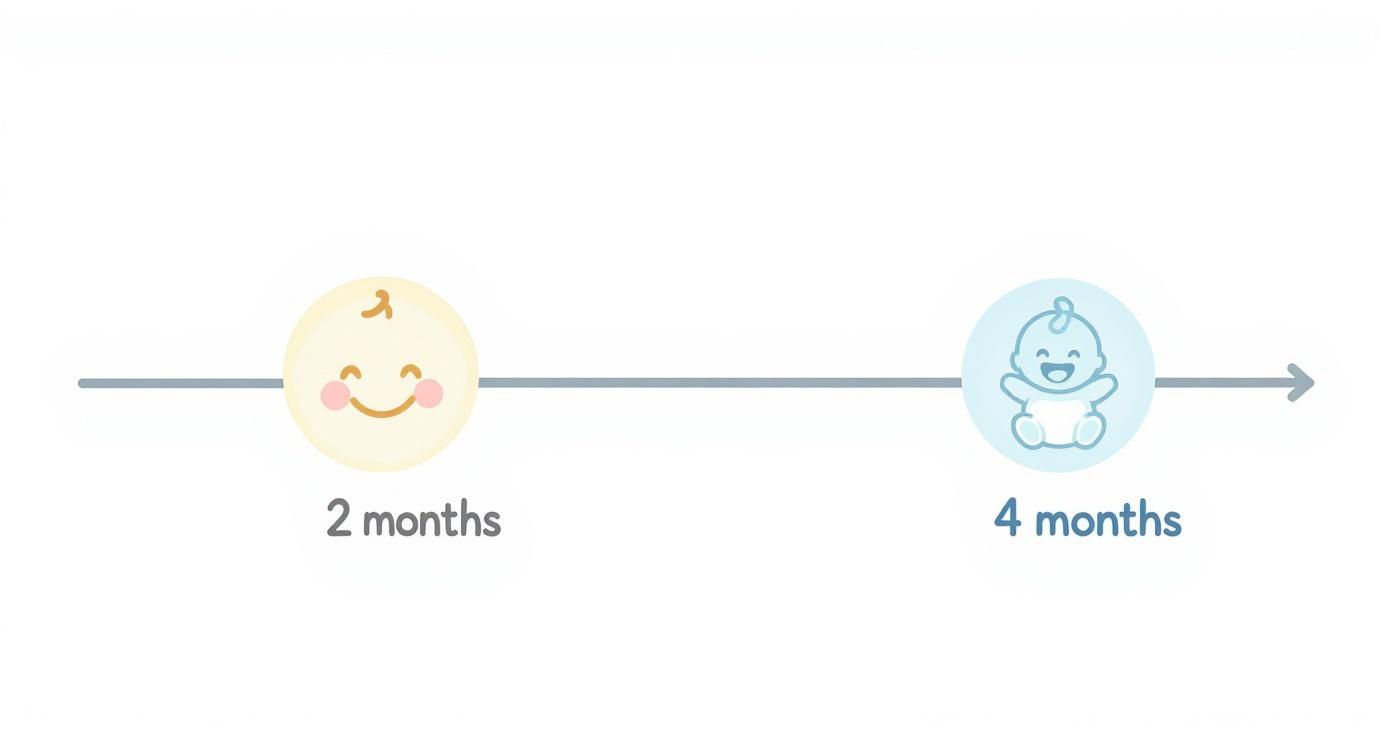
As you can see, social smiling is the first big step. It sets the stage for the more complex response of laughter to appear at around four months. To give you a clearer picture, here is a quick guide to what you can expect in that first year.
Baby's Laughter Timeline: A Quick Guide
| Age Range | What to Expect | Developmental Insight |
|---|---|---|
| 0–2 Months | Reflexive smiles (often during sleep), coos, and gurgles. | These are involuntary responses, but they build the facial muscles needed for intentional expressions later on. |
| 2–4 Months | The first social smiles appear, responding directly to you. Early chuckles and squeals of delight might start. | Your baby learns to connect emotionally. They recognise your face and voice and respond with happiness. |
| 4–6 Months | This is the sweet spot for the first real, hearty belly laughs. These are often triggered by physical play like tickles or peek-a-boo. | Laughter becomes a tool for social interaction. They are learning about cause and effect ("When you do that, it makes me feel happy!"). |
| 6–12 Months | Laughter becomes more frequent and varied. They will laugh at silly faces, unexpected sounds, and funny games. | Their sense of humour is developing. They can now anticipate fun things and find more complex situations amusing. |
Remember, this is just a general guide. Every baby is wonderfully unique and will follow their own path.
Why That First Laugh Matters So Much
That first laugh is a powerful way for your baby to communicate. It tells you they are happy, engaged, and deeply connected to you. It is also a fantastic sign of healthy cognitive development.
Babies often start laughing in response to playful, social games. According to Australian early childhood experts, by around four months, babies get a kick out of predictable and physical games. This is not just fun. It helps them build social bonds and even learn to regulate their emotions.
A baby’s laugh is not just a reaction; it is an interaction. It is one of the first ways they actively take part in a shared emotional moment with you, making your bond even stronger.
This milestone is just one of many you will celebrate. As your baby gets stronger and gains more physical control, you will see other key developments emerge. For more on what is next, check out our guide on when babies start rolling.
The Developmental Journey To That First Giggle
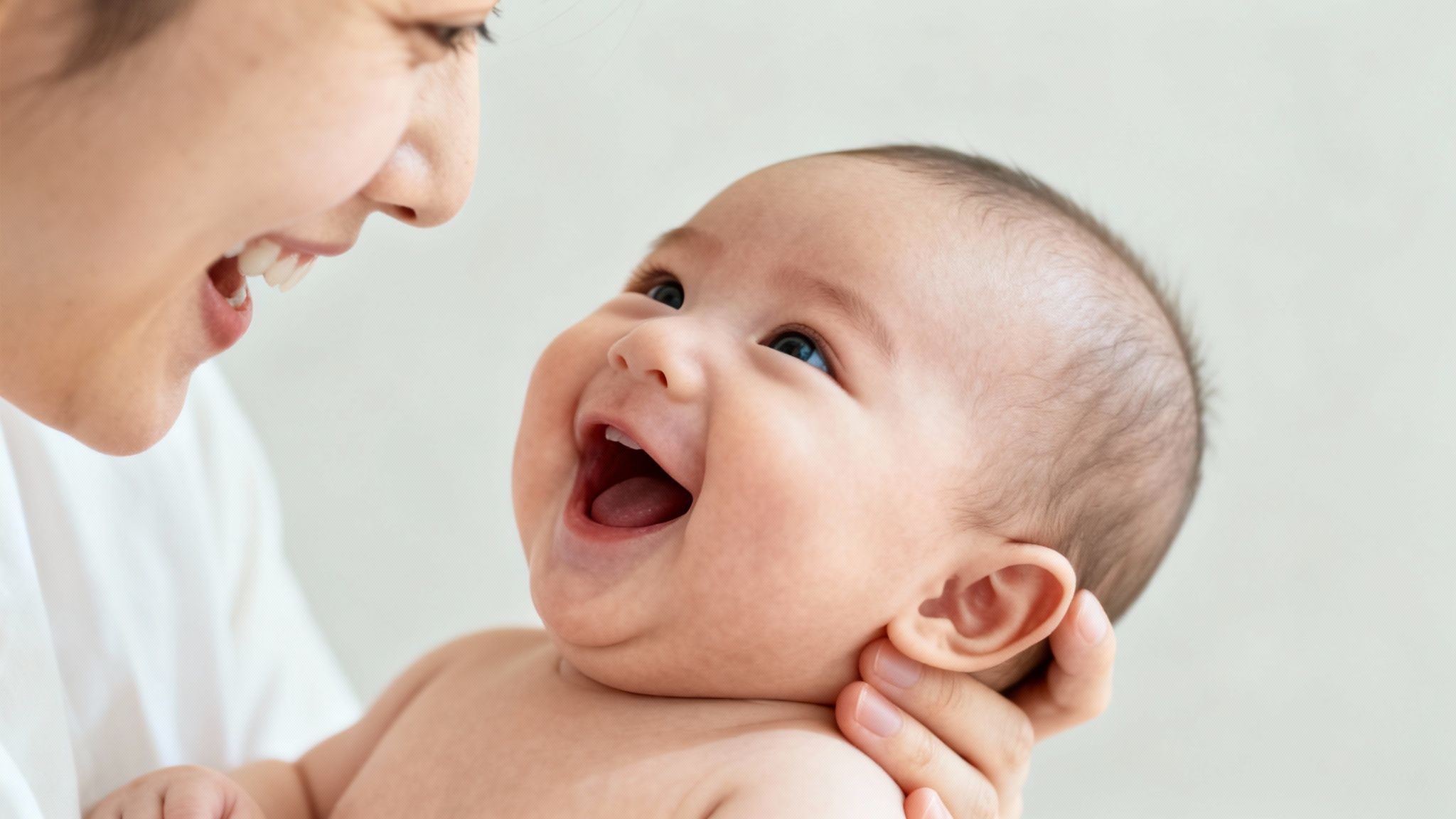
A baby's laugh does not just happen out of the blue. It is the beautiful result of some serious developmental work happening behind the scenes. Think of it like a puzzle coming together, piece by piece. Each piece is a new skill your baby is mastering. When they all click into place, that first proper giggle emerges.
This journey starts with the most basic building blocks of social connection and cognitive growth. Let's break it down.
From Reflexes To Reactions
In the very beginning, those sweet smiles you see from your newborn are often just reflexes. They usually happen during sleep and are not a response to anything you are doing. But they are important. They are like practice runs for their facial muscles.
As their brain develops, these reflexes start to fade. This makes way for something much more meaningful: the social smile. Around the two-month mark, your baby starts to connect your face with feelings of comfort and happiness. When they smile back at you, it is their first real attempt at a two-way conversation. This is a huge leap forward. It shows they are becoming socially aware and starting to grasp the basics of emotional connection.
Connecting The Cognitive Dots
For that smile to turn into a full-blown laugh, a few other things need to happen in their developing mind. These cognitive skills are all growing at once, creating the perfect foundation for that first joyful outburst.
Here are the key skills that pave the way:
- Improving Vision: A newborn’s vision is quite blurry. By two to three months, they can focus much better on faces and objects up close. Being able to clearly see your smiling face or a funny expression makes social interaction so much more engaging for them.
- Memory and Recognition: Your baby is busy learning to recognise familiar faces, voices, and routines. This ability to remember and anticipate is crucial. Laughter often comes from the surprise of a familiar game like peekaboo. This only works because they know you will reappear.
- Understanding Cause and Effect: As babies interact with their world, they start to figure out that their actions can cause reactions. They learn that cooing gets a smile. Eventually, they learn that a funny face from you is a delightful event. This understanding is what makes playful interactions so amusing to them.
Laughter is a sign of insight. It is that little lightbulb moment when a baby understands the ‘game’. This could be your face reappearing in peekaboo or the funny noise you just made. This shows their brain is not just reacting, but actively processing and finding real joy in the world.
The Role of Social Bonding
Ultimately, laughter is deeply social. It is a powerful tool for connection that babies instinctively use to strengthen their bond with you. When you laugh with them, they learn that this is a positive, shared experience.
This social feedback loop is vital. Your delighted response to their smiles and chuckles encourages them to do it more, reinforcing the beautiful connection between you. Playing with them using age-appropriate toys and games helps build these pathways. If you are looking for ideas, you can explore some great suggestions for infant toys for babies 0-6 months old.
Every smile, gurgle, and coo is a step on the path to that first heartwarming giggle. It is a sign that your baby feels safe, connected, and is starting to find their own little sense of humour. The journey is just as beautiful as the destination.
Understanding The Different Types of Baby Laughter

A baby's giggle is so much more than just a sweet sound. It is one of their first real ways of communicating with you. As you get to know your little one, you will quickly realise that not all laughs are created equal. Learning to read these different sounds is like opening a tiny window into their developing inner world.
From those soft, breathy chuckles to full, contagious belly laughs, each one tells you something different. It is their way of sharing what they find delightful, surprising, or comforting. Let's break down what those precious giggles really mean.
The Gentle Chuckle
The very first laughs you will probably hear are quiet and almost airy. This is the gentle chuckle, and it usually pops up between two and four months old. It is such a soft, delicate sound that it might catch you by surprise the first time.
This early laughter is often a response to gentle physical feelings. Think about the soft tickle of you blowing a raspberry on their tummy or a light tickle under their chin. It is a simple, almost reflexive expression of pure pleasure and connection.
This gentle chuckle is your baby’s first go at expressing pure joy. It is a quiet but powerful signal that they feel safe, happy, and totally connected to you in that moment.
It is amazing to think that this early appreciation for simple fun is universal. An international study found that by two months, about 50% of infants start showing an interest in humour, with laughter being a key sign.
The Social Giggle
As your baby’s social awareness starts to blossom, a new kind of laugh emerges around the four to six-month mark. This is the social giggle. This one is much more intentional and interactive. It is a direct response to you and the silly games you play together.
This is the giggle you will hear during a game of peekaboo or when you pull a funny face. It is not just about a physical sensation anymore. It is about sharing a fun experience with you.
- Peekaboo Fun: The surprise and delight of seeing your face reappear is a classic trigger for the social giggle.
- Silly Noises: An unexpected squeak or a funny sound can earn you a cheerful laugh as your baby learns to anticipate the fun.
- Funny Faces: Exaggerated expressions are fascinating to a baby. Their giggle is a sign that they are engaged and amused by your antics.
This laugh is a sign of huge cognitive leaps. Your baby is starting to understand cause-and-effect and is now an active participant in social play.
The Hearty Belly Laugh
Finally, we get to the one we all wait for: the deep, rumbling belly laugh. This often appears from six months onwards and is the most expressive of all. It is a full-bodied laugh that comes right from their core. It sometimes even makes them gasp for air between giggles.
This kind of laughter shows a much deeper level of amusement and understanding. They might laugh at a sibling’s silly dance, the cat chasing a toy, or a more complex game you are playing. It signals a proper developing sense of humour and an ability to find joy in the wider world around them.
How to Encourage Your Baby to Laugh
Getting those first giggles is easily one of the best parts of being a new parent. It is all about connection, surprise, and joyful little moments. The best part? You do not need special toys or complicated games. Your baby’s favourite thing in the world is you.
Here is why. Laughter is a social reaction that bubbles up from those sweet and unexpected moments you share. Your job is just to create a warm, playful space where those moments can happen all on their own.
Let us look at some practical and safe ways to invite more laughter into your day. These ideas are perfectly matched to your baby’s growing skills and their blossoming sense of humour.
Gentle Games for Younger Babies (2-4 Months)
At this early stage, your baby’s humour is all about gentle feelings and familiar faces. Their laughter will probably be soft little chuckles, not full-on belly laughs just yet. The focus here is on calm, gentle, and repetitive play.
Here are a few simple ideas to try:
- Funny Noises and Faces: Get nice and close so your baby can see you clearly. Make soft popping sounds with your lips, click your tongue, or stick your tongue out. Your big, exaggerated expressions are totally fascinating to them.
- Blowing Raspberries: A classic for a reason. Gently blowing a raspberry on their tummy or feet creates a surprising tickle that often leads to a happy little chuckle.
- Gentle Tickles: A light tickle under their chin, on their feet, or behind their knees can be a wonderful way to get a giggle. Just watch their cues closely and stop if they seem to be getting overwhelmed.
Interactive Play for Growing Babies (4-6 Months)
As your baby gets more control over their body and starts to figure out the world, you can bring in more interactive games. This is often the golden age for the first real belly laughs.
A baby's laugh at this stage is a sign of understanding. It is their way of saying, “I get it!” They recognise the game and find the predictable surprise absolutely hilarious. It is a huge cognitive and social milestone.
Let us explore some activities perfect for this age:
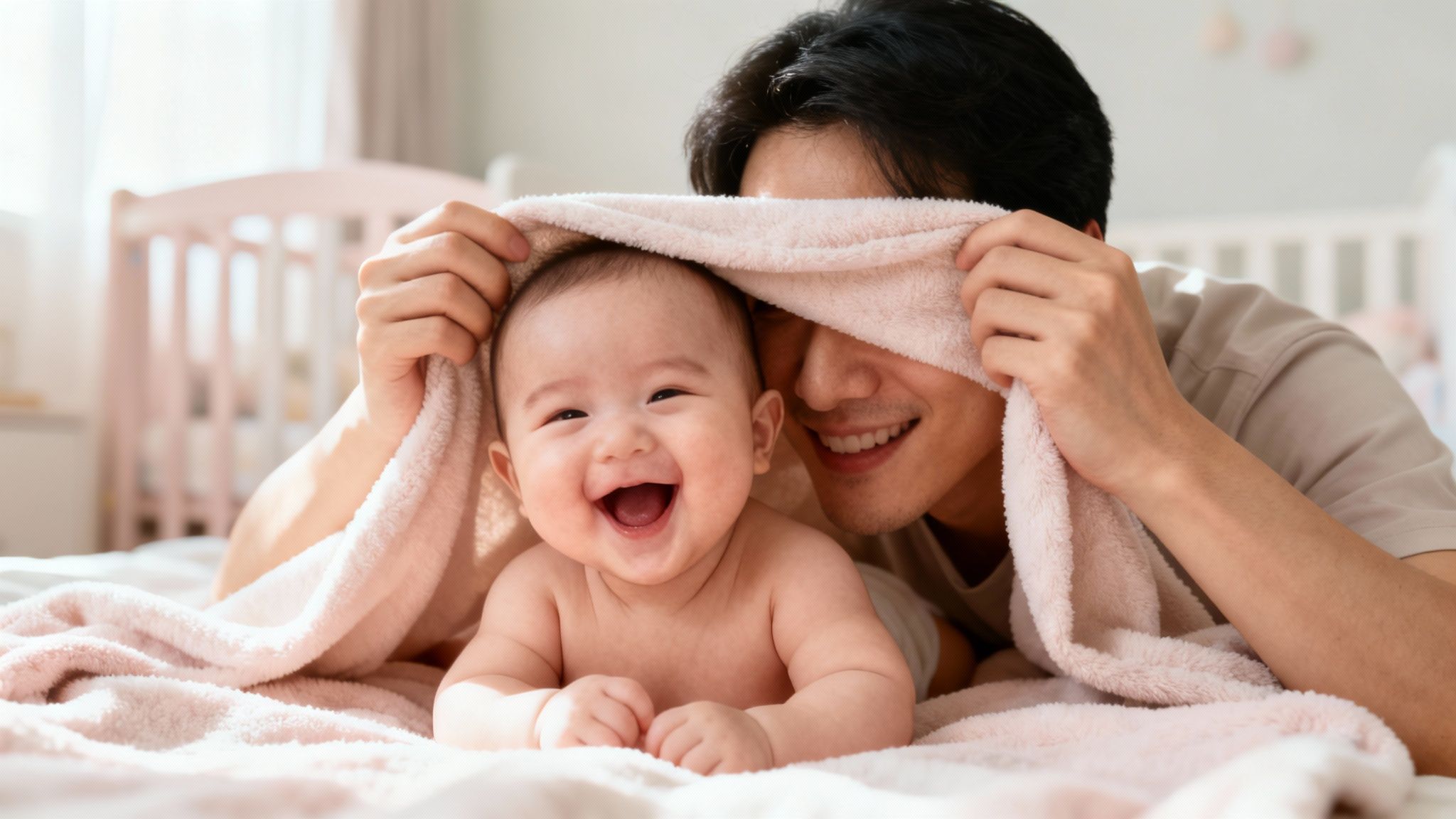
- Peekaboo: This timeless game is a masterclass in building up anticipation and surprise. Hiding your face behind your hands and then reappearing with a happy "Peekaboo!" teaches them about object permanence in the most joyful way.
- Puppets and Toys: Use a soft hand puppet or a favourite stuffed animal to "talk" to your baby in a silly voice. Make the puppet pop out from behind a cushion or give them a gentle nuzzle.
- Lift-Off: Gently lifting your baby up into the air and bringing them back down with a "whoosh" sound can create a thrilling and funny feeling for them. Make sure to support their head and neck.
Many of these games are perfect to work into daily routines like tummy time. Engaging them with silly faces and songs can make this important developmental activity more enjoyable. For more inspiration, check out our guide on fun tummy time activities to try with your baby.
Playful Tips for Success
Remember, the goal is bonding and joy, not forcing a reaction. Keep these simple ideas in mind:
- Timing is Everything: Pick a time when your baby is fed, rested, and in a calm but alert mood. An overtired or hungry baby is not likely to be up for games.
- Be Repetitive: Babies love repetition. It helps them learn patterns and anticipate the fun part. This often makes it even funnier the second or third time around.
- Follow Their Lead: Pay close attention to your baby’s cues. If they turn their head away or get a bit fussy, it is time for a break. Every interaction should be a happy one.
What to Do If Your Baby Is Not Laughing Yet
It is completely normal to feel a bit anxious if your baby has not let out their first real laugh by the four or five-month mark. You have probably been waiting for that joyful sound. When it does not show up on a typical schedule, it is easy to let worry creep in.
But please, take a breath. Every baby is their own little person, developing at a pace that is just right for them. A slight delay in laughing is incredibly common. It usually is not a sign of anything wrong. Just like some babies crawl or walk earlier than others, some just take a little longer to find their giggle. Often, it is just a reflection of their unique personality. Some babies are more serious and observant, while others are expressive from day one.
Instead of focusing on this one milestone, it is far more helpful to look at your baby’s overall development and all the other ways they communicate with you. A baby who is not yet laughing but is engaging in other ways is almost certainly doing just fine.
Looking at the Bigger Picture
Before you start to worry, take a moment to notice all the wonderful ways your baby is already connecting with you. A healthy, developing baby will show their engagement in lots of non-verbal ways.
Ask yourself these questions:
- Does my baby make eye contact with me? This is a huge sign of social connection.
- Do they smile back when I smile at them? That social smile is a massive developmental step that comes before laughter.
- Is my baby cooing, gurgling, or making other little sounds to get my attention? These are the first building blocks of communication.
- Do they seem interested in faces and follow movements with their eyes? This shows their vision and cognitive skills are right on track.
If you can answer "yes" to these, your baby is hitting many crucial social milestones. Their laugh will almost certainly follow when they are ready.
Every baby starts with joy. Some express it more quietly than others at first. Trusting that joy is a signal and observing when your child lights up is a wonderful way to understand their unique personality. This holds true even without a laugh.
When to Consult a Professional
While it is true that every baby is different, you should always trust your parental instincts. If you have noticed your baby is not meeting several milestones, or if you have broader concerns about their social engagement, it is always a good idea to seek professional advice.
Consider having a chat with a healthcare professional if, by around six months, your baby consistently:
- Does not smile or make eye contact.
- Shows very little interest in interacting with you or others.
- Does not make any sounds like cooing or babbling.
These signs, especially when you see them together, might suggest it is time for a developmental check-in.
The next steps are simple and reassuring. Your local child and family health nurse is a fantastic first point of call. They can assess your baby's overall development, offer personalised advice, and give you much-needed peace of mind. If they think it is necessary, they can refer you to a paediatrician for a more thorough evaluation.
Remember, checking in with an expert is never a bad thing. It is a proactive step that shows you are supporting your baby's wellbeing.
Common Questions About Baby Laughter
Even after you have celebrated that first adorable giggle, you probably still have a few questions. Baby laughter is a fascinating part of their development. Every little chuckle can bring up new curiosities for parents.
Let's break down some of the most common queries. Getting these answers can help you feel more confident as you navigate this joyful, noisy stage.
Can a Baby Laugh in Their Sleep?
Yes, it is completely normal for babies to smile, chuckle, or even let out a proper laugh while fast asleep. If you have tiptoed in to check on them and caught a sleepy giggle, you are seeing a very common part of their development.
These sleepy laughs are usually just a reflex. They often happen during the REM (rapid eye movement) phase of sleep, which is a surprisingly active time for a baby's brain. It does not mean they are having a funny dream. It is a great sign that their little nervous system is maturing just as it should.
Does Tickling Help a Baby Learn to Laugh?
Gentle tickling is a classic way to get a laugh, and for good reason. It is a physical sensation that often takes babies by surprise. That surprise can bubble up into a happy giggle. It is a wonderful way to bond and share a fun moment together.
But true social laughter is a little different. That kind of laughter develops from understanding and interaction, like the shared fun of a peekaboo game. While tickling causes laughter, social games teach your baby how to use laughter to connect with you.
Laughter is a powerful social tool, even for the littlest humans. A laugh from tickling is a reaction to a physical feeling. A laugh from a silly face is a social connection. Both are wonderful, but they signal different types of developmental progress.
It is always best to use a very light touch when you tickle. Keep a close eye on your baby’s cues, as some little ones can get overstimulated quite quickly.
Is It a Problem If My Baby Laughs at Strange Things?
Not at all! A baby’s sense of humour is just starting to take shape. It works very differently from ours. They are not laughing at a clever joke. They are laughing at things that surprise them or feel interesting and new.
A baby might burst out laughing at the crinkling sound of paper, a shadow dancing on the wall, or even a sudden sneeze. This is a fantastic sign that their brain is busy making new connections and trying to figure out the world. They are learning about cause and effect. Their laughter is just an expression of that discovery.
So, when they giggle at something that seems totally random to you, celebrate it. It is a sure sign of a curious and developing mind.
Sources:
- Communication for 0-12 months: what to expect, Pregnancy, Birth and Baby, Australian Government Department of Health and Aged Care, August 2022.
- Developmental milestones: 3 to 6 months, Australian Parenting Website, Raising Children Network (Australia) Limited, 20 October 2022.
At Wallaby Collective, we create beautiful, safe spaces for these precious moments of discovery and laughter. Our soft, stylish linen play mats are the perfect foundation for tummy time, playful games, and all the giggles that follow.