

Guide: when can babies start swimming lessons for safety
Deciding when to start your baby's swimming lessons is a huge milestone for many Aussie families. The short answer? The sweet spot is generally around six months of age. This gives your little one time to build essential physical strength and develop a more robust immune system before their first big splash in a structured class.
Understanding the Right Age to Start Swimming
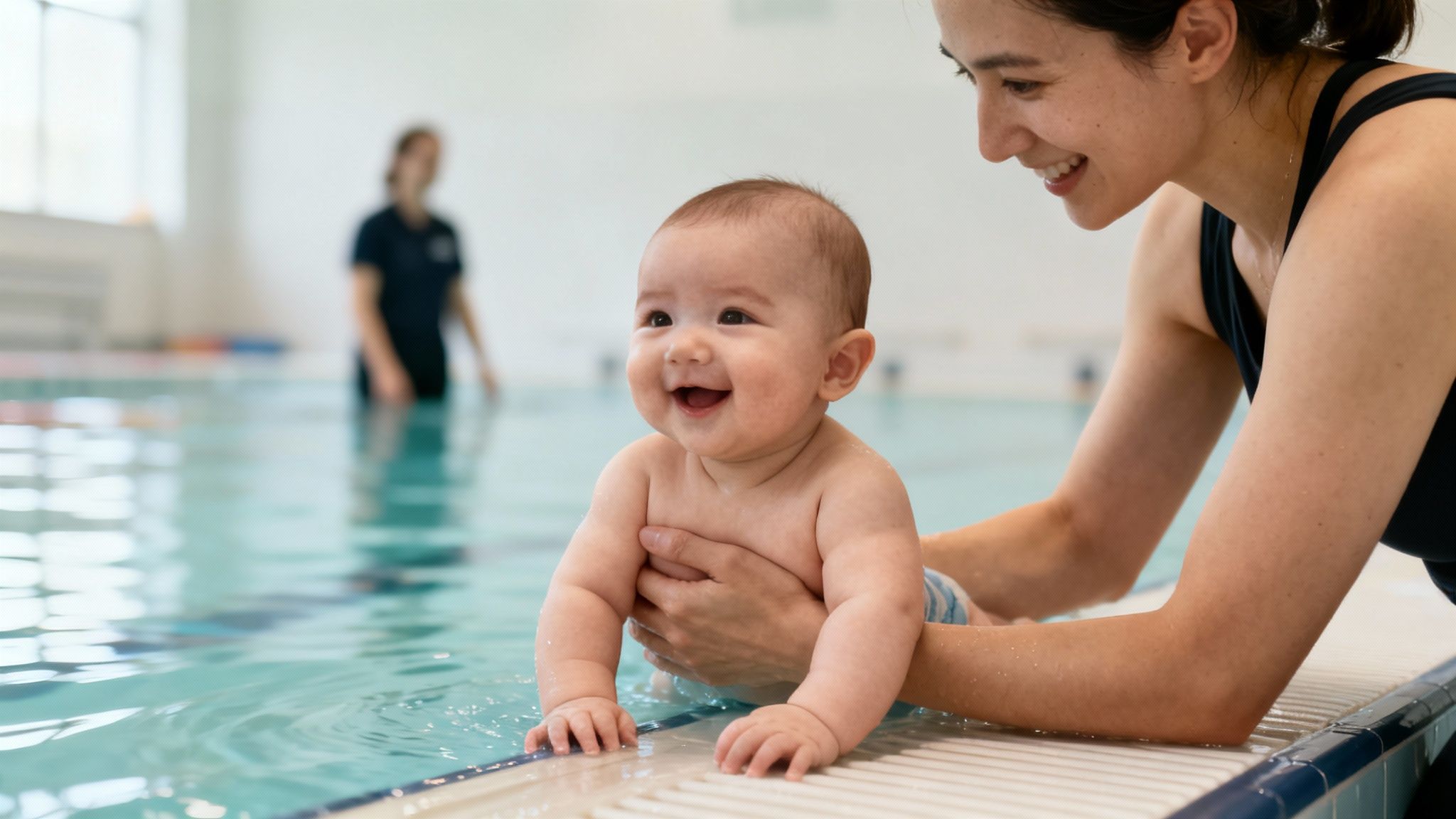
So, why is the six-month mark the magic number? It is all about readiness. Before this age, babies still work on the fundamentals. Around six months, most bubs have gained good head and neck control. This is a non-negotiable for safely being in the water, even with your support.
Their immune systems have also had more time to mature. This makes them less susceptible to picking up bugs in a shared space like a public pool. It is the perfect intersection of physical development and health resilience.
Key Readiness Milestones
Thinking about when babies can start swimming lessons is less about a date on the calendar and more about watching your own child. You are looking for developmental cues that signal they are ready for a positive first experience.
A good way to gauge readiness is by looking at a few key developmental stages. The table below breaks down what you can expect at different ages and what it means for their swimming journey.
| Age Group | Typical Development | Implication for Swimming |
|---|---|---|
| 0-3 Months | Reflexive movements, little head control. | Too early for formal lessons. Focus on gentle bath time fun. |
| 3-6 Months | Gaining head and neck strength, can sit with support. | Getting closer. Some babies might be ready towards the 6-month mark. |
| 6-9 Months | Good head control, sitting independently, reaching for objects. | The ideal time to start. They are physically strong enough for a positive experience. |
| 9-12 Months | Pulling up to stand, more coordinated movements. | Excellent time to build on water confidence and introduce basic safety skills. |
Ultimately, it is about watching your baby. They should be able to hold their head up steadily without your help. This is not just a safety thing; it is about them being comfortable and able to engage. And just as importantly, you need to feel ready and confident too! Your calm energy will make all the difference.
The Australian Context for Early Swimming
Here in Australia, learning to swim is not just a hobby. It is a critical life skill. We are surrounded by pools, beaches, and rivers, so starting water safety education early is a massive priority for most families.
Australian guidelines generally recommend babies can begin swimming lessons from around six months. This approach helps build a foundation for water safety in a country where aquatic activities are a huge part of our lifestyle. You can read more on the official guidance for babies and swimming.
Source: Babies and swimming, Healthdirect Australia, July 2022.
Water Familiarisation vs Formal Lessons
It is also really important to know what "swimming lessons" actually look like for a baby. For anyone under one, it is not about learning freestyle. The real focus is on water familiarisation.
Let's break it down. Think of it as a guided play session in the pool. The goals are simple but incredibly powerful:
- Build your baby’s confidence and comfort in the water.
- Get them used to the feeling of splashing and gentle submersion.
- Strengthen the bond between you and your child in a fun, new setting.
- Introduce basic safety reflexes, like turning back to hold onto the side of the pool.
These early sessions are all about creating a positive, happy association with water. They lay the groundwork for more structured learn-to-swim classes when your child is a bit older. The aim is to nurture a love and respect for the water, not to train a future Olympian.
Next steps. Let's dive into why getting an early start can be so beneficial.
The Importance of Early Water Familiarisation
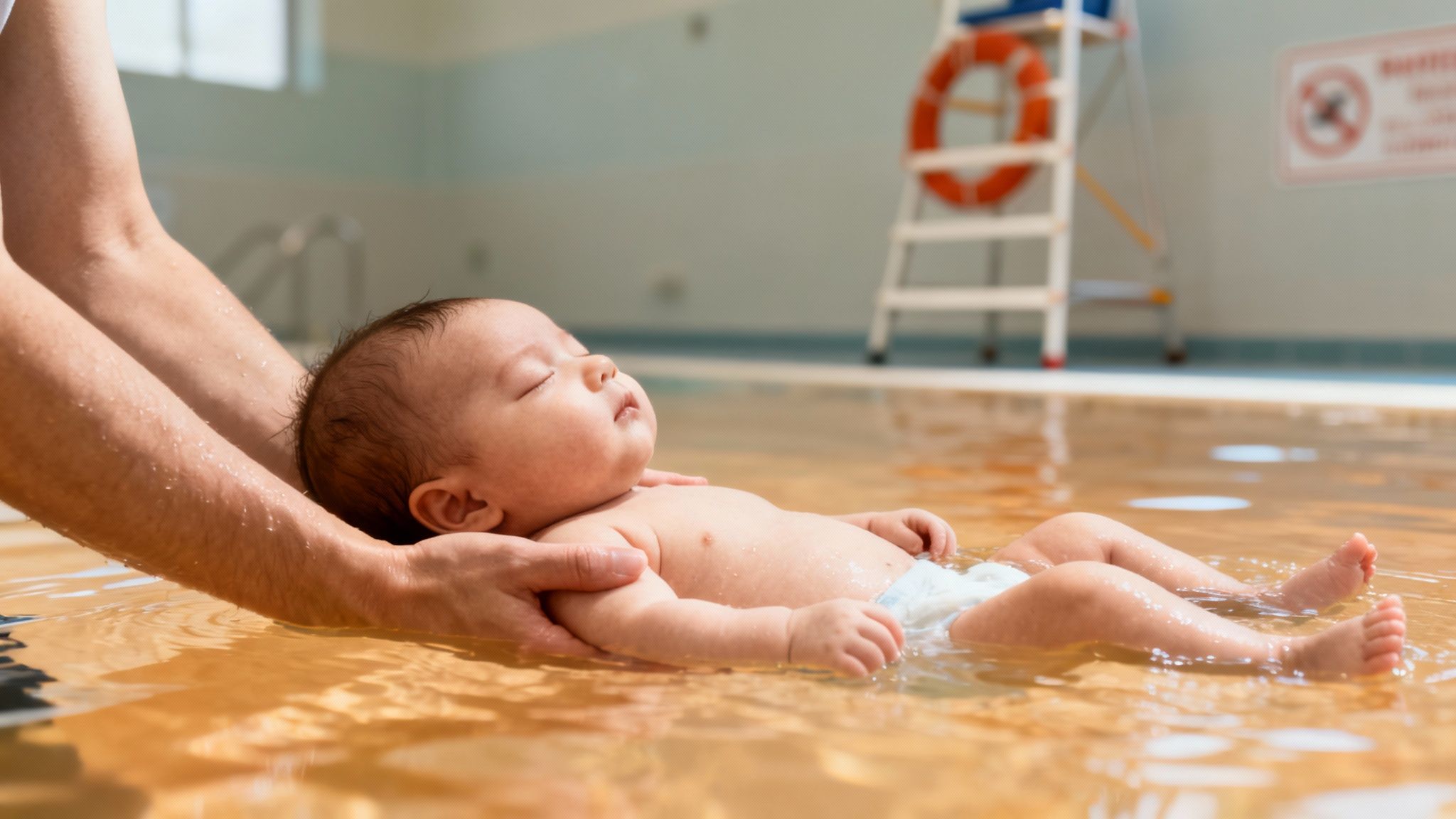
Starting swimming lessons with your baby is not really about teaching them to paddle. It is about building a foundation of safety and confidence in the water that can last a lifetime. In Australia, where pools, beaches, and rivers are part of our way of life, this early introduction is incredibly important.
When you introduce your little one to water in a controlled, positive way, you gently teach them to respect it, not fear it. This simple shift in mindset can make all the difference if they ever have an unexpected fall into water later on.
A Critical Layer of Drowning Prevention
The stats around water safety for young children are sobering, but they also highlight how much education helps. For years, drowning has tragically been a leading cause of accidental death for Australian kids under five.
The good news is, we have made huge progress. Fatal drownings in this age group have dropped significantly thanks to widespread safety campaigns. But non-fatal drowning incidents are still a very real risk for families. Early water familiarisation classes are a key part of the multi-layered approach to keeping our kids safe.
The goal of early water familiarisation is not to make your baby "drown-proof." Instead, it is to equip them with foundational skills and a calm respect for the water, which are vital components of overall water safety.
These lessons teach babies crucial reflexes, like instinctively turning to hold onto the side of the pool. While they are never a substitute for constant supervision, they add another valuable layer of protection. It is all about building muscle memory from the very beginning.
More Than Just Safety: The Developmental Perks
Beyond the critical safety aspect, early swimming offers a heap of developmental benefits. The water provides sensory and physical stimulation that is pretty hard to replicate on land.
Here is why it helps your baby’s development:
- Physical Strength: The water's gentle resistance helps strengthen your baby’s muscles, especially in their neck, arms, and legs. This can give them a great head start on milestones like crawling and walking.
- Coordination and Balance: Moving through the water encourages your baby to use both sides of their body, which helps build bilateral coordination. This cross-body movement is fantastic for stimulating brain development.
- Cognitive Growth: Following simple instructions and responding to cues in a class setting gives their cognitive function a little boost. Even the songs and rhymes used in lessons help with early language skills.
Think of the pool as a giant, gentle gym for your baby. Every kick and splash is an exercise that builds both their body and their brain. For more ideas on how to engage your little one, check out our guide on fun and safe water play activities for infants.
Building Lifelong Water Confidence
Perhaps one of the most lasting benefits is the positive relationship your child builds with water. A child who is scared of the water often struggles to learn. This can make formal swimming lessons much harder down the track.
By introducing them early in a warm, playful, and supportive setting, you help create happy memories. They learn that water is fun. This sets them up for a lifetime of safe and happy aquatic adventures, from beach holidays to backyard pool parties.
This early start is an investment in their future. It nurtures a healthy respect for the water and builds the confidence they need to become capable swimmers.
What to Expect in Infant and Toddler Swim Classes
Stepping onto the pool deck for your little one’s first swim class can feel like a mix of excitement and nerves. It is a whole new world of sounds, splashes, and sensations for your baby. Knowing what these early lessons are all about can help turn any apprehension into pure, shared enjoyment.
First things first, these classes are not about turning your baby into a pro swimmer overnight. Think of them as carefully guided play sessions designed to build a happy, positive relationship with the water. You will be right there in the pool with your bub, guiding them through every gentle movement under the watchful eye of a qualified instructor.
The journey is broken down into different stages. The curriculum for babies looks very different from what toddlers learn. Each stage is designed to match your child's developmental readiness.
Infant Water Familiarisation (6 to 18 Months)
For the youngest swimmers, the goal is simple: water familiarisation. This is all about gentle introductions to build comfort and confidence in the pool. The focus is less on formal strokes and more on positive sensory experiences. It is guided playtime that lays a vital foundation for everything that comes next.
Here is what a typical class for this age group looks like:
- Songs and Games: Instructors use familiar songs and rhymes to create a fun, relaxed vibe. Activities like singing "Humpty Dumpty" while sitting on the pool edge or "Ring a Ring o' Rosie" in the water help your baby connect the pool with joy.
- Gentle Movement: You will learn how to hold your baby securely while gliding them through the water. This helps them feel the sensation of buoyancy and movement in a safe, supported way.
- Sensory Exploration: Simple things like splashing hands, kicking feet, and pouring water with toys are used to engage your baby’s senses. It all helps them get used to the feeling of water on their skin.
- Basic Safety Cues: A key skill introduced right from the start is learning to turn back to the pool edge. Instructors teach this through repetition. They encourage babies to grab onto the side after a short glide. This builds a foundational safety reflex.
The entire experience is built around strengthening that parent-child bond. Your calm, positive presence is the most important ingredient, showing your baby that the water is a safe and wonderful place to be.
Toddler Learn-to-Swim Programs (18 Months to 3 Years)
As your baby grows into a toddler, the classes start to change. While still centred around play, the focus shifts towards encouraging more independence and introducing foundational swimming skills. Toddlers have more physical strength and are ready to start learning more structured techniques.
You will notice the curriculum starts building on the skills from the infant program, but with more purpose.
- Developing Independence: Lessons encourage toddlers to move more freely, with less direct support from you. They might start using kickboards or noodles to practise floating and kicking on their own.
- Kicking and Propulsion: Instructors will introduce more specific kicking drills. This helps toddlers make the connection between their leg movements and moving through the water.
- Safe Entries and Exits: A big focus is teaching toddlers how to get in and out of the pool safely. This includes learning to climb out by themselves or using a "slide-in" entry.
- Breath Control: Through fun games like blowing bubbles in the water, toddlers learn the absolute basics of breath control. This is a critical first step before they can comfortably put their face in the water.
The move from infant to toddler classes is a gradual one. Good instructors are experts at reading a child’s readiness and will adapt activities to suit their confidence. The goal always remains the same: to build a happy, competent, and safe little swimmer over time.
Setting Realistic Expectations for Your Child's Progress
It is a question almost every new parent has: if I start lessons at six months, will my little one be swimming laps by their second birthday? It is a great question, and it gets right to the heart of what early swim lessons are really about.
The short answer is no, but the real answer is so much more encouraging.
Early lessons are fantastic for building water confidence, foundational safety skills, and a positive relationship with the pool. Think of it as laying the groundwork. They do not, however, fast-track the physical development needed to pull off formal swimming strokes.
Progress is a slow, steady journey, not a race. Every child moves at their own pace. Their unique coordination, strength, and how comfortable they feel in the water shapes this journey.
Understanding Developmental Timelines
When it comes to learning complex skills like swimming, a child's physical and cognitive development leads the way. A baby can learn to hold their breath and kick their legs. However, their brain and body simply are not ready to coordinate the complex movements for freestyle or backstroke.
This timeline shows how skills build on each other, moving from basic water familiarisation to more independent movements.
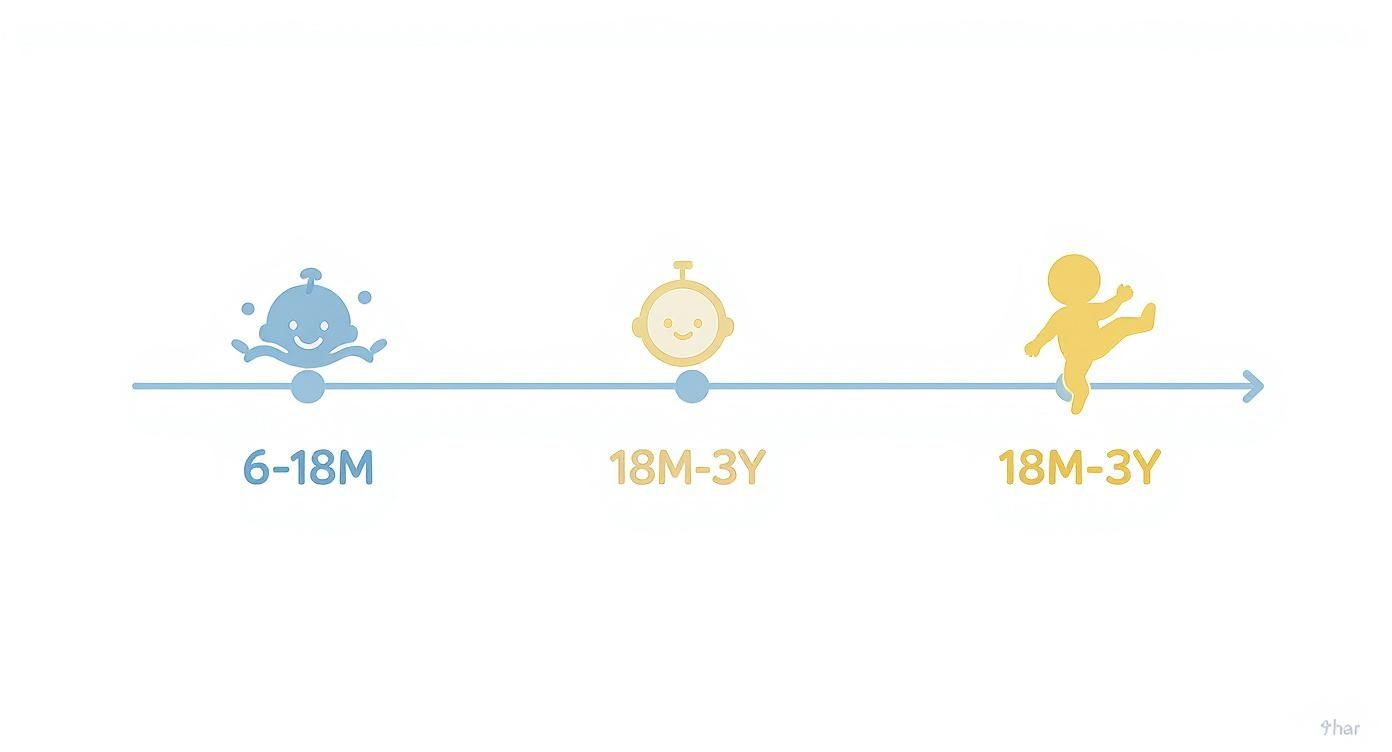
As the infographic shows, the first few years are all about creating foundational comfort and safety reflexes, not mastering technical skills.
To get a better sense of your child's readiness, it helps to understand the general key developmental milestones babies hit along the way. This gives you context, framing swimming as just one piece of their amazing growth journey. For more tips on navigating these early years, our guide on parenting advice for new parents offers some great insights.
The Real Goal of Early Lessons
So, if the aim is not to create a swimming prodigy, what is the point? It is simple: safety and confidence. It is about teaching them to be comfortable and respectful of the water, not afraid of it.
The most important outcome of early swim classes is a child who feels happy and secure in an aquatic environment. This positive foundation is what makes learning formal strokes easier and more enjoyable later on.
For developing technical ability, consistency matters far more than starting age. Children who attend lessons regularly, year-round, build and retain skills much more effectively. Stopping and starting often leads to them taking a few steps back.
When Do Children Typically Learn to Swim?
Australian research gives us a pretty clear picture here. Studies show that children generally develop real water confidence and basic swimming skills around four years of age.
What is really interesting is that this research tracked children who started lessons at ages two, three, and four. It found that no matter when they began, most kids were able to swim freestyle by about 5.5 years old.
This tells us that an early start is brilliant for safety and getting them comfortable in the water. But the ability to swim proper strokes is tied to developmental readiness. This seems to click into place around the same age for most children.
So, for now, focus on celebrating the small wins: a happy splash, a willing back float, or a confident hop into the water. These are the true markers of success in these early years.
How to Choose the Right Swim School
Finding the right swim school is a huge step in your baby’s water journey. It is about so much more than just finding the closest pool. You are looking for a safe, warm, and professional space where your little one can build a happy and confident relationship with the water from day one.
The decision can feel massive, but knowing what to look for makes it all a bit easier. You need a place that puts safety first, has properly qualified instructors, and truly understands what babies and toddlers need. A great program always uses a gentle, child-led approach.
Check Instructor Qualifications
The very first thing to check is the instructor's qualifications. In Australia, the standards are high for a reason. You will want to find teachers who hold current certifications from nationally recognised bodies.
Here are the two main qualifications to keep an eye out for:
- AUSTSWIM: This is Australia’s national organisation for teaching swimming and water safety. The AUSTSWIM Teacher of Infant and Preschool Aquatics qualification is the gold standard.
- Swim Australia: This is the learn-to-swim arm of the Australian Swimming Coaches and Teachers Association (ASCTA). A Swim Australia Teacher of Babies & Toddlers qualification is another top-tier credential.
These certifications mean the instructor is not just a good swimmer. They are trained specifically to teach little ones. They understand their developmental stages and crucial safety practices. Do not feel shy about asking the swim school to see proof of these qualifications. Any good school will be proud to show you.
Assess the Pool Environment
The pool environment itself plays a massive role in your baby’s comfort and safety. A facility set up for infants will have a few key features that make the whole experience positive for everyone. When you visit a potential school, take a good look around.
Water temperature is a big one. For babies, the pool should be heated to a lovely warm 32-33 degrees Celsius. This stops them from getting cold. A cold baby can quickly turn a fun lesson into a shivery, stressful one.
Also, ask about their water treatment. A reputable school will have excellent filtration and strict hygiene standards to keep the water clean and gentle on sensitive baby skin. The air quality and the general cleanliness of the change rooms are also great clues to how well the facility is run.
Understand the Teaching Philosophy
Beyond the practical stuff, the school’s approach to teaching is vital. You are looking for a program that is truly child-centred. This means the class flows with the needs and moods of the babies. It does not stick to a rigid, one-size-fits-all lesson plan.
Look for a school that champions:
- Positive Reinforcement: Instructors should be using smiles, praise, and encouragement to build confidence.
- Play-Based Learning: For this age group, lessons should feel like playtime. Great programs use songs, games, and toys to introduce foundational water skills naturally.
- Small Class Sizes: This is essential for getting individual attention. A good ratio is usually one instructor for every six to eight parent-and-baby pairs.
The best swim schools get it: for a baby, their parent is their safe place in the water. A great instructor teaches through you, empowering you with the skills to guide your own child with confidence.
To help you compare your options, a simple checklist can be a lifesaver. It ensures you ask the right questions and can easily see how different schools stack up against each other.
Swim School Evaluation Checklist
| Feature to Check | What to Look For | Why It Matters |
|---|---|---|
| Instructor Qualifications | AUSTSWIM or Swim Australia certified for infants. Current CPR/First Aid. | Ensures teachers are trained specifically for your baby's age and safety. |
| Pool Temperature | Heated to 32-33°C. | Keeps your baby warm, comfortable, and happy throughout the lesson. |
| Water & Air Quality | Clean, clear water. Good ventilation. Clean change rooms. | Protects sensitive skin and lungs from harsh chemicals or poor hygiene. |
| Class Size | Maximum 6-8 parent/baby pairs per instructor. | Guarantees your baby gets enough individual attention and support. |
| Teaching Style | Play-based, child-led, positive reinforcement (songs, toys, praise). | Creates a fun, low-pressure environment where babies learn best. |
| Safety Measures | Clear emergency procedures, lifeguard on duty, secure pool access. | Non-negotiable for peace of mind and your child's well-being. |
| Make-up Policy | Flexible policy for missed classes due to illness. | Babies get sick! A good policy means you do not lose your money. |
| Overall Vibe | Welcoming, friendly staff. Happy and engaged parents and babies. | Trust your gut. You should feel comfortable and supported from the moment you walk in. |
Using a checklist like this helps you move beyond just location and price. It focuses your attention on the things that truly create a safe and positive learning environment. This sets your little one up for a lifetime of loving the water.
Preparing for Your Baby's First Swim Lesson
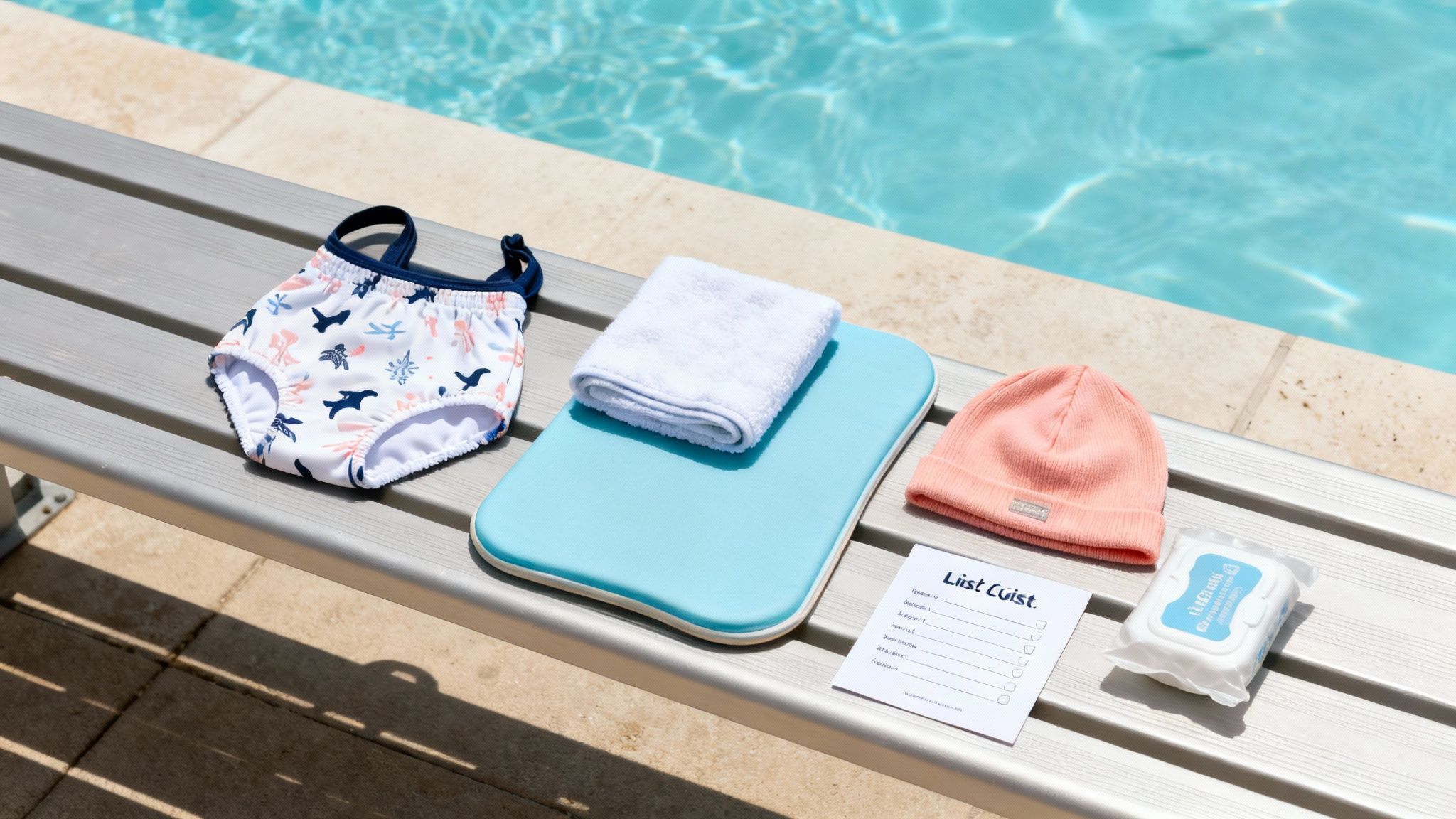
A little bit of prep work can make your baby's first swim lesson an amazing experience for both of you. Getting everything sorted beforehand means less last-minute stress. This way, you can focus on the fun and connection.
It really just comes down to a well-packed swim bag and arriving with time to spare. Let's break it down.
What to Pack in Your Swim Bag
Having the right gear ready to go makes the transition from the car to the pool and back again so much smoother. You do not need to bring the entire nursery. Just pack the essentials to keep everyone comfortable.
Here is what your list should look like:
- Swim Nappies: Most swim centres require a two-part system: a disposable swim nappy underneath a snug, reusable nappy cover. This double layer is your best bet against any little accidents in the pool.
- Towels: Pack two. A smaller one for the poolside to wrap bub in as soon as you get out, and a bigger, hooded towel for a proper dry-off after their shower.
- Warm Clothes for Afterwards: Your baby will be tired and can get cold quickly once they're out of the water. Have a clean, dry nappy and some warm, easy-to-pull-on clothes like a onesie ready to go. If you're looking for soft fabrics, this guide to bamboo baby clothes has some great insights for sensitive skin.
- A Snack or Feed: Swimming is hungry work! Have a bottle or a light snack on hand for after the lesson to top up their energy.
- Your Own Gear: Do not forget your own swimmers and a towel!
If you want a more detailed checklist, our guide on nappy bag essentials for new mums is a total lifesaver.
Timing is Everything
A happy swimmer is a well-rested and well-fed swimmer. Try to book a lesson time that works with your baby’s natural routine, not against it. Avoid classes that clash with their usual nap time or are right before a feed.
Getting to the pool about 15 minutes early is a brilliant idea. It gives you plenty of time to get changed, use the toilet, and settle in without that frantic, rushed feeling.
The whole point of that first lesson is simply to create a positive, happy feeling about being in the water. Your calm energy is the most important thing you can bring. Just focus on smiles, cuddles, and gentle fun.
With all the practical stuff sorted, you can just show up with a positive mindset. Remember, this is a special bonding moment. By getting organised beforehand, you are free to be fully present and enjoy every splash.
Of course, it is completely normal to have a few questions swirling around before you and your baby take that first dip together. Getting those worries out of the way means you can relax and focus on all the fun you are about to have.
Let's walk through some of the most common questions we hear from parents.
Are Pool Chemicals Safe for My Baby?
This is usually the first thing parents ask, and for good reason. You can rest easy knowing that reputable swim schools across Australia stick to very strict health and safety standards for their water quality.
They work hard to get the balance of chlorine and pH levels just right. This makes it safe for even the most delicate baby skin. On top of that, baby swim classes are almost always held in pools heated to a balmy 32-33°C. This lovely warm water keeps your little one comfortable and happy, so there are no shivers to worry about.
Should We Skip a Lesson for Sickness?
Juggling sniffles and teething is just part of the parenting journey. When it comes to swim lessons, it is always best to err on the side of caution.
A good rule of thumb is to skip a class if your baby is showing any real signs of being unwell, like:
- A fever
- Vomiting or diarrhoea
- An open sore or skin infection
- They just seem tired and not their usual self
If it is just a very mild cold with no fever, swimming is often fine. But it is always a good idea to check your swim school’s policy and, most importantly, trust your gut. A make-up class is always a better option than trying to push through a lesson with a sick baby.
One of the most important things to remember is that swim lessons should be a positive, happy experience. If your baby is feeling out of sorts, it is much better to rest at home and come back when they are ready to splash and play again.
Do I Need to Be a Strong Swimmer?
Not at all. This is a common worry, but you can definitely put it to rest. These parent-and-baby classes are designed for you to be your little one’s support in the water, not to be an Olympic swimmer yourself.
Lessons are held in shallow water where you can easily and comfortably stand. The instructor is there to guide both of you through every song and activity. Your swimming ability is not a factor. It is your calm, encouraging presence that truly matters.
What If My Baby Cries During the Lesson?
First off, it is completely normal for a baby to cry in a new environment. There are so many new sounds, feelings, and faces to take in. They might be a little tired, a bit hungry, or just momentarily overwhelmed by it all.
Experienced swim instructors have seen it all before and are brilliant at handling these moments. They might suggest:
- Trying a gentle cuddle or a quiet moment together.
- Taking a short break out of the water on the pool deck.
- Switching to a different, more soothing activity.
The best thing you can do is stay calm and positive. Your baby will pick up on your relaxed energy, which often helps them settle down quickly. Crying is just their way of communicating, not a sign that anything is wrong.
After a fun lesson, having a soft, cosy spot for a post-swim cuddle is a must. At Wallaby Collective, our beautiful linen play mats are the perfect place for your little one to relax and recharge. Designed right here in Perth, they offer a stylish, safe, and wonderfully soft surface for your home. Explore our collection of linen play mats.