

What to Pack in a Nappy Bag An Essential Australian Guide
Figuring out what to pack in a nappy bag can feel like planning a cross-country trek, not a quick trip to the shops. But it does not have to be that complicated. At its core, you just need nappies, wipes, a change of clothes, and feeding supplies. These are your non-negotiables. They are the absolute must-haves for any outing.
Your Essential Nappy Bag Checklist
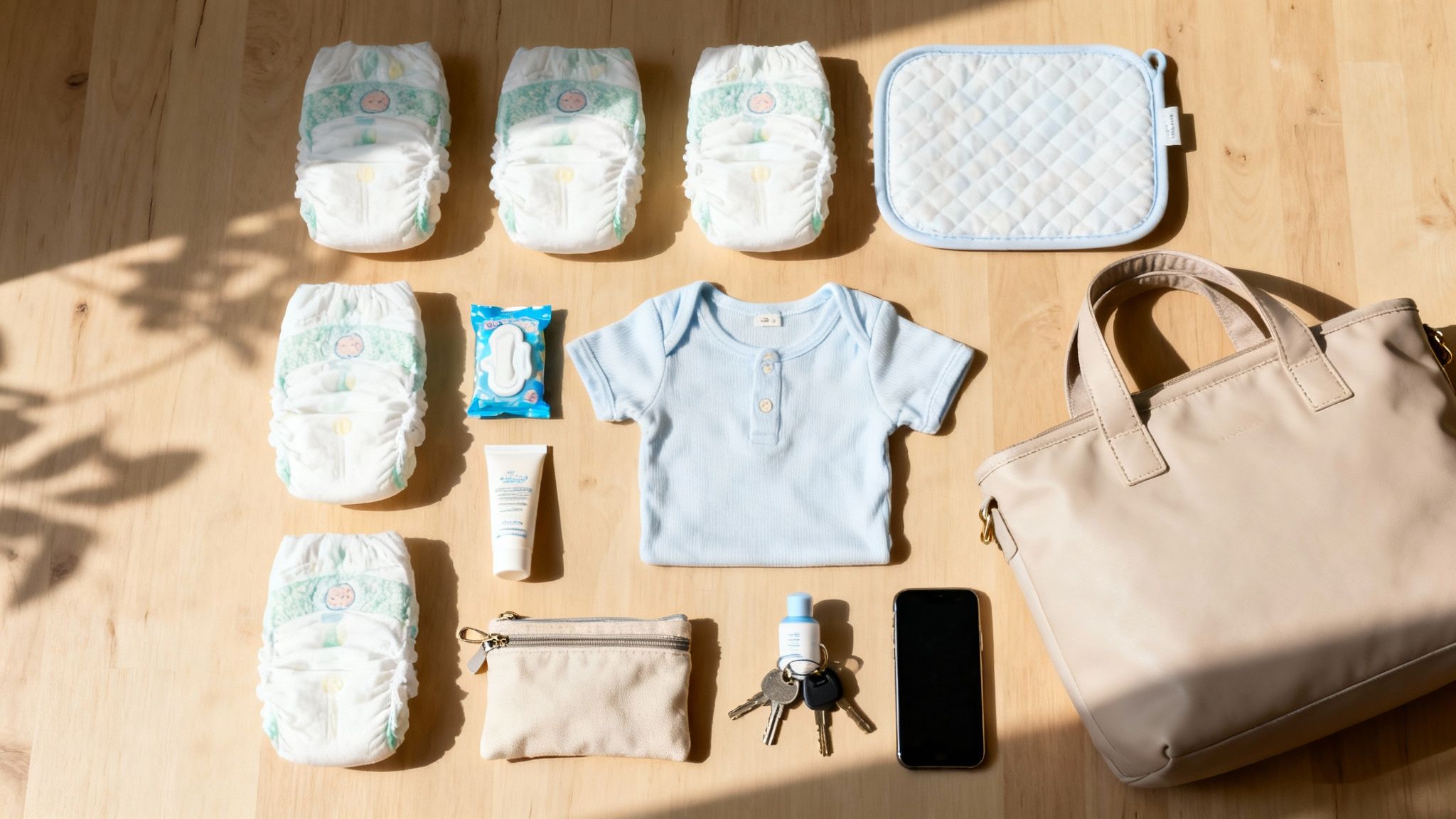
Leaving the house with a baby is all about being prepared without feeling like you are hauling a suitcase. The trick is to nail the essentials first so you are ready for anything without overpacking.
Let's start with that foundational layer of items. Get this right and you will handle the first few hours away from home with total confidence. From here, you can always add extras depending on how long you will be out and how old your little one is.
Diapering and Changing Essentials
This is where you absolutely cannot skimp. Newborns can power through 8 to 10 nappies a day, so getting caught short is a scenario every parent dreads. A good rule of thumb for a short outing is to pack one nappy for every hour you plan to be out, plus a couple of spares for good measure. If you are getting ready for your new arrival, our complete newborn checklist for Australian parents can help you feel fully prepared.
Here are the other absolute must-haves for a quick change on the go:
- A portable changing mat: Public change tables are not always the cleanest. A mat gives you a clean, comfy surface no matter where you are.
- Wipes: A travel-sized pack is your best friend. Wipes are not just for nappy changes. Use them for sticky fingers, messy faces, and wiping down surfaces.
- Nappy rash cream: Pop a small tube in a side pocket. It is essential for soothing any irritation on the spot.
- Disposable bags: These are a true lifesaver for sealing away used nappies and soiled clothes until you can find a proper bin.
Clothing and Feeding Basics
Spit-up, spills, and the dreaded nappy blowout are just part of life with a baby. They always seem to happen at the most inconvenient times, so packing a full change of clothes is a non-negotiable. A simple onesie or bodysuit, a singlet, and a pair of socks are usually all you need.
Next steps for feeding are based on your baby. If you bottle-feed, bring a bottle with sterilised water and a separate container with pre-measured formula. If you breastfeed, you might want to pack a light cover for comfort or privacy. For older babies on solids, a bib and a simple snack are always a good idea.
Having a well-packed nappy bag is not just about being organised. It is about giving yourself peace of mind. When you know you are ready for the most common baby curveballs, you can actually relax and enjoy being out with your little one.
For a few more ideas and a different perspective, other guides on what to pack inside the diaper bag can also be a great source of inspiration.
Packing For Different Outings and Seasons
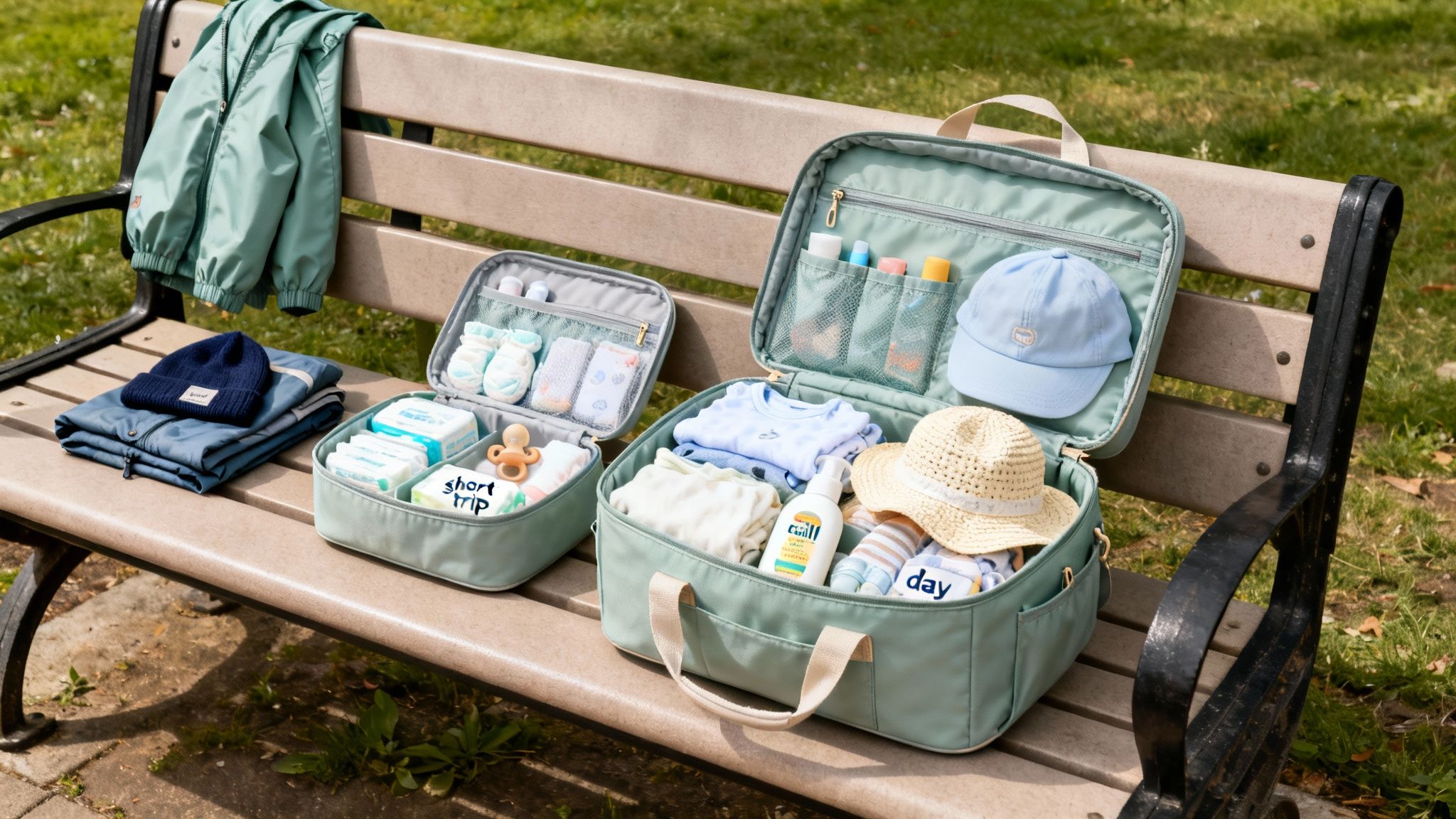
Once you have your core essentials down, the next trick is learning to adapt. Let's be real. A quick dash to the shops for milk requires a much lighter load than a full day at a family barbecue. Getting smart about scaling your nappy bag for different outings is the key to making every trip feel that little bit smoother.
Here is why knowing how to adjust is important. It means you are always ready for the time you will be out and where you are going, whether it is for a couple of hours or the entire day.
Short Trips Versus Full-Day Adventures
For a quick trip out, your essentials checklist usually has you covered. You are probably only looking at one or two feeds and a couple of nappy changes. But when that "quick coffee" turns into a half-day or full-day event, you will need to scale up your supplies.
Let's break it down:
- Extra Nappies: For a full day, I would recommend doubling what you would usually pack. Having at least 6-8 nappies means you are covered for any surprises.
- More Clothing: Instead of one spare outfit, pop in two. It is always a good idea to include layers like a cardigan or vest, as the temperature can change in a flash.
- Feeding Supplies: If you bottle-feed, pack at least two to three extra bottles with pre-measured formula. For breastfed bubs, you might not need extra gear, but having a muslin wrap can be great for a bit of comfort and privacy if you need it.
My go-to tip? Use packing pods or even just separate pouches for your ‘top-up’ supplies. It keeps your main bag so much more organised. You can just grab the ‘full-day’ pod when you know you will be out for longer.
Packing for Australian Weather
We all know how unpredictable Australian weather can be. A beautiful sunny morning can easily turn into a cool, windy afternoon. So packing for four seasons in one day is genuinely a good strategy.
Being ready for anything makes those outdoor adventures, like a family day in the park, so much more relaxed. For more ideas on what to bring along, check out our guide on planning the perfect baby picnic.
Here is how to prep your nappy bag for the elements:
For Sunny Days:
- Sunscreen: Choose a baby-safe, broad-spectrum sunscreen and try to apply it before you even leave home.
- Sun Hat: A wide-brimmed hat is an absolute non-negotiable for protecting your baby’s delicate face and neck.
- Light Muslin Wrap: These are lifesavers. You can use one to create shade over the pram, as a light blanket, or even for a quick clean-up.
For Cooler Weather:
- Warm Layers: A beanie, some warm socks or booties, and a jacket or knitted cardi are must-haves.
- A Thicker Blanket: A warmer, snugglier blanket ensures your baby stays cosy if the temperature really drops.
When you are prepping for a longer trip or a chilly day, having some good tips for keeping food warm while traveling can be a game-changer for your baby's meals. An insulated bottle bag or food jar helps keep milk or solids at just the right temperature. This means your baby can have a comfortable feed no matter what the weather is doing. It is all about adapting your packing to what the day might throw at you.
Just when you think you have mastered the art of packing the perfect nappy bag, your baby hits a new milestone, and suddenly, everything changes. It is one of those universal parenting truths. A newborn's needs are worlds away from a curious, snack-fuelled toddler's.
Next steps involve keeping up with this constant evolution. This is key to leaving the house feeling prepared, not panicked. The good news is that a few simple swaps are all it takes to adapt your nappy bag for every stage. This ensures you have exactly what you need without hauling around unnecessary extras.
The Newborn Bubble: 0 to 3 Months
In those hazy early months, your nappy bag is basically a survival kit for comfort, feeding, and a surprising number of outfit changes. Your tiny baby’s world revolves around sleeping, eating, and needing cuddles, and your bag should reflect that beautiful simplicity.
Let's break down the focus. It is all about being ready for spit-up, leaks, and soothing a fussy bub while keeping them snug and secure.
Here is what your newborn checklist will likely revolve around:
- Extra Singlets and Onesies: Newborns are absolute pros when it comes to spit-up and nappy explosions. Always pack at least two full changes of clothes. Trust me on this one.
- Muslin Wraps or Swaddles: These are the unsung heroes of the newborn stage. They work as a swaddle, a light blanket, a pram cover for naps on the go, or a burp cloth in a pinch.
- Soothing Items: If your baby takes a dummy, pack a few spares. A small, familiar soft toy can also bring a world of comfort when you are out and about.
The Infant Stage: 4 to 12 Months
Once your baby becomes more aware of the world, starts grabbing everything in sight, and begins their great food adventure, your nappy bag needs a refresh. This stage is all about managing the glorious mess of solids and keeping a newly mobile baby happily entertained.
You will start shifting from purely milk-based needs to adding food. This means a few more practical items are about to join your kit.
This is when your nappy bag truly transforms into a mobile meal station. Being organised with feeding supplies means you can introduce new flavours anywhere. This makes outings far more flexible and fun.
Start adding these essentials to your bag:
- Feeding Gear: Pack a bib, a spoon, and a spill-proof container for purees or first finger foods. Silicone bibs are a game-changer for easy cleaning.
- Sippy Cup: It is a great time to introduce a sippy cup with a little water, especially on warmer days.
- Teething Toys: As those first teeth start to make an appearance, having a couple of safe teething toys on hand can be a lifesaver for soothing sore gums.
The Toddler Tornado: 1 Year and Beyond
When your little one is officially a walking, talking toddler, your nappy bag’s role changes yet again. It becomes less about constant nappy changes and more about fuel and fun. Toddlers have endless energy and fleeting attention spans, so your bag needs to support their growing independence and curiosity.
This is also the stage where many Australian parents look for a stylish, functional bag that can handle more than just the baby basics. In fact, research projects the Australian nappy bag market will hit USD $17.0 million by 2030. This growth is driven by parents needing packs that can carry it all, from snacks and spare jackets to toys and bibs. You can find more great checklists that show this trend over on the Huggies Australia website.
Your bag’s contents will shift to include things like:
- Healthy Snacks: Toddlers seem to be hungry all the time. Pack a variety of healthy, low-mess snacks like crackers, fruit pouches, or cheese sticks to keep them going.
- Water Bottle: A durable, leak-proof water bottle is non-negotiable for keeping your active toddler hydrated.
- Small Toys or Books: A favourite little toy, a sticker sheet, or a small board book can be your secret weapon. They can prevent meltdowns while waiting for a coffee or at an appointment.
How To Organise Your Nappy Bag Like A Pro
A perfectly packed nappy bag is a lifesaver, but only if you can actually find what you need when you need it. There is nothing worse than fumbling for a wipe during a nappy blowout. Digging for a dummy while your baby is having a meltdown is also stressful.
Turning that potential chaos into calm is simpler than you think. With a few smart strategies, you can organise your bag so that everything has its place. This makes those trips out the door feel a whole lot less stressful.
Create Zones With Packing Pods
The best trick I ever learned was to create ‘zones’ for different needs. Using packing pods, pouches, or even big zip-lock bags lets you group similar items together. It makes grabbing what you need incredibly easy, without having to pull everything else out.
Let's break it down into three core zones:
- The Changing Zone: This pod is your go-to for nappy changes. It should have a few nappies, a travel pack of wipes, nappy rash cream, and some disposable bags. When it is time for a change, you just grab this one pouch.
- The Feeding Zone: Keep all your bottles, formula containers, bibs, spoons, and snacks in here. Separating food stops any accidental spills from getting all over the spare clothes. You only need to learn that lesson once.
- The First-Aid and Extras Zone: This is your spot for everything else. Think dummies, teething toys, baby paracetamol, and a spare change of clothes.
Think of it as creating a mini filing system inside your bag. This approach not only keeps things tidy but also makes it much faster to see what needs restocking when you get home. It is a simple habit that saves you so much time.
To make this even easier, here are a few ways you can set up your zones.
Nappy Bag Packing Zones
| Packing Method | Description | Best For |
|---|---|---|
| Packing Pods | Dedicated, often insulated, fabric containers that zip up. | Mums who love structure and want to keep everything perfectly contained. Great for separating clean, dirty, and food items. |
| Clear Pouches | See-through vinyl or mesh pouches. | Visual organisers who want to see what is inside at a glance. Helps you quickly check stock levels before leaving the house. |
| Colour-Coding | Using different coloured pouches for each zone (e.g., blue for changing, green for feeding). | Mums juggling multiple kids or anyone who thrives on a quick-grab system. Your partner can easily find the “red pouch” too. |
Ultimately, the best method is the one that simplifies your life. Whether it is sleek pods or simple zip-lock bags, having a system is what matters most.
Master The Art of Layering
Once your zones are sorted, how you pack them into the bag makes all the difference. The trick is to put things you will need in a hurry right on top. Place the ‘just-in-case’ items at the bottom. This strategic layering means you are not digging around when every second counts.
Here is a packing order that actually works:
- Bottom Layer (Least Used): Start with the bulkier, less urgent things. This is where your spare change of clothes, a blanket, or your own personal items can go.
- Middle Layer (Feeding and Fun): Next in is your feeding pod. I like to tuck any toys or books in here too, ready to pull out when you need a distraction.
- Top Layer (Urgent Essentials): The most accessible part of your bag is prime real estate. This is for your changing pod, wipes, and dummies. These are the things you will reach for most often and most urgently.
Set Up a Permanent Car Kit
For total peace of mind, a permanent supply kit in your car is a game-changer. It is your safety net for those days when you have used more nappies than expected or forgotten to restock the bag completely.
Next steps for this kit are simple. Just grab a small box or bag and stock it with extra nappies, a full pack of wipes, a spare outfit, and some non-perishable snacks. This simple car kit means you can quickly top up your main bag while you are out. This saves you from a panicked trip home or a dash to the shops.
Adding A Play Mat: Your Outing Game Changer
Here is a little secret that seasoned parents swear by: a portable play mat. It is one of those items you might not think to add to your nappy bag. But once you do, you will wonder how you ever managed without it. A lightweight, foldable mat can instantly transform any public space into a safe, clean bubble for your baby.
Think of it as your secret weapon for those spontaneous park visits, coffee catch-ups, or trips to a friend’s house. Instead of worrying about dirty floors or uncomfortable surfaces, you just roll out a familiar space for your little one. Simple.
From Tummy Time to Nappy Changes
A quality play mat is so much more than just a soft spot to land. It is incredibly versatile. It gives you a clean, cushioned surface for essential tummy time. This helps your baby build that crucial neck and shoulder strength, no matter where you are. We have got more great tips for making the most of these sessions in our guide to tummy time mats for infants.
But its usefulness goes way beyond playtime:
- An Emergency Change Station: Have you ever been caught out without a public changing room? A mat offers a hygienic surface for a quick nappy change in the park or even in the boot of your car.
- A Familiar Nap Spot: At a friend’s place or a family gathering, the familiar texture and scent of their own mat can help your baby settle down for a nap in a new environment.
- A Clean Mealtime Area: For older babies starting on solids, it creates a designated space to sit and have a snack. This keeps crumbs and spills (mostly) contained.
This little infographic shows the best way to layer your nappy bag, placing less-used items like a play mat or blanket right at the bottom.
The key is packing smart. When you are in a rush, you want urgent items like wipes and nappies right at the top, ready to grab.
Adding a play mat to your packing list is less about carrying another thing. It is more about expanding your possibilities. It empowers you to say 'yes' to more adventures, knowing you have a clean, safe space for your baby, anytime and anywhere.
Clever Hacks And Common Packing Mistakes
Even with the best checklist, you quickly realise parenting is all about learning on the go. You pick up clever shortcuts and figure out which common mistakes to skip. Let's get into some pro tips from parents who have been there, done that, and survived the dreaded nappy blowout.
Adopting a few smart habits can turn your nappy bag from a jumble of supplies into an efficient, grab-and-go tool. It is about packing smarter, not just stuffing more in.
Smarter Packing, Not Harder Packing
One of the biggest lessons you will learn is finding that sweet spot between being prepared and overpacking. It is so easy to fall into the trap of packing for every single what-if. This leaves you with a bag that is heavy, disorganised, and a pain to carry. The real key is to trust your core list of essentials and only add specific items for known risks, like an extra outfit if your little one is prone to reflux.
Another classic mistake? Forgetting to restock. We have all been there. You get home exhausted, dump the bag by the door, and completely forget about it. Then you are halfway to the park the next day with only one nappy left. Panic stations.
Make restocking a non-negotiable part of your routine. As soon as you walk in the door, take two minutes to replace used nappies, wipes, and snacks. This simple habit will save you from so much stress later.
Here are a few more parent-tested hacks that actually work:
- Revive Dried Wipes: Do not throw out that packet of wipes just because it has dried out. A quick splash of clean water will bring them right back to life, good as new.
- Double-Duty Items: A muslin wrap can be a burp cloth, a pram cover, a nursing cover, or a makeshift change mat. Look for items that serve multiple purposes to save precious space.
- Regular Clean-Outs: Once a fortnight, tip everything out of your bag. You will be amazed at the stray crumbs, old receipts, and forgotten toys you will find lurking at the bottom.
Lessons From Government Initiatives
Striking the right balance is something even government programs focus on. The Victorian government’s baby bundle initiative is a perfect example. Since July 2019, they have given out over 240,000 of these bundles to new parents. Each bundle contains a nappy bag packed with just the essentials. You can learn more about the Victorian government's baby bundle program on their website.
Here is why that matters. The program highlights that you often need less than you think. It focuses on core items like nappies, wipes, a growsuit, and a safe sleeping bag. This reinforces what is truly necessary for a baby's immediate needs. By focusing on these fundamentals, you can avoid the clutter and pack with confidence, knowing you have what really matters covered.
Sources:
- Baby Bundle, Department of Health, State Government of Victoria, Australia, 21 June 2024.
- Australia Nappy Bag Market Size, Share & Trends Analysis Report By Material, By Distribution Channel And Segment Forecasts, 2024 - 2030, Grand View Research, April 2024.
- Newborn baby care in pictures, Raising Children Network (Australia), 21 December 2022.
A well-packed nappy bag gives you the freedom to enjoy every moment with your little one. For a safe, stylish, and practical space for your baby to play wherever you go, explore the beautiful, machine-washable play mats from Wallaby Collective. Discover the collection at https://wallabycollective.com.