

Discover: toys for 9 month old — Developmental Play & Safety
Nine months is a magical, whirlwind stage. Your baby is suddenly a blur of motion. They sit up confidently, start to crawl, and explore their world with new purpose. The best toys for a 9 month old keep up with this incredible burst of energy. They support budding motor skills, endless curiosity, and sensory development. Think classic stacking rings, soft blocks they can safely chew on, and simple push toys.
Choosing the Best Toys for Your 9 Month Old
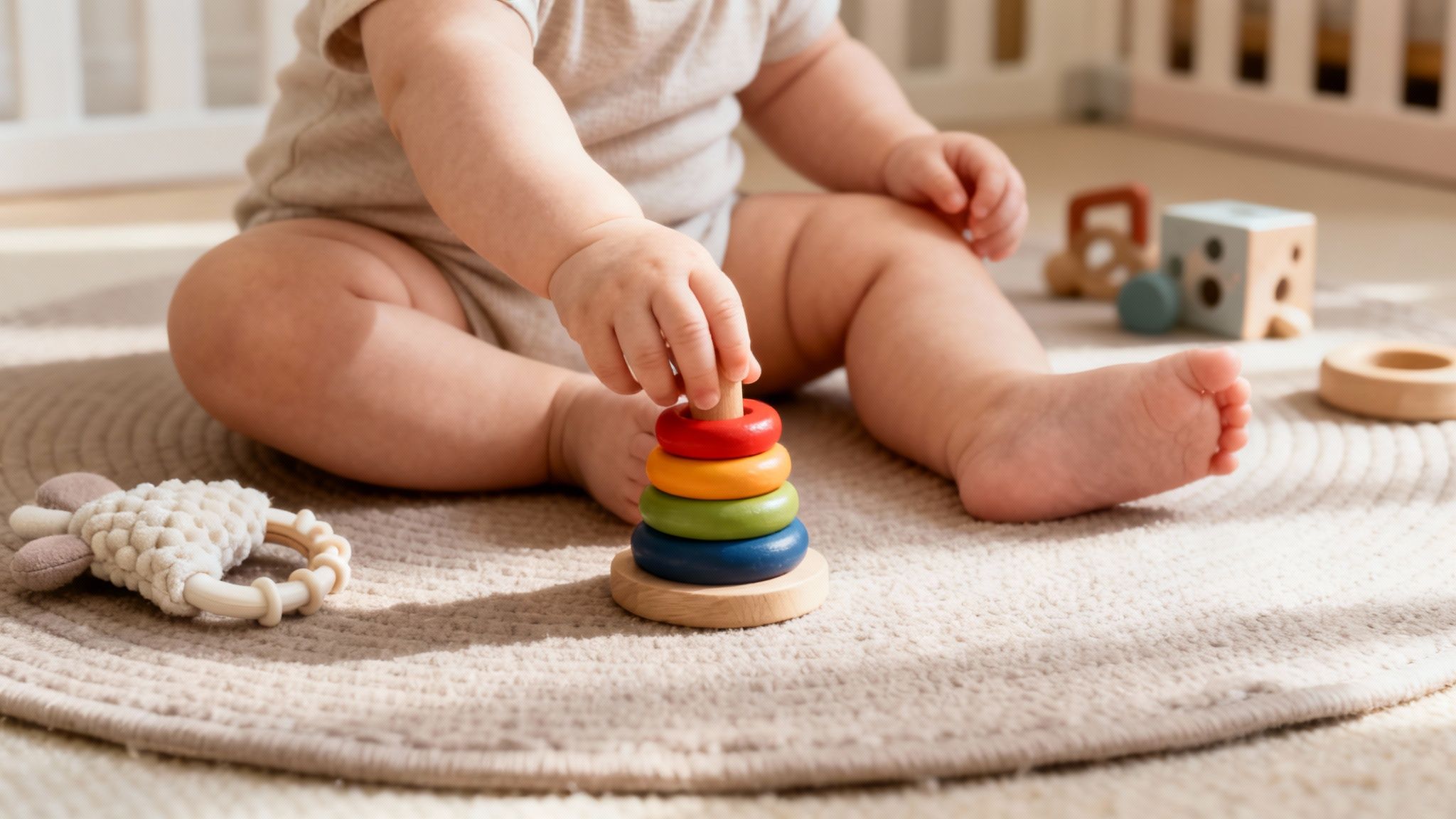
Your baby’s world expands every single day. One minute they master sitting up. The next, they crawl across the room. They might even try to pull themselves up on the couch. This explosion in mobility means their play needs change fast. Let's break it down.
This is the perfect time to introduce toys that are not just fun, but are also powerful tools for learning and growth. The real goal is to find things that challenge and delight them in equal measure. This builds a solid foundation for all the learning still to come.
Matching Toys to Milestones
At this age, your little one works on crucial skills. Picking the right toys can make all the difference in supporting their journey.
Here is why certain types of toys are so effective right now:
- Fine Motor Skills: Your baby perfects their pincer grasp. This is the clever ability to pick up small things with their thumb and forefinger. Toys with bits and pieces to grab, twist, or push are perfect for this.
- Gross Motor Skills: As they get more mobile, they need encouragement to move. Toys that encourage them to crawl, cruise along furniture, and push things around help build their strength and coordination.
- Cognitive Growth: Simple puzzles and shape sorters introduce problem-solving and cause-and-effect. These are key building blocks for understanding how their world works.
Next steps? Use this quick reference table. It connects your baby’s development with the kinds of toys that help them thrive.
Quick Guide to Selecting Toys for a 9 Month Old
| Developmental Milestone | Key Toy Characteristic | Example Toy |
|---|---|---|
| Fine Motor Skills (Pincer Grasp) | Small, grabbable parts | Stacking rings, knobs on a puzzle |
| Gross Motor Skills (Crawling/Cruising) | Encourages movement | Push car, activity walker, large soft ball |
| Object Permanence ("Peekaboo") | Hiding and revealing elements | Lift-the-flap books, pop-up toys |
| Cause & Effect ("If I do this...") | Responds to baby's actions | Activity cubes with buttons, musical toys |
| Sensory Exploration (Mouth & Hands) | Varied, safe-to-chew textures | Soft blocks, textured balls, silicone teethers |
This little guide should help you feel more confident when you browse the toy aisle. It makes it easier to spot the things that will truly engage your nine-month-old.
A Practical Checklist for Parents
When you are out shopping, think of this as your practical guide. It helps you find toys that are both engaging and beneficial. You will want to prioritise things that nurture their physical and cognitive development.
And because this stage flies by, it is never too early to think about what is next. To get a peek into the next exciting stage of play, you might find this ultimate guide to birthday gifts for toddlers really informative.
How Your 9 Month Old Learns Through Play
For your little one, playtime is not just about having fun. It is serious work. It is the main way they figure out the world around them. Right around nine months, this important work gets much more interesting to watch as their brain develops at an incredible speed.
Choosing the right toys for a 9 month old is really about understanding the amazing developmental leaps they make. Let's look at how play directly fuels their growth. It turns simple moments into powerful learning opportunities.
The Magic of Object Permanence
Have you noticed your nine-month-old is suddenly obsessed with peek-a-boo? Or that they get a huge kick out of finding a toy you have hidden under a blanket? This is not just a cute game. It is a massive cognitive milestone called object permanence.
Basically, it is the understanding that things still exist even when they cannot see them. Before this, it was truly "out of sight, out of mind." Now, their brain can hold onto an image of that hidden toy, which drives them to look for it.
This new skill is a huge step toward developing memory and abstract thinking. Toys that involve a bit of hide-and-seek, like pop-up toys or lift-the-flap books, are perfect for reinforcing this concept in a fun, engaging way.
Developing Fine and Gross Motor Skills
Around the nine-month mark, your baby’s physical skills really take off. You will see two key types of motor skills developing as they play and explore every day.
Here is why toys that get them moving are so important right now:
- Fine Motor Skills: Watch their little hands. They are probably moving from that whole-palm grab to using their thumb and forefinger in a neat pincer grasp. This lets them pick up smaller things with way more precision. Toys with knobs to turn, chunky puzzle pieces to grip, or soft blocks to stack are fantastic for practising this delicate skill.
- Gross Motor Skills: Your baby also strengthens all their large muscle groups. They get good at sitting up on their own, crawling with a real sense of purpose, and maybe even "cruising" by pulling themselves up on the furniture. Push-along toys, soft balls to chase, and activity walkers give them a reason to get moving. These help build the coordination and strength they need for these bigger actions.
The next step is creating a safe space for all this exploration. A large, cushioned play mat gives them the perfect spot to practise plopping down from sitting, crawling across the room, and taking those first wobbly steps. Every time they reach, crawl, or stand, they build physical confidence.
A Guide to Australian Toy Safety Standards
When you pick out a toy for a nine-month-old, safety is absolutely the number one thing on your mind. Here in Australia, we are lucky to have strong regulations designed to protect our little ones. Knowing a bit about them can help you feel much more confident in your choices.
Let's break it down. Australia has a mandatory safety standard for all toys made for children up to 36 months old. This standard is your best friend when you want to make sure a toy is safe for your baby, who will explore everything with their hands and mouth.
The rules tackle the biggest risks for babies and toddlers head-on. They set clear guidelines to prevent common accidents, so playtime can stay fun and stress-free.
The Main Hazards to Look Out For
The safety standards are laser-focused on preventing three major dangers. Once you know what they are, it is much easier to spot a toy that might not be up to scratch.
Here is why these rules are so important:
- Choking: Small parts are easily the biggest risk. The standard specifies a minimum size for toys and any little bits that might break off.
- Strangulation: Any cords, strings, or ribbons on a toy have to be shorter than a certain length. This stops them from accidentally wrapping around a baby’s neck.
- Toxic Materials: It is a given that babies will put toys in their mouths. The rules ensure toys are free from harmful chemicals, giving you peace of mind.
These standards create a fantastic safety net, but a quick personal inspection is always a good idea. That extra once-over before you buy or hand a toy to your baby adds another layer of protection.
How to Spot a Safe Toy on the Shelf
You do not need to be a safety expert to make a good choice. Just look for toys that feel well-made and sturdy. Check that the seams on soft toys are stitched tightly. Make sure plastic toys do not have any sharp edges or feel like they could easily crack.
The Australian Competition and Consumer Commission (ACCC) is the watchdog that oversees these rules. Their mandatory standard sets very strict requirements for the size, shape, and construction of toys. If you are curious, you can read the finer details on the toys for children up to 36 months of age standard on their website.
A great at-home trick for checking choking hazards is the toilet paper roll test. If a toy, or any piece that comes off it, can fit completely inside the roll, it is too small for a child under three.
Once the toy is home, the job is not quite done. Toys get a lot of love, which means wear and tear. Give your baby’s favourites a regular check for things like loose parts, splintering wood, or peeling paint. This ensures they stay safe for play, day after day.
Top Toy Categories for Your Developing Baby
Walking into a toy store can feel a bit overwhelming. With rows and rows of options, it is easy to wonder which toys are genuinely right for your little one. The secret is to focus on toy categories that match the specific developmental leaps your nine-month-old is making right now.
At this age, babies are little scientists. They figure out cause and effect. Simple toys like stacking rings and soft building blocks are perfect for this. When they send a tower tumbling with a single swipe, they learn a huge lesson: "I can make things happen!" It is a powerful discovery about their place in a world.
To help you choose with confidence, this infographic breaks down the key areas of toy safety covered by Australian standards.
As you can see, the main goal of these standards is to prevent the most common hazards for babies, like choking, strangulation, and exposure to toxic materials. It is all about peace of mind.
Toys That Encourage Movement and Problem Solving
As your baby gets more mobile, finding toys that encourage them to move is a game-changer. A sturdy push walker can offer just the right amount of support for those first wobbly steps. It builds both leg strength and confidence. Even a simple ball to roll and chase can motivate them to crawl, reach, and explore their space.
This is also a fantastic time for toys that get their little minds working. Shape sorters and chunky puzzles with large knobs are brilliant for developing problem-solving skills and hand-eye coordination. They learn to twist, turn, and try again until a piece fits. This is a wonderful lesson in persistence.
You do not always need to buy something new, either. Simple household items like a wooden spoon and a pot can provide endless fun while teaching rhythm and sound.
The best toys for a nine-month-old are often the simplest. Open-ended toys, like a set of blocks, can become a tower one day and a car the next. This flexibility sparks creativity and imagination that will grow right alongside them.
The Importance of Tactile and Sensory Play
For a nine-month-old, learning is a full-body experience. Toys with different textures, sounds, and safe-to-chew surfaces are incredibly engaging because they stimulate multiple senses at once. It is no surprise that cotton-based soft toys are a huge part of the Australian baby toy market. Their safety, breathability, and eco-friendly qualities make them a top choice for parents.
For more ideas on toys that create engaging sounds, check out our guide on musical toys for babies.
To give you a clearer picture, here’s a quick breakdown of different toy types and the skills they support.
Comparing Toy Categories and Their Benefits
| Toy Category | Primary Skills Developed | Good Material Choices |
|---|---|---|
| Stacking & Building | Fine motor skills, problem-solving, cause & effect | Silicone, untreated wood, food-grade plastic |
| Push & Pull Toys | Gross motor skills, balance, coordination | Sturdy wood, non-toxic painted finishes |
| Shape Sorters & Puzzles | Hand-eye coordination, shape recognition, logic | Wood with large knobs, soft fabric sorters |
| Sensory & Soft Toys | Tactile exploration, auditory skills, comfort | Organic cotton, linen, natural rubber |
| Musical Instruments | Auditory development, rhythm, cause & effect | Wood, metal (e.g., bells), BPA-free plastic |
This table shows how even the simplest toys are hard at work building foundational skills for your little one.
Much of this sensory exploration happens right on the floor. This makes a quality play mat an essential piece of gear. It gives your baby a safe, defined space to practise sitting up, crawling, and pulling themselves up to stand.
When it comes to materials, especially for something that is in direct contact with your baby’s skin, it is worth being picky. Look for mats made from non-toxic, breathable fabrics. A cushioned surface made from OEKO-TEX certified linen is ideal. It is gentle on sensitive skin and provides a comfy foundation for all their floor-based adventures.
Creative Ways to Use Your Baby Play Mat
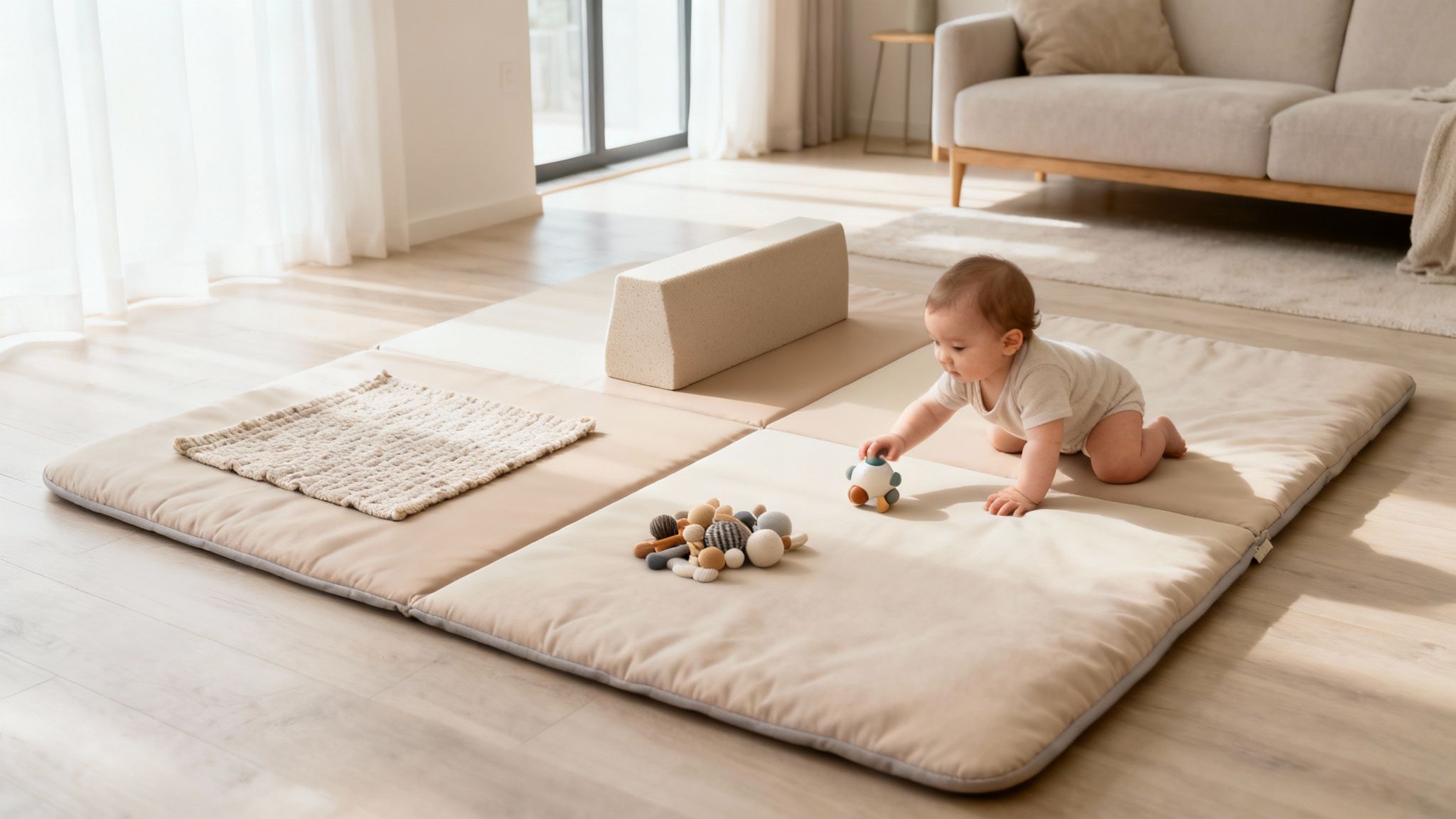
A good play mat is so much more than just a soft spot on the floor. Think of it as your baby’s first little studio. It is a dedicated space for discovery that turns a corner of your home into their very own stimulating, safe world.
At nine months old, your baby hits new milestones almost daily. Using a play mat in creative ways can turn simple playtime into a powerful learning experience. It actively supports all that incredible growth.
The big, flat surface is the perfect arena for your little one to practise budding gross motor skills. It gives them the freedom and cushion they need to safely experiment with crawling, rolling, and even those first wobbly attempts at pulling up to stand.
Creating a Focused Play Zone
A play mat naturally defines a play area, which is brilliant for helping your baby focus. By arranging a few well-chosen toys for a 9 month old on the mat, you create an inviting 'yes' space. They are free to explore everything within reach. This simple setup minimises distractions from the rest of the room and encourages them to settle into longer, more engaged play.
Using a play mat as a consistent play zone helps build a gentle routine. When your baby is placed on the mat, they begin to understand that it is time for fun and exploration. This creates a positive association with independent play.
For parents looking for a stylish and safe option, you can find some great ideas in our guide to choosing the best baby play mat in Australia. A great mat really is the foundation for countless developmental activities.
Building Sensory and Motor Skills
Your play mat is the perfect stage for setting up simple activities. These strengthen core muscles and fine-tune coordination. It is surprisingly easy to set up engaging experiences that encourage movement and sensory exploration.
Here is why this dedicated space works so well:
- Encouraging Movement: Place a favourite toy just out of their reach at the edge of the mat. This simple invitation motivates your baby to pivot, stretch, and crawl. It builds strength and coordination in a fun, low-pressure way.
- Sensory Stations: Create little 'sensory stations' in different corners of the mat. Use safe objects with varied textures. A soft piece of silk, a bumpy silicone teether, or a smooth wooden block are great for them to discover as they move around.
- Mini Obstacle Courses: As your baby gets more confident with crawling, use cushions or rolled-up blankets. Build a small, safe obstacle course. Navigating these gentle challenges is fantastic for improving their spatial awareness and problem-solving skills.
From there, it is all about watching how your baby interacts with these little setups. See what captures their interest. Adapt the activities to keep them challenged and engaged. Before you know it, your living room has become their favourite playground.
How to Clean and Care for Baby Toys
Since almost everything ends up in a baby's mouth, keeping their toys and play surfaces clean is a top priority. A simple cleaning routine not only keeps things hygienic but also helps their favourite toys for a 9 month old last that little bit longer.
Let’s break down how to care for different types of toys. Getting into a regular cleaning rhythm prevents germs and grime from building up. This is especially important for those items your baby loves to chew on.
Simple Cleaning Methods for Every Toy
Different materials need different cleaning methods to keep them safe and in good shape. The good news is you do not need any harsh chemicals. Simple, non-toxic solutions are all you need.
Here are a few practical cleaning tips:
- Plastic and Silicone Toys: These are usually the easiest to clean. Pop them on the top rack of the dishwasher or let them soak in a tub of warm water and mild soap. A quick wipe with a vinegar and water solution also works wonders as a natural disinfectant.
- Wooden Toys: Never soak wooden toys. Water can make the wood swell and cause the paint to chip off. Instead, just wipe them down with a damp cloth and a gentle, non-toxic cleaner. Make sure they are completely air-dried before they go back in the toy box.
- Soft Toys and Play Mats: One of the best things about soft toys and fabric play mats is that many of them can be thrown right in the washing machine. Always check the care label first, but a gentle cycle and an air dry will usually do the trick to keep them fresh and clean.
A fantastic at-home cleaning solution is a simple mix of one part white vinegar to one part water in a spray bottle. It is safe, effective for sanitising surfaces, and you likely already have it in your pantry.
While you clean, it is a great habit to give each toy a quick once-over for any signs of wear and tear. This helps make sure everything stays safe for playtime.
Common Questions About Baby Toys
Navigating the world of baby toys can feel overwhelming. It is natural to have a few questions. Let's walk through some of the most common ones. This will help you feel confident about what your nine-month-old really needs.
How Many Toys Does a Baby Need?
It is tempting to think that more toys equal more fun, but it is often the other way around. A huge pile of toys can actually be overstimulating for a little one.
The best approach? Focus on a small, thoughtful selection of high-quality, open-ended toys. A handful of versatile items that encourage different types of play will do far more for their development than a mountain of plastic.
As they get older, keeping the toy collection under control is key to a calm home. For some great tips on keeping the chaos at bay, this guide on how to organize kids toys is a lifesaver.
What Are the Best Toys to Encourage Crawling?
When you want to get your baby moving, the best toys are the ones that give them a reason to scooch forward. Simple is almost always better.
A few ideas that work wonders:
- Soft, lightweight balls: They are easy for tiny hands to push and just interesting enough to chase across the floor.
- Push-and-go cars: A simple car that rolls a short distance on its own can be the perfect motivation for that first real crawl.
- You! Never forget that you are your baby's absolute favourite toy. Getting on the floor and crawling just a little way ahead of them is often the most powerful encouragement of all.
When Should I Introduce Toys With Lights and Sounds?
Toys with all the electronic bells and whistles can certainly grab a baby's attention, but it is best to use them sparingly. While there is no strict rule, most experts agree that simpler, passive toys are the priority at this age.
This approach encourages your baby to be the active one in the partnership. It sparks their own creativity and problem-solving skills instead of just reacting to a toy.
At nine months, your baby is a little scientist. They figure out big concepts like cause and effect. A simple wooden block teaches this lesson just as well as a flashing, singing toy but without the risk of overstimulation.
Ultimately, the goal is to give them tools that help them explore and learn in their own time, at their own pace.
At Wallaby Collective, we believe in creating calm, beautiful spaces for your little one to learn and play. Our OEKO-TEX certified linen play mats provide the perfect, safe foundation for all their developmental adventures. Discover our collection today.