

The Ultimate Guide to Fun Kids Indoor Games
When outdoor adventures are off the table, kids' indoor games are your secret weapon. They are not just about passing the time; they are thoughtfully designed activities that bring entertainment and developmental benefits right into your home. Think of everything from simple, imaginative play for toddlers to more structured fun like board games or creative challenges for older kids. These games are a fantastic way to keep children active, engaged, and learning, no matter the weather outside.
Why Indoor Play Is More Important Than Ever
In a world of hectic schedules and unpredictable weather, creating a vibrant indoor play world for our kids is essential. Turning our homes into hubs for fun and growth has become a modern parenting necessity. With a bit of intention, kids' indoor games can powerfully support everything from fine motor skills to creative thinking. Let's break it down.
The Modern Shift Indoors
Today’s families are navigating a new reality. Kids are spending more time at home than ever before. Recent Australian research shows a clear trend away from outdoor play and towards indoor, often digital, entertainment. A Royal Children's Hospital National Child Health Poll found that less than half of all Australian children (45%) play outside most days. This is a real concern for parents, with 80% wishing their children would spend more time playing outside. This shift makes curated indoor activities more vital than ever for balanced, healthy development.
Here is why. Turning your living room into a temporary playground is not just about beating boredom. It is about actively nurturing those critical developmental milestones that might otherwise get missed.
Indoor play offers a controlled environment where children can safely explore, experiment, and learn without the unpredictability of public spaces or bad weather. It is a unique opportunity to build foundational cognitive and social skills from the comfort of home.
The Power of Purposeful Play
The goal is to make indoor time just as enriching as any outdoor adventure. With the right activities and a comfy foundation like a soft play mat, it is easier than you think. Purposeful play is about more than just distraction. It is about choosing activities designed to stimulate growth.
Here is why it matters so much:
- Skill Development: Indoor games are perfect for honing fine motor skills through things like drawing or building with blocks. They also improve gross motor skills with games like ‘the floor is lava’.
- Cognitive Growth: Puzzles, board games, and storytelling challenges get those little brains working. They encourage problem-solving, strategic thinking, and language skills.
- Emotional Connection: Playing together strengthens family bonds. It also teaches important social cues like sharing and taking turns and creates warm, lasting memories.
To really tap into the power of your indoor space, try mixing in some engaging 10 Kids Learning Activities at Home that build essential skills. Even simple activities can have a huge impact. Next steps. Let's explore some specific games tailored to your child's age, making sure their time inside is both fun and beneficial.
Creating the Perfect Indoor Play Zone
The first step to unlocking hours of successful indoor games is setting up a dedicated play zone. A well-designed space encourages independence, sparks imagination, and makes cleanup far less of a chore. You do not need a huge room. Transforming any corner into a safe haven for play is simpler than you think.
The goal is to build a versatile space that easily shifts from a quiet reading nook to an epic fort-building station. This means thinking about safety, organisation, and comfort right from the start.
Start with a Safe Foundation
The foundation of any great play zone is the floor. A high-quality, cushioned play mat acts as the perfect base. It defines the play area while providing a soft surface that protects against the inevitable tumbles that come with energetic games.
Its non-slip surface provides essential safety for everything from tummy time and wobbly first steps to more boisterous activities. This single item can instantly make a space feel more intentional and inviting for little ones. If you're looking for the right fit, you can learn more about finding the best baby play mat for safety and comfort in our detailed guide.
This foundation is more important than ever. Current data shows Australian children spend a significant amount of time inside. Only 37% of children aged 0–2 years and 28% of children aged 3–5 years met national screen-time recommendations. This indicates a strong need for engaging, non-digital indoor environments.
Smart Organisation for Small Spaces
A tidy play zone is a more peaceful one. Clever storage is key to keeping toys organised and accessible without creating clutter. Even in a small apartment, you can create an effective system.
Here are a few practical tips:
- Use Vertical Space: Bookshelves, hanging fabric pockets, and wall-mounted bins draw the eye upward and keep floors clear. This frees up precious floor space for active indoor games.
- Choose Kid-Friendly Bins: Opt for soft, lightweight baskets or low, open-front bins. This empowers children to access their own toys and helps them learn to put things away themselves.
- Implement a Toy Rotation: Keep a selection of toys in storage and swap them out every few weeks. This simple trick keeps playtime feeling fresh and exciting, preventing boredom and reducing clutter.
A well-organised play space is not just about looking neat; it is about reducing decision fatigue for your child. When they can easily see and reach their favourite things, they are more likely to engage in deep, imaginative play.
Let There Be Light and Comfort
Finally, consider the atmosphere. Good natural light can boost mood and energy levels, so position your play zone near a window if possible. Add a few soft cushions or a child-sized chair to create a cosy corner perfect for reading or quiet time.
The perfect play zone is one that feels safe, inspiring, and ready for adventure.
Indoor Games for Babies and Toddlers (Ages 0-3)
The first three years are pure magic. It is all about sensory discovery and building those essential motor skills. For our littlest ones, the world is a brand-new playground. Simple indoor games are how they start to figure it all out.
Every little interaction, from feeling a soft blanket to hearing your voice in a game of peek-a-boo, is busy building crucial neural connections. This stage is not about rules. It is about gentle, repetitive play that strengthens your bond. A soft, cushioned play mat is the perfect safe space for these early explorations. It supports wobbly little bodies during tummy time and cushions those first attempts at sitting up and crawling.
Sensory Exploration Games
For the youngest members of the family, play is all about engaging the senses. These activities are designed to be calm, gentle, and absolutely fascinating for their developing minds.
- Fabric Fun: Grab a few things with different textures from around the house, like a silk scarf, a soft woolly jumper, or a crinkly piece of paper. Gently brush them against your baby’s hands and feet, describing how each one feels. It is a simple game that builds sensory awareness and language skills.
- Sound Discovery: Create your own shakers using small, sealed containers filled with rice, pasta, or beans. Shake them gently to make different sounds for your baby to track with their eyes and ears. This is a brilliant way to encourage auditory development.
You do not need a mountain of toys, just everyday household items and your full attention. A simple play mat can become the central hub for safety, organisation, and fun in your play zone, as this little diagram shows.
This shows that a dedicated mat is not just a soft surface; it is the foundation for a secure and well-rounded play environment.
Building Motor Skills and Cognitive Concepts
As your little one grows into a toddler, their games can become a bit more active. They can focus on cause-and-effect and developing coordination. Peek-a-boo is a classic for a reason. It is a powerful game that teaches object permanence. This is the idea that things still exist even when you cannot see them. Try mixing it up by hiding behind your hands, a soft blanket, or even popping up from behind the sofa to keep it exciting.
Here is a quick look at some simple and effective indoor games perfect for this age group.
Activities for Babies and Toddlers
| Game Idea | What You Need | Developmental Benefit |
|---|---|---|
| Beginner Block Stacking | A few soft or large wooden blocks | Develops hand-eye coordination and fine motor skills. |
| Ball Rolling | A soft, lightweight ball | Encourages tracking objects with eyes and teaches turn-taking. |
| Bubble Catching | Bubble mixture and a wand | Promotes visual tracking, reaching, and gross motor skills. |
| "So Big!" Stretch | Just you and your baby! | Teaches body awareness and following simple verbal cues. |
These activities are wonderfully straightforward. They prove you do not need much to create a meaningful moment of play and learning.
The most important part of play at this age is connection. Your enthusiastic voice, gentle touch, and smiling face are the most valuable "toys" your child has. These simple games create joyful moments that strengthen your bond and build their confidence to explore the world.
Encouraging Movement and Coordination
Once your toddler is on the move, you can introduce games that encourage crawling, walking, and balance.
- Pillow Obstacle Course: Arrange a few pillows or cushions on your play mat for your toddler to crawl over. This builds strength, balance, and problem-solving skills as they navigate their soft "mountains."
- Simple Fetch: Sit on the floor and gently roll a soft ball a short distance away. Encourage your toddler to crawl or toddle over to get it and bring it back. Celebrate their success with claps and praise. This builds gross motor skills and introduces the concept of back-and-forth play.
From here, it is all about watching your child's cues. If they seem engaged, keep playing. If they look away or get fussy, it is time for a cuddle or a quiet activity. At this age, the best indoor games are short, sweet, and full of love.
Creative Indoor Games for Preschoolers (Ages 3-5)
Preschoolers are a complete whirlwind of energy and imagination. This age is all about big stories, exploring wild ideas, and moving their bodies in every way possible. The best indoor games for them are open-ended. They let their own creativity take the lead.
The trick is channelling all that boundless spirit into something constructive. The right activities can boost their problem-solving skills, physical coordination, and emotional expression, all from the safety of your living room. A soft play mat can be the perfect 'home base' or a defined stage for their imaginative adventures. This helps to keep the fun and the mess contained.
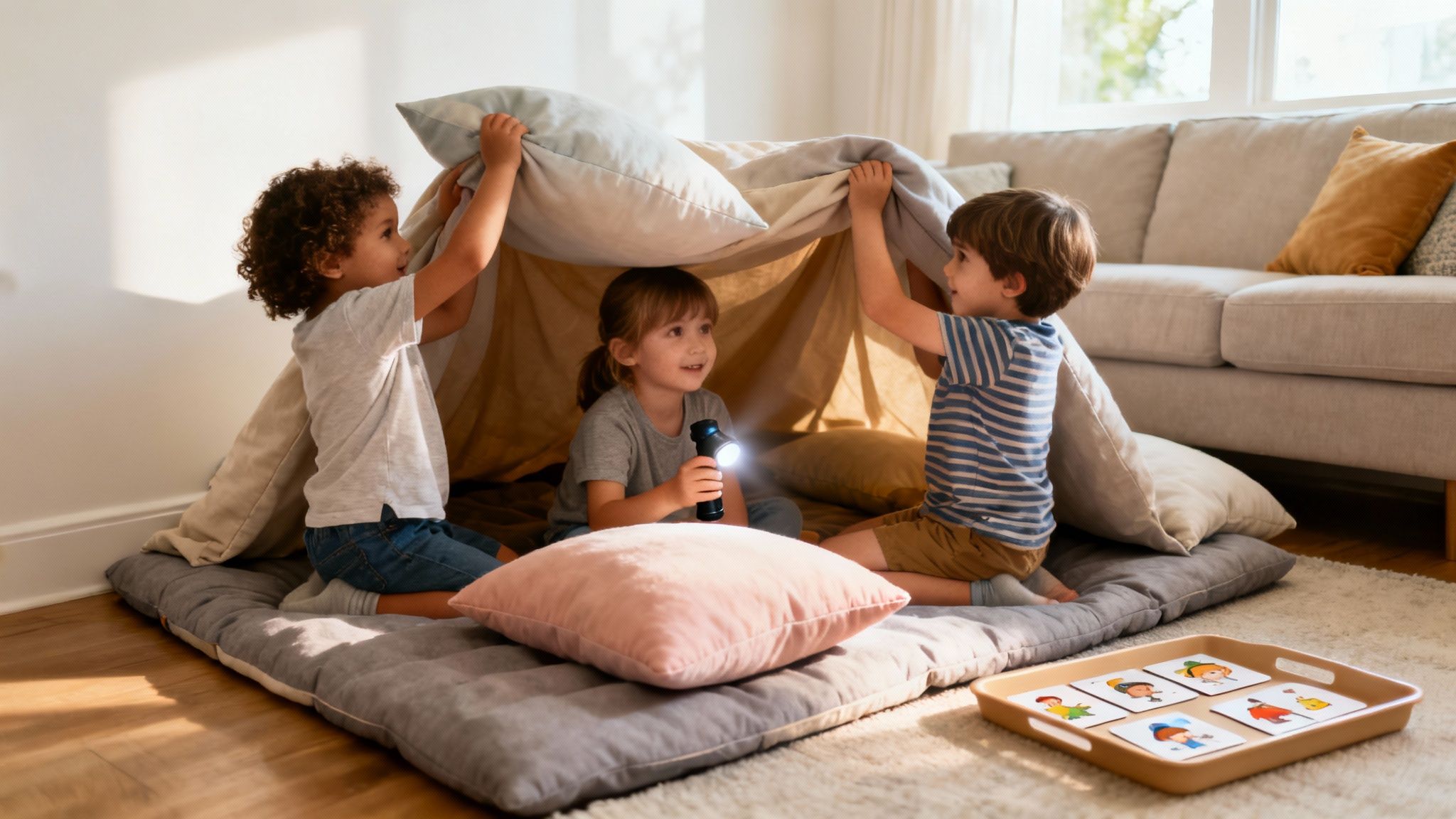
Epic Pillow Fort Engineering
Building a pillow fort is a childhood classic for a reason. It is the perfect blend of physical activity, creative planning, and the sheer magic of creating a secret hideaway. This is so much more than just a game; it is a first lesson in basic engineering and teamwork.
Let's break it down.
- Gather Your Materials: Round up every spare pillow, cushion, and blanket in the house. Chairs, couches, and even a clothes horse make fantastic structural supports.
- Plan the Build: Ask your little one where the door should go or how many rooms their fort needs. This empowers them to take charge and make all the big creative decisions.
- Construct and Decorate: Drape blankets over your furniture framework, weighing them down with a few books. Inside, you can add fairy lights, their favourite stuffed animals, and a torch for some spooky storytelling.
- Settle In: Once it's built, the fort becomes a magical space for reading books, sharing snacks, or telling whispered secrets.
This simple activity quietly builds crucial skills in planning and problem-solving. It is a win-win.
The Indoor Picture Scavenger Hunt
A scavenger hunt is a brilliant way to get preschoolers moving and thinking. Using pictures instead of words for this age group makes the game accessible and fun. It builds their confidence and observation skills along the way.
It works so well because it turns your home into one giant, exciting puzzle to solve. They learn to match images to real-world objects, which is a key skill for early literacy. It also encourages them to look at their everyday surroundings in a new, more attentive way.
Empowering a preschooler to solve clues on their own builds incredible self-esteem. That triumphant moment they find the "treasure" is a powerful learning experience that reinforces persistence and focus.
Setting one up is quick and easy.
- Prep the Clues: Draw or print simple pictures of things around your house, like a chair, a lamp, a teddy bear, or a book.
- Hide the Pictures: Place the first picture somewhere obvious. Then, hide the next picture clue near the object shown in the first one. For example, you could tape the picture of a teddy bear to the leg of the chair.
- Set the Goal: The final clue should lead to a small prize. This could be a sticker, a favourite snack, or a special book to read together.
This is one of those fantastic indoor games that you can adapt for any space, big or small.
Mess-Free Craft Station
Craft time is amazing for developing fine motor skills, but the thought of glitter and glue taking over the house can be a lot. A "mess-free" station uses clever materials to contain the creativity while still letting their imagination run wild.
Here are a few of our go-to ideas:
- Sticker Scenes: Just provide sheets of stickers and some blank paper. Kids can create entire worlds, characters, and stories without touching a single paint pot or pen.
- Water Painting: You can find special "magic" water painting books where kids paint with a simple water-filled brush. Colours appear, then disappear as the page dries, ready to be used again and again.
- Playdough Mats: Use a laminated sheet of paper or a dedicated playdough mat. This contains the squish and gives them a clear boundary for their creations.
Setting up on a play mat makes clean-up even easier, as it provides a wipeable surface that protects your floors. These activities prove that fostering creativity does not always have to end in a massive clean-up operation. Now, just try one of these ideas and watch your preschooler’s imagination take flight.
Engaging Indoor Games For School-Aged Kids (Ages 6-10)
Once kids hit primary school, their ability to think strategically, work in a team, and tackle complex problems explodes. This is the perfect time to introduce indoor games that challenge their growing minds while still getting them moving. The focus starts to shift from simple make-believe to activities with a bit more structure, rules, and a shared goal.
This age group thrives on a good mix of high-energy fun and quiet, focused activities. A day stuck inside is a brilliant chance to burn off some steam with a physical challenge before everyone settles down for a game that needs more concentration. It is all about having a few different options up your sleeve that appeal to their ever-expanding skills and interests.
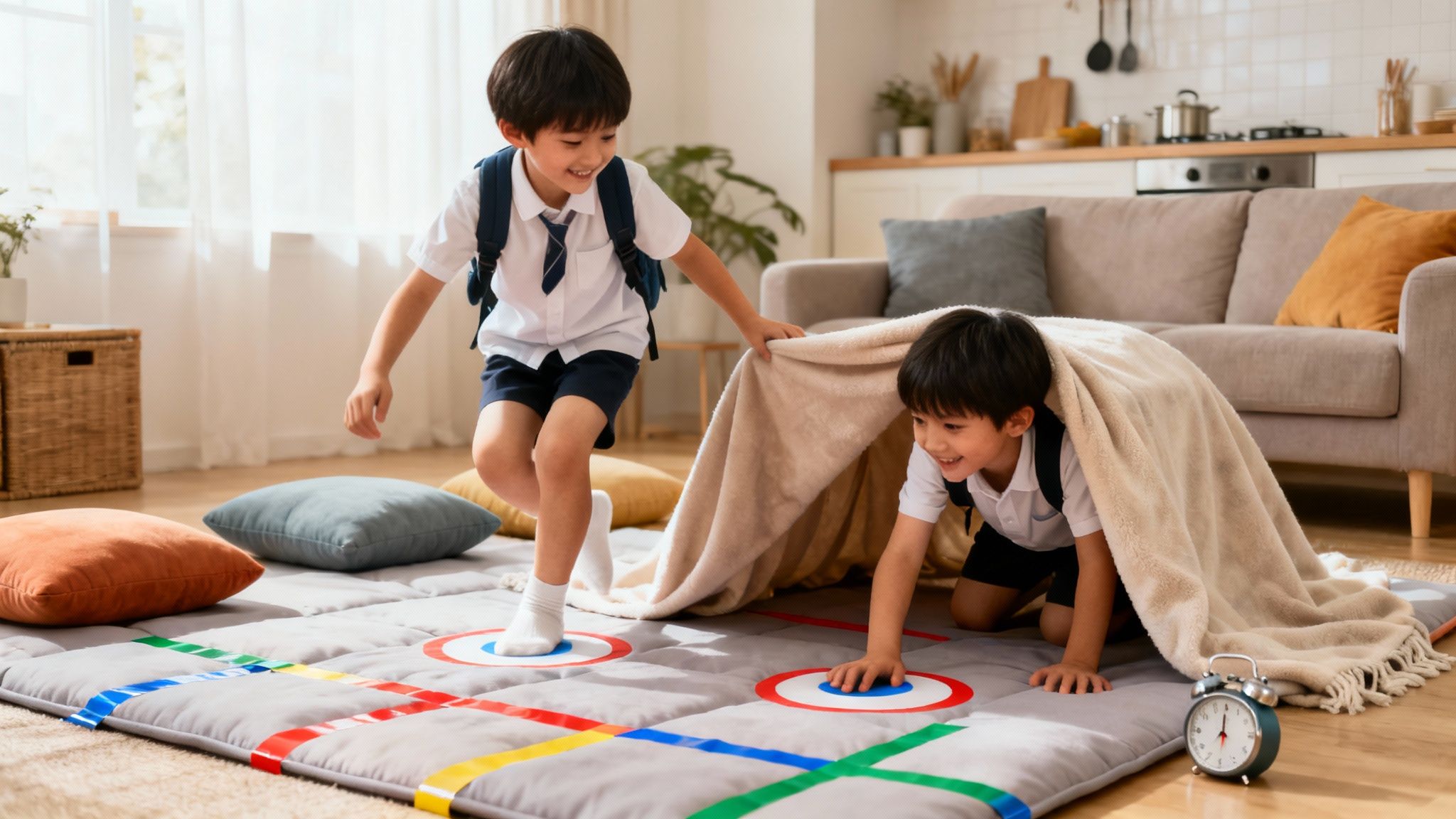
DIY Minute-To-Win-It Challenges
Minute-to-win-it games are a guaranteed winner with this age group. They are fast, hilarious, and use things you already have around the house. This makes them super easy to set up at a moment's notice. The aim is simple: complete a silly challenge in 60 seconds or less.
Here is why they work so well. These quick-fire games teach kids about resilience and being a good sport in a really low-stakes way. So what if they do not manage to stack all the cups? The next challenge is just a minute away. This encourages them to laugh it off and try again.
Here are a few ideas to get you started:
- Cookie Face: Pop a biscuit on each player’s forehead. Using only their face muscles, they have to wiggle it down into their mouth. No hands allowed!
- Cup Stack: Give each player 10 plastic cups. They have one minute to stack them into a pyramid and then take it all down back into a single neat stack.
- Junk in the Trunk: Tape an empty tissue box onto a belt and strap it around a player’s waist so the box sits on their lower back. Fill it up with eight ping pong balls. The player then has to jump, wiggle, and dance to get all the balls out in under 60 seconds.
The Ultimate Indoor Obstacle Course
An indoor obstacle course is the classic rainy-day solution for kids with energy to burn. It is fantastic for building gross motor skills, problem-solving, and following a sequence of instructions. A soft, cushioned play mat makes a great start and finish line.
Think like a junior ninja warrior trainer for a second. With a little creativity, your living room is full of potential obstacles. Just make sure safety is your top priority. Set up the course in an open area, well away from sharp corners or breakables.
An obstacle course does more than just burn energy. It empowers kids to see their everyday environment in a new, imaginative way, transforming a simple cushion into a stepping stone or a table into a secret tunnel.
Here is a sample course to spark some ideas:
- Crawl under the dining room table (the dark cave).
- Walk the tightrope along a line of masking tape on the floor.
- Jump into and out of a hula hoop five times (the magic portal).
- Balance a beanbag on your head while walking from one sofa cushion to another (crossing the crocodile river).
- Finish by putting a puzzle piece in its spot. You can read more about why this is great for their brains in our guide on the benefits of puzzles for kids.
Quieter Games For Focused Fun
It is just as important to balance all that high-energy play with some calm-down activities. Quieter games are brilliant for developing patience, fine motor skills, and strategic thinking. If you're looking for something the whole family can get into, it is worth checking out some of the best family board games that are fun for a mix of ages.
Collaborative storytelling is another wonderful option that needs zero setup. Just start a story with a simple sentence like, "Once upon a time, there was a purple kangaroo who loved to bake..." Then, each person adds one sentence to keep the tale going. You will be amazed at the wonderfully silly places the story ends up.
Next steps. Pick a game, gather your bits and pieces, and get the whole family involved for an afternoon of memorable indoor fun.
Caring for Your Play Mat and Keeping Your Space Tidy
A clean, inviting play area is everything. To get the most out of your kids' indoor games, keeping your play mat and space fresh is key. A little care goes a long way. It ensures your mat lasts through years of tumbles, spills, and endless fun.
Let's get into how to keep your play mat in top condition.
Simple Washing and Drying Guide
Let's be real, spills and messes are part of the deal. The good news is, they do not have to be a big one. For little accidents, a quick spot clean with a damp cloth is usually all you need. But when it is time for a proper clean, the process is wonderfully straightforward.
Here is how to wash your mat:
- Machine Wash: Pop the mat in the washing machine by itself. Use a gentle, cold cycle to protect the beautiful fabric and internal cushioning.
- Air Dry: Once the cycle is done, hang the mat to air dry. To keep it from stretching, just drape it evenly over a clothesline or drying rack.
- Avoid the Dryer: This one is important. Never put your play mat in a tumble dryer. The intense heat can damage the foam and fabric, which compromises its safety and comfort.
This simple routine keeps your mat hygienic and ready for the next round of play.
Why Quality Materials Matter
Choosing a play mat made from high-quality, certified materials gives you priceless peace of mind. For instance, materials certified under OEKO-TEX Standard 100 have been rigorously tested for harmful substances. This makes them a much safer choice for a baby's sensitive skin. This certification guarantees that every single component is harmless to human health.
When your little one spends hours playing, crawling, and even napping on their mat, knowing the material is non-toxic and gentle is invaluable. It is one less thing for busy parents to worry about.
Smart Storage and Toy Rotation
A tidy space helps kids focus on their play. When the games are over for the day, having a simple pack-away solution makes a huge difference. A matching storage bag is perfect for this. Just roll up the mat and tuck it away to reclaim your living room. It also makes taking the mat on visits to grandparents or friends incredibly easy.
To keep things fresh and exciting, try rotating toys every few weeks. Store a few toys out of sight, then swap them with the ones currently in the play area. This simple trick makes old toys feel new again. It sparks fresh interest and creativity without cluttering up your space. A tidy, well-cared-for play zone is an invitation for endless fun.
Got Questions About Indoor Play? We've Got Answers
Here are a few common questions we hear from parents about making indoor play work, even when space is tight or screens are calling.
How Can I Encourage Screen-Free Play Indoors?
It often starts with creating a really inviting, screen-free zone. Think easily accessible toys, books, and craft supplies that are just waiting to be picked up. Having a consistent daily schedule that carves out dedicated ‘unplugged’ playtime also makes a huge difference.
But the real secret? Get involved yourself. When your little one sees you genuinely excited to build a fort or play a board game, you are showing them firsthand how much fun and connection happens away from a screen.
What Are the Best Indoor Games for a Small Apartment?
Living in a smaller space just means getting a bit more creative! The trick is to focus on games that do not need a lot of running room. Tabletop activities like board games, puzzles, and drawing are always fantastic choices.
For those moments when they need to burn off some energy, try games like 'The Floor is Lava' using cushions, a classic game of Simon Says, or a simple obstacle course that involves crawling under chairs. Using a play mat is great here because it helps define the play space without taking up permanent room.
How Do I Handle the Mess from Indoor Games?
A simple, consistent clean-up routine is your best friend. Start with easy-to-access storage bins and try making clean-up part of the game. Set a timer and see if you can race to beat it.
It also helps to establish one simple rule: one game must be packed away before another one comes out. Using a designated play mat is another game-changer, as it helps contain the chaos and makes that final tidy-up so much quicker.
Sources
- Children and screen time, Australian Institute of Family Studies, October 2023.
- National Child Health Poll 39: Screen time: What’s happening in Australian homes?, The Royal Children's Hospital Melbourne, March 2023.
Ready to create a beautiful, safe, and comfortable foundation for countless indoor adventures? Explore the timeless, machine-washable linen play mats from Wallaby Collective and find the perfect piece for your home at https://wallabycollective.com.