

How to Break the Cycle of an Overtired Baby
To break the cycle of an overtired baby, you should first recognise their unique sleep cues. From there, create a calm, soothing environment that helps their little nervous system relax.
Your short-term goal is simply to get them any sleep possible. This often means an earlier bedtime to start reducing their sleep debt, even before you try to build a consistent routine. This approach helps to stop the flood of stress hormones. It also paves the way for more restorative rest.
Recognising the Overtired Baby Cycle

It is a scenario many Australian parents know well. Your baby has been awake for what feels like an age. But instead of drifting off peacefully, they just get more frantic and impossible to settle. This confusing state is the classic sign of an overtired baby. Sheer exhaustion starts to look a lot more like hyperactivity than sleepiness.
Understanding this cycle is the key to breaking it. When a baby misses their natural sleep window, their body does not just get sleepier. It actually kicks into a stress response. It releases hormones like cortisol and adrenaline to cope with being awake for too long.
Here is why that matters. This creates a frustrating paradox. Your baby is desperately tired. But their little body is flooded with "fight-or-flight" hormones. This makes it almost impossible for them to calm down and fall asleep. An overtired baby often fights sleep so fiercely, becoming rigid, arching their back, or crying inconsolably.
The Science Behind the Struggle
Let's break it down. Think of your baby's need for sleep like a rising tide. As they stay awake, a hormone called adenosine builds up, creating 'sleep pressure'. When this pressure hits its peak, it signals their body to release melatonin, the sleepy hormone. This is your baby's perfect moment to drift off.
But if that window is missed, the body tries to compensate for the fatigue by releasing cortisol. Now, your baby is battling a confusing mix of sleepy signals and alert signals. This internal tug-of-war causes that classic overtired meltdown.
This hormonal response explains why an overtired baby might:
- Fight sleep: Even when you know they are completely exhausted.
- Take short "disaster naps": Waking up after only 30-40 minutes, still tired and grumpy.
- Wake frequently overnight: The lingering stress hormones disrupt their natural sleep cycles.
- Seem "wired" or hyperactive: A second wind powered by a rush of adrenaline.
When you are dealing with an overtired baby, your primary focus should shift from "teaching sleep" to simply facilitating calm. The goal is to lower those stress hormones so sleep becomes possible again.
Decoding Your Baby's Unique Signs
While yawns and eye-rubbing are the more obvious tired signs, overtiredness often shows up with more subtle or intense cues. Learning your baby's specific signals is crucial for stepping in before the cycle really gets going. To dive deeper, you can learn more about identifying specific baby tired cues in our detailed guide.
For many parents, the real challenge is telling the difference between normal fussiness and true overtiredness.
Here is a relatable scenario. Imagine your five-month-old has had a busy morning out. They missed their usual nap time by about 45 minutes. When you get home, instead of settling easily, they are frantic. They cry when you put them down but also push away when you try to cuddle. This is not defiance. It is a nervous system in total overdrive.
Common signs of an overtired baby include:
- Intense, high-pitched crying that is hard to soothe.
- Becoming frantic or hyperactive, often with flailing arms and legs.
- Refusing to feed or fussing at the breast or bottle.
- Arching their back and seeming physically uncomfortable.
- Avoiding eye contact and turning their head away from you.
Recognising these behaviours not as bad habits but as genuine distress signals is a game-changer. It shifts your perspective from frustration to empathy. This allows you to respond with the calming support your baby needs. The very first step in learning how to break the cycle of an overtired baby is simply seeing the problem for what it is. It is a biological response, not a behavioural issue.
Understanding Your Baby’s Sleep Needs by Age
To solve the overtired puzzle, you first need to understand the science of your baby's sleep. Just like they need the right amount of food, babies have very specific sleep requirements that change rapidly during their first year. Getting a handle on these needs is your secret weapon for breaking the cycle of an overtired baby before it even begins.
It is not just about the total hours they clock. It is about the timing. This is where the concept of a wake window becomes incredibly important. A wake window is simply the amount of time your little one can comfortably stay awake between sleeps. Pushing them past this natural limit is what triggers the release of stress hormones like cortisol and leads straight to that overtired, wired state.
Next steps. Respecting these windows helps you work with your baby's biological rhythms, not against them.
Newborns to Three Months
During the first few months, a baby's world is a gentle blur of eating, sleeping, and brief moments of quiet alertness. Full-term newborns do not have established biological rhythms for predictable sleep just yet. Their patterns are mainly driven by hunger, which is why they wake so frequently.
A newborn's wake window is astonishingly short, often just 45 to 60 minutes. This means that by the time you have fed, burped, and changed them, it is pretty much time for them to sleep again. It is a relentless cycle, but understanding this helps you set realistic expectations.
Let's break it down:
- Total Sleep: They need a massive 14-17 hours of sleep over a 24-hour period.
- Sleep Pattern: This sleep is broken into many small chunks, with frequent wakings every 1-3 hours for a feed.
- Wake Windows: Keep a close eye on the clock, as their awake time is incredibly brief.
This constant need for sleep can be exhausting for parents, but it is a critical phase for their rapid brain development.
Four to Six Months
Around the four-month mark, you might notice some big shifts. Your baby's sleep patterns start to mature, and their internal body clock begins to solidify. Naps become a bit more predictable, and you may see longer stretches of sleep at night.
Their wake windows are extending, now lasting around 1.5 to 2.5 hours. This is a great time to start observing a more distinct eat-play-sleep rhythm. For example, after they wake from a nap, you will feed them, have some tummy time or a kick on their play mat, and then start their wind-down routine as they approach the end of that two-hour window.
For a more structured approach as you head into this stage, check out our guide on creating a sleep schedule for a 3-month-old.
By 4-11 months, their recommended sleep total drops slightly to 12-15 hours daily. This is typically broken down into two or three naps during the day, which helps them shift towards longer blocks of restorative sleep at night.
Six to Twelve Months
As your baby becomes more mobile and engaged with the world, their sleep needs continue to evolve. Wake windows stretch out to 2.5 to 3.5 hours, and most babies will consolidate their daytime sleep into two solid naps.
A common pitfall during this stage is assuming that more activity will lead to better sleep. While daytime play is vital, an overstimulated baby who has been kept awake too long will still struggle to settle.
This is often when the dreaded short nap makes an appearance. A baby’s sleep cycle is much shorter than an adult's, lasting only about 40-50 minutes. If they wake after just one cycle, it is often because they have not yet learned how to link their cycles together. This is a skill that develops over time, and a consistent routine helps them practise it.
To explore the science behind it all, you can find deeper insights into understanding sleep and enhancing sleep quality.
A Guide to Baby Sleep and Wake Windows by Age
To make things a little easier, here is a quick reference table. Think of it as a starting point. Every baby is different, so use this as a guide and watch your own baby’s unique sleep cues.
| Age | Total Sleep Needed (24 hrs) | Typical Wake Window | Number of Naps |
|---|---|---|---|
| 0-3 months | 14-17 hours | 45-90 minutes | 4-6+ |
| 4-6 months | 12-16 hours | 1.5-2.5 hours | 3-4 |
| 7-9 months | 12-15 hours | 2-3.5 hours | 2-3 |
| 10-12 months | 12-15 hours | 3-4 hours | 2 |
Remember, these are just averages. The key is to find the sweet spot that works for your little one, preventing them from tipping into that overtired zone.
Understanding these age-specific needs builds your confidence. It helps you see that you are not just guessing. You are responding to your baby's biological cues. This knowledge empowers you to create flexible routines that prevent overtiredness and lay a solid foundation for better rest for the whole family.
Your Short-Term Rescue Plan for Immediate Relief
When you are in the thick of it with a baby who is both exhausted and fighting sleep, you need a plan that works right now. Let’s forget long-term strategies for a moment. Your only goal for the next 24 to 48 hours is to calm your baby’s overstimulated nervous system and help them get the sleep they so desperately need.
Think of this as your first-response toolkit. This is not about creating perfect sleep habits or teaching independent sleep. It is about rescue and recovery. Helping your baby catch up on rest now will reduce their sleep debt. It also creates a much calmer foundation to build on later. It is the single most important step in breaking the cycle of an overtired baby for good.
Create a Temporary Sleep Cave
An overtired baby’s senses are completely on high alert. The slightest stimulation can be enough to jolt them awake or stop them from settling in the first place. This includes a sliver of light under the door, a distant phone ringing, or a change in room temperature. Your first job is to create an intensely calm, dark, and boring environment.
Let's break it down:
- Go Dark, Really Dark: Use blackout blinds, or even tape cardboard over the windows for a temporary fix. You want the room so dark you can’t see your hand in front of your face. This darkness is a powerful cue for the brain to start producing melatonin, the sleepy hormone.
- Block Out Sound: An overstimulated baby is incredibly sensitive to noise. A continuous white noise machine can be a lifesaver. It creates a consistent, womb-like sound that masks sudden household noises. Aim for a volume similar to a running shower.
- Keep it Cool: A room that is slightly cool is much better for sleep. Red Nose Australia recommends dressing your baby as you would yourself, comfortably warm but not hot. A safe sleep environment and a comfortable temperature help signal to your baby’s body that it is time to rest.
This guide gives a snapshot of your baby’s sleep needs, showing just how important it is to nail nap and bedtime timings to avoid overtiredness.
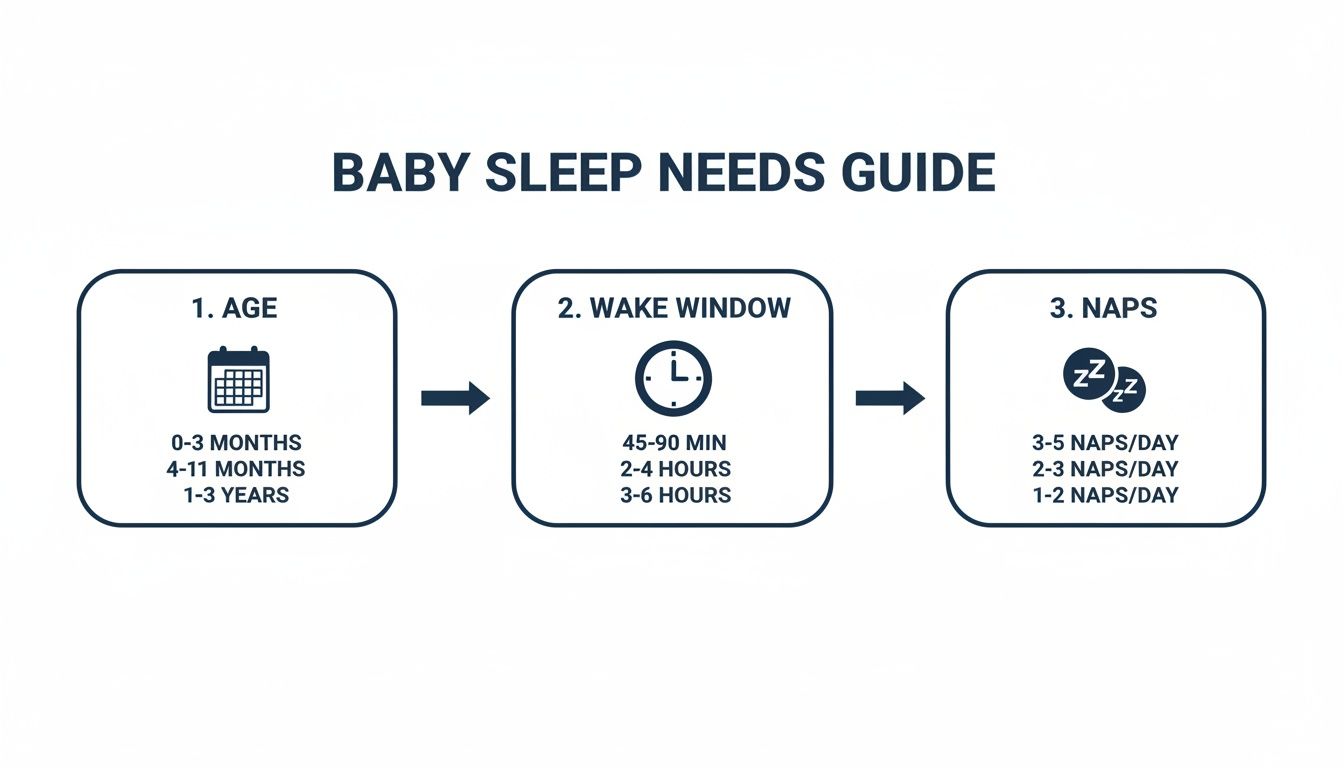
As you can see, those wake windows for young babies are incredibly short. This makes it all too easy to miss their ideal sleep time and kickstart the overtired cycle.
Use Gentle Soothing Techniques
Once the environment is sorted, your focus shifts to actively calming your baby. The key here is rhythm and consistency. Overtired babies have lost their own internal rhythm, so your job is to lend them yours.
These techniques work because they mimic the sensations of the womb. This was a place of ultimate comfort and security.
- Swaddling: For younger babies who are not rolling yet, a snug swaddle can be pure magic. It contains their startle reflex and provides a feeling of security. It helps to calm flailing limbs and an overactive nervous system.
- Rhythmic Motion: Gentle, repetitive movement is incredibly soothing. This could be rocking in a chair, bouncing slowly on a yoga ball, or even just a walk around the block in the pram. The consistent motion helps regulate their little system.
- Shushing: Making a loud, continuous "shushing" sound right near your baby’s ear replicates the whooshing noises they heard in the womb. It is a powerful tool that can cut through their cries and capture their attention.
During this rescue phase, do whatever it takes to get your baby to sleep. If that means a contact nap, a pram nap, or feeding to sleep, that is okay. The priority is rest, not rules.
For new parents, introducing a consistent routine on a soft, flat play mat can aid tummy time and play. This promotes daytime alertness to consolidate night sleep. The Raising Children Network suggests two to three daytime naps of up to two hours help prevent overtiredness. They also recommend avoiding pre-bed screens, which can disrupt sleep.
Offer an Earlier Bedtime
One of the quickest ways to help your baby recover from a sleep deficit is an earlier bedtime. It might feel completely counterintuitive to be putting your baby to bed at 6:00 pm, but this strategy is incredibly effective.
Here is why it works. The sleep that happens in the first part of the night is the most restorative. By shifting bedtime earlier, you are giving your baby more opportunity to get that deep, high-quality sleep before midnight. This helps them chip away at their sleep debt and reset their internal clock.
And do not worry that an early bedtime will cause an early wake-up. More often than not, a well-rested baby will actually sleep longer and more soundly. This one adjustment can be a total game-changer for breaking the overtired cycle in just a few nights.
Building a Sustainable Sleep Routine

Once you are out of the woods with an overtired baby, the real work begins. You need to create a sleep routine that actually lasts. This is not about watching the clock and enforcing a rigid schedule. It is about building a predictable, gentle rhythm to your baby’s day to stop overtiredness from creeping back in.
Next steps. Babies find comfort in knowing what is coming next. A predictable flow to their day makes their world feel safe. This is a huge part of helping them relax enough to sleep well. This is how you move from constantly putting out fires to proactively creating a calm, rested household.
The Power of a Wind-Down Ritual
If there is one tool you need in your sleep toolkit, it is a simple wind-down ritual. This is just a short sequence of calming activities, done in the same order before every single sleep. This signals to your baby's brain that it is time to switch off. It is their cue to go from playtime to rest time.
It does not need to be complicated. A 5-10 minute routine for naps and a 20-30 minute one before bed is usually plenty. Consistency is what really matters.
Here is why it is so effective:
- It creates positive sleep associations. Your baby starts to connect these calm activities with the feeling of drifting off to sleep.
- It lowers stress hormones. The quiet, predictable steps help reduce any lingering cortisol from their awake time.
- It is a beautiful way to connect. Those few minutes of quiet cuddles and calm before sleep are pure gold.
Think about your own evening routine. You might brush your teeth, get into your pyjamas, and read a book. These small actions tell your brain it is time to unwind. A baby’s wind-down ritual works in exactly the same way.
Crafting Your Own Calming Routine
The best routine is one that feels right for your family and is easy to stick with. You can mix and match different things to see what helps your little one relax the most.
A simple bedtime ritual could look like this:
- A Warm Bath: This is so relaxing, and the slight drop in body temperature afterwards is a natural sleep trigger.
- A Gentle Massage: Using a baby-safe lotion, gently massage their little legs, arms, and back. Calming touch is incredibly soothing.
- Getting Dressed for Bed: Change them into their PJs and sleeping bag in the dimly lit nursery.
- Reading a Story: A quiet story or two is the perfect end to the day. Reading from the best bedtime books for toddlers can become a cherished part of the routine that signals sleep is near.
For naps, a shorter version works just as well. Maybe just a nappy change, a quick cuddle while you sing a song, and then into their sleeping bag. The repetition is the magic ingredient.
Integrating Feeding and Daytime Activities
A great sleep routine is about more than just what happens before bed. It is about the rhythm of the entire day. The way you structure feeds and playtime has a direct impact on how well your baby sleeps.
The "eat, play, sleep" cycle is a game-changer for so many families. When your baby wakes, you offer a feed first. This gives them a full tummy and lots of energy for their awake time. It also helps break any association between feeding and falling asleep.
After the feed comes "play." This is their time to engage their senses and work their bodies. For a tiny baby, this could be some tummy time on a soft mat. As they get older, it might be playing with toys or exploring the room. This active awake time helps build up just the right amount of sleep pressure. This way, they are ready for a good, restorative nap when their wake window comes to an end.
A well-fed baby with a full "play tank" is far more likely to settle easily and sleep well than one who is hungry or bored.
Adaptable Sample Schedules
Please remember, these are just guides, not strict rules. Your baby is the expert on their own needs, so always watch their cues and adjust as you go.
| Age | Morning | Midday | Afternoon | Evening |
|---|---|---|---|---|
| 4-6 Months | 7:00 Wake & Feed 8:30 Nap 1 (1.5-2h) |
10:30 Wake & Feed 12:30 Nap 2 (1.5-2h) |
2:30 Wake & Feed 4:30 Nap 3 (30-45m) |
6:30 Bedtime Ritual 7:00 Bedtime |
| 7-9 Months | 7:00 Wake & Feed 9:30 Nap 1 (1-1.5h) |
11:00 Wake & Feed 1:30 Nap 2 (1-2h) |
3:30 Wake & Feed Playtime |
6:30 Bedtime Ritual 7:00 Bedtime |
| 10-12 Months | 7:00 Wake & Feed 10:00 Nap 1 (1-1.5h) |
11:30 Wake & Feed 2:30 Nap 2 (1-1.5h) |
4:00 Wake & Feed Playtime |
6:30 Bedtime Ritual 7:00 Bedtime |
This kind of predictability helps regulate your baby’s internal body clock (their circadian rhythm). It teaches them when to expect sleep and when to be active. This creates a solid foundation that keeps the overtired cycle from starting all over again. With a bit of patience and consistency, you can create a routine that supports healthy sleep for your baby and brings a whole lot more calm to your entire family.
Navigating Common Setbacks and Sleep Regressions
Just when you feel like you have finally found your rhythm, a sleep setback can appear out of nowhere. One week your baby is napping like a champ. The next, they are fighting every single sleep and waking all through the night. I promise you, this is an incredibly common and normal part of their development.
These bumps in the road are not a sign that you have done something wrong. They are almost always linked to major developmental leaps, teething, or a little illness. The real key to long-term success is knowing how to manage these disruptions without completely undoing all your hard work.
Let's break it down. The goal is not to prevent setbacks altogether. That is impossible. It is about navigating them with confidence. With a few simple strategies, you can get back on track quickly and protect your baby's healthy sleep foundations.
Understanding Sleep Regressions
A sleep regression is a phase where a baby who was sleeping well suddenly starts waking frequently at night or fighting their naps. These periods often pop up right when they are hitting a big cognitive or physical milestone. This includes learning to roll over, sit up, or crawl. Their little brain is working so hard on these amazing new skills that it can temporarily throw their sleep patterns into chaos.
The most famous one is the four-month sleep regression. This is less of a "regression" and more of a permanent change in their sleep cycles.
When you are in the thick of a regression, it is so easy to fall back into old habits out of sheer desperation. Here is how you can stay the course:
- Be Consistent: As much as you can, stick to your calming wind-down routine. That predictability is incredibly reassuring for a baby whose world is changing so quickly.
- Offer Extra Comfort: This is the time for extra cuddles and reassurance during the day and before sleep. It is a time for support, not for being rigid.
- Avoid Creating New Habits: Try not to introduce new sleep props that you do not want to be stuck with long-term, like rocking or feeding to sleep every single time. If you need to help them get the sleep they need, that is absolutely fine. But just be mindful of creating a new dependency.
Handling Teething and Illness
Nothing throws sleep off track quite like the discomfort from teething or a cold. When your little one is in pain or feeling unwell, all the usual sleep rules go right out the window. Your priority instantly shifts from routines to pure comfort and care.
It is completely fine to offer more cuddles, hold your baby for their naps, or give them extra feeds for comfort if they are sick. Comfort is always the priority.
When your baby is sick or teething, just focus on getting them whatever sleep they can, however you can get it. Once they are feeling better, you can gently and confidently guide them back to their established routine.
Once they are feeling well again, you can jump straight back to your usual routine. It might take a day or two for them to readjust, but babies are so resilient. A few days of disruption will not erase all the positive sleep skills they have learned.
When to Seek Professional Advice
Sometimes, a sleep issue that will not go away might be more than a temporary setback. It is so important to trust your gut instincts as a parent. If something just feels off, or if the sleep problems are happening alongside other worrying symptoms, it is always best to get professional advice.
Consider checking in with a healthcare professional if you notice:
- Snoring or Noisy Breathing: Consistent snoring, gasping for air, or pauses in breathing while sleeping could point to a physical issue that needs to be checked out.
- Poor Weight Gain: If sleep issues are paired with feeding troubles or poor weight gain, it is really important to chat with your GP or child health nurse.
- Extreme Fussiness or Pain: If your baby seems to be in constant discomfort that is not soothed by the usual methods, there could be an underlying issue like reflux.
- Your Own Wellbeing Suffers: Chronic sleep deprivation can take a huge toll on your own mental health. Looking after yourself and asking for support is just as important as caring for your baby.
A GP or child health nurse can help rule out any medical reasons for sleep disturbances. They can give you the reassurance and guidance you need, making sure both you and your baby get the right support to thrive.
A Few Common Questions
Navigating a sleep reset can feel like you are in uncharted territory, so it is only natural to have a lot of questions. Let's tackle some of the most common ones that come up when you are trying to break an overtired cycle.
How Long Will This Take?
This is the big one, isn't it? The good news is, you can often see a big improvement in just a couple of days. Your first goal is to help your baby catch up on sleep. That can happen within 2-3 days of starting a rescue plan with a much earlier bedtime.
Building a new, solid routine that keeps overtiredness at bay usually takes about one to two weeks of sticking with it. Just remember to be patient with your little one and yourself. Progress is never a perfect straight line.
Am I Spoiling My Baby by Holding Them to Sleep?
Absolutely not. You cannot spoil a young baby with too much comfort and security. When your little one is overtired and struggling, your only priority is helping them get the sleep they so desperately need.
If that means extra cuddles, rocking, or contact naps for a few days, that is more than okay. Responding to their need for closeness actually builds trust and a secure attachment. Once they are well-rested again, you can gently start working on more independent sleep habits.
How Can I Get My Baby to Nap Longer Than 30 Minutes?
Ah, the dreaded 30-minute nap. It is incredibly common while babies are figuring out how to connect their sleep cycles. The most frequent culprit is a wake window that is just a little too long, so start by looking at that first.
A few other things you can try:
- Anticipate the wake-up: Head into their room a few minutes before that 30-minute mark.
- Offer gentle soothing: As they start to stir, a gentle hand on their chest or some soft shushing can help them drift into the next sleep cycle without fully waking up.
- Check the environment: A pitch-black room and continuous white noise make a huge difference in helping them stay asleep through that tricky transition between sleep cycles.
At Wallaby Collective, we create beautifully soft, OEKO-TEX certified linen play mats perfect for creating a calm space for play and rest. Discover our modern, machine-washable designs that complement your home and support your baby's development. Find your perfect play mat today.