

10 Key Gross Motor Skills Examples to Support Your Child's Development
Every parent watches eagerly as their little one grows. They celebrate each new movement from a wobbly head lift to those first tentative steps. These are more than just cute moments. They are the building blocks of development known as gross motor skills. These crucial abilities involve the large muscle groups of the body. They enable everything from rolling over and sitting up to running and jumping. They are fundamental for physical strength, coordination, and body awareness.
This guide gives you clarity and confidence to nurture this journey. We will provide a comprehensive list of gross motor skills examples. We will also include simple, effective activities tailored to each developmental stage. You will learn how to create a supportive environment that encourages movement. This environment helps build core strength and lays the foundation for more complex actions later. As they grow, you can continue to foster their abilities with fun challenges. For instance, once your child reaches their toddler years, you can explore engaging movement activities for preschoolers to keep them active and learning. Our goal is to provide actionable steps you can take today to help your child master these essential milestones. Let's break it down.
1. Tummy Time
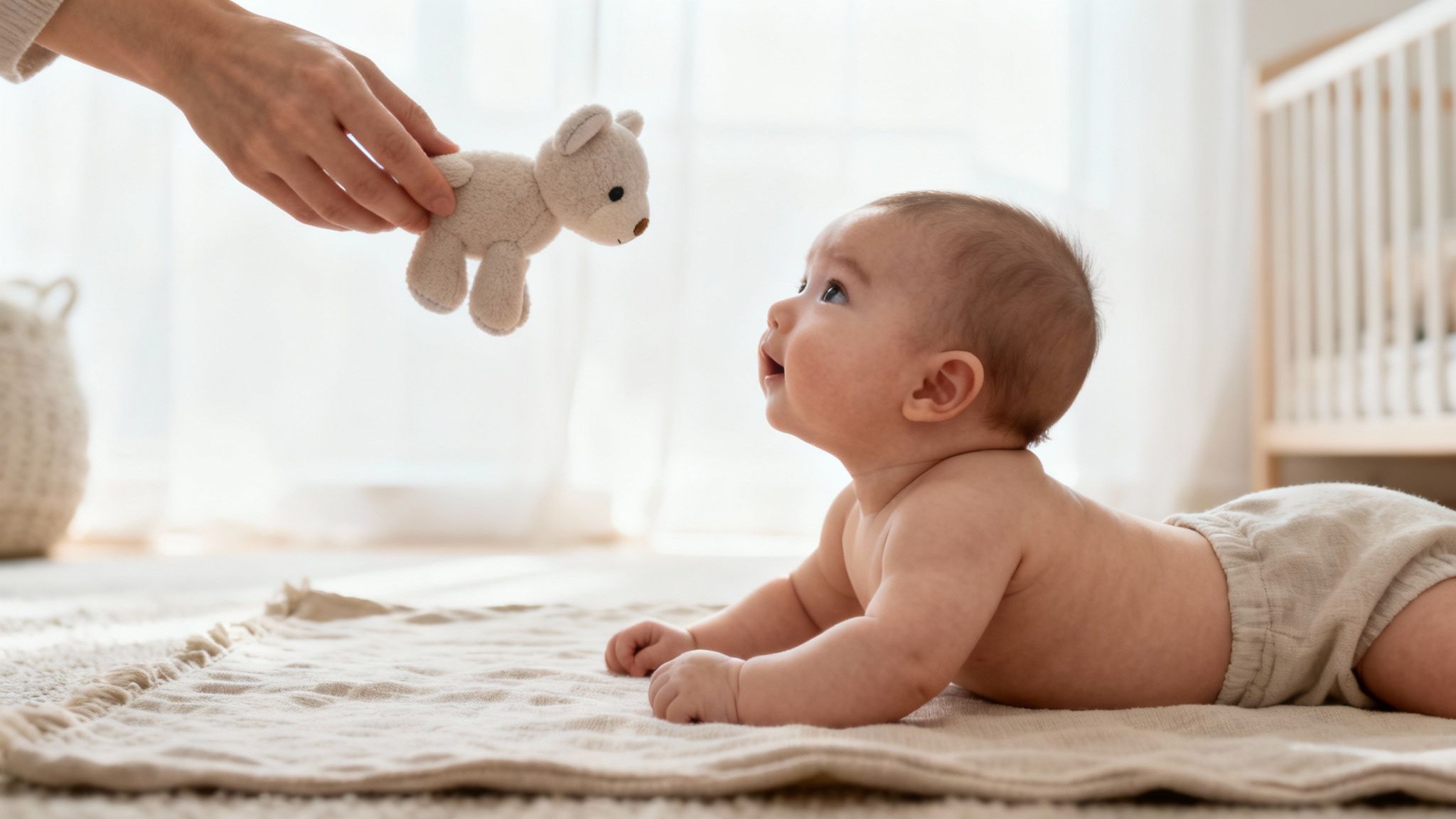
Tummy time is a crucial activity for infants. It forms the very foundation of their gross motor skill development. It involves placing a baby on their stomach while they are awake and supervised. This simple position is a powerhouse workout. It strengthens the muscles in the neck, shoulders, back, and arms. These are the exact muscle groups required for major developmental milestones like rolling over, sitting up, crawling, and eventually walking. It is one of the first and most important gross motor skills examples a baby will practise.
Why Tummy Time is Essential
Regular tummy time not only builds strength but also helps prevent flat spots on the back of the baby's head. It provides a different view of the world. This encourages sensory exploration and cognitive development as they learn to interact with their surroundings from a new perspective. Paediatricians often recommend starting from birth with very short sessions. They aim for a total of 15 to 30 minutes daily by the time a baby is three months old.
Actionable Tips for Success
Here is how you can make tummy time a positive experience.
- Start Small: Begin with sessions of just 3 to 5 minutes, a few times a day. Gradually increase the duration as your baby gets stronger and more comfortable.
- Create an Engaging Space: Place colourful toys or a baby-safe mirror just within reach. This will motivate your baby to lift their head and push up. A soft, supportive surface like a linen play mat offers comfort and safety.
- Get Down on Their Level: Make it a bonding activity. Lie on the floor facing your baby, sing songs, and talk to them. Your presence is the best encouragement.
- Time It Right: Avoid practising tummy time immediately after a feed to prevent discomfort. Choose times when your baby is happy and alert.
2. Rolling Activities
Rolling is a major developmental milestone. It typically occurs between 3 to 6 months. It involves an infant learning to intentionally turn their body from their back to their stomach and vice versa. This complex movement is a significant step up from tummy time. It requires coordinated strength in the core, neck, and limbs. Encouraging this skill is a key part of building a foundation for sitting and crawling. This makes it one of the most exciting gross motor skills examples to witness.
Why Rolling is Essential
Rolling builds crucial physical and cognitive skills beyond being a new trick. It strengthens the entire body, improves balance, and enhances body awareness. Each roll also provides new sensory input and a different perspective on their environment. This stimulates brain development. It is the first time your baby can purposefully move themselves around a room. This fosters a sense of independence and curiosity.
Actionable Tips for Success
Here is how you can support your baby's rolling journey.
- Motivate with Toys: Place a favourite toy just out of reach on one side. This encourages them to shift their weight and initiate a roll to get closer.
- Create a Safe Zone: Use a supportive, cushioned play mat on the floor to provide a firm yet soft surface. Ensure the area is flat, spacious, and clear of any obstacles.
- Practise Both Ways: Gently guide their hips or shoulders to help them understand the motion of rolling from back to front and front to back.
- Celebrate the Effort: Cheer on every small attempt and partial roll. Positive reinforcement makes practice feel like a fun and rewarding game.
3. Sitting Practice and Support
Sitting up independently is a significant leap in a baby's gross motor journey. Babies typically achieve this skill between four and eight months. This skill signifies developing core strength, balance, and coordination. The progression moves from needing full support to propping themselves up with their hands. It finally leads to sitting unassisted. This milestone is a clear example of how gross motor skills examples build upon one another, starting from the strength gained during tummy time.
Why Sitting Practice is Essential
Practising sitting gives babies a new vantage point to observe and interact with their world. This is crucial for cognitive and social development. It frees up their hands to explore toys, promoting fine motor skills. As babies learn to control their torso, they are building the foundational strength and stability required for future skills. These skills include crawling, pulling to stand, and walking. A safe, cushioned surface is vital during this wobbly phase.
Actionable Tips for Success
Here is how you can support your baby's sitting practice safely and effectively.
- Create a Soft Landing Zone: Use a play mat with appropriate cushioning. It should be soft enough to protect against inevitable tumbles but firm enough to provide a stable base for balancing.
- Encourage Upright Posture: Place engaging toys in front of your baby. This motivates them to sit up tall and reach forward, rather than slumping.
- Offer Minimal Support: Start by providing support around their hips. Gradually reduce your assistance as their confidence and strength grow. Let them do the work.
- Celebrate the Effort: Cheer on their attempts and progress. Keeping practice positive and pressure-free encourages them to keep trying without frustration.
4. Crawling Development and Obstacle Courses
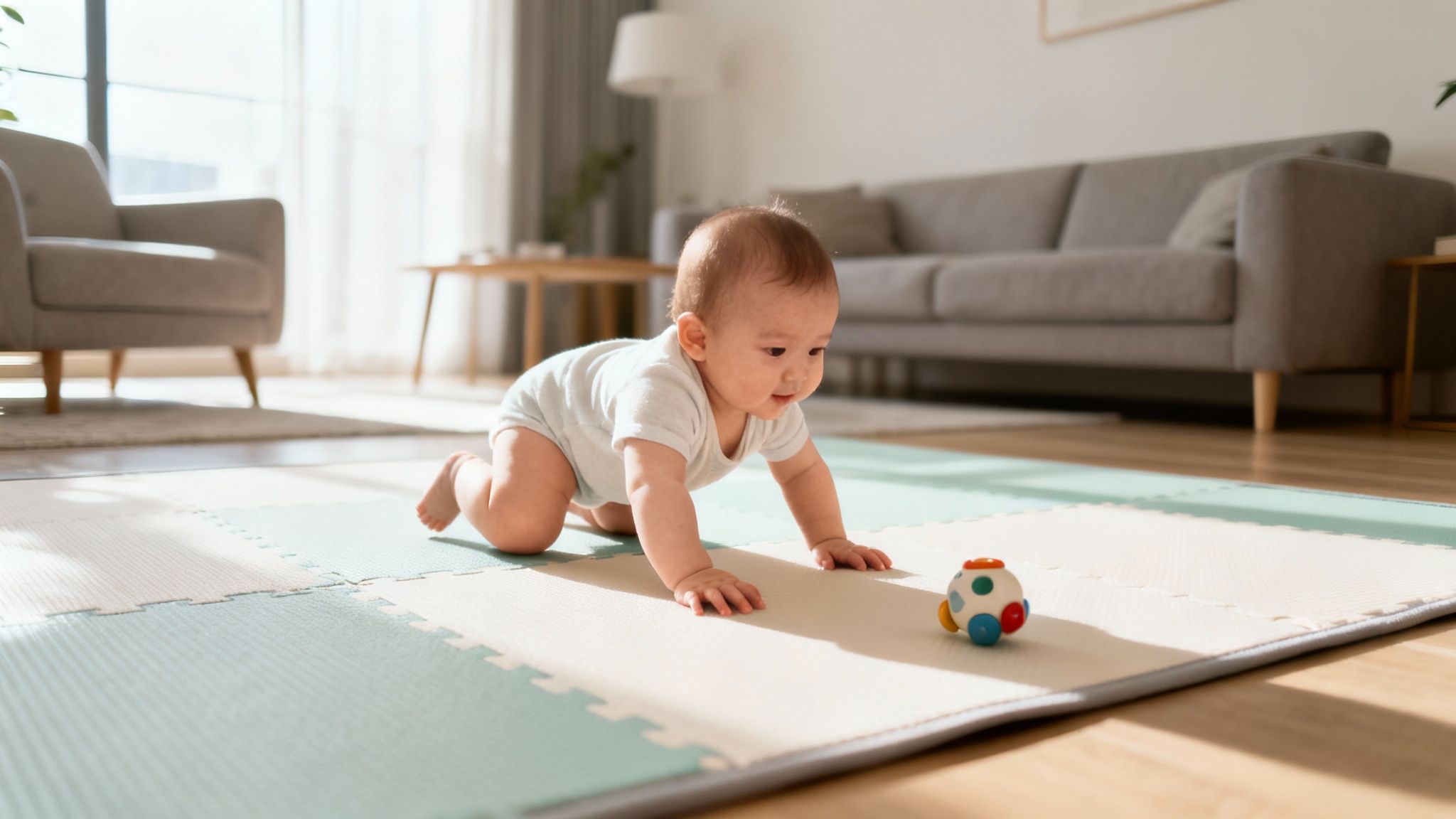
Crawling is a major gross motor milestone. It typically emerges between 6 and 12 months. It unlocks a new world of exploration and independence for a baby. This developmental leap involves coordinating arm and leg movements to propel the body forward. It strengthens the core, back, and limb muscles. Creating a safe and stimulating environment with gentle obstacles is a fantastic way to encourage this skill. This makes it a key entry in our list of gross motor skills examples.
Why Crawling Practice is Essential
Crawling does more than just get your baby from point A to B. The cross-lateral movement helps build pathways between the left and right hemispheres of the brain. This is crucial for future learning, coordination, and problem-solving. It also develops binocular vision as your baby looks from their hands to their destination. It enhances their spatial awareness and body control. A supportive play mat provides the ideal surface for this practice. It offers cushioning for delicate hands and knees.
Actionable Tips for Success
Here is how you can create a fun crawling course.
- Create Space: Use a large, uncluttered play mat. This gives your baby plenty of room to move freely and safely without bumping into furniture.
- Motivate Movement: Place favourite toys just out of reach. This encourages them to move forward and practise their crawling technique.
- Add Gentle Challenges: Build a simple obstacle course using soft pillows, rolled-up blankets, or cushions. Your baby can then navigate over them, building strength and confidence.
- Baby-Proof the Area: As your baby becomes more mobile, ensure the surrounding space is safe. Cover sharp corners on furniture and secure any hazards.
5. Standing with Support and Cruising
Standing with support is a monumental milestone. It typically emerges between 8 and 12 months. It is when a baby develops the leg strength and balance to pull themselves up. They learn to bear their own weight while holding onto furniture. This skill quickly evolves into cruising. They move sideways along surfaces, which is a direct precursor to walking. This progression is one of the most exciting gross motor skills examples to witness.
Why Standing and Cruising are Essential
This stage is critical for building lower body strength, coordination, and spatial awareness. Cruising teaches babies how to shift their weight, rotate their torso, and plan their movements. They learn to move from one piece of furniture to another. This practice refines the balance and confidence needed to eventually let go and take those first independent steps. Early childhood programs often use low, stable furniture and padded edges to create safe cruising zones for toddlers.
Actionable Tips for Success
Here is how you can support your baby's cruising adventures.
- Create a Safe Circuit: Arrange sturdy furniture, like a sofa or low coffee table. This creates a safe pathway for your baby to navigate. Ensure all furniture is stable and will not tip over.
- Motivate Movement: Place favourite toys just out of reach along the cruising path. This encourages them to keep moving from one point to the next.
- Provide a Stable Base: A quality, non-slip play mat offers a cushioned yet firm surface. It provides grip for their feet and a soft landing for the inevitable tumbles.
- Keep the Path Clear: Make sure the floor and mat surface are free from toys or obstacles. These could cause your baby to trip while they are focused on moving.
6. Walking Practice and First Steps
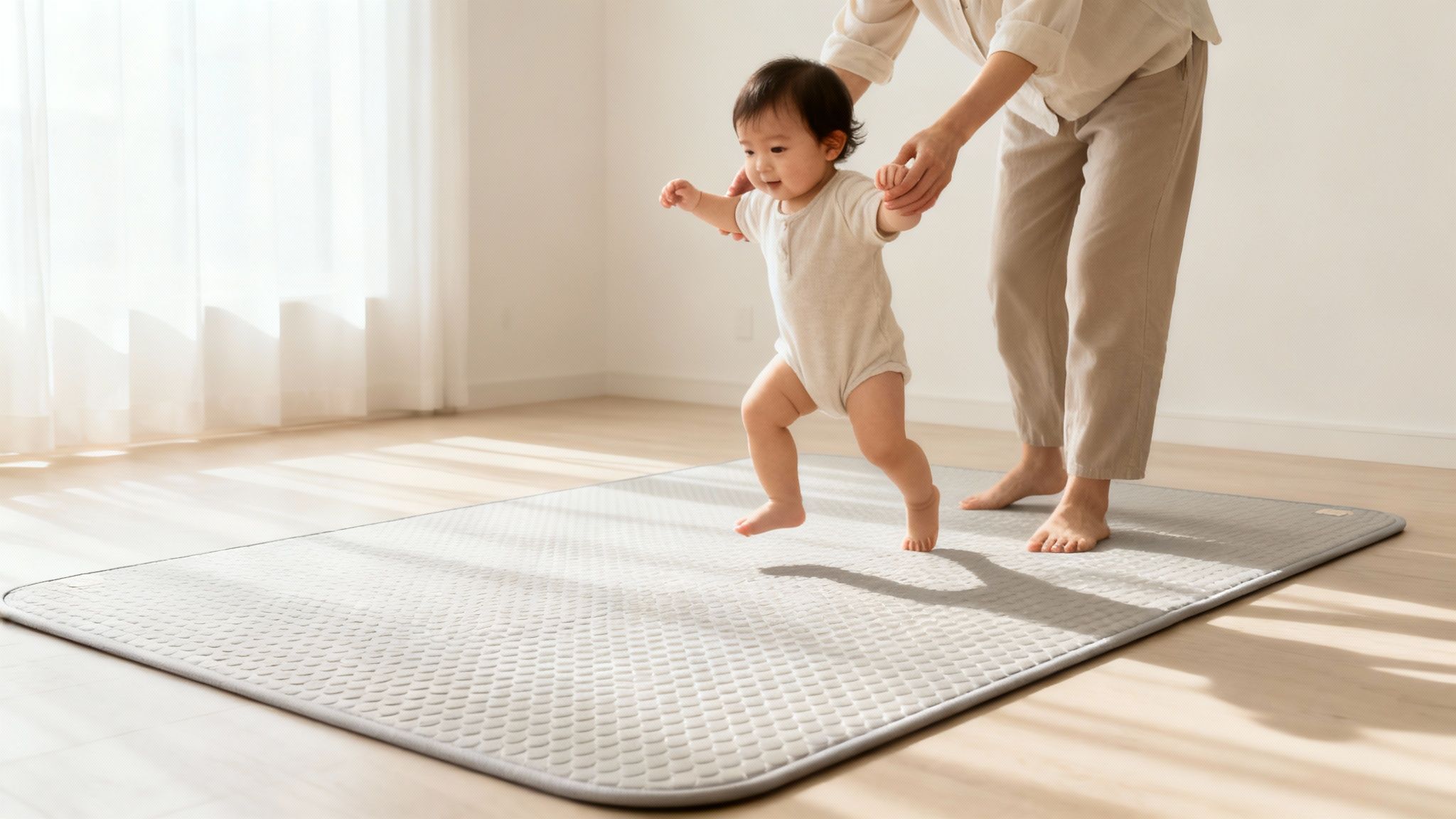
Walking practice marks one of the most celebrated gross motor milestones. A toddler typically achieves this between 12 and 18 months. This exciting stage involves a toddler learning to coordinate balance, core stability, and leg strength. They use these skills to take their first independent steps. It is a culmination of all the skills they have developed so far. It is a clear example of complex gross motor skills examples in action. Providing a safe, encouraging environment is key to helping them build confidence.
Why Walking Practice is Essential
Learning to walk is a giant leap towards independence. It allows toddlers to explore their world in a new way. This practice strengthens their entire body, refines their balance, and improves spatial awareness. The process of trying, falling, and getting back up also builds resilience and determination. Paediatricians often recommend creating 'safe walking zones' in homes. Early childhood centres use padded flooring to support this crucial developmental phase.
Actionable Tips for Success
Here is how you can support your little one’s first steps.
- Create a Safe Zone: Use a large, non-slip play mat. This creates an obstacle-free walking path. It provides a soft surface for the inevitable tumbles, which helps build confidence.
- Encourage Barefoot Time: Allowing your toddler to be barefoot or in soft-soled shoes helps them feel the ground. This improves their balance and stability.
- Offer Support (But Not Too Much): Let them use furniture to pull themselves up and cruise along. Hold their hands initially, then gradually offer just one hand. Eventually let go as they become steadier.
- Celebrate the Effort: Cheer for every attempt, not just the successful steps. Your encouragement makes the learning process a positive and fun experience for them.
7. Jumping and Bouncing Activities
Jumping and bouncing are exciting milestones. They typically emerge between 18 and 24 months. These actions build directly upon the strength and balance gained from walking. They require a complex combination of leg power, core stability, coordination, and spatial awareness to execute successfully. Learning to jump and bounce is one of the more advanced gross motor skills examples for toddlers. It sets the stage for more complex movements like hopping and skipping.
Why Jumping and Bouncing are Essential
These high-impact activities are fantastic for building muscle and bone density in the lower body. They also enhance a child's proprioception. This is their sense of where their body is in space. As they practise, they learn to control their body's momentum and land safely. This improves their overall balance and reaction time. Early experiences with jumping in safe environments build physical confidence and a love for active play.
Actionable Tips for Success
Here is how you can encourage safe jumping and bouncing.
- Create a Safe Zone: Use a cushioned, non-slip play mat to absorb impact. This protects your toddler's developing joints and prevents slips on hard floors.
- Start with Bouncing: Begin by encouraging your child to bounce in place with both feet. This is the precursor to a full jump. You can model this movement yourself.
- Offer Support: Initially, provide handholds like your hands or a sturdy, low piece of furniture. This helps them maintain balance as they find their feet.
- Make It Rhythmic: Use music or songs to make bouncing fun. This encourages repetitive movement.
8. Climbing and Balance Development
Climbing and balance development marks a thrilling phase for toddlers. It typically starts around 18 to 24 months. As they gain strength and coordination, they become eager to conquer new heights and navigate challenging surfaces. This stage is a significant leap forward. It builds courage, body awareness, and problem-solving abilities alongside physical strength. Learning to climb and balance are essential gross motor skills examples. They prepare children for more complex movements and sports activities later in life.
Why Climbing and Balance are Essential
Engaging in climbing and balance activities helps toddlers understand concepts like height, gravity, and spatial awareness. It strengthens the core, legs, and arms. It also refines their vestibular system, which is responsible for balance. This practice builds not just physical competence but also mental resilience and confidence. Supervised risk-taking, such as navigating a small obstacle, teaches them to assess situations and trust their own capabilities.
Actionable Tips for Success
Here is how you can safely encourage climbing and balance.
- Create a Safe Zone: Set up a dedicated play area with low, stable obstacles like soft cushions or small steps. A cushioned, non-slip play mat is crucial to provide a soft landing surface.
- Start Small: Begin with very low heights and simple balance challenges. As your child's confidence and ability grow, you can gradually introduce slightly more complex obstacles.
- Supervise Closely: Always be within arm's reach to offer support if needed. Try to let your child problem-solve and explore independently.
- Ensure Stability: Double-check that all climbing structures are stable. They must not tip or collapse. This is vital for creating a secure environment for exploration.
9. Running, Turning, and Direction Changes
Running marks a thrilling developmental leap for toddlers. It typically emerges between 18 and 24 months. It signifies a major advance in balance, leg strength, and coordination. This skill evolves from a straight-ahead dash into more complex movements. These include stopping suddenly, turning, and changing direction. These actions are fundamental gross motor skills examples. They enhance cardiovascular fitness, build powerful leg muscles, and refine a child's spatial awareness and reaction time.
Why Running and Turning are Essential
Mastering running and direction changes is crucial for active play and social interaction. It allows toddlers to participate in games like chase. They can navigate busy playgrounds and develop the confidence to explore their environment safely. Daily active play involving running is widely recommended by paediatricians to support physical health and coordination. A large, cushioned surface provides an ideal, forgiving space for them to practise these new skills.
Actionable Tips for Success
Here is how you can support your little one's need for speed.
- Create a Safe Zone: Use a spacious play mat. Clear the surrounding area to create a large, obstacle-free track for safe running practice.
- Set Up a Circuit: Place soft toys or cushions as markers for your child to run around. This encourages them to change direction and navigate obstacles.
- Play Stop and Go: Turn on some music and have a dance party. When the music stops, everyone freezes. This helps them practise stopping and starting on cue.
- Offer a Target: Motivate movement by placing a favourite toy at the other end of the room. Encourage them to run to it.
10. Dance, Rhythm, and Movement Exploration
Dancing and exploring rhythm are fantastic and joyful ways for children to develop complex gross motor skills. These activities engage the whole body. They encourage coordination, balance, and spatial awareness as children learn to move in time with music. Rhythmic movement builds physical confidence and body control. It stands out as one of the most expressive gross motor skills examples. It blends physical development with creativity.
Why Dance and Rhythm are Essential
Engaging in dance helps children understand how their bodies can move through space. This improves their planning and sequencing skills. It also supports cardiovascular health and endurance. Rhythmic activities stimulate brain development, enhance memory, and provide a healthy outlet for emotional expression. Early childhood programs often incorporate daily movement to music for these very reasons.
Actionable Tips for Success
Here is how you can encourage movement exploration at home.
- Create a Safe Dance Floor: Use a soft, cushioned play mat as a dedicated space for movement. This provides a comfortable, non-slip surface that protects against tumbles.
- Play a Variety of Music: Expose your child to different tempos, genres, and rhythms. This keeps them engaged and challenges their movement patterns.
- Encourage, Don't Direct: Model simple actions like swaying, spinning, or clapping. Let your child interpret the music freely. The focus should be on exploration, not perfection.
- Use Fun Props: Introduce items like colourful scarves, ribbons, or a simple ball. These can inspire new ways of moving and interacting with their environment.
10-Activity Gross Motor Skills Comparison
| Activity | 🔄 Complexity | ⚡ Resources & Setup | 📊 Expected Outcomes | 💡 Ideal Use Cases | ⭐ Key Advantages |
|---|---|---|---|---|---|
| Tummy Time | Low | ⚡ Minimal: play mat, 1 toy, supervision | 📊 Neck/shoulder/arm strength; foundation for rolling | 💡 Newborns to 12 months; start 3–5 min, build to 15–30 min daily | ⭐ Critical foundational skill; simple to implement |
| Rolling Activities | Moderate | ⚡ Play mat, motivating toys, clear floor space | 📊 Core coordination; precursor to crawling/sitting | 💡 3–6 months practice on cushioned surface | ⭐ Signals healthy motor development; naturally encouraged by play |
| Sitting Practice & Support | Moderate | ⚡ Cushioned mat, soft supports/pillows, supervision | 📊 Core stability, balance; frees hands for fine motor play | 💡 4–8 months; supervised supported → independent sitting | ⭐ Enables new play opportunities; safe fall practice |
| Crawling & Obstacle Courses | High | ⚡ Large play mat, gentle obstacles, thorough baby-proofing | 📊 Arm/leg strength, coordination, spatial exploration | 💡 6–12 months; open courses to encourage forward movement | ⭐ Dramatically increases independence and exploration |
| Standing with Support & Cruising | High | ⚡ Non-slip mat, anchored furniture, clear edges | 📊 Leg strength, balance; precursor to walking | 💡 8–12 months; cruising circuits around safe furniture | ⭐ Major step toward independent walking |
| Walking Practice & First Steps | High | ⚡ Large non-slip mat, baby-proofed area, safe shoes/barefoot | 📊 Independent mobility, confidence, advanced balance | 💡 12–18 months; create clear walking zones for practice | ⭐ Major independence milestone; broad developmental gains |
| Jumping & Bouncing Activities | Medium | ⚡ Cushioned non-slip mat, clear overhead & floor space | 📊 Leg power, balance, cardio, proprioception | 💡 18–24 months+; start with bouncing in place, add height gradually | ⭐ High energy output; enjoyable strength & coordination gains |
| Climbing & Balance Development | High | ⚡ Cushioned mat, low stable obstacles, close adult support | 📊 Balance, problem-solving, spatial reasoning | 💡 18–24 months+; supervised low-climb practice | ⭐ Builds confidence, advanced balance and motor planning |
| Running, Turning & Direction Changes | High | ⚡ Very large flat mat/clear floor, non-slip surface, padding on edges | 📊 Cardiovascular fitness, dynamic coordination, agility | 💡 18–24 months+; running circuits with direction changes | ⭐ Foundation for sports skills and complex movement |
| Dance, Rhythm & Movement Exploration | Low–Moderate | ⚡ Soft mat, music, simple props (scarves, ribbons) | 📊 Coordination, rhythm, creative expression, social engagement | 💡 6 months+; family movement sessions or classes | ⭐ Multi-skill development; highly motivating and inclusive |
Key Takeaways and When to Seek Advice
We have journeyed through a comprehensive list of gross motor skills examples. These range from the foundational wiggles of tummy time to the confident strides of a running toddler. Each stage represents a monumental leap in your child's physical development. Understanding these milestones is the first step. Creating an environment where they can flourish is the next. The core principle is that movement, facilitated by play, is the engine of early childhood development.
Your role as a parent or carer is to be a facilitator, not a coach. You empower your child to explore their physical capabilities by providing encouragement, a safe space, and engaging opportunities. Remember, the progression through these skills is not a race. Every child develops at a unique pace. Celebrating their individual effort is far more important than comparing them to a rigid timeline.
Summarising the Journey of Movement
Let's break down the most important insights from our exploration of gross motor skills.
- Foundation First: Skills are built sequentially. Mastery of early movements like head control during tummy time provides the essential foundation. Core strength from sitting up is also crucial. These prepare for more complex actions like crawling, walking, and climbing.
- Play is the Work: Children learn best through play. Integrating activities like building a cushion obstacle course or having a dance party transforms skill development. It becomes a joyful experience instead of a task. This approach fosters a positive relationship with physical activity from the beginning.
- Safety is Paramount: A child's confidence to explore is directly linked to their sense of security. Creating a safe environment is non-negotiable. It should be free from hard edges and slippery surfaces. A cushioned, non-slip surface like a quality play mat is a crucial tool in your developmental toolkit.
Actionable Next Steps for Parents
Now that you are equipped with numerous gross motor skills examples, what are your next steps? Focus on observing your child's cues and interests. If they are trying to pull themselves up, introduce them to sturdy, low furniture. If they are starting to jump, show them how to bend their knees for a soft landing.
Most importantly, be present and responsive. Your engagement and encouragement are powerful motivators. Celebrate the wobbly first steps and the determined attempts to climb. This positive reinforcement builds not just physical strength but also resilience and self-confidence.
When to Consult a Professional
Variation in development is perfectly normal. However, certain signs may warrant a discussion with a healthcare professional. According to guidance from trusted sources, it is a good idea to seek advice if you notice significant developmental delays. The Raising Children Network, an Australian parenting website, suggests this.
Consider speaking with your paediatrician or a child and family health nurse if your child:
- Seems consistently floppy or overly stiff in their movements.
- Shows a strong preference for using one side of their body.
- Does not meet major milestones within a few months of the typical age range.
- Loses a skill they once had.
Early identification and support can make a significant difference. A professional assessment can provide reassurance. It can also outline a clear path forward with targeted support if needed. This ensures your child has every opportunity to thrive.
Source:
Developmental delay in children, Raising Children Network, January 2023.
Creating a safe and beautiful space for these crucial developmental moments is our passion. The Wallaby Collective offers premium, non-toxic padded play mats that provide the perfect cushioned surface for every wiggle, roll, and wobble. Explore our collection to find a stylish, supportive foundation for your little one's gross motor skill journey at Wallaby Collective.