

A Parent's Guide to Gross Motor Skills Activities for Infants
Gross motor skills activities for your baby are as simple and natural as tummy time on a soft mat or reaching for a favourite toy. These everyday movements engage the large muscles in their arms, legs, and torso. This builds the strength and coordination they need to start exploring their world.
Understanding Your Baby's First Big Movements
The term 'gross motor skills' might sound a bit clinical. It simply refers to the big movements your baby makes as they learn to control their body. Think of it as the physical foundation for every little adventure to come.
These skills develop in a predictable pattern, starting from their head and moving down to their toes. First, your baby masters control over their neck and head. Next comes their torso for sitting. Finally, their legs and feet develop for crawling and walking. Every wiggle, kick, and roll is a tiny, crucial step on this journey.
Let's break it down. These foundational movements help your baby hit exciting milestones. They build confidence with each new skill they unlock.
Why Are These Skills So Important?
Supporting your baby’s gross motor development is about much more than checking off physical milestones. These early movements have a positive ripple effect on their overall growth and wellbeing.
Here is why focusing on these skills truly matters:
- Builds Physical Strength: Activities like tummy time and reaching for toys strengthen the core, neck, back, and limb muscles. These are the very muscles they need for rolling, sitting up, and eventually crawling.
- Enhances Coordination and Balance: As your baby practises these big movements, they learn how different parts of their body can work together smoothly.
- Boosts Confidence and Independence: Mastering a new skill, like sitting up on their own, gives your baby a huge sense of accomplishment. It also gives them the freedom to play and explore more independently.
- Supports Cognitive Growth: Movement and learning are completely intertwined. As your baby moves through their environment, they learn about cause and effect, spatial awareness, and even early problem-solving.
The Building Blocks of Movement
You can think of gross motor development like building a house. You cannot put the walls up before you have a solid foundation. In the same way, your baby needs to master basic skills like head control before they can tackle more complex actions like sitting or crawling.
The best tools you have to support this journey are simple, everyday play and interaction. You do not need any fancy equipment. A safe space and your engaged presence are more than enough to encourage these incredible first big movements.
Next steps? We will look at the typical timeline for these milestones and how you can support each stage.
Sources Used:
- Developing gross motor skills, The Royal Children's Hospital Melbourne, February 2018.
Your Baby's Gross Motor Milestones from Birth to 12 Months
Watching your baby grow is one of the most incredible parts of being a parent. Every little one develops at their own unique pace. Understanding the typical progression of gross motor skills can help you celebrate each new achievement along the way. Think of it like a series of building blocks, where mastering one skill lays the foundation for the next.
Let's walk through the key milestones you can generally expect during your baby's first year. Remember, these are just guides. The most important thing is to provide a loving, supportive space for your little one to explore and grow.
The First Three Months: Newborn Reflexes to Head Control
In the very beginning, your baby's movements are mostly reflexive. You will notice them kicking their legs and waving their arms when lying on their back, often in a beautifully symmetrical way. The main job during this stage is building up that crucial head and neck strength.
One of the first major milestones you will see is gaining head control. At first, their head will lag behind their body if you gently pull them up to sit. With short, supervised sessions of tummy time, they will gradually learn to lift their head and turn it from side to side. By around 3-4 months, you should see them holding their head in line with their body when you pull them to a sitting position.
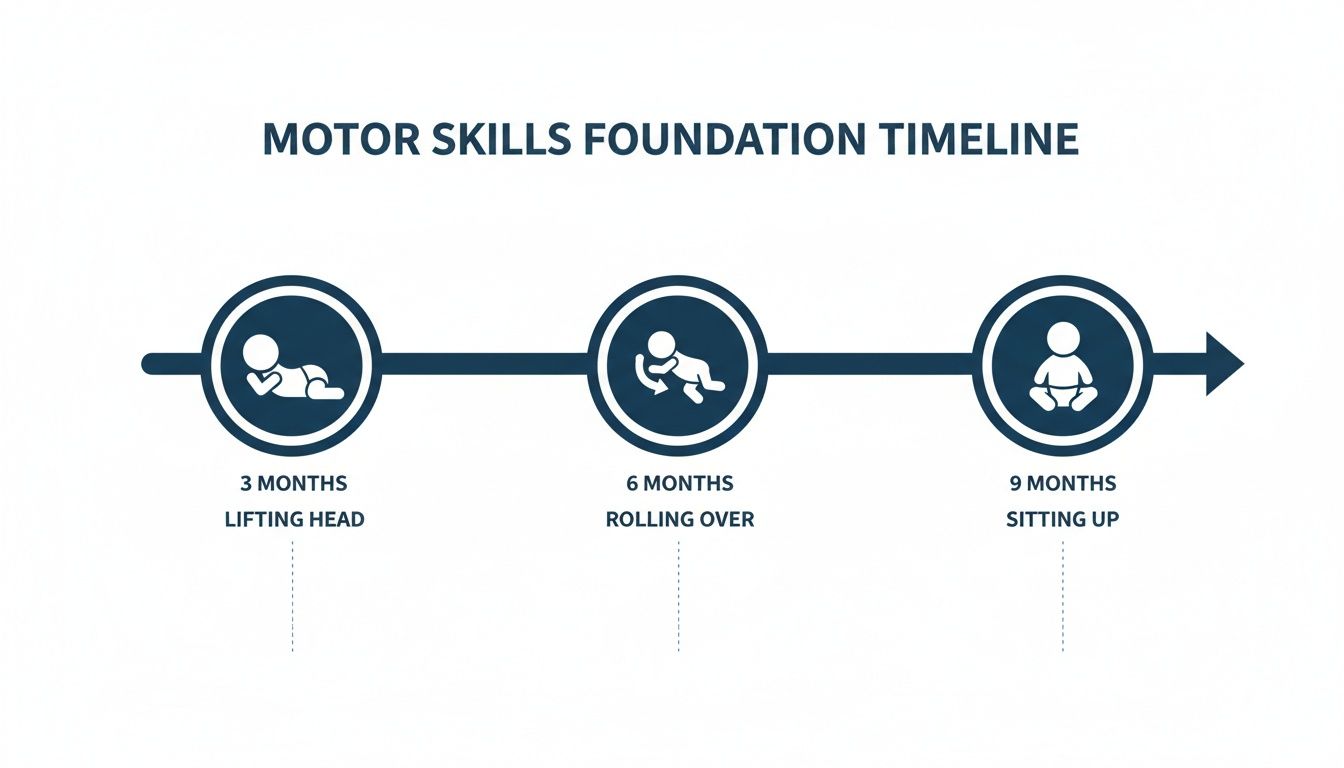
This visual timeline shows how mastering one skill, like lifting their head, directly prepares them for the next big move.
Four to Six Months: Rolling and Pushing Up
This period is all about a huge leap in strength and coordination. Your baby is discovering just how much their body can do. During tummy time, they will go from propping themselves up on their forearms to pushing up on their hands with their arms fully extended.
This newfound strength leads to another exciting milestone: rolling over. Babies typically figure out how to roll from their tummy to their back first. The back-to-tummy roll follows a little later. You might also spot them grabbing their feet and bringing them to their mouth while lying on their back. This is a fantastic and adorable way to build core strength.
Seven to Nine Months: Sitting and Crawling
Get ready for some serious movement. Around this time, many babies master sitting independently. They learn how to balance without support. This frees up their hands to reach for toys. This upright position gives them a whole new perspective on the world.
Next up is often crawling. This can look different for every baby. Some do the classic hands-and-knees crawl. Others might prefer a belly crawl or a bottom-shuffle. Each method gets them where they want to go. If you want to dive deeper, you can check out our guide on when babies start crawling and the different styles they use. All this practice strengthens their muscles for the next big stage.
Ten to Twelve Months: Pulling Up and First Steps
The last few months of the first year are all about moving upwards. Your baby will likely start pulling up to a standing position using furniture for support. Once they feel steady on their feet, they will begin 'cruising' by holding on and taking sideways steps along the sofa or coffee table.
This cruising phase is crucial for building leg strength and balance. It is the direct preparation for the ultimate gross motor milestone: walking. Some babies take their first independent steps around their first birthday. Others take a little longer. Both are perfectly normal. Just being able to stand independently for a few seconds is a huge achievement during this time.
To help you keep track of all these exciting developments, here is a quick-reference guide.
Infant Gross Motor Milestones at a Glance
This table breaks down the typical journey. It shows what each new skill looks like in action.
| Age Range | Typical Gross Motor Milestone | What It Looks Like |
|---|---|---|
| 0-3 Months | Gaining Head Control | Lifting their head and chest during tummy time; turning head side to side. |
| 4-6 Months | Rolling Over | Purposefully rolling from tummy to back, and later from back to tummy. |
| 7-9 Months | Sitting & Crawling | Sitting up without support; moving forward on hands and knees or by scooting. |
| 10-12 Months | Pulling to Stand & Cruising | Using furniture to pull up to a standing position and taking steps while holding on. |
Watching these milestones unfold is a truly special part of your baby’s first year. Enjoy every little wobble and triumphant step forward.
Why Early Movement and Play Are So Important
Those early wiggles, kicks, and stretches might just look cute. But they are doing some seriously important work. Every little movement your baby makes is like a tiny workout. It builds the foundation for all the exciting milestones to come. Simple, everyday play is one of the most powerful tools you have to support their physical journey.
Think of it this way. Early achievements, like gaining head control and learning to roll, are not just one-off tricks. They are the essential groundwork for more complex skills like crawling and walking. Each new ability builds directly on the one before it. This creates a chain reaction of development that leads to confident mobility.
Let's break it down. When your baby has tummy time, they are doing much more than just looking around. They are actively strengthening the muscles in their core, neck, and back. These are the exact muscle groups they need to push up, sit steady, and eventually move across the room.
The Brain-Body Connection
Movement does not just build muscle; it builds the brain. Every time your baby moves, their brain is busy creating new neural pathways. This process, known as motor learning, helps them figure out how their body works. It also teaches them how to control it with more and more precision.
This connection is a two-way street. Physical exploration helps babies learn about the world around them. This sparks cognitive growth. In turn, as their brain develops, they become more curious and driven to move. This creates a positive cycle of learning and development.
Every time you encourage your baby to reach for a toy or roll towards your voice, you help them strengthen this vital brain-body link. These simple interactions are the fuel for their developmental engine.
Building a Foundation for the Future
Giving your baby plenty of chances to move and play has a lasting impact. It sets the stage for a physically active lifestyle. It also helps prevent potential delays. Research from Australia shows just how crucial early support is for confident mobility down the track.
A 2018 study in Victoria found that 34.3% of toddlers assessed had a 'slight' to 'significant' delay in their fundamental movement skills. This highlights how important it is to focus on these foundational movements right from the start.
To better understand the broader impact and why timely support is so important for a child’s overall growth, it is worth exploring the benefits of early intervention for child development.
Simple, daily interactions are the key. By making floor time and active play a regular part of your baby’s routine, you give them the chance to practise and master the skills they need to thrive. You are not just playing. You are building a powerful foundation for a healthy, confident child.
Simple and Fun Gross Motor Activities for Your Infant
Ready to turn playtime into a powerful engine for growth? You do not need expensive gear or complicated setups to support your baby's development. In fact, the most effective gross motor activities are often the simplest ones. They use little more than your loving interaction and a few things from around the house.
Let’s explore some fun, age-appropriate activities that make building strength and coordination a joyful experience for both of you. Each one is designed to meet your baby exactly where they are in their incredible first year.
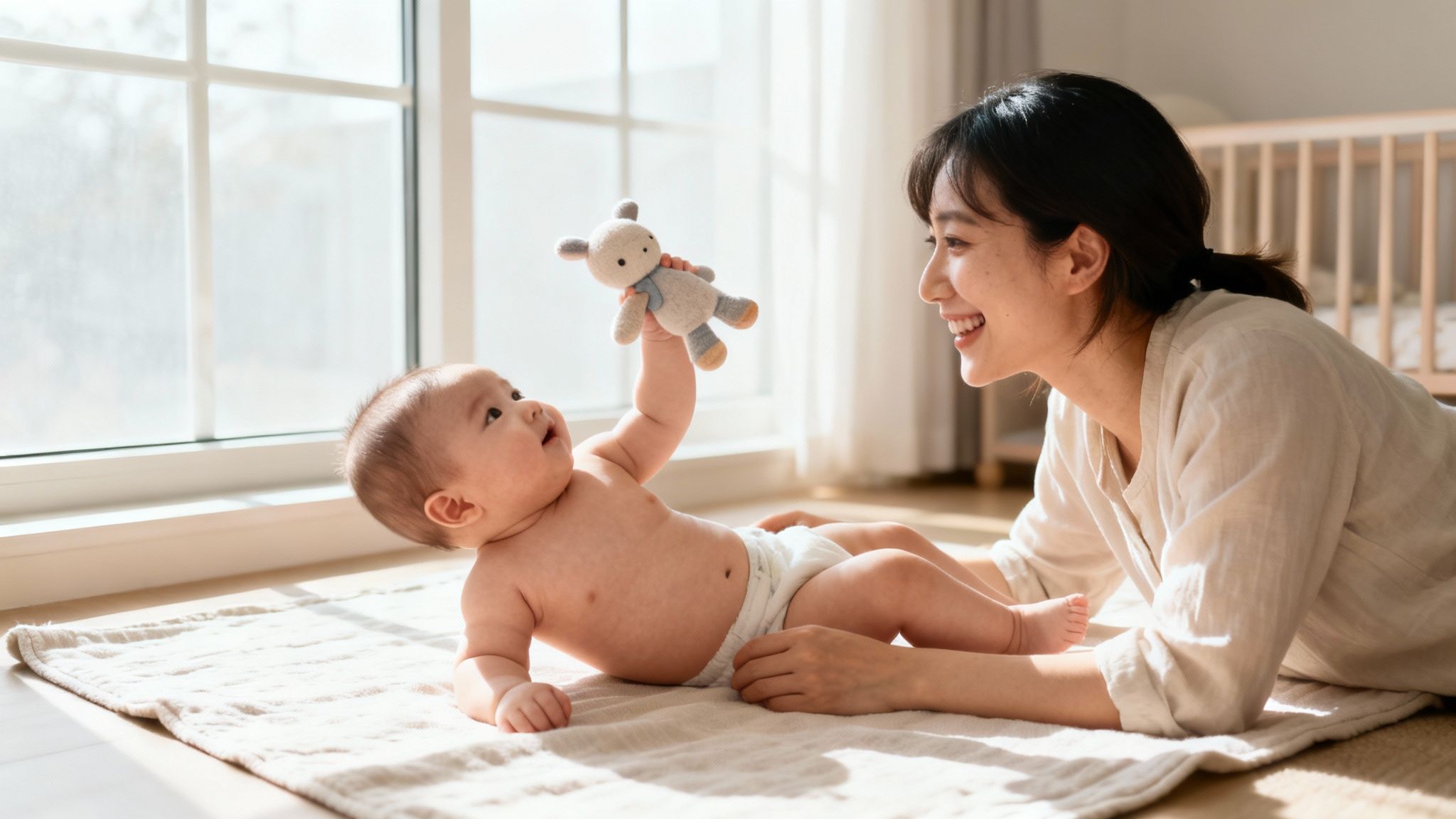
Activities for Newborns to 3 Months
In these early days, it is all about building that foundational neck and core strength. Your baby's movements are still quite reflexive. These gentle activities encourage them to start taking more purposeful control.
-
Tummy Time Tracking: Place your little one on their tummy on a soft but firm surface for short, supervised bursts. Get down on their level. Encourage them to lift their head by talking, singing, or showing them a high-contrast toy. Slowly move the toy from side to side to see if they will follow it with their gaze.
- Why it helps: This is the ultimate workout for strengthening the neck, shoulder, and back muscles. These are the very muscles they will need for good head control and, before you know it, rolling over.
- Safety Tip: Always supervise tummy time and make sure your baby is awake and alert. Start with just a minute or two, a few times a day. For more great ideas, check out these creative tummy time activities to try with your baby.
-
Gentle Bicycle Legs: While your baby is lying comfortably on their back, gently hold their ankles. Slowly move their legs in a bicycling motion. Sing a little song or chat with them as you go to make it a playful, bonding moment.
- Why it helps: This simple movement encourages hip and knee flexibility. It also gives them a feel for the coordinated leg patterns they will eventually use for crawling.
Activities for 4 to 6 Months
Your baby is getting so much stronger and more curious about the world. Now is the perfect time to encourage reaching, pushing, and that exciting milestone: rolling.
-
Reach and Grab: During floor time, place an engaging, baby-safe toy just beyond their immediate grasp. This little challenge encourages them to stretch, pivot on their tummy, and shift their weight to reach for it.
- Why it helps: This activity is a fantastic motivator for learning to roll and crawl. It builds core and arm strength while also promoting better balance.
- Safety Tip: Make sure any toys are large enough that they cannot become a choking hazard and have no small, detachable parts.
-
Assisted Rolling: Help your baby discover the sensation of rolling. While they're on their back, you can gently guide their hip over or offer a toy to one side. This encourages them to turn their body and roll onto their tummy.
- Why it helps: This gives them the physical sensation of the movement. It helps their brain and body connect the dots to eventually initiate rolling all on their own.
Activities for 7 to 9 Months
Movement is becoming much more purposeful now. Sitting up and crawling are on the horizon. These activities are all about building the balance and coordination needed for those huge milestones.
-
Sitting 'Prop' Games: Once your baby can sit with a bit of support, place cushions or pillows around them and let them practise balancing. Sit in front of them and roll a soft ball back and forth. This challenges their stability and gets those core muscles firing.
- Why it helps: This strengthens the torso muscles that are essential for stable, independent sitting. It also frees up their hands for play and exploring.
-
Cushion Mountain Climb: Create a small, gentle 'mountain' using firm cushions or pillows on the floor. Encourage your little explorer to crawl over the top to get to a favourite toy on the other side.
- Why it helps: This is a brilliant way to build arm, leg, and core strength all at once. It also teaches them how to navigate different surfaces and heights, which is fantastic for body awareness.
- Safety Tip: Always stay close by to provide support. Make sure the cushion pile is stable and not too high for them.
Activities for 10 to 12 Months
Your little one is on the verge of becoming a toddler. Activities now shift to focus on pulling up, cruising along furniture, and building the confidence for those first wobbly steps.
-
Cruising Adventures: Arrange sturdy, stable furniture (like a coffee table or sofa) so your baby can hold on and take sideways steps from one end to the other. Placing a favourite toy at the destination is a great motivator.
- Why it helps: Cruising is a critical pre-walking skill. It seriously strengthens their leg muscles and develops the balance they need to eventually walk independently.
-
Stand and Play: Encourage play at a low, stable table or the edge of the couch. This prompts them to pull to a stand and stay standing while their hands are busy. This builds endurance in their legs and core. To really dial up the fun, you can incorporate some wonderful educational toys for infants that spark curiosity.
- Why it helps: This activity builds the confidence and strength they need for standing without support. This is a key step right before walking.
Creating a Safe and Stimulating Play Environment
For your baby to truly flourish, they need more than just activities. They need a space that invites them to explore and supports their tiny, developing body.
Think of the floor as your baby’s first playground. It is where they will master tummy time, figure out how to roll over, and eventually, push up to crawl. Providing the right surface for these gross motor skills activities for infants makes a huge difference in how they build strength and coordination. Setting one up is simpler than you might think.
The Foundation of Play: A Quality Play Mat
The centrepiece of any great infant play space is a high-quality play mat. A soft blanket might seem cosy. It can bunch up and make it harder for a baby to push against the ground. On the flip side, a hard floor offers no cushioning for those inevitable tumbles. A dedicated play mat strikes that perfect balance.
It provides a surface that is both firm enough for stability and soft enough for comfort. This is ideal for everything from tummy time to learning how to sit up. This supportive base gives your little one the stability they need to push up with their arms. This strengthens their upper body and core muscles along the way.
For example, a linen play mat like the ones from Wallaby Collective is wonderfully soft but designed not to be overly puffy. This means it lies flat. It offers a stable foundation that does not get in the way of your baby's efforts to move and explore.
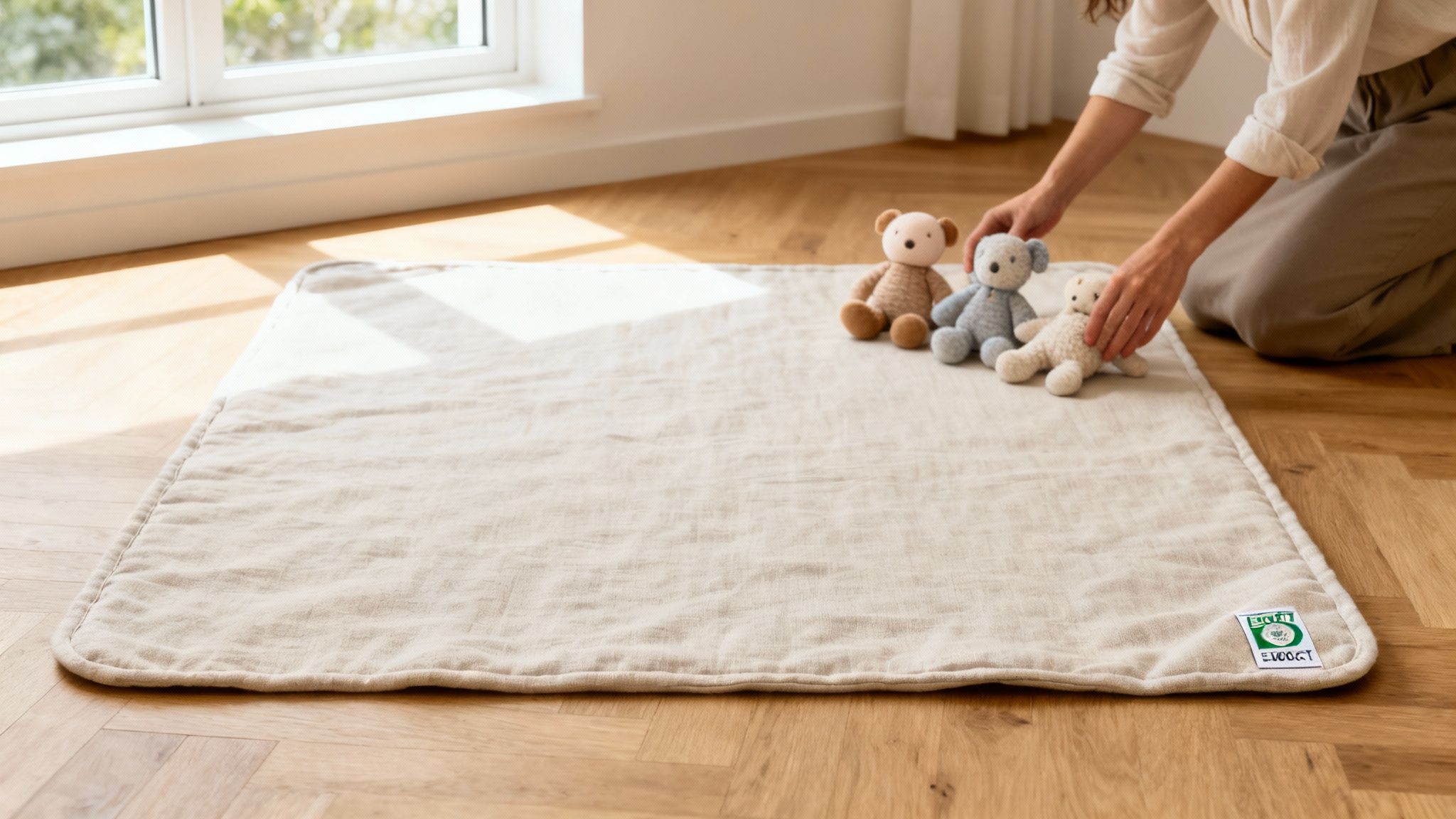
Setting Up Your Play Space
Once you have the right mat, think about where to place it. Creating an inviting and safe zone is key to encouraging independent play and movement.
Here are a few practical tips for setting up the perfect spot:
- Choose a Central Location: Place the mat in a common area like the living room. This lets you keep an eye on your baby while they play. They will also feel secure knowing you are close by.
- Keep it Clutter-Free: Make sure the immediate area around the mat is clear of hazards. Remove small objects, sharp-cornered furniture, and loose cords to create a safe zone for all their rolling and crawling adventures.
- Introduce Simple, Engaging Toys: You do not need to overwhelm them. Just a few age-appropriate toys placed slightly out of reach can be a great motivator to get them moving.
Selecting the right gear is just as important as the activities themselves. If you're looking for the perfect foundation for your play space, you can learn more about choosing the best tummy time mats for infants in our detailed guide.
Health and Hygiene: A Clean Space is a Safe Space
Babies spend a lot of time on their play mat. This means spills, drool, and other messes are just part of the deal. Keeping their play environment clean is crucial for their health and your peace of mind. This is where the materials and design of your mat really matter.
Look for features that make your life easier while keeping your baby safe.
- OEKO-TEX Certification: This label ensures the fabric has been tested for harmful substances. It is safe for your baby’s sensitive skin. It is a mark of quality you can trust.
- Machine-Washable Design: For busy parents, a mat that can be easily thrown into the washing machine is a non-negotiable. This simple feature means you can quickly clean up messes and maintain a hygienic surface without any fuss.
A beautiful, functional, and clean space allows your baby to thrive. By focusing on a supportive surface and a safe setup, you create the ideal environment for your little one to build their strength, confidence, and all-important gross motor skills.
When to Chat with a Health Professional
You know your baby better than anyone. It is completely normal to have questions about their development, especially when it comes to gross motor skills. Think of milestones as a friendly guide, not a strict checklist. Every baby truly moves at their own pace.
Your parental intuition is one of your greatest tools. If something just does not feel right, trusting that gut feeling and seeking a professional opinion is always a good move. It can bring peace of mind or, if needed, get your baby early support.
Signs That Might Warrant a Conversation
While there is a wide range of ‘normal’, a few things might signal it is time for a chat with your GP, paediatrician, or child health nurse. This is not about causing alarm. It is about empowering you with the right information.
Consider reaching out if you notice your baby:
- Still has significant head lag after the first few months.
- Seems unusually stiff or floppy through their arms and legs.
- Consistently uses one side of their body much more than the other.
- Is not putting any weight on their legs by around 7-8 months.
Who to See and What to Do Next
If you have any concerns, your local child and family health nurse is a brilliant first stop. They are a fantastic, free resource for Australian parents. They can offer expert guidance and assessments.
From there, they can help figure out if a referral to a paediatric physiotherapist is a good next step. A physio can properly assess your baby’s unique needs. They can also give you tailored advice and activities to support their motor skill journey. Starting that conversation is the best thing you can do for your little one.
Sources Used:
- Developing gross motor skills, The Royal Children's Hospital Melbourne, February 2018.
- Get Up & Grow: Healthy Eating and Physical Activity for Early Childhood, Australian Government Department of Health, 2009.
Got Questions About Your Baby's Motor Skills?
It is completely normal to wonder if your baby is on the right track with their physical development. Let's walk through some of the questions we hear most often from parents. This way, you can feel confident and enjoy every little wiggle and roll.
Knowing what to expect (and what is perfectly normal) helps you focus on what truly matters: soaking up this precious time with your little one.
How Much Tummy Time Does My Baby Really Need?
When you first start, think short and sweet. Begin with just 2-3 minute sessions a couple of times a day, right from the newborn stage. The goal is consistency, not trying to hit a time target right away. Pop them on their tummy when they're awake, alert, and happy.
As your baby gets stronger and more comfortable, you can slowly stretch out these sessions. Aim for a total of at least 30 minutes of tummy time spread throughout the day by the time they are three to four months old. And of course, always stay with them and supervise.
Is It a Problem If My Baby Skips Crawling?
Not necessarily. The classic hands-and-knees crawl is fantastic for building strength and coordination. However, some babies find other ways to get moving. You might see a cute little bottom-shuffle, a commando crawl, or even a log-roll across the room to get to a toy.
If your baby is hitting their other milestones, seems keen to explore, and is using both sides of their body, skipping a traditional crawl is usually nothing to worry about. But if you have any concerns at all, a quick chat with your child health nurse or GP is always a great idea for peace of mind.
What Are the Best Toys to Encourage Gross Motor Skills?
You really do not need anything fancy or expensive. Often, the simplest things work best to get those little muscles working.
- For Tummy Time: A colourful play mat keeps them comfy. A non-breakable mirror placed in front of them is brilliant for encouraging that all-important head lifting.
- For Reaching: Think soft balls or simple toys that roll just out of reach. This will encourage them to stretch, pivot, and start moving towards what they want.
- For Walking: Once they are a bit older, sturdy furniture they can ‘cruise’ along and simple push toys are perfect for building confidence on their feet.
At the end of the day, your face, your voice, and your encouragement are the best motivators you can give them.
Give your little one the perfect foundation for play and development. The Wallaby Collective linen play mat offers a safe, comfortable, and stylish space for all your baby's first big movements.
Explore our collection of OEKO-TEX certified play mats