

Developmental Toys for Newborns: Your Guide to Safe, Engaging Play
The best developmental toys for newborns are not complicated. They are simple, sensory-rich items that help your little one with their first milestones. Think high-contrast patterns for developing vision, soft rattles for hearing and touch, and a comfortable play mat for important tummy time.
These items are much more than fun things to look at. They are the real building blocks of your baby's learning journey.
Why Play Is Your Newborn's First Language
For a newborn, the world is a completely new place full of strange sights, sounds, and feelings. Every interaction is a form of learning. Simple 'play' is the first language they use to make sense of it all. Developmental toys are the tools that help them speak it.
Here is why it helps to shift your mindset from seeing toys as just entertainment. Instead, think of them as fundamental instruments for growth. A newborn's brain develops at an incredible pace, forming more than a million new neural connections every second. The right kinds of toys provide the perfect gentle stimuli to support this amazing process.
Building a Strong Foundation
From day one, your baby is working on crucial skills, even when it looks like they are just lying there. Developmental toys for newborns target these specific areas, laying a solid foundation for all future learning.
Let's break it down:
- Sensory Stimulation: Toys with different textures, gentle sounds, or bold, simple patterns engage your baby’s senses of touch, hearing, and sight.
- Motor Skill Development: Items like a play gym or a simple, easy-to-hold rattle encourage reaching, grasping, and kicking. These are the first steps to building muscle strength and coordination.
- Cognitive Growth: High-contrast images help a newborn’s developing eyes learn to focus. This is a critical first step in them starting to understand the world around them.
A supportive and simple environment is the best stage for this early development. A high-quality, comfortable play mat provides a safe and dedicated space for your baby to explore, move, and begin their journey of discovery through play.
The Growing Importance of Early Play
Australian parents are starting to recognise the power of this kind of purposeful play. The Australian baby toys market, which includes items like soft play mats and sensory aids, is set to grow significantly. This trend shows a real shift in awareness of how these simple tools can foster physical, cognitive, and emotional growth from the very beginning.
Ultimately, play is how your baby learns to connect with you and their environment. To get a better sense of the wider impact, it’s worth understanding the benefits of play-based learning for early development, which these kinds of toys directly support. By choosing simple, effective toys, you’re giving your newborn the best possible start.
Choosing Toys For Your Newborn's First Three Months
It can be tempting to fill the nursery with every toy imaginable, but when it comes to newborns, less is more. The goal is to gently support their development, not overwhelm them. In these first three months, your baby’s world is expanding at a dizzying pace. The right toys are like little guides for their brand-new senses.
Next steps involve understanding how toys support your baby's journey from basic sensory input to building motor skills and brain connections.
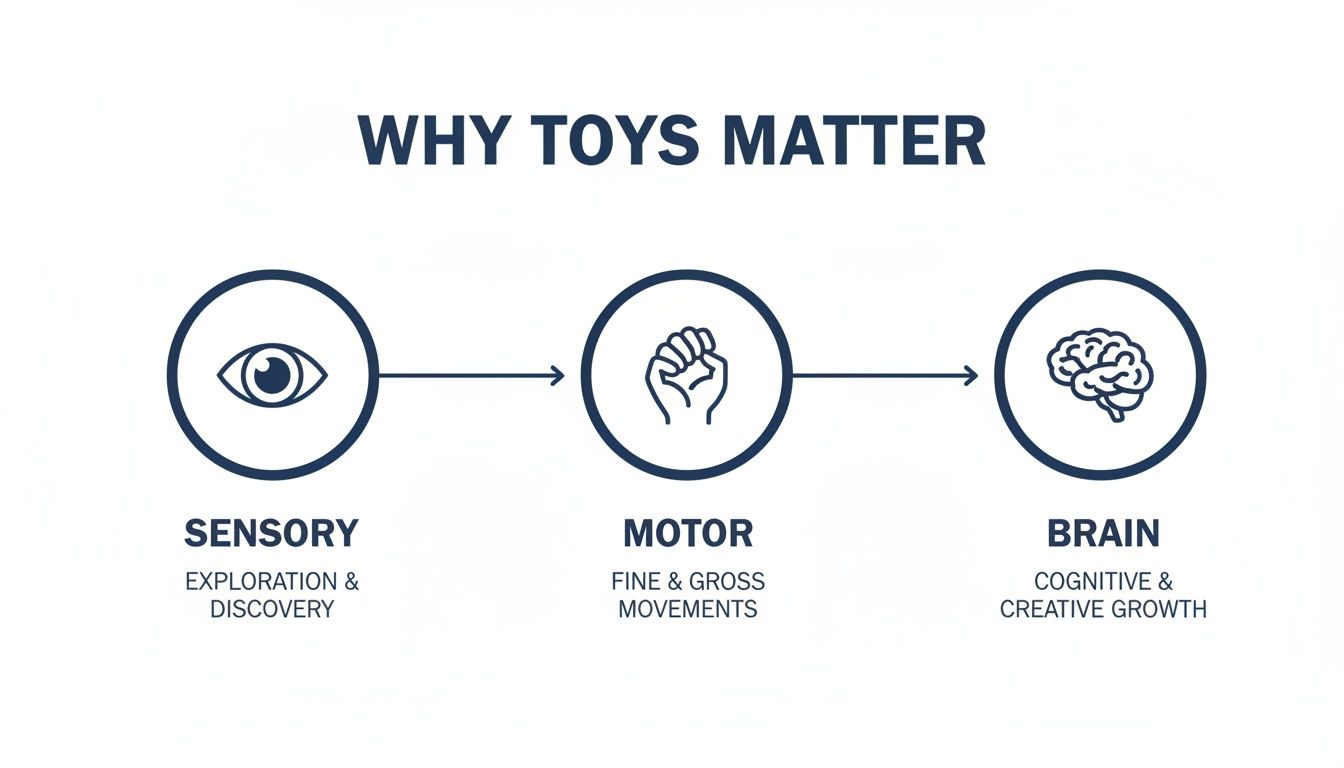
As you can see, it all starts with simple sensory experiences. These moments build the foundation for more complex motor skills, which in turn fuel that incredible cognitive growth happening behind the scenes.
Let's break down what toys work best, month by month.
Newborn Toy Selection Guide 0-3 Months
Here is a quick reference to help you match the right toys to your baby's developmental stage during those crucial first three months.
| Age Range | Key Developmental Focus | Recommended Toy Types | How It Helps |
|---|---|---|---|
| 0-1 Month | Vision and Reflexes | High-contrast cards, soft rattles | Strengthens eye muscles and introduces cause-and-effect through natural movement. |
| 1-2 Months | Visual Tracking and Touch | Play gyms, mobiles, textured toys | Encourages head turning and eye movement, while building new neural pathways through touch. |
| 2-3 Months | Reaching and Grasping | Lightweight rings, easy-to-grab plush toys | Supports the shift from reflexive to intentional grasping and builds core strength. |
This table gives a simple overview, but let’s dive a little deeper into what’s happening at each stage.
Month One: Focus on Vision and Reflexes
In that first month, your baby’s vision is still quite fuzzy. They see best in high contrast, which is why simple black-and-white images are so captivating for them. These bold patterns give their developing eyes something clear to focus on, strengthening their visual pathways.
You will also notice that powerful grasp reflex. Place a finger in their palm, and their tiny hand will instinctively curl around it. A lightweight, soft rattle is perfect for this. They do not need to shake it on purpose. Their own natural movements will create a gentle sound, giving them their first little lesson in cause and effect.
Month Two: Encouraging Tracking and Touch
Between one and two months, your baby’s vision sharpens. They will start following moving objects with their eyes, a skill we call visual tracking. This is the ideal time to introduce a mobile hung safely over their cot or a play gym set up on their play mat. The gentle motion encourages them to practice turning their head and using those eye muscles.
Their sense of touch also becomes more refined. This makes it a great time to introduce different textures. Feeling varied surfaces helps their brain build important connections.
Look for toys with a mix of materials:
- Soft, plush fabrics for comfort.
- Crinkly or silky materials that offer interesting sounds and feelings.
- Smooth wooden surfaces on a ring to introduce a firm, natural texture.
Exploring these different sensations is a key part of their sensory development. If you want to learn more, you can get some great ideas for choosing the right infant activity toys that support these milestones.
Month Three: Promoting Reaching and Grasping
By the time they are two to three months old, those early reflexes start becoming more intentional. Your baby will begin to reach for objects they find interesting. This is a huge developmental leap, as they learn to coordinate what they see with what their hands can do.
To support this new skill, offer toys that are easy for their little hands to hold. Think lightweight rings, soft plush animals with easy-to-grab limbs, or simple linking rings. Placing these items on a play mat during tummy time is a brilliant way to motivate them to reach out. This also helps strengthen their neck, shoulder, and core muscles.
Understanding Key Toy Categories for Newborns
Walking into the baby aisle can feel overwhelming. Every toy seems to promise the world for your little one's development. Choosing the right developmental toys for newborns is actually simpler than you think. It is not about having dozens of toys, but about understanding why certain types matter.
Let’s break it down.
Newborn toys fall into a few key categories. Each one is designed to stimulate a different part of their rapidly growing mind and body. A few thoughtful selections from each group are all you need to create powerful learning opportunities.
Sensory Toys That Excite and Engage
Sensory toys are all about waking up your newborn’s senses of sight, hearing, and touch. These are their main tools for making sense of their brand-new world. Simple, engaging items help their brain process new information and build crucial neural pathways.
Think of it like introducing new flavours to a budding foodie. Each new texture or sound is a fresh experience that builds their understanding.
Here are a few simple ideas:
- Crinkle books or papers: That crinkly sound is fascinating for a baby. It offers both auditory and tactile stimulation in one simple toy.
- Textured balls: A simple ball with different bumps, ridges, or fabrics encourages your baby to explore with their hands and, eventually, their mouth.
- Soft fabric swatches: Pieces of silk, velvet, or corduroy are a simple yet effective way to introduce different tactile sensations during cuddle or play time.
Motor Skill Toys for Building Strength
Motor skill toys are designed to get your baby moving. They motivate them to reach, grasp, kick, and push up. This builds the foundational strength and coordination needed for future milestones like rolling over, sitting, and crawling.
A play gym or a comfy tummy time mat are perfect examples of motor skill ‘toys’. They create an inviting space that makes physical work feel like play.
Your baby's first 'workout' happens on the floor. Toys that encourage them to lift their head during tummy time or reach for an object are like their personal trainers. They help them build core, neck, and shoulder strength one play session at a time.
This early physical development is absolutely essential. Simple things like linking rings or a lightweight rattle placed just within reach can be powerful motivators for purposeful movement.
Auditory Toys That Fine-Tune Hearing
From inside the womb, your baby has been listening. Auditory toys help them refine this skill. They teach them to pinpoint where a sound is coming from and to tell the difference between various tones and rhythms.
This is not about loud, electronic toys with endless tunes. For a newborn, the best auditory toys are gentle and respond to their own actions.
For instance, a soft rattle that makes a quiet sound when they move their arm teaches a basic lesson in cause and effect. Simple musical pull-toys with a gentle melody can also be soothing. They help them connect movement with a pleasant sound. If this is an area you are curious about, you can learn more about how to choose the best musical toys for babies to support their listening skills.
Visual Toys for Developing Focus
A newborn’s eyesight is still a bit blurry, so they are naturally drawn to simple, bold patterns. Visual toys are designed to capture their attention and help them practise focusing their eyes. They strengthen their vision and help them learn to track moving objects.
This is exactly why high-contrast black-and-white patterns are so popular and effective for the youngest babies. Their simplicity makes it easy for a newborn's developing brain to process what they are seeing.
Common visual toys include:
- High-contrast flashcards: You can pop these near your baby during tummy time or in their line of sight when they are lying on their back.
- Unbreakable mirrors: A baby-safe mirror is a fantastic tool. Babies are fascinated by faces. Looking at their own reflection encourages them to lift their heads and focus.
- Mobiles: A simple mobile with bold shapes hung safely above their change table or bassinet encourages visual tracking as the objects gently move.
A Guide to Toy Safety and Australian Standards
Nothing is more important than your baby’s safety. When you are picking out developmental toys, knowing the safety standards is just as crucial as understanding the play benefits. This simple guide will help you choose toys that are not just engaging but completely secure for your little one.
Let's break it down.
When it comes to materials, simpler is often better. Natural materials are a fantastic choice because they are typically free from nasty synthetic chemicals. Think untreated wood and organic cotton. Both are gentle and safe for newborns.
Choosing Safe and Non-Toxic Materials
Your newborn will explore just about everything with their mouth, so what their toys are made of really matters. Looking for certain certifications can give you peace of mind that a toy is safe for your baby to touch, hold, and chew on.
Here is why some materials and labels are worth seeking out:
- OEKO-TEX Certified Fabrics: This is a global standard that tests for harmful stuff. When a fabric toy or a play mat is OEKO-TEX certified, it means every single part has been tested and found to be completely harmless.
- Organic Cotton: This is cotton grown without synthetic pesticides or fertilisers. It is incredibly soft, breathable, and easy on a baby’s sensitive skin. This makes it a wonderful choice for plush toys and blankets.
- Untreated Wood: Natural, solid wood sealed with a non-toxic, food-grade finish is a durable and safe bet. It offers a firm texture for teething and is naturally resistant to bacteria.
This focus on safe, sustainable materials is becoming more common. Aussie parents are putting early childhood development and eco-friendly products first. This is shaping the baby toy market. There is a clear shift towards sustainable materials like organic cotton, especially among millennial and Gen Z parents. You can find more insights about this growing trend in the Australian market on techsciresearch.com.
What to Avoid When Buying Newborn Toys
Knowing what to look for is one thing, but knowing what to avoid is just as important. Australian toy safety standards, specifically AS/NZS ISO 8124, are in place to protect children. It always helps to be extra vigilant yourself.
When you check a toy, try to think like a baby. If a part looks like it could come loose and fit in their mouth, it is a potential hazard. Durability and a simple design are your best friends for ensuring playtime is always safe.
Here's a quick checklist of things to steer clear of:
- Small Parts: Toys for children under three should not have small parts that can break off. These are serious choking hazards.
- Long Cords or Ribbons: Anything longer than 30 cm can pose a strangulation risk. Make sure any cords on toys are short and securely attached.
- Harmful Chemicals: Avoid toys containing BPA, phthalates, and lead. These chemicals can be toxic if ingested. Always buy from reputable brands that comply with Australian safety standards.
- Sharp Edges or Points: Run your hands over the toy. Check for any sharp or rough spots that could scratch or poke your baby.
By keeping these points in mind, you can feel confident choosing developmental toys that are safe, durable, and genuinely good for your newborn.
Creating the Perfect Tummy Time Play Space
So, you have picked out the perfect developmental toys for your newborn. That is a great start. But the next step is just as important. You must create a space where your little one actually wants to play. This is all about connecting the 'what' (the toys) with the 'where' (the play space). This makes tummy time a positive and effective routine.
Tummy time is one of the most important things you can do for your baby's development. It is how they build the essential neck and shoulder strength needed to eventually lift their head, roll over, and crawl. This simple daily practice also plays a big part in preventing positional plagiocephaly, also known as flat head syndrome.
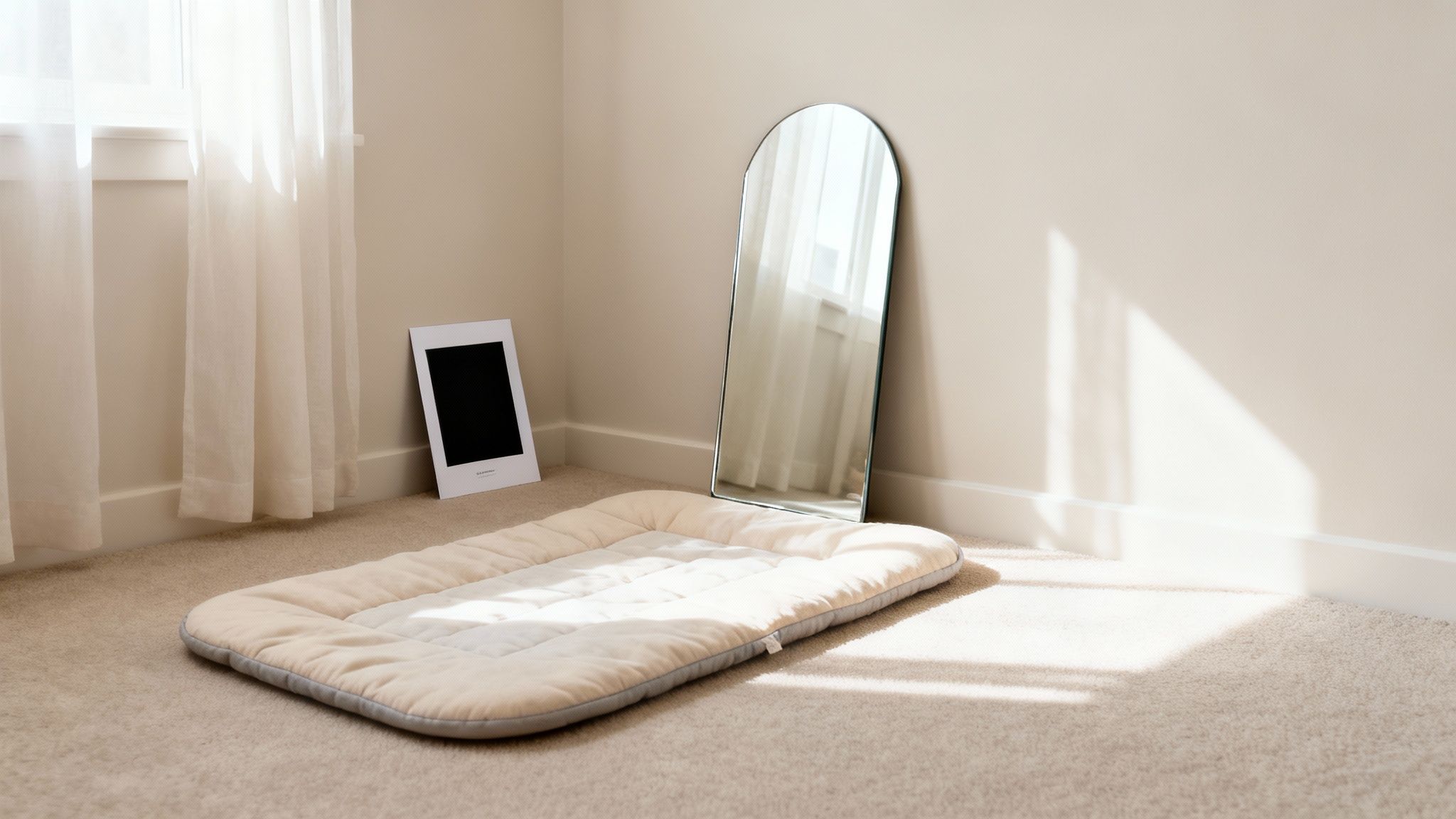
Let's break down how to set up the ideal tummy time spot, starting with the foundation.
The Importance of the Right Play Mat
The surface your baby lies on is the foundation of any great tummy time space. A soft blanket might seem cosy, but it often bunches up. This makes it harder for your baby to push up and build strength. The sweet spot is a surface that is soft enough for comfort but firm enough to give them stable support.
Here is why a quality play mat really makes a difference:
- Provides a Stable Surface: A firm mat gives your baby a solid base to push against with their hands and arms. This is crucial for building that upper body strength.
- Defines a Safe Zone: It creates a clean, dedicated space just for them, away from general floor traffic and potential hazards.
- Offers Sensory Input: Many mats are designed with gentle textures or simple patterns that add another layer of sensory exploration to their playtime.
This stable, engaging surface is more than just a comfy spot. It is an active tool that supports your baby’s first little movements and explorations. If you are looking for the right fit for your home, our guide on choosing the best tummy time mats for infants can help.
Think of a play mat as your baby’s first gym. It's a safe, supportive space where they can do the important work of building strength, coordination, and confidence through play.
Making Tummy Time Engaging and Fun
Let’s be honest, not all babies love being on their tummy right away. The trick is to start small. Just a minute or two at a time, several times a day, is perfect. As they get stronger and more comfortable, you can gradually make the sessions a little longer.
Using simple developmental toys can turn tummy time from what feels like a chore into a fun, interactive game.
Here are a few practical tips to keep your newborn engaged:
- Use High-Contrast Cards: Pop a black-and-white flashcard on the mat in front of them. The bold patterns will catch their eye and encourage them to lift their head for a better look.
- Introduce an Unbreakable Mirror: Babies are fascinated by faces, especially their own. Placing a baby-safe mirror just out of reach can motivate them to push up and see their reflection.
- Get Down on Their Level: Lie on the floor with them, face-to-face. Your presence is the most engaging toy of all. It is a beautiful way to strengthen your bond.
This focus on creating stimulating play spaces is a growing trend across Australia, as more families prioritise early development. It is interesting to see how online retail has made it so much easier for parents everywhere to find these kinds of high-quality items. Online retail now makes up over a third of the market.
By setting up a comfortable, safe, and stimulating environment, you are not just going through the motions of a daily routine. You are turning it into a cherished moment of connection and learning for you and your baby.
Answering Your Questions About Newborn Toys
As you settle into this incredible new journey, it is completely normal to have questions swirling around. When it comes to toys for your newborn, lots of parents wonder about the same things. Let’s tackle some of the most common ones to help you feel clear and confident.
How Many Toys Does My Newborn Really Need?
Honestly, very few. For a newborn, quality is much more important than quantity. A small, thoughtful selection that gently engages their senses is far more effective than a room full of clutter.
Start with just one or two high-contrast items for their developing vision, a single soft rattle to encourage hearing and grasping, and a comfortable play mat for floor time. You can simply rotate these few key pieces to keep your baby engaged without overwhelming them. A minimalist approach is always best in these early days.
When Is the Right Time to Introduce Toys?
You can start introducing simple sensory experiences from the first few weeks. During those brief moments when your baby is alert and calm, try showing them high-contrast cards to stimulate their eyesight. A safe, soft play mat can also be used for very short, supervised tummy time sessions right from the start.
Gentle rattles can come into play around the one-month mark, just as their natural grasping reflex starts to strengthen. The most important thing is to always supervise playtime and pay close attention to your baby’s cues. They will let you know when they are tired or have had enough.
Are Expensive Developmental Toys Actually Better?
Not at all. A toy's price tag rarely has anything to do with its developmental value for a newborn. In fact, the most effective toys are often the simplest ones because they invite your baby to actively explore.
A simple wooden ring or a silky piece of fabric can provide powerful sensory input without any complex features. Focus on safety, age-appropriateness, and material quality over flashing lights or electronic sounds. Well-made, non-toxic items are always the best investment in your baby's play.
As you dive into the world of developmental toys, you might also be thinking about how to capture these fleeting early moments by finding the best newborn photographers.
How Should I Clean Newborn Toys Safely?
Keeping toys clean is essential, especially since everything eventually ends up in your baby’s mouth. The good news is, it is a straightforward process that does not require any harsh chemicals.
Next steps are simple:
- For fabric items like play mats or soft toys, choose machine-washable products. Use a gentle, baby-safe detergent and just follow the care label.
- For hard toys made of wood or plastic, a simple wipe-down with a damp cloth and a mild soap-and-water solution is perfect.
- Always let toys dry completely before giving them back to your baby. This prevents any mould or mildew from growing.
Following these simple cleaning habits helps keep your baby's play space healthy and safe.
At Wallaby Collective, we believe in creating beautiful, safe, and functional spaces for your baby to grow and play. Our OEKO-TEX certified linen play mats are designed to provide the perfect foundation for tummy time and those precious early explorations. Discover our collection and create a calm, stylish play space for your little one at https://wallabycollective.com.