

8 Fun & Simple Craft Ideas for Toddlers To Try in 2026
Toddlerhood is a whirlwind of discovery. Engaging your little one in creative activities is a wonderful way to support their development. Finding the right craft ideas for toddlers can feel overwhelming, but it does not have to be complicated or require a trip to the craft store. This guide is for busy parents who want simple, safe, and enriching activities using materials you likely already have.
We will explore a curated collection of parent-friendly crafts that focus on sensory exploration and fine motor skill development. Each idea includes a straightforward materials list, easy-to-follow steps, and practical tips for variations and mess management. Let's break it down. You will find actionable advice for setting up activities like sensory play, water pouring, and playdough exploration, all organised for clarity. These projects are fun for your child and low-stress for you.
Our focus is on process-oriented art. This is where the experience of creating is more important than the final product. This approach helps nurture curiosity and builds confidence in young children. For even more inspiring and simple ways to engage your little one, discover other easy crafts to do at home. Now, let’s get ready to make some creative memories.
1. Sensory Play with Natural Textures
Sensory play is a cornerstone of early childhood development. It introduces toddlers to the world through touch, sight, and sound. This craft idea focuses on tactile exploration. It uses natural materials to create engaging sensory experiences that are both safe and stimulating. It is one of the most foundational craft ideas for toddlers because it builds crucial neural pathways.
Instead of structured outcomes, the goal here is open-ended discovery. Toddlers can explore different textures at their own pace. This helps them develop fine motor skills, cognitive growth, and sensory awareness. Using a soft, neutral base like a linen play mat provides the perfect canvas. It allows the colours and textures of the natural materials to stand out.
Why It Works for Toddlers
This approach taps into a toddler's natural curiosity. The varied sensations from soft wool, smooth silk, or textured linen help them understand their environment. This kind of play supports not just sensory development but also language skills. Here is why. You can introduce words like "soft," "bumpy," and "smooth." For a deeper dive into the benefits, you can explore more about sensory play ideas for babies and their development.
How to Set It Up
Let's break it down into two simple options.
- The Texture Basket: Gather various natural materials. Place them in a low, accessible basket. Your toddler can freely pull items out to touch and examine them.
- The Sensory Board: For a more permanent creation, securely glue different fabric swatches onto a piece of sturdy cardboard or a foam board. This creates a tactile wall hanging or lap board.
Materials You Will Need
- Base: A shallow basket or a piece of cardboard.
- Textures: Cotton balls, linen swatches, wool yarn, silk ribbons, and felt squares.
- Safety: Ensure all items are large enough to not be a choking hazard. Choose OEKO-TEX certified fabrics to guarantee they are free from harmful substances.
- Surface: A Wallaby Collective linen play mat provides a comfortable and safe space for exploration.
Actionable Tips
- Supervise Actively: Always stay with your toddler during sensory play to ensure they explore safely.
- Rotate Materials: Keep the activity engaging by swapping out textures every week. Introduce new items like a smooth wooden ring or a large, soft feather.
- Clean with Ease: Choose machine-washable fabrics. This way, you can easily clean them after a session. A quick wash keeps everything hygienic for the next playtime.
2. Water Play and Pouring Activities
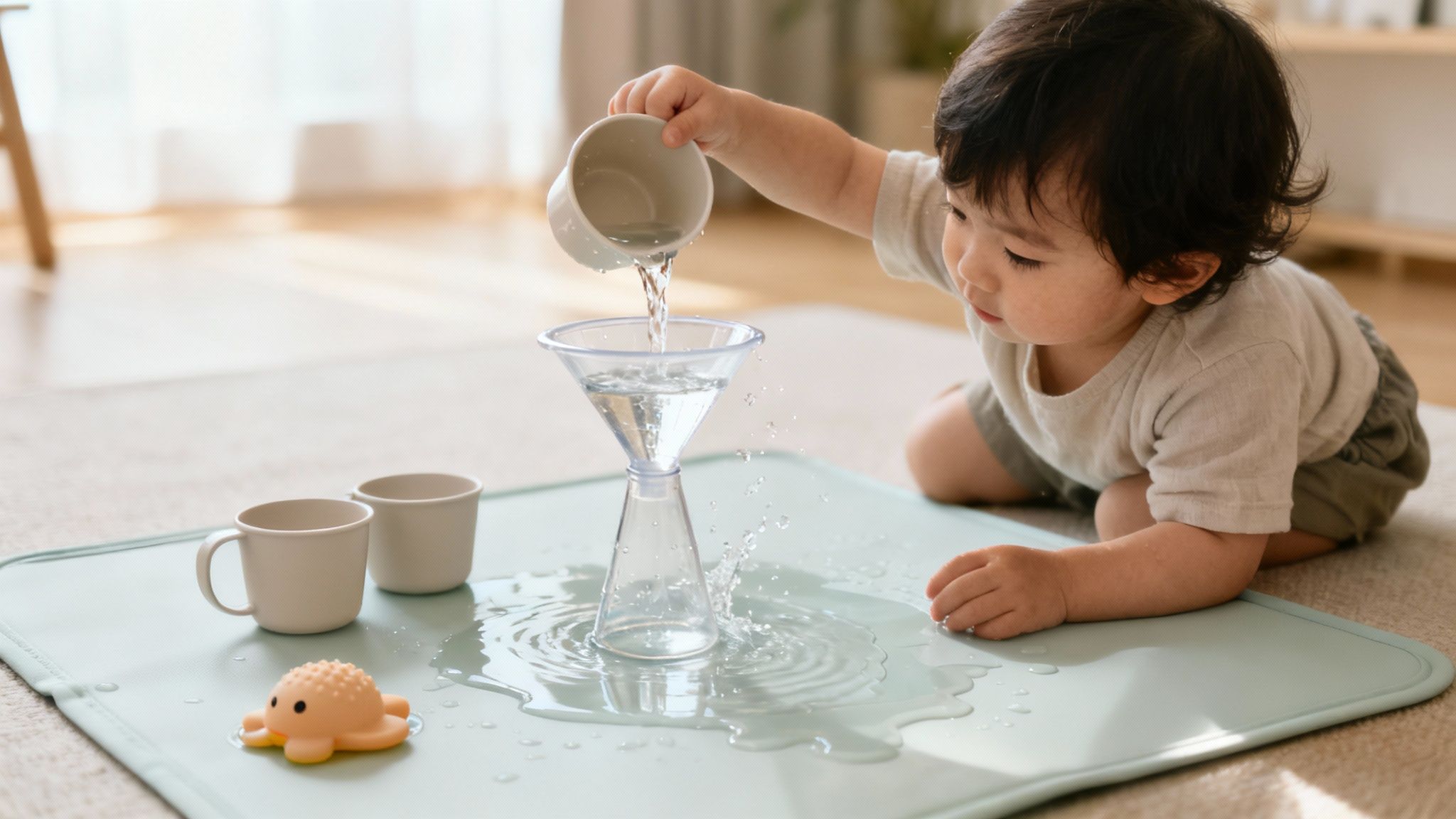
Water play is a classic developmental activity. It helps toddlers understand cause and effect while developing coordination and concentration. This craft idea focuses on controlled pouring, scooping, and splashing. It turns a simple element into a powerful tool for learning. It is one of the best craft ideas for toddlers because it introduces early physics concepts in an engaging, hands-on way.
The goal is to provide a structured yet open-ended environment for exploration. Toddlers can experiment with how water moves, fills different containers, and feels. All of this enhances their fine motor skills and problem-solving abilities. Using a play mat as a designated splash zone makes cleanup simple and defines the play area.
Why It Works for Toddlers
This activity taps into a toddler’s innate fascination with water. The simple act of pouring helps build hand-eye coordination. It also strengthens hand muscles and fosters concentration. It provides a calming, meditative experience that can soothe an overstimulated child. For a closer look at the benefits, you can discover more about water play activities for little ones.
How to Set It Up
Let's break it down into two simple options.
- The Sensory Bin: Fill a shallow bin or large bowl with a small amount of water. Add various cups, funnels, and floating toys for pouring and scooping.
- The Pouring Station: Set up two containers. Fill one with water and leave the other empty. Provide a ladle or large spoon for your toddler to transfer water from one to the other.
Materials You Will Need
- Base: A shallow sensory bin or several sturdy, non-breakable containers.
- Tools: Measuring cups, funnels, plastic jugs, spoons, and floating bath toys.
- Safety: Always use a shallow amount of water and never leave a child unattended. Ensure all tools are age-appropriate and free of sharp edges.
- Surface: A Wallaby Collective linen play mat placed on hard flooring can create a designated splash zone. Its absorbency helps manage small spills.
Actionable Tips
- Supervise Closely: Constant supervision is crucial during any water play activity, no matter how shallow the water is.
- Contain the Splash: Use a waterproof apron to keep your toddler's clothes dry. Place your play mat nearby to absorb splashes and protect your floors.
- Easy Cleanup: The machine-washable linen mat can be quickly dried or washed after play. This makes cleanup stress-free and hygienic for next time.
3. Stamping and Printing with Natural Objects
Stamping and printing activities introduce toddlers to the joy of art-making. They do this by exploring shapes, colours, and patterns. This craft idea uses natural or household objects dipped in non-toxic paint to create unique artwork. It is a fantastic way for toddlers to learn about cause-and-effect while developing hand strength and coordination.
Instead of focusing on a perfect final product, the emphasis is on the process. Your toddler can discover how different objects create different marks. This fosters creativity and problem-solving skills. Using a neutral-coloured play mat as the base helps the vibrant paint colours pop. This makes the experience more visually stimulating.
Why It Works for Toddlers
This activity taps into a toddler’s innate desire to make their mark on the world. The repetitive motion of stamping is satisfying. It helps refine their fine motor skills. It also introduces basic concepts of printmaking and pattern creation. This builds a foundation for more complex art projects later on.
How to Set It Up
Let's break it down into a few simple variations.
- Leaf and Flower Printing: Collect various leaves and flowers from the garden. Your toddler can paint one side and press them onto paper to reveal beautiful, natural prints.
- Block and Sponge Stamping: Use wooden blocks or cut sponges into simple shapes. These are easy for little hands to grip and create bold, clear patterns.
- Potato Stamping: An adult can carve simple shapes into a halved potato. This creates a custom, easy-to-hold stamp perfect for making repeated patterns.
Materials You Will Need
- Stamping Tools: Leaves, flowers, wooden blocks, sponges, or potatoes.
- Paint: Washable, non-toxic paint in a shallow dish or tray. Look for OEKO-TEX certified paints to ensure they are safe for skin contact.
- Surface: Paper or card for printing.
- Workspace: A Wallaby Collective linen play mat provides a comfortable, cleanable surface. Place a protective sheet underneath for extra messy play.
Actionable Tips
- Contain the Mess: Dress your toddler in an art smock or old clothes. Keep wet wipes and a cloth handy for quick clean-ups of hands and surfaces.
- Show, Don't Tell: Demonstrate how to dip an object in paint and press it onto the paper. Then, let your toddler explore freely.
- Display Their Art: The neutral background of the play mat offers a great contrast for photographing and displaying your toddler's finished creations.
4. Playdough Exploration and Creation
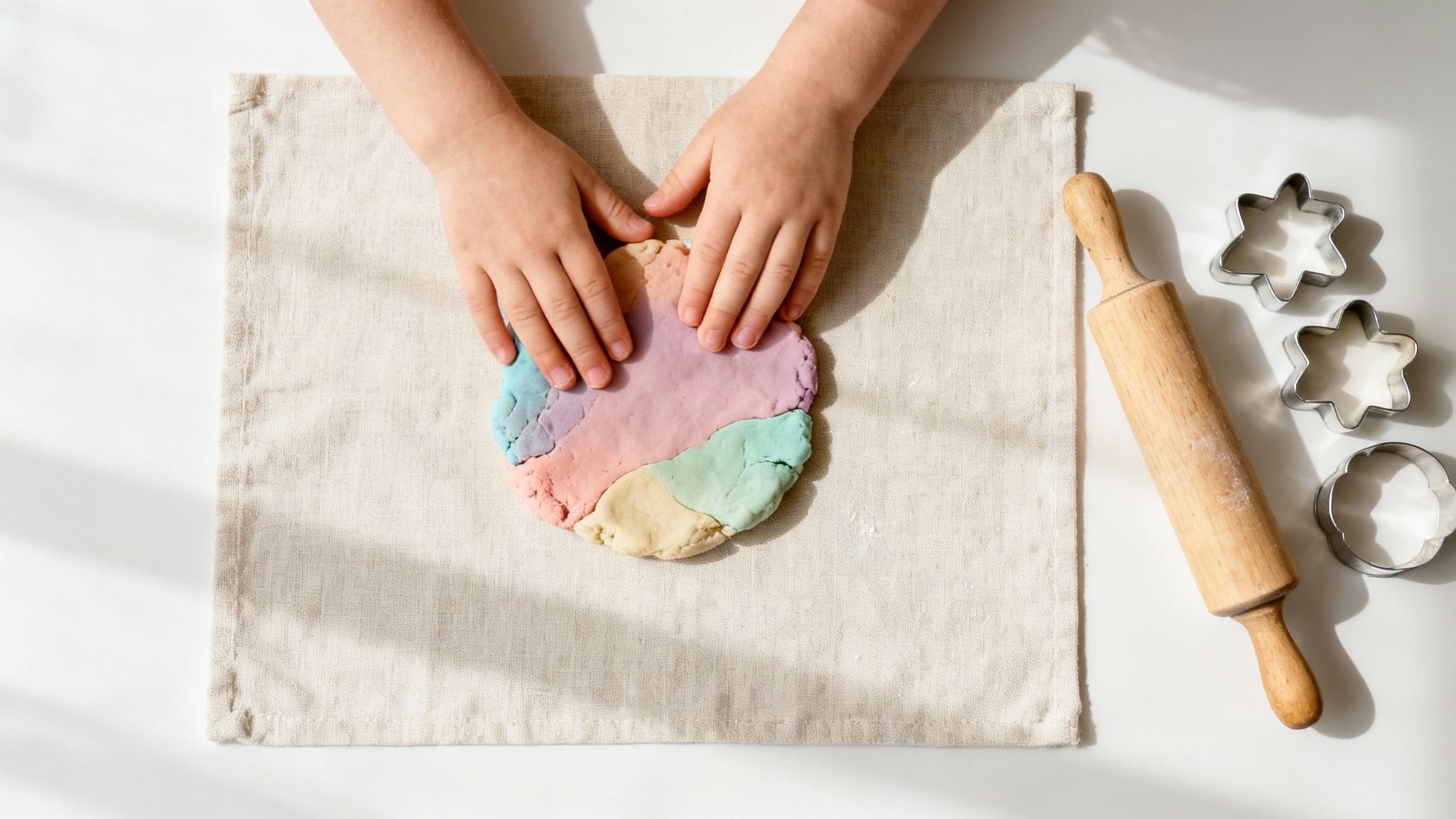
Playdough is a timeless classic among craft ideas for toddlers. It offers endless tactile and creative possibilities. This simple material allows toddlers to squeeze, squish, roll, and shape. This is brilliant for developing hand strength, fine motor skills, and imagination. It provides a calming, therapeutic experience suitable for all developmental stages.
The open-ended nature of playdough promotes imaginative play. Children create everything from simple snakes to intricate sculptures. Whether you opt for a store-bought, non-toxic version or a simple homemade recipe, the focus is on the sensory process of creation. Using a neutral-toned linen play mat ensures that the vibrant colours of the playdough pop. This makes the activity even more visually engaging.
Why It Works for Toddlers
Playdough directly engages a toddler’s sense of touch. It also encourages them to experiment with cause and effect. As they press, flatten, and roll the dough, they strengthen the small muscles in their hands and fingers. This is essential for future skills like writing. This activity also supports cognitive development as they learn about shapes, sizes, and three-dimensional objects.
How to Set It Up
Let's break down how to get started with this fun activity.
- Simple Squishing Session: For younger toddlers, provide a few balls of different coloured playdough. Let them explore by squishing, poking, and pulling it apart.
- Creative Sculpting: For older toddlers, introduce simple tools. These can include plastic cookie cutters, a child-safe rolling pin, or plastic utensils. This encourages more structured creations like animals, food, or patterns.
Materials You Will Need
- Dough: Non-toxic, store-bought playdough or a homemade recipe (flour, salt, water, cream of tartar, oil, and food colouring).
- Tools: Rolling pins, cookie cutters, and plastic cutlery (optional).
- Add-Ins: Glitter, beads, or a drop of lavender essential oil can add a new sensory dimension (always supervise closely).
- Surface: A Wallaby Collective linen play mat provides an easy-to-clean and comfortable workspace. The neutral tones help make cleanup more visible.
Actionable Tips
- Supervise Actively: Always watch your toddler to ensure they do not try to eat the playdough.
- Control the Mess: Establish a clear rule that playdough stays on the mat. This helps contain the mess and makes tidying up much simpler.
- Store Properly: Keep playdough in airtight containers between sessions to prevent it from drying out. A quick knead with a drop of water can often revive it.
5. Sticker Play and Sticky Collage
Sticker play is a classic, low-mess craft activity. It captures a toddler's full attention while developing crucial skills. This simple yet powerful idea involves peeling and sticking. This repetitive motion builds fine motor strength, hand-eye coordination, and pincer grasp. It is one of the most accessible craft ideas for toddlers. It requires minimal setup and offers endless creative possibilities.
The goal is to allow toddlers the freedom to create scenes, patterns, or colourful collages. This activity supports visual-motor integration, spatial awareness, and even early storytelling. Toddlers can place stickers to represent characters or objects. A neutral, soft surface like a linen play mat provides the perfect contained area. This makes cleanup simple and keeps the focus on the vibrant stickers.
Why It Works for Toddlers
This craft taps into a toddler’s desire for autonomy and accomplishment. Successfully peeling a sticker and placing it is a satisfying achievement that boosts their confidence. The activity also enhances concentration and patience. As you talk about the shapes, colours, and images on the stickers, you are also building their vocabulary and language skills.
How to Set It Up
Let's break it down into a couple of easy options.
- Sticker Scene Creation: Provide a large sheet of paper or a pre-printed background scene (like a farm or ocean). Add sheets of themed stickers. Your toddler can create their own picture by populating the scene.
- Sticky Collage Wall: For a larger-scale project, safely tape a large piece of contact paper to a wall or window, sticky side out. Give your toddler stickers, pom-poms, or paper shapes to stick onto the surface. This creates a collaborative art piece.
Materials You Will Need
- Base: Large sheets of paper, poster board, or clear contact paper.
- Stickers: A variety of large, easy-to-peel stickers. Consider different textures like puffy, foil, and felt stickers for a sensory element.
- Safety: Ensure stickers are large enough not to be a choking hazard and are non-toxic. Always supervise your child.
- Surface: A Wallaby Collective linen play mat offers a comfortable spot for your toddler to sit and focus on their sticker art.
Actionable Tips
- Prepare the Stickers: For toddlers just starting out, peel the background part of the sticker sheet away. This leaves just the stickers. This makes them much easier to lift.
- Use it as a Calm-Down Activity: The focused nature of sticker play makes it a perfect quiet-time activity after more energetic play.
- Create Sticker Stations: Set up a small table or a designated corner on your play mat with paper and a container of stickers to encourage independent, creative play.
6. Ribbon and Fabric Threading
Threading activities are fantastic craft ideas for toddlers. They are designed to boost fine motor control and hand-eye coordination. This simple yet effective craft involves guiding ribbons, soft ropes, or fabric strips through holes. It transforms a basic task into a powerful developmental tool. It encourages concentration and problem-solving skills. This lays the foundation for more complex abilities like lacing shoes later on.
The focus of this activity is on the process of manipulation and exploration. Toddlers work to thread materials. As they do, they strengthen the small muscles in their hands and fingers. This is crucial for future writing and self-care tasks. Using a variety of soft, natural materials like linen ribbons and woollen ropes adds a rich sensory dimension to the experience.
Why It Works for Toddlers
This craft idea taps into a toddler's growing desire to manipulate objects and understand cause and effect. The act of successfully pulling a ribbon through a hole provides a satisfying sense of accomplishment. This repetitive, focused motion is calming. It helps improve a toddler's ability to concentrate on a single task. This is an important skill for their developing minds.
How to Set It Up
Here’s how to introduce this engaging activity.
- Lacing Cards: Create simple lacing cards. Punch holes around the edge of a sturdy piece of cardboard. Provide a thick, soft rope or a wide ribbon for your toddler to thread through the holes.
- Cardboard Tube Weaving: Use a cardboard tube, like from a paper towel roll. Cut small slits at each end. Your toddler can then wrap and thread fabric strips or thick yarn around the tube. This creates a colourful creation.
Materials You Will Need
- Base: Sturdy cardboard pieces, foam boards, or empty cardboard tubes.
- Threading Materials: Wide linen ribbons, soft fabric strips, thick woollen yarn, or shoelaces with the plastic ends removed for safety.
- Tools: A hole punch for creating lacing cards.
- Surface: A Wallaby Collective linen play mat offers a soft, defined space for this focused work. It keeps all the pieces contained and comfortable.
Actionable Tips
- Model First: Gently show your toddler how to push the ribbon through one hole and pull it out another. Do not worry about a perfect pattern. Let them explore freely.
- Vary the Difficulty: Start with large holes and thick, stiff ribbons. As their skills develop, introduce smaller holes or more flexible materials like yarn. This provides a new challenge.
- Ensure Safety: Always use materials that are large enough to avoid being choking hazards. Check that all fabrics and ribbons are non-toxic and well-made.
7. Foam and Paper Collage Making
Collage making is a fantastic way for toddlers to explore colour, shape, and composition. This activity involves tearing paper, arranging different materials, and gluing them onto a surface to create unique artwork. It’s one of the most versatile craft ideas for toddlers. Here is why. It helps develop fine motor skills, decision-making, and visual-spatial awareness.
The beauty of collage is in its process-oriented nature. There is no right or wrong way to create. This empowers toddlers to express their creativity freely. Using a neutral base, like a linen play mat, helps the vibrant colours of the paper and foam pieces stand out. This provides excellent visual contrast that keeps little ones engaged.
Why It Works for Toddlers
This craft taps into a toddler's desire to manipulate objects and see immediate results. Tearing paper strengthens hand muscles and improves coordination. Placing pieces helps them understand cause and effect. As they choose and arrange materials, they are making creative decisions. They also learn about different textures, from smooth paper to soft foam.
How to Set It Up
Here are a few simple ways to introduce collage making.
- Torn Paper Art: Provide sheets of colourful construction or tissue paper. Let your toddler tear them into pieces. They can then glue the torn bits onto a larger sheet of paper to create an abstract masterpiece.
- Sticker and Paper Mix: Combine foam stickers with pre-cut paper shapes. Toddlers can easily peel and stick the foam pieces alongside glued paper. This adds another layer of texture and fun.
Materials You Will Need
- Base: A large sheet of paper or cardboard.
- Textures: Coloured construction paper, tissue paper, magazine clippings, and foam stickers or shapes.
- Adhesive: A non-toxic, washable glue stick or paste.
- Surface: A Wallaby Collective play mat provides a comfortable and easy-to-clean workspace.
Actionable Tips
- Supervise Adhesives: Always supervise glue use. Have wet wipes on hand for quick clean-ups.
- Prep for Success: For younger toddlers, pre-tear or pre-cut some paper into strips. This makes it easier for them to handle.
- Embrace Variety: Offer a mix of textures and colours to stimulate their senses. Introduce natural elements like leaves for a nature-themed collage. You can discover more engaging art and crafts ideas for toddlers to expand their creative horizons.
8. Sensory Bins and Exploration Play
Sensory bins offer a contained world of discovery. They provide toddlers with a rich, hands-on experience that is both engaging and educational. This craft idea involves filling a container with safe, non-toxic materials. This allows little ones to scoop, pour, and explore. It is one of the most versatile craft ideas for toddlers, as it can be adapted to any theme or season.
The focus of this activity is on process over product. A toddler's natural curiosity is stimulated. They may dig for hidden treasures or simply feel the textures run through their fingers. This type of play supports fine motor skill development, hand strength, and sensory awareness. It also encourages calm, focused engagement. Using a neutral-toned linen play mat underneath contains the mess and creates a defined play space.
Why It Works for Toddlers
Sensory bins tap into a toddler's desire to touch and manipulate everything. The experience of scooping kinetic sand, pouring pasta, or squishing water beads helps them understand concepts like volume and cause-and-effect. This focused play also supports cognitive development. It provides a fantastic opportunity to introduce new vocabulary related to textures and actions. Examples include "grainy," "scoop," and "bury."
How to Set It Up
Here’s how to create a simple yet captivating sensory experience.
- Themed Bins: Choose a theme. This could be an ocean adventure with blue-coloured rice and sea creature toys. It could also be a construction site with kinetic sand and small diggers.
- Discovery Dig: Fill a bin with a base material like rice or dried pasta. Hide small, safe toys for your toddler to find.
Materials You Will Need
- Base: A shallow plastic bin or tray.
- Fillers: Kinetic sand, uncooked rice, dried pasta, or water beads (with strict supervision).
- Tools: Scoops, small cups, funnels, and child-safe tongs.
- Safety: Ensure all hidden objects are large enough to not be a choking risk. Always supervise closely to prevent your toddler from ingesting any materials.
- Surface: A Wallaby Collective linen play mat provides the perfect spill-catching base. This makes clean-up simple and keeps play organised.
Actionable Tips
- Contain the Mess: Place the sensory bin on a play mat or use a waterproof cover underneath. This will catch any spills and define the play area.
- Rotate Fillers: Keep the activity fresh and exciting. Change the sensory bin materials and themes every few weeks.
- Supervise Closely: Active supervision is essential. It ensures your child plays safely and does not put small items in their mouth.
- Organise Easily: Use the mat's storage bag to keep your different sensory bin fillers and tools neatly organised between play sessions.
Comparison of 8 Toddler Craft Ideas
| Activity | Implementation 🔄 | Resources & setup ⚡ | Expected outcomes ⭐📊 | Ideal use cases 💡 | Key advantages ⭐ |
|---|---|---|---|---|---|
| Sensory Play with Natural Textures | 🔄 Low: simple assembly, rotate materials, launder regularly | ⚡ Low: fabric swatches, baskets, soft play mat | ⭐ Improves tactile discrimination & fine motor skills; 📊 moderate engagement | 💡 Quiet exploration, teething stages, eco-conscious families | ⭐ Safe natural materials, low cost, supports sensory development |
| Water Play and Pouring Activities | 🔄 Medium: waterproofing, controlled setup, constant supervision | ⚡ Minimal: cups, funnels, containers, waterproof mat; drying time | ⭐ Builds cause-effect understanding & coordination; 📊 high engagement, calming | 💡 Calming play, teaching measurement, outdoor or bath-adjacent sessions | ⭐ Highly engaging, adaptable skill levels, calming effect |
| Stamping and Printing with Natural Objects | 🔄 Medium: paint prep and protective surfaces required | ⚡ Low: natural stamps, washable paints, paper, protective cover | ⭐ Encourages creativity & hand strength; 📊 pattern recognition and visual exploration | 💡 Indoor art sessions, documentation projects, sensory-art exploration | ⭐ Accessible materials, fosters artistic confidence, good for keepsakes |
| Playdough Exploration and Creation | 🔄 Low–Medium: dough prep, surface protection, storage needed | ⚡ Affordable: homemade ingredients or commercial tubs, simple tools | ⭐ Strong gains in fine motor control & hand strength; 📊 sustained engagement | 💡 Calming sensory play, fine-motor prep for writing, imaginative play | ⭐ Highly engaging, therapeutic, promotes creativity and hand strength |
| Sticker Play and Sticky Collage | 🔄 Low: minimal setup, easy transition management | ⚡ Very low: stickers, paper or boards, backing station | ⭐ Improves peeling/placing fine motor skills; 📊 immediate reward and visual results | 💡 Quick calm-down activity, travel, low-prep moments | ⭐ Minimal mess, portable, immediate sense of accomplishment |
| Ribbon and Fabric Threading | 🔄 Medium: prepare threading frames or cards, supervise for safety | ⚡ Low: ribbons, cords, holed cards or looms, calm mat area | ⭐ Develops dexterity, hand-eye coordination; 📊 focused concentration gains | 💡 Focused fine-motor practice, pre-lacing skill development | ⭐ Calming, adaptable difficulty, builds foundational lacing skills |
| Foam and Paper Collage Making | 🔄 Medium: material prep, glue control, protective layer | ⚡ Low: recycled paper, glue/stickers, scissors, protective mat | ⭐ Enhances composition, tearing strength, and decision-making; 📊 creative expression | 💡 Art projects, emotional expression, group activities | ⭐ Inexpensive, versatile, supports visual-spatial skills |
| Sensory Bins and Exploration Play | 🔄 Medium: assemble bins, manage small items, frequent supervision | ⚡ Low–Moderate: bin, filler (sand, rice, beads), scoops, storage space | ⭐ Rich sensory input; improves scooping/pouring fine motor skills; 📊 long engagement | 💡 Themed learning, extended focused play, calm exploratory sessions | ⭐ Highly engaging and adaptable, reusable materials, supports focused exploration |
Your Next Steps for Creative Fun
We have explored a range of engaging and development-focused craft ideas for toddlers. These range from the tactile joy of playdough to the simple pleasure of stamping with natural objects. Each activity is designed not just to entertain. It also nurtures crucial skills, builds confidence, and creates cherished memories. The central takeaway is that toddler crafts do not need to be complex or expensive. The most impactful experiences often arise from the simplest materials.
Let’s break down the key insights. We have seen how sensory play with natural textures stimulates touch and curiosity. Meanwhile, water activities teach fundamental concepts like cause and effect. We also covered how activities like sticker collage and ribbon threading are fantastic for developing fine motor skills. These are essential for future tasks like writing. The common thread is that process, not the final product, is what truly matters at this age.
Putting It All Into Practice
So, what are your next steps? The best approach is to start small. You do not need to try every idea at once. Instead, choose one activity that aligns with your toddler’s current interests and the materials you have on hand.
- Observe and Adapt: Pay attention to what captivates your child. If they love splashing in the bath, water-based painting might be a perfect starting point. If they are fascinated by collecting leaves and gumnuts on your walks, bring those treasures to the craft mat for printing.
- Prepare Your Space: A little preparation goes a long way. Set up your neutral linen play mat. Arrange your materials in an inviting way. Put on some old clothes. Creating a designated, mess-friendly zone removes stress for you and gives your toddler the freedom to explore without hesitation.
- Integrate Their Interests: Make craft time even more special by connecting it to their world. You could try recreating their favourite animals with playdough. You could also make collages inspired by the vibrant illustrations of Brenda Williams' story characters. This simple step turns a fun activity into a meaningful storytelling experience.
Embracing these craft ideas for toddlers is about much more than just filling an afternoon. It is an investment in your child’s cognitive, physical, and emotional development. You are teaching them to be curious, creative problem-solvers while strengthening your bond through shared, hands-on experiences. Let go of the need for perfection. Simply enjoy the colourful, messy, and wonderful journey of discovery with your little one.
Ready to create a beautiful, safe, and stress-free space for your toddler's creative adventures? Discover the machine-washable, padded linen play mats from Wallaby Collective. Our mats provide the perfect neutral backdrop for every craft. They protect your floors while complementing your home's style. Explore the collection at Wallaby Collective.